Water-Shedding Surface
PVC coated polyester and selected PE structures can provide rain protection. Welded seams, sufficient overlap and a sloped installation help reduce leakage risk and water pooling.



 Industrial Protective Cover Solutions
Custom PVC coated and PE woven covers for lumber, drywall, insulation, steel, cement bags, pipes, roofing products and palletized construction supplies—specified around exposure time, stack shape, tie-down method and repeat handling.
Waterproof performance depends on the selected fabric, seam construction and installation. DERFLEX can recommend a project-matched structure after reviewing the application details.
A building material cover tarp is a removable protective sheet used to shield stored construction supplies from rain, snow, dust, sunlight, windblown debris and repeated jobsite handling. Unlike a general-purpose cover selected only by nominal size, a professional material cover should be planned around the vulnerability of the goods underneath it.
Lumber may require ventilation and protection from standing water. Drywall and cement bags need careful moisture control. Steel and sharp-edged components can concentrate stress at contact points. Insulation, roofing membranes and plastic pipes may need UV shielding. The cover shape, edge reinforcement, slope, overlap and anchoring arrangement therefore matter as much as the fabric weight.
DERFLEX supplies tarp material rolls, semi-finished panels and finished covers for contractors, building material distributors, storage yards, rental companies, wholesalers and OEM programs. A custom building material cover tarp can be configured for repeated use, inventory identification, local fabrication or direct deployment at the jobsite.
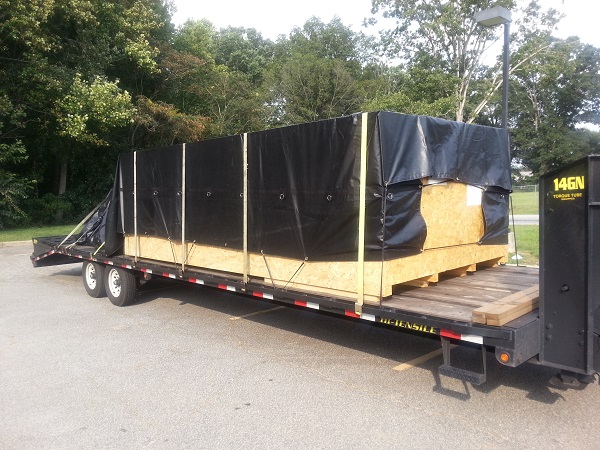
A heavy duty building material cover tarp should be evaluated as a system: base fabric, coating, seam design, edge construction, tie-down layout, stack geometry and site conditions all influence practical performance.
PVC coated polyester and selected PE structures can provide rain protection. Welded seams, sufficient overlap and a sloped installation help reduce leakage risk and water pooling.
Double-fold hems, webbing, corner patches, rope edges, D-rings and correctly spaced grommets distribute loads more effectively than unsupported holes at the edge.
Coated polyester can be selected for abrasion, repeated folding, dragging and fastening. Padding should still be used where the tarp contacts sharp steel or rough masonry.
Outdoor formulations and optional surface treatments can be discussed for extended sunlight and seasonal exposure. Final suitability depends on climate and service expectations.
Opaque colors help reduce direct visibility of stored goods. Color coding, printed identification and batch labels can also support storage organization and rental inventory control.
PVC coated fabric can be hot-air welded, high-frequency welded or sewn with a suitable waterproof design. This supports custom shapes, joined panels and repeat production.
The protection plan should reflect how the material reacts to moisture, sunlight, condensation, contamination and point loading.
Keep the stack elevated, form a drainage slope and allow airflow. Do not seal visibly wet timber under an airtight cover for extended periods.
Prioritize full rain exclusion, side protection and clean handling. Keep boards above ground moisture and inspect the cover after storms.
Use pallet elevation, side overlap and welded seams where needed. Avoid contact between the cover and standing water around the pallet base.
Protect from direct precipitation and UV exposure while avoiding puncture points. Confirm whether the packaged insulation needs ventilation.
Use wear pads at edges and design tie-downs so the cover does not rub continuously against sharp corners during wind movement.
Shield packaged roofing products from moisture and sun. Match the tarp dimensions to the pallet or rack to reduce loose fabric and flapping.
Use long-format covers with reinforced longitudinal edges, suitable fastening spacing and clear access points for staged installation.
Color-coded or printed covers can separate categories, hide inventory from casual view and support repeat deployment across warehouse yards.
DERFLEX website images are used below to show the relationship between coated fabric, finished covers and installation environments.
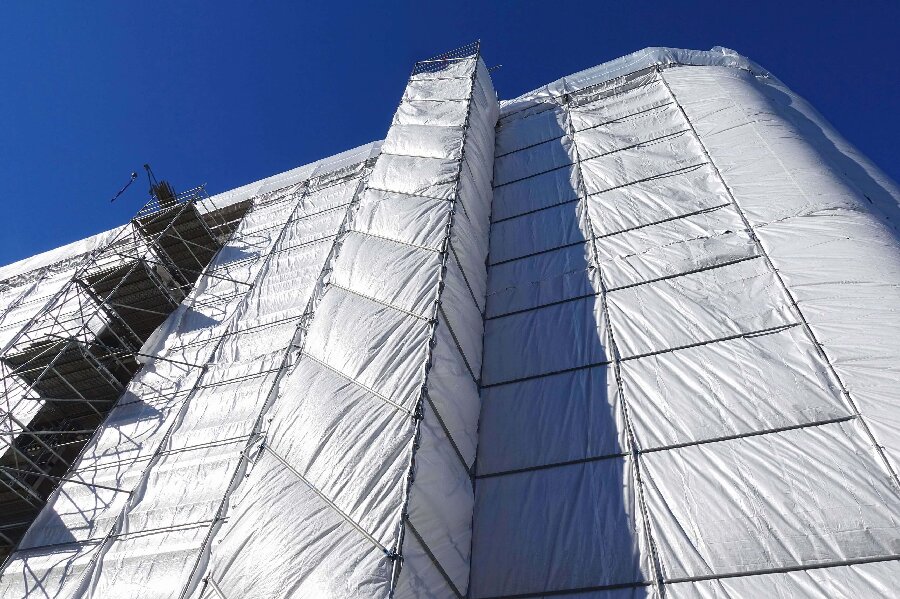
Large-area tarpaulin installed around a construction structure.
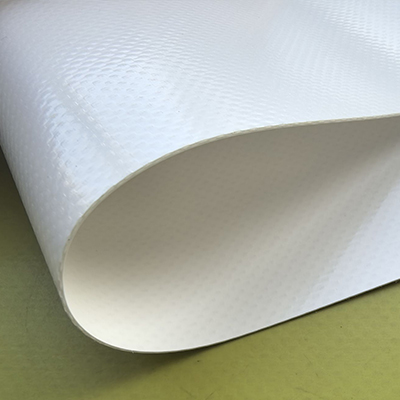
Weldable coated material for custom waterproof cover fabrication.
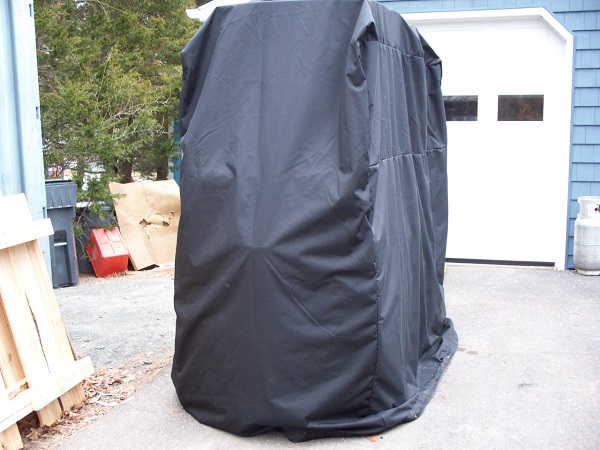
Shape and seam placement can be adapted for taller or irregular stacks.
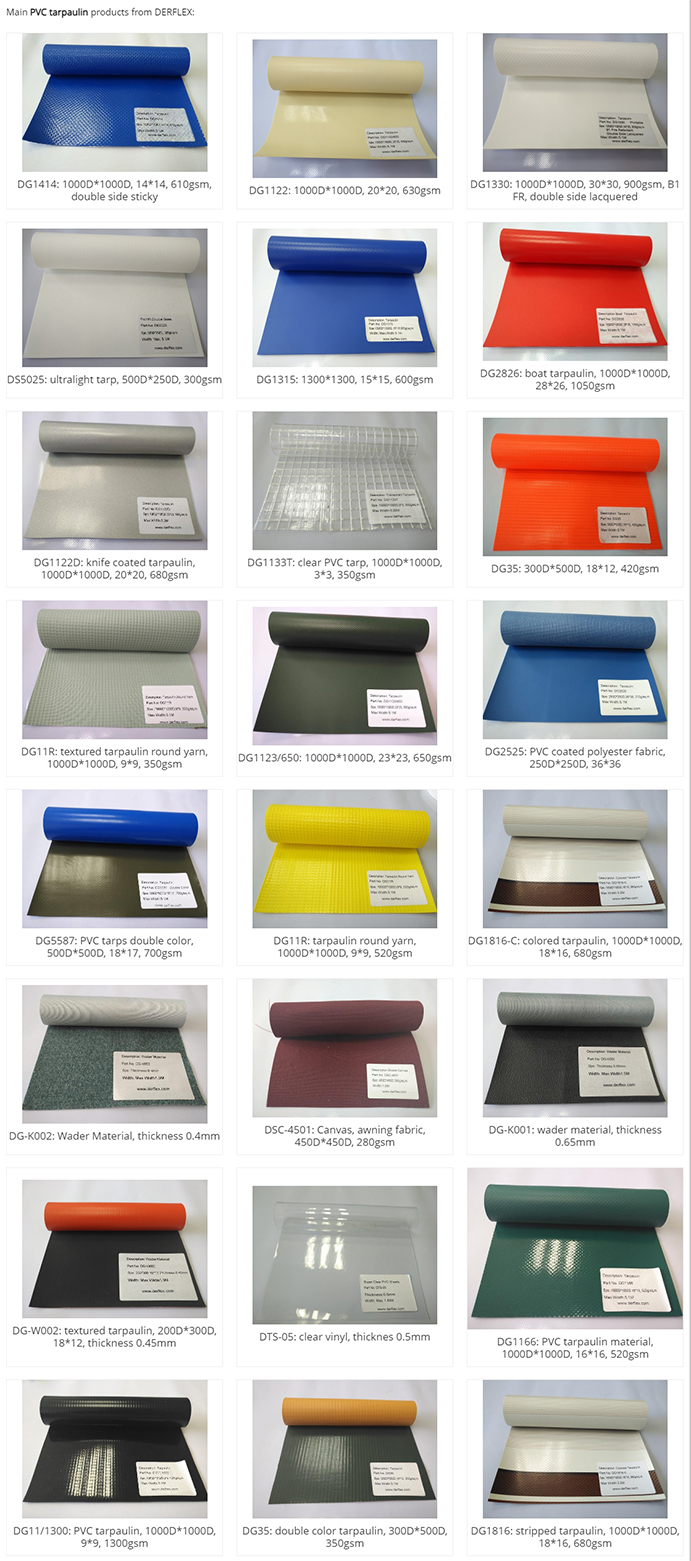
Multiple fabric structures, weights, surfaces and colors for project matching.
A common heavy duty structure uses a high-tenacity woven polyester base with PVC coating on both sides. The textile scrim provides dimensional stability and mechanical strength, while the coating creates a cleanable, weather-resistant and weldable surface.
For short-duration or cost-sensitive coverage, PE woven tarpaulin may be considered. For repeated handling, large welded panels, reinforced fixing points or longer outdoor exposure, coated polyester is often the more practical direction. The final choice should be based on the project rather than the material name alone.
Optional lacquer, UV direction, matte or glossy appearance, color matching and cleanability according to use.
Forms the external barrier and supports welding, printing and surface finishing.
High-tenacity yarn and selected weave density provide tensile stability and tear resistance.
Helps complete the barrier structure and provides a suitable surface against the covered stack.
The ranges below are intended for preliminary selection. Final construction, tolerances and test values should be confirmed on the approved specification sheet or sample.
| Item | Typical Options | Procurement Notes |
|---|---|---|
| Product | Building material cover tarp; roll material, cut panel, semi-finished sheet or finished cover | Confirm whether local fabrication or finished deployment is required. |
| Material | PVC coated polyester fabric; PE woven tarpaulin; selected flame-retardant direction | PVC coated polyester is commonly considered for repeated, welded and heavy-duty use. |
| Weight | Approx. 200–900gsm project range; coated polyester commonly 450–900gsm; custom structures by review | Do not select by GSM alone. Yarn, weave, coating, fixing points and contact surfaces also matter. |
| Base Fabric | Common polyester yarn directions include 500D, 840D, 1000D and 1300D | Construction is matched to required tensile, tear and handling performance. |
| Width / Size | Material widths commonly around 1.02–3.20m; wider finished covers joined by welding; custom length and shape | Provide finished dimensions, stack height, drape allowance, overlap and shrinkage tolerance. |
| Waterproof Design | Double-sided coated surface; hot-air or high-frequency welded seams; overlap and flap options | Waterproof performance is affected by seams, penetrations, installation slope and water pooling. |
| Reinforcement | Double-fold hems, webbing, corner patches, rope edges, straps, D-rings and rust-resistant grommets | Specify wind direction, fastening load and intended installation frequency. |
| Grommet Layout | Custom perimeter spacing and reinforced high-load positions | Closer spacing is not automatically better; the edge structure must support the intended load. |
| Surface / Color | Glossy, matte or lacquered; white, blue, green, gray, black, orange and custom matching | Color may support visibility, heat management, privacy or inventory coding. |
| Functional Options | UV, cold-resistant, anti-mildew, flame-retardant, anti-static or printable direction by specification | Provide the target standard, market and test method before production confirmation. |
| OEM / Packaging | Logo printing, labels, barcodes, woven bags, cartons, pallets and private-label packs | Suitable for building material distributors, tarp wholesalers, rental fleets and OEM brands. |
Reference data should not be treated as a guarantee for every construction. Request the current technical sheet, sample and applicable test report for the selected product.
DERFLEX can support custom building material cover tarp programs for project use, wholesale supply and private-label distribution.
Identify lumber, drywall, steel, bagged goods, insulation or mixed pallets and describe moisture or UV sensitivity.
Provide length, width, height, cover direction, access needs, slope, overlap and fastening positions.
Confirm PVC or PE direction, weight, color, surface, expected exposure, flame-retardant need and packaging.
Plan welded seams, hems, webbing, D-rings, corner patches, grommet spacing, labels and printed identification.
Review the specification, sample or drawing, then align batch inspection and packing for repeat supply.
The page covers the same product family for multiple B2B purchase models, avoiding separate thin pages for each synonym.
Daily protection for staged lumber, drywall, insulation, tools, roofing products and temporary outdoor storage zones.
Reusable covers for yard inventory, pallet handling, branch transfers, seasonal storage and customer delivery staging.
A building material cover tarp wholesale program can include standard size families, custom colors, labels, barcodes and export packaging.
Color-coded covers, repeated sizes and repairable PVC structures for short-term projects and managed site equipment fleets.
Custom shapes for panels, components and partially assembled modules during yard storage and transport preparation.
Protection for mixed project materials awaiting installation, dispatch or transfer between factories, yards and worksites.
Separate same-day rain protection, several-week project storage and repeated seasonal use. Longer exposure usually requires stronger UV, coating and reinforcement direction.
Confirm whether the product is damaged by liquid water, humidity, UV, dust or condensation. Some goods need a waterproof surface plus controlled ventilation.
Flat stacks encourage water pooling. Add a ridge, support or slope and include enough drape without leaving excessive loose fabric that can flap in wind.
Identify sharp steel, timber corners, pallet edges and rough concrete. Add wear patches, sleeves or padding rather than relying on fabric weight alone.
Explain whether the cover uses ropes, elastic cords, straps, sandbags, rack hooks or fixed D-rings. The hem and hardware should match the load path.
List the target market, flame-retardant standard, restricted-substance requirement and test method. Confirm current document availability for the selected grade.
Both models have appropriate uses. The difference is whether the buyer needs a quick stock size or a repeatable specification linked to a project and purchasing program.
Quality control is more useful when the inspection items, methods and acceptance criteria are agreed before production.
Review yarn construction, weave, roll identification and relevant incoming material records according to the selected product.
Check weight, width, appearance, color, coating condition, flatness and other agreed roll-level items.
Inspect welded seams, hems, hardware positions, dimensions, printed marks and packing against the approved drawing or sample.
Discuss technical sheets, declarations, flame-retardant reports or third-party test documents required for the selected grade and market.
Six relevant internal resources help buyers compare tarp structures, performance grades and adjacent construction applications.
Jobsite covers for scaffolding, temporary roofing, equipment and exposed work areas.
Core MaterialMaterial structures, weights, widths and application directions for tarp fabrication.
Technical FabricCoated textile construction for weldable covers and industrial outdoor products.
Industrial UseHeavy-duty cover solutions for machinery, storage, warehouses and project protection.
Performance GradeStronger tarp directions for demanding exposure, fastening and repeated handling.
Product FamilyCustom PVC tarp material and finished cover programs for B2B procurement.
Practical answers for contractors, distributors, wholesalers and OEM buyers.
It is used to shield lumber, drywall, insulation, steel, cement bags, pipes, roofing products and other construction supplies from rain, snow, dust, sunlight and jobsite contamination during storage or staging. The installation should also address drainage, ventilation, sharp edges and anchoring.
Yes. DERFLEX can discuss custom finished size, material weight, color, welded seams, hems, grommet spacing, D-rings, webbing, corner reinforcement, access flaps, printing, labels and export packaging. A drawing or stack dimensions help define the cover.
A waterproof coated fabric can form an effective rain barrier, but practical leakage risk also depends on seams, holes, overlaps, slope, tie-downs and water pooling. Welded seams and a water-shedding installation should be specified where rain protection is critical.
PVC coated polyester is commonly considered for repeated handling, reinforced edges, welding and longer outdoor exposure. PE woven tarpaulin may suit short-term, lighter or cost-sensitive coverage. The correct choice depends on service duration, climate, handling and the goods being covered.
Keep the materials elevated, provide a drainage slope, prevent the tarp from sitting in standing water and consider airflow around the stack. Do not trap visible moisture under a tightly sealed cover for extended periods. Follow the material supplier's storage instructions.
DERFLEX can support bulk and repeat B2B programs for distributors, contractors, rental companies and private-label brands. Orders can be discussed by standard size family, custom specification, logo, labels, barcode, bag or carton packing and pallet configuration.
DERFLEX can review your use case and propose a practical PVC or PE material direction, finishing plan and packaging method for custom, wholesale or OEM supply.