


TPU Coated Polyester Fabric — Waterproof, Weldable Polyester Textile
DERFLEX supplies TPU coated polyester fabric for OEM products that need a strong textile reinforcement together with a flexible thermoplastic sealing surface. Polyester base cloth supports dimensional stability and repeatable panel control, while the TPU layer can provide waterproofing, airtight sealing, abrasion resistance and weldable processing when the complete structure is matched to the finished product.
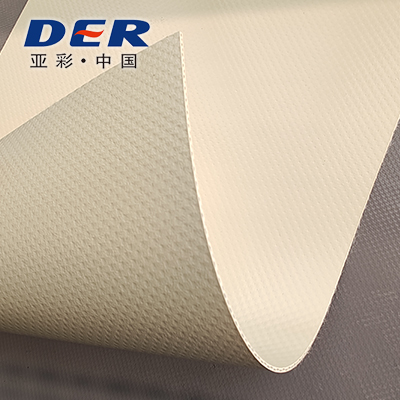
What is TPU coated polyester fabric?
TPU coated polyester fabric is a reinforced technical textile made by bonding thermoplastic polyurethane to a polyester base fabric. The polyester carries tensile load and helps control stretch and panel shape; the TPU surface supplies the waterproof and heat-weldable barrier. It is used for waterproof bags, inflatable components, flexible tanks, protective covers, medical air systems and industrial products where sealed seams and repeatable conversion matter.
The Polyester Base and the TPU Layer Do Different Jobs
A reliable specification treats the textile, polymer and seam process as one system. “TPU coated polyester” is not one fixed construction.
Single-side and double-side structures can be discussed. The correct layout depends on air or liquid retention, weight target, cleanability, seam design and end-use exposure.
A common sourcing mistake: “polyester” can refer to two different things
In TPU coated polyester fabric, “polyester” normally describes the textile substrate. Separately, the TPU coating itself can also be formulated as a polyester-based TPU or a polyether-based TPU.
These are independent specification decisions. A project can use a polyester woven base with a polyether TPU surface for humid or water-contact service, or a polyester woven base with polyester TPU where abrasion, mechanical strength or some oil-related exposure is the priority.
That distinction should be clarified before quotation because it affects hydrolysis behavior, surface durability, welding trials, cost and end-use suitability.
Polyester Base Fabric
Polyester is frequently selected when the converter wants good dimensional stability, repeatable cut-panel geometry and controlled handling in industrial roll production.
TPU Chemistry
Polyether and polyester TPU directions should be evaluated against water, humidity, abrasion, oil, cleaning chemicals, temperature and repeated flexing rather than chosen by name alone.
Joining Surface
Coating side, layer thickness, hardness, finish and seam overlap all influence the welding window. Sampling on the actual machine is part of material selection, not an afterthought.
For the broader nylon-and-polyester platform, see DERFLEX TPU coated fabric. This page is intentionally narrower and focuses on polyester-reinforced structures.
When TPU Coated Polyester Is a Practical Direction
Polyester reinforcement is especially useful when the finished product must hold panel geometry, run through repeat production and still provide a weldable TPU surface.
Dimensional Stability
Useful for larger cut panels, covers, containers and welded assemblies where uncontrolled stretch can change seam alignment, finished dimensions or production repeatability.
Industrial Converting
Polyester-base roll goods can be matched to slitting, cutting, HF/RF welding, hot-air welding, heat sealing or sewing-plus-sealing routes depending on the selected TPU structure.
Waterproof & Airtight Systems
The TPU barrier can support waterproof or airtight finished goods, but the final result depends on seam construction, machine settings, valve or fitting design and production inspection.
Abrasion & Surface Protection
TPU is commonly selected where repeated rubbing, folding, packing or field handling would be too demanding for a basic water-repellent textile surface.
OEM Appearance Control
Matte, glossy, embossed and textured directions can be discussed together with custom color, width, roll format and packaging for branded product programs.
Multi-Application Platform
The same material family can be engineered toward bags, inflatable structures, bladders, machine covers and technical containers by changing substrate, TPU layer and testing priorities.
If your product needs a softer, more drapable or tear-focused reinforcement, compare this direction with DERFLEX TPU fabric options using nylon or polyester substrates.
Choose the Structure from the Finished Product Backward
The table below is a buyer-oriented selection framework, not a universal datasheet. Final values should be confirmed by samples, welding trials and end-product testing.
| Application Direction | Polyester Base Direction | TPU / Coating Direction | Primary Procurement Focus |
|---|---|---|---|
| Waterproof dry bags & equipment bags | Light to medium denier polyester where panel stability and repeatable cutting matter | Single- or double-side TPU depending on seam and interior requirements | Fold feel, weld appearance, hydrostatic performance, abrasion, color consistency |
| Inflatable products & air chambers | Medium to heavy reinforcement selected around pressure, size and fatigue | Double-side TPU commonly evaluated for sealing and cleanability | Air retention, seam peel, puncture, pressure cycling, valve bonding |
| Flexible tanks & liquid bladders | Heavy polyester structures for load distribution and dimensional control | Polyether or polyester TPU chosen after liquid compatibility and hydrolysis review | Liquid compatibility, seam load, fold fatigue, abrasion, field repair route |
| Industrial covers & sleeves | Polyester selected for shape control, handling and repeat roll conversion | Single-side TPU can be sufficient where air retention is not required | Abrasion, cleanability, cold flex, dimensional stability, price-performance balance |
| Medical air systems | Structure chosen around soft handling, air retention and processing consistency | TPU chemistry must be matched to cleaning, humidity and project compliance needs | Air leakage, seam repeatability, surface cleaning, biocompatibility route if required |
| Marine / rescue components | Reinforcement selected around load, folding and field deployment | Water / hydrolysis-oriented TPU direction often evaluated | Cold flex, water exposure, UV plan, seam integrity, safety validation |
For dedicated air-holding material development, see DERFLEX TPU inflatable fabric.
TPU Coated Polyester Fabric Specification Guide
These are current DERFLEX platform directions for TPU coated fabric. Availability for a specific polyester construction must be confirmed during quotation and sample approval.
| Specification Item | Available / Typical Direction | How to Specify It Correctly |
|---|---|---|
| Base Textile | Polyester woven fabric; common project directions include 210D, 420D, 600D, 840D, 1000D, 1680D and custom constructions | Select around finished product size, tensile/tear load, panel stretch, fold behavior and target weight. |
| TPU Chemistry | Polyether TPU or polyester TPU direction | Polyether is often evaluated for humidity, hydrolysis and water-contact service; polyester TPU is often evaluated for abrasion, mechanical strength and some oil-related use. |
| Coating Side | Single-side or double-side TPU | Use double-side when both faces need sealing, cleanability or stronger airtight / liquid-holding performance. |
| Total Weight | Approx. 90–1500 gsm depending on base denier and TPU construction | Do not choose GSM alone. Compare strength, layer thickness, flexibility and seam requirement. |
| Thickness | Approx. 0.05–1.2 mm or customized | Thickness changes weld margin, stiffness, barrier behavior, hand feel and cost. |
| Roll Width | Common 1.4–3.2 m direction; custom width by construction | Wider rolls can reduce seams and scrap for large panels, but machine and coating limitations must be checked. |
| Surface | Matte, glossy, smooth, embossed or textile-texture direction | Specify cleanability, anti-slip need, visual standard, print/branding method and blocking resistance. |
| Color | Standard and custom color direction | Provide Pantone or physical standard and define acceptable batch tolerance before mass production. |
| Processing | HF/RF welding, hot-air welding, heat sealing, ultrasonic evaluation, sewing plus seam sealing where appropriate | Confirm on the buyer’s actual machine, seam overlap and product geometry before bulk approval. |
| Functional Direction | Hydrolysis, UV, low-temperature, oil/chemical, anti-mildew, flame-retardant or other project-specific directions | State the real exposure medium, duration, temperature and required test method; do not rely on a generic “resistant” label. |
Final technical data, tolerances and compliance documentation should be confirmed against the selected grade, approved sample and finished-product requirements.
Specify the Fabric and the Seam Process Together
A roll can look correct and still fail in production if the TPU surface, layer thickness, machine route and seam geometry were never matched during sampling.
HF / RF Welding
Many TPU structures can be evaluated for high-frequency or radio-frequency welding. Processability depends on TPU chemistry, coating side, thickness, electrode geometry, overlap width, dwell time, pressure and cooling.
Useful when
- Repeatable sealed seams are central to the product.
- The converter needs fast cycle times on compatible TPU surfaces.
- Inflatable, bladder or waterproof assemblies require controlled seam strength.
Hot-Air / Heat Welding
Hot-air and related heat-sealing routes can be practical for bags, covers, large panels and field-fabricated assemblies. The usable temperature-and-speed window should be developed on the actual material.
Useful when
- Long continuous seams or large panels must be converted efficiently.
- The equipment route is already established in the buyer’s factory.
- Seam appearance and overlap control can be validated during sampling.
Do not approve a TPU polyester roll from material data alone
Before mass production, run a trial using the intended machine, electrode or nozzle, seam overlap, corner geometry and real product load. Check seam peel or shear, leakage, visual scorching, surface sticking, dimensional change and repeatability across multiple welds. For pressure, rescue, medical or liquid-holding products, finished-product validation remains the responsibility of the finished-product manufacturer.
Buyers considering film-laminated structures can compare TPU laminated fabric when a bonded TPU film layer is preferred over a coating-led construction.
Polyether TPU vs Polyester TPU on a Polyester Textile
The polyester base fabric can stay the same while the TPU chemistry changes. Neither TPU family is universally better.
Polyether TPU Direction
- Often evaluated for humid, wet or repeated water-contact environments.
- Common direction where hydrolysis resistance is important.
- Useful for marine, outdoor inflatable and selected medical air applications.
- Still requires verification for UV, disinfectants, saltwater, temperature and long-term service conditions.
Polyester TPU Direction
- Often evaluated for abrasion and mechanical performance.
- Can be considered for industrial protection or some oil-related environments after compatibility testing.
- Useful where surface durability and bonding strength are important.
- Hot/wet exposure and hydrolysis risk should be reviewed before final approval.
Where TPU Coated Polyester Fabric Is Used
The polyester substrate is particularly attractive when waterproof or airtight performance must be combined with controlled panel dimensions and repeat manufacturing.
Waterproof Bags
Dry bags, waterproof backpacks, panniers, motorcycle luggage, tool bags and protective cases can use TPU coated polyester where welded seams, abrasion resistance and stable panel cutting matter.
Inflatables & Air Chambers
Air cushions, lifting bags, inflatable structures and selected rescue systems can use double-side TPU polyester constructions when air retention and seam repeatability are validated.
Flexible Tanks & Bladders
Water, industrial liquid and selected oil-related containment projects may use heavy polyester reinforcement with a TPU surface chosen around the exact medium, pressure and temperature.
Industrial Covers
Machine covers, sleeves, cleanable flexible barriers and protective sheets benefit from polyester dimensional control and TPU surface toughness where standard coated cloth is not sufficient.
Medical Air Systems
Pressure cushions, air cells and mattress components may use TPU coated textiles when sealing and cleanability are required. Application-specific regulatory and biocompatibility requirements must be confirmed separately.
Marine & Outdoor Equipment
Waterproof storage, buoyancy-related components, outdoor protective products and field-deployed equipment can use TPU polyester structures selected for water exposure, cold flex and repeated folding.
For bag-specific materials and lighter welded roll-top constructions, see TPU dry bag fabric.
TPU Fabric Image Pack
Actual DERFLEX material and application images help buyers compare surface, reinforcement direction and end-use context.
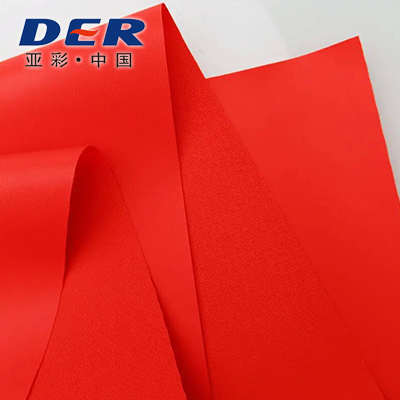
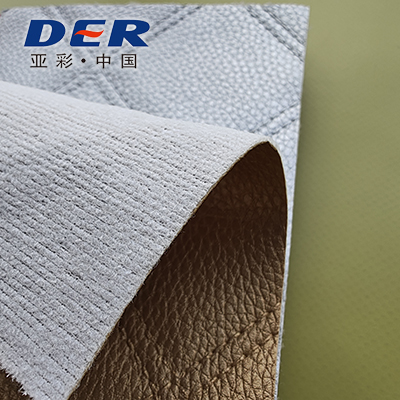
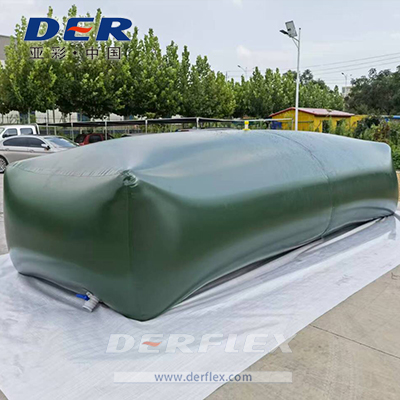
Need transparent layers, windows or lamination film? DERFLEX also supplies clear TPU film roll for transparent, flexible and weldable composite development.
TPU Coated Polyester vs TPU Coated Nylon
Both can be strong choices. The better reinforcement depends on the finished product’s geometry, load, flex pattern and handling requirements.
| Decision Factor | TPU Coated Polyester | TPU Coated Nylon |
|---|---|---|
| Dimensional stability | Often preferred where panel shape and low stretch are important. | Can be more flexible and drapable depending on weave and denier. |
| Large welded panels | Useful where controlled panel dimensions help seam alignment and repeat production. | Useful when flexibility and tear performance are higher priorities. |
| Foldability / soft hand | Can be engineered soft, but substrate tends to feel more dimensionally controlled. | Commonly selected for soft folding and flexible outdoor/inflatable products. |
| Industrial covers / containers | Strong fit for protective covers, flexible containers, sleeves and sheets. | Used when softer handling or high tear performance is required. |
| Inflatable / rescue gear | Suitable when reinforcement and pressure-related design support it. | Frequently evaluated where folding, tear strength and flexible handling matter. |
| Welding | The TPU surface—not only the base textile—determines the welding route. Both structures should be trial-welded on the actual equipment. | |
Five Ways TPU Polyester Projects Go Wrong Before Production Starts
Most avoidable failures come from an incomplete specification rather than from the word “TPU” itself.
Buying by GSM Only
Two fabrics with the same weight can use different base denier, TPU thickness and coating distribution. Compare structure, not weight alone.
Confusing Polyester Base with Polyester TPU
The textile substrate and TPU chemistry are separate. State both in the purchase specification.
Skipping Weld Trials
A generic “HF weldable” description does not define electrode, overlap, time, pressure or seam strength.
Using Generic Chemical-Resistance Claims
Oil, fuel, disinfectant, saltwater and process chemicals are not one exposure. Test the exact medium at the intended temperature and duration.
Approving Color Before Surface
Gloss, embossing, texture, TPU hardness and blocking behavior can change perceived color and appearance after welding or folding.
Ignoring Repeat-Order Controls
B2B programs should record, approved sample, width, weight, surface, color reference, roll packing and agreed inspection points for future batches.
What to Send DERFLEX for a Useful Quotation
A clear application brief reduces incorrect samples and makes comparison between candidate structures more meaningful.
Finished Product Information
- End product and application environment
- Whether it must hold air, water, oil or only block rain
- Product dimensions, panel size and expected mechanical load
- Outdoor / indoor use and temperature direction
- Exposure to water, humidity, UV, oil, fuel, disinfectant or chemicals
- Required service or test standards, if already defined
Material & Conversion Information
- Polyester denier or reference fabric if known
- Target GSM or thickness range
- Single-side or double-side TPU preference
- Polyether / polyester TPU preference if specified
- HF/RF, hot-air, heat-seal or other joining method
- Width, color, surface finish, roll length and estimated quantity
Requirement Review
Define the product, exposure, seam route and performance priorities.
Structure Matching
Select polyester reinforcement, TPU chemistry, layer layout, surface and width.
Sample & Weld Trial
Confirm appearance, hand, seam behavior, leakage and critical mechanical checks.
Bulk Specification
Freeze the approved construction, tolerances, packing and repeat-order inspection points.
Manufacturer-Level Support for Polyester TPU Roll Programs
The value of a technical textile supplier is not a list of adjectives. It is the ability to translate the finished product into a repeatable material specification.
Application-Based Selection
DERFLEX can review the application, polyester reinforcement direction, TPU chemistry, coating side and welding route before a sample is selected.
Coated & Laminated TPU Platform
Buyers can compare coated fabric, laminated fabric and film structures instead of being forced into one material format for every program.
Custom Roll Supply
Width, weight, layer direction, color, surface, roll length and packing can be discussed around converter requirements and repeat production.
Sample Validation
Trial welding and application testing help establish a practical approval route before bulk production.
Quality-Control Planning
Appearance, width, weight, surface consistency, coating condition and conversion suitability can be included in the agreed acceptance plan.
B2B Project Communication
The quotation can be built around the actual product requirement, target test plan, roll format, quantity and export destination.
TPU Coated Polyester Fabric FAQ
Short, direct answers to the specification questions that usually come before sampling and welded-product development.
Is TPU coated polyester fabric waterproof?
The continuous TPU layer can provide a waterproof barrier. For a finished waterproof product, the seam, valve, fitting, fold design and welding process must also be sealed and tested. “Waterproof fabric” does not automatically make every finished assembly waterproof.
Can TPU coated polyester fabric be HF or RF welded?
Many TPU coated polyester structures can be evaluated for HF/RF welding. The usable process window depends on TPU chemistry, coating thickness, surface finish, electrode shape, overlap design, pressure and dwell time. Trial welding on the intended equipment is recommended before bulk approval.
What is the difference between TPU coated polyester and TPU coated nylon?
TPU coated polyester is often selected for dimensional stability, controlled panel geometry and industrial roll conversion. TPU coated nylon is often selected for softer folding and tear-focused applications. The TPU coating itself can be similar; the reinforcement changes how the composite handles load and flex.
Does “TPU coated polyester” mean the TPU is polyester-based?
Not necessarily. In the product name, polyester usually refers to the textile substrate. The TPU layer can be either polyether-based or polyester-based. Buyers should specify the substrate and TPU chemistry separately.
Should I choose polyether TPU or polyester TPU?
Polyether TPU is often evaluated for humid, wet and hydrolysis-sensitive environments. Polyester TPU is often evaluated where abrasion, mechanical strength or certain oil-related exposures matter. The exact grade should be confirmed against the service medium, temperature, duration and test requirements.
Should TPU polyester fabric be coated on one side or both sides?
Single-side coating can reduce weight when only one barrier surface is needed. Double-side coating is commonly evaluated for airtight inflatables, flexible tanks, medical air cells and products where both surfaces benefit from sealing or cleanability.
What GSM or thickness should I choose?
There is no universal “best” GSM. Start with product size, pressure or load, abrasion, fold behavior, seam method and target weight. Two materials at the same GSM can perform differently because their textile denier and TPU layer distribution are different.
What information is needed for a custom quotation?
Send the application, target polyester denier or reference sample, coating side, TPU chemistry if specified, thickness or GSM, width, color, surface finish, welding method, exposure environment, test requirements, order quantity and destination.
Continue the TPU Material Selection
These verified DERFLEX pages cover adjacent material formats and application-specific TPU structures.
Build a TPU Coated Polyester Fabric Around Your Product
Tell DERFLEX what you are manufacturing, whether the material must hold air or liquid, the target polyester denier or GSM, coating side, width, color, welding method, exposure conditions and required testing. The next step should be a sample that matches the real conversion process—not a generic roll selected only by price.