For in-house fabricators
Specify fabric construction, surface, usable width, length, color and packing. Your team controls nesting, panel joins, reinforced edges and local hardware installation.




Industrial coated textiles · OEM conversion supply
Buy material by the roll—built around the way your factory cuts, welds, sews and ships. DERFLEX supports PVC-coated polyester fabric programs for equipment covers, workshop partitions and large-format industrial enclosures.
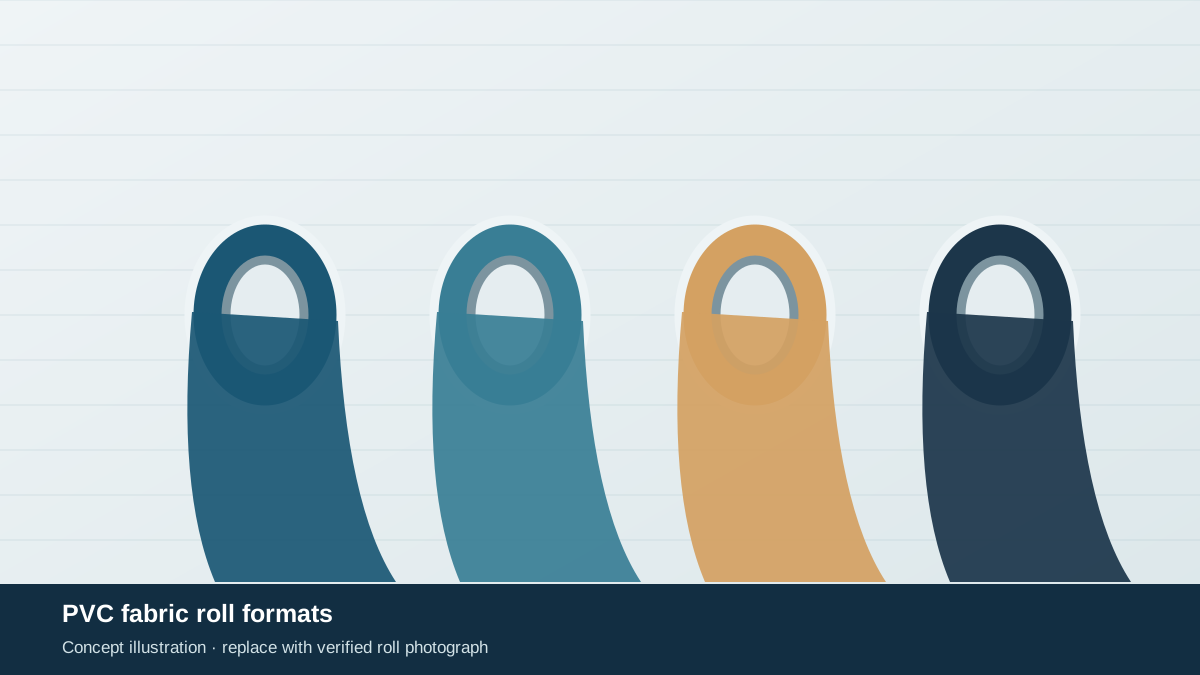
01 / Purchase format
PVC fabric rolls are continuous coated textile materials that an industrial cover fabricator converts into made-to-measure products. A roll quote is not a quote for stitched, welded or installed covers.
Specify fabric construction, surface, usable width, length, color and packing. Your team controls nesting, panel joins, reinforced edges and local hardware installation.
Cut-panel availability requires separate confirmation and an approved cutting drawing. A fabric roll does not inherently include panels or finished measurements.
Seams, hems, openings, eyelets, tracks, zippers, fitting parts or frames are separate specifications. Confirm whether finishing services are in the agreed scope.
Procurement distinction: When comparing suppliers, align unit prices (per running meter, square meter or roll), nominal versus usable width, joining allowance and packing. The cheapest price per roll is not necessarily the lowest converted cost.
02 / Engineering selection
Polyester scrim carries much of the tensile load; the PVC layer adds a water barrier and surface needed for fabrication. Their combination determines how material behaves at seams, folds, edges and during use.
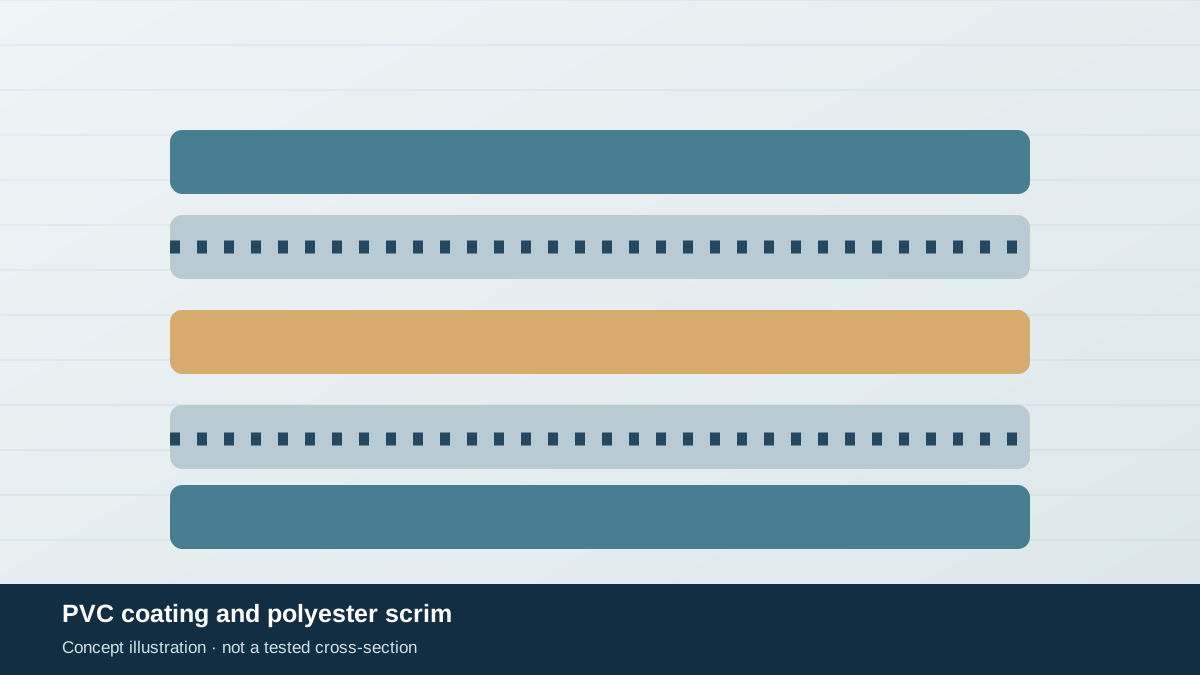
For high-cycle roll-up partitions, test repeated bending and edge wear. For static equipment covers, check abrasion at machine contact points and access-opening reinforcement. For large outdoor covers, prioritize panel load paths, attachment strategy and drainage details.
Consider lighter constructions where frequent removal, folding and worker handling are important. Validate durability at contact points instead of relying on GSM alone.
Balance surface cleaning, seam performance and handling. Select visual opacity and any flame-retardant requirement according to the intended installation.
Review scrim strength, tear resistance, load-bearing interfaces, reinforcement patches and handling equipment. Heavier construction is an option, not a substitute for proper design.
03 / Commercial specification
The usable material you can cut is determined by practical width, quality exclusions, allowable joints and uninterrupted length—not simply the nominal number on the quotation.
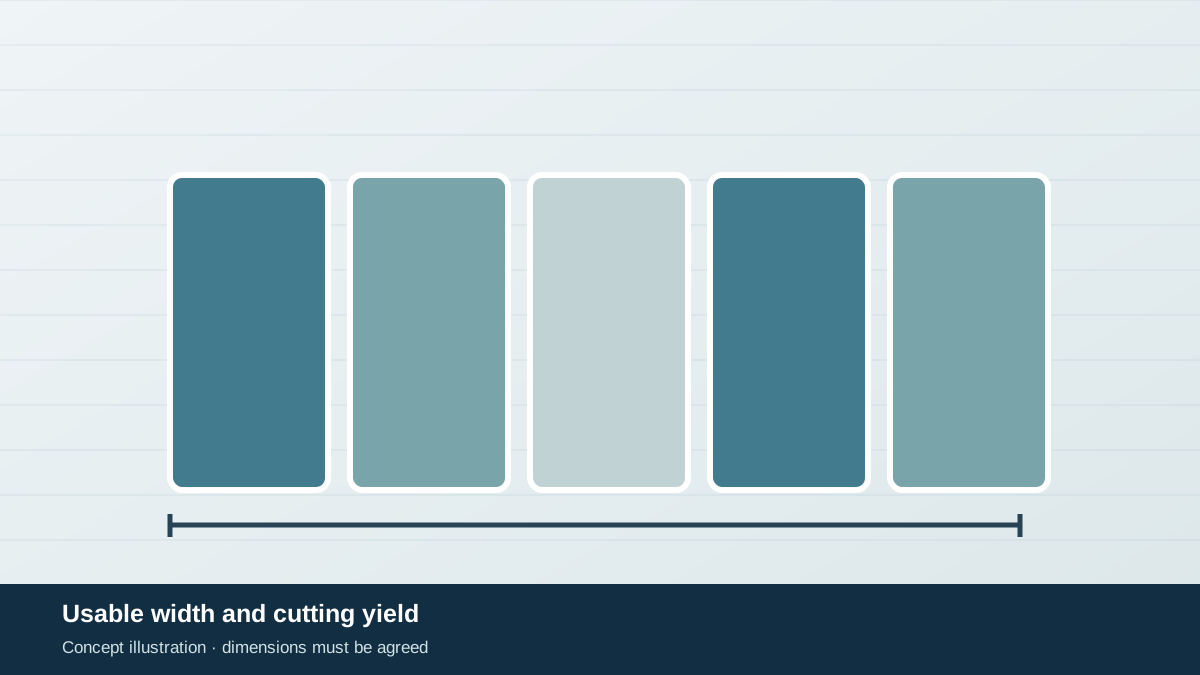
Suppose a cover panel requires a 2.40 m cut width. A quoted 2.50 m roll may appear suitable, but only if the minimum usable width after edge exclusions is at least 2.40 m plus any process allowances. Ask for a defined usable-width guarantee and cutting tolerance.
Illustrative area: 2.50 m × 50 m = 125 m² nominal roll area. If a hypothetical 0.05 m per edge is excluded, the remaining 2.40 m × 50 m = 120 m² before seams, joints and defects. This is an example, not a DERFLEX tolerance or actual factory yield.
| RFQ field | What the fabricator should state | Agreement / inspection point |
|---|---|---|
| Fabric structure / GSM | Approved reference sample or target performance envelope | Nominal mass, declared tolerance and grade ID |
| Nominal roll width | Requested production width and minimum cuttable width | Measurement method, edge exclusion and variation |
| Roll length | Target running meters and handling capacity | Length tolerance and core/roll weight |
| Join / splice policy | Maximum number and location of allowed joints | Marking, permitted method and minimum uninterrupted length |
| Surface / color | Approved swatch, gloss or matte, face orientation | Color reference and visual inspection rules |
| Conversion process | Hot-air, HF, sewing or combined process | Production-line sample and accepted seam method |
| Packaging | Core, roll orientation, pallet, protective wrap | Labels, container loading and roll-edge protection |
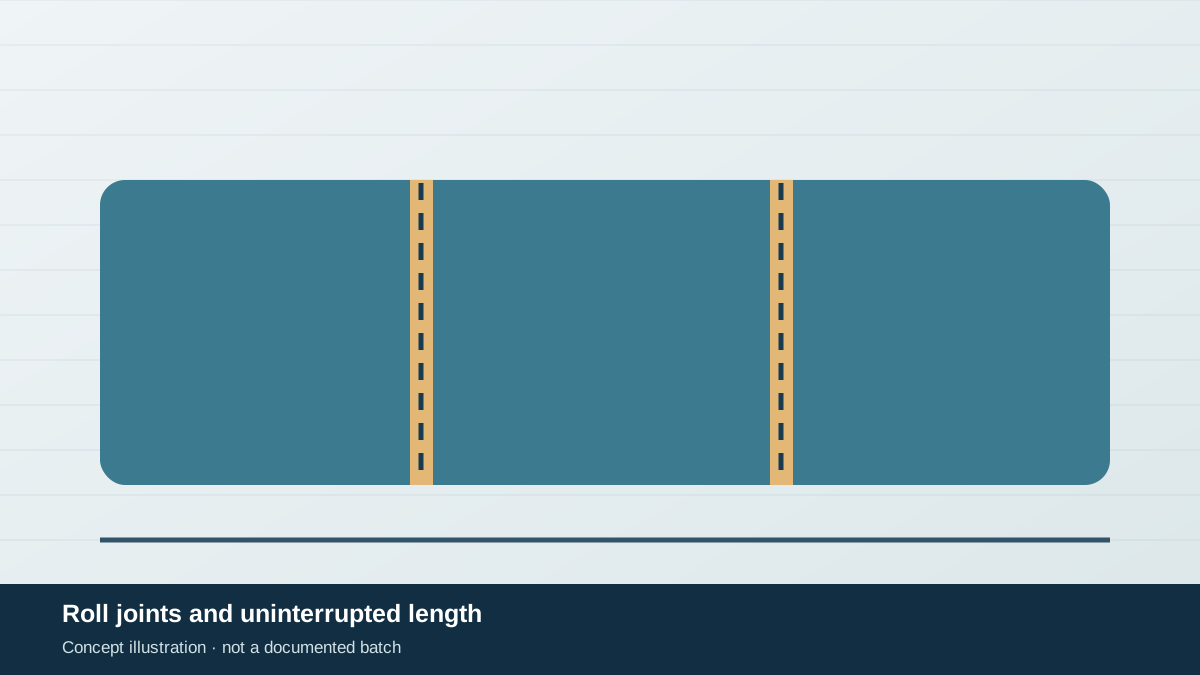
Ask whether a roll is continuous, spliced or may contain marked joins. A fabricator producing large one-piece panels may need an uninterrupted length requirement, whereas a smaller-cover line can sometimes accept marked segments.
Record how a joint is identified on roll packaging and material, how accepted length is measured, and the process for nonconforming rolls. Document inspection before cutting to prevent a join from landing in a highly loaded panel.
04 / Production and documentation
When a cover maker repeats the same product every month, production control depends on being able to connect a roll to an agreed grade, approved sample and inspection record.
Discuss whether a batch-level certificate of analysis, quality inspection summary or relevant third-party report is required. Documentation should correspond to the actual production grade, not a broadly similar material.
Specify wrap materials, core integrity and handling precautions that limit scuffs, moisture ingress, edge crushing and dirt during export.
Position labels so each roll can be checked before unpacking or loading into a cutting and welding workflow.
For a new grade or color, inspect a production-representative trial for surface, width, cutting flatness and seams.
05 / Use cases
One coated-fabric family can serve different products only when the chosen grade fits the mechanical, environmental and fabrication conditions of that specific application.
Removable protection for idle assets, maintenance zones and plant equipment. Review sharp corners, abrasion pads, access flaps and local temperature exposure.
Flexible separation for dust, spray or process zoning. Consider cleaning, color/opacity, hanging interfaces, movement cycles and applicable fire requirements.
Fabricated enclosure panels or oversized protective sheets. Plan welding seams, uplift loads, water run-off, edge tie-downs and repairability with the final fabricator.
Application note: Waterproof-coated fabric alone does not make a fully waterproof finished enclosure; joints, edges and openings need proper design. Fabric flame-retardant test results do not certify a complete curtain system. Do not use PVC roll fabric as a lifting device or structural element without separately engineered approval.
06 / Trial validation
A reliable approval sample is not simply a color chip. It should let your operator verify the interactions that determine scrap, seam failures and finished-cover performance.
An actionable result is a purchase-ready material specification—not merely a promise of “heavy duty” quality. Agree the grade, minimum acceptable properties, test methods, widths, splice policy, packaging and documentation.
For existing covers, share an offcut or sample of the fabric currently used, the point where it fails, the conversion machine and your target improvement. DERFLEX can then discuss a matching grade and a realistic qualification route.
Request a Material Trial Discussion07 / RFQ preparation
Send a concise application brief. You do not need a complete engineering specification to begin; an existing material sample, drawing and target purchase quantity help establish a starting grade.
| Information to send | Example of a useful answer |
|---|---|
| Fabricated product | Removable compressor cover / workshop welding partition |
| Material direction | PVC-coated polyester, target GSM or existing reference sample |
| Panel and roll widths | Finished panel size; minimum usable roll width |
| Joining process | Hot-air weld, high-frequency or sewn seam |
| Quantity | Initial trial running meters; expected repeat volume |
| Roll constraints | Desired length, joint policy, cores, pallet format |
| Environment | Indoor / outdoor, cleaning exposure, cold, UV or FR needs |
| Commercial requirements | Delivery country, target shipment window, required reports |
Material construction and coating formulation set the baseline. Width and cuttable yield, color and finish, order size, joining and inspection limits, trial expectations and export packaging can change the total delivered cost.
For fair comparisons, request the same quotation unit and delivery term from all suppliers. Confirm minimum order and lead time for the exact grade instead of assuming one catalogue figure covers every custom build.
Send your width, fabrication method, color, trial quantity and application photo or drawing.
08 / Buyer questions
Yes. This page concerns PVC-coated polyester roll material for fabricators that perform their own cutting, welding, sewing and fitting. Pre-cut panels or completed covers should be specified as separate quote items and confirmed before purchase.
Provide the end use, target fabric weight or sample, usable roll width, color, surface, annual or trial quantity, destination and conversion method. Add roll length, joint allowance, labeling and packing requirements when these affect your line.
No. Higher mass may improve some protection requirements but can increase handling effort and affect folding. Select fabric against actual tensile, tear, abrasion, seam and environmental needs using comparable test methods.
PVC-coated polyester is commonly processed by hot-air or high-frequency welding, but the selected grade must be qualified on your own equipment. Confirm seam strength, peel behavior, settings and aged performance on production-representative samples.
State nominal and minimum usable width, permitted width tolerance, target roll length, allowed joints per roll, marking method and minimum uninterrupted length. Agree these points in the approved purchase specification; do not infer them from nominal width alone.
Application-specific UV, flame-retardant or other finishes may be discussed. Request a grade-specific test report stating the standard, method, specimen and validity; a material test does not certify the complete installed enclosure.
09 / Explore DERFLEX
Compare source-material families, roll supply options and adjacent OEM applications before finalizing your cover-fabric specification.