News
Company News

Truck Roof Tarpaulin Fabric for OEM Trailer Manufacturers | DERFLEX

Update:2026/11/15 18:09:11 Views:
Truck Roof Tarpaulin Fabric for OEM Trailer Manufacturers | DERFLEX
OEM trailer systems / PVC-coated polyester roll goods

Truck Roof Tarpaulin Fabric for OEM Trailer Manufacturers

Specify the roof fabric around your trailer architecture—not around GSM alone. DERFLEX supports discussions on coated polyester roll materials, welded panel patterns, edge reinforcement and repeatable production for commercial trailer roof cover programs.

For trailer body builders • roof-cover converters • system integrators • fleet accessory manufacturers

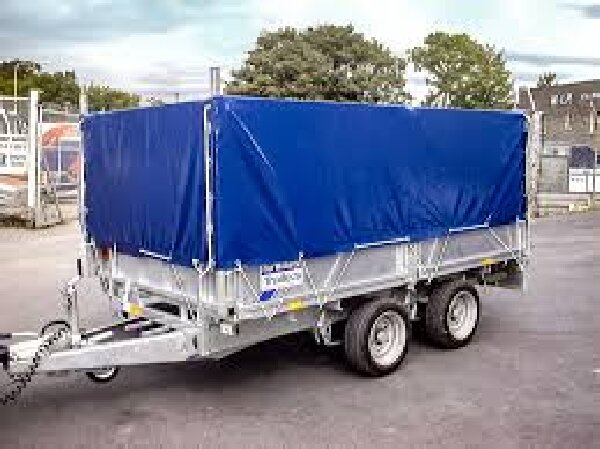
DERFLEX trailer tarpaulin product photograph for OEM trailer cover material selection
DERFLEX trailer tarpaulin product photograph. Roof seam geometry and system approval must be confirmed from your OEM drawings.
Roof-specific selectionStatic and moving covers separated
Coated polyesterConstruction selected by target loads
Weld-ready layoutsSeam position and overlap validated
OEM roll controlUsable width, winding and batch traceability
01 / Application architecture

Trailer Roof Use Cases: Fixed Roof or Moving Tarp System?

Truck roof tarpaulin fabric is a PVC-coated textile used as a weather-protective roof skin on certain commercial trailer bodies or as part of a retractable cover assembly. The correct specification depends on whether the textile stays tensioned on a fixed frame or repeatedly slides, folds and travels through a mechanical system.

Fixed or tensioned textile roof

The material is attached to a rigid or semi-rigid roof frame and sees largely continuous membrane tension, road vibration, drainage loads and exposure. Pay attention to cut orientation, long-term creep, perimeter attachment and water pooling.

Sliding / retractable roof

The cover moves with bows, tracks or rollers. In addition to weather performance, validate low-temperature flex, surface wear, fold-cycle behavior, shifting seams and clearance around hardware. Fixed-roof fabric is not automatically suitable for this duty.

Repair and replacement panels

Retrofit programs need compatibility with the original fabric, attachment profile, welding method and existing frame geometry. Confirm whether repair patches or replacement skins can be welded without damaging aged material.

System boundary: A waterproof textile alone does not certify a complete trailer roof as watertight, wind-rated or load-bearing. Roof geometry, seams, fasteners, drainage and installation determine assembly performance.
02 / Mechanical performance

Tear, Tensile and Dimensional Stability Requirements

Trailer roof cover material must resist force transfer from frame bows, perimeter hardware, air movement during transit and local abrasion at contact points. Tensile strength describes how the textile carries in-plane load; tear resistance describes how a pre-existing cut can propagate. Both matter, but neither replaces seam and attachment tests.

  • Warp and weft tensile: define both directions, not a single headline result.
  • Tear propagation: assess cut sensitivity near eyelets, sharp corners and reinforcement transitions.
  • Coating adhesion: evaluate peel resistance after relevant conditioning and weathering.
  • Cold flex / folding: request evidence for intended service temperatures, especially retractable covers.
  • Dimensional change: review heat exposure, tension, panel orientation and panel-to-panel repeatability.

Request test methods, specimen orientation, units, conditions and batch references. Representative roll weights may be discussed within DERFLEX's truck-tarp range, but GSM alone cannot establish a roof's suitability.

Plan view diagram showing concentrated loads at truck roof perimeter and proposed panel seams
Concept drawing: edge zones and seam positions must be checked against actual support and fastening geometry.
03 / Conversion & welding

Welded Panel Layouts That Fit OEM Manufacturing

The roof's usable width and finished perimeter dictate how many panels are needed. An apparently inexpensive narrow roll may require more seams and production time than a wider material. Final choices should minimize unplanned joins while keeping welds away from high-wear contact points where possible.

Layered photograph showing a welded overlap between PVC-coated fabric panels
Illustrative overlap section. Test actual seam width, process settings and strength.

Qualify the complete seam, not just the fabric

Hot-air, hot-wedge or high-frequency joining may be considered depending on coating chemistry, machinery and fabric construction. The converter should validate the intended process on production-representative rolls before committing to a trailer series.

  • Confirm net usable width after selvage trimming and manufacturing tolerances.
  • Document seam locations against bow spacing, gutters, roof tracks and folding lines.
  • Specify overlap direction and water-shedding behavior on any exposed roof slope.
  • Check seam peel, shear or tensile behavior to the agreed test protocol, including conditioned samples where relevant.
  • Record visual defects: incomplete weld, coating scorching, puckering and misalignment.

Ask for both flat trial coupons and a representative full-size panel. A strong bench weld does not establish the field durability of a repeatedly flexed roof joint.

04 / Edge interface design

Edge Reinforcement, Attachments and Roof Fittings

Roof failures often begin where broad fabric tension concentrates into a narrow edge or fitting. Reinforcement design should consider webbing, doubled fabric, welded hems, keder or another attachment profile only when compatible with the specific trailer system.

Map every high-stress point: front and rear corners, rails, sliding carriage interfaces, frame contact areas and any openings. Specify radius, cut-out shape, local patch geometry and surface orientation. Strength added by a reinforcement patch can shift the stress concentration to the next unreinforced zone if its transition is abrupt.

Where eyelets, ropes or mechanical fasteners are used, the OEM must define geometry and spacing from its own frame drawings. These are assembly engineering decisions, not generic fabric properties.

For moving roofs, carry out repeated-cycle trials with the actual hardware and check whether reinforcement thickening interferes with folding, stacking or travel.

DERFLEX product image of webbing, reinforced fabric edges and an eyelet layout
Representative edge-reinforcement elements; not a validated DERFLEX roof assembly or supplied hardware specification.
05 / Purchasing discipline

OEM Roll Procurement Checklist

Send a roof system drawing or even a marked-up sketch together with your annual demand and trial quantity. Your material request becomes more precise when the supplier can see the roof type, finished dimensions, panel joins and process constraints.

Specification fieldWhat your OEM team should defineWhat to verify on samples or documents
Trailer architectureFixed, tensioned or sliding roof; frame and support spacingActual load paths and operation cycles
Coated fabric constructionPolyester scrim, PVC coating, target weight and finishProduct-specific technical data, coating adhesion and flexibility
Roll geometryUsable width, length, winding direction and roll coreNet width tolerance, edge quality and splice count
Mechanical criteriaWarp/weft tensile, tear and dimensional change requirementsNamed test methods, condition, units and lot traceability
Welding methodMachine type, overlap, panel layout and process speedWeld coupons and production trial acceptance criteria
Weather and serviceTemperature range, UV exposure, expected movement and abrasionRelevant documented tests; no assumed universal lifetime
Edge systemsWebbing, hems, profiles, patch positions and interface drawingsFit with real rail, bow and roof hardware
Commercial programForecast, color, labeling, packaging, port and order scheduleApproved reference sample and repeat-order specification
Roll stock diagram showing measurement of net usable fabric width and traceability checks
Incoming-roll quality checklist illustrated; use measured batch values in production.

Trial-to-production approval sequence

Material shortlist

Share use case, climatic duty, proposed fabrication and key performance targets.

Line trial

Check cutting, feeding, welding, dimensional stability and folding against your machinery.

Approved OEM standard

Lock the accepted sample, roll tolerances, tests, marking and change-control rules.

06 / Supplier-to-OEM collaboration

Where Fabric Supply Ends and Trailer System Approval Begins

DERFLEX's manufacturing focus is on PVC-coated material and tarp fabrication requirements. For OEM trailer roof programs, the value of a material partner is the ability to discuss construction, conversion trials, color consistency and roll supply in the language of manufacturing—not just offer a catalogue weight.

Material-side questions

Ask for the proposed construction and its test documentation, including tensile and tear orientation, coating adhesion, mass per area, and production roll identification.

Conversion-side questions

Align your weld equipment, trial setup, seam geometry, cutting yield, and attachment method with the material offered. Confirm any planned printing or surface treatment on samples.

System-side approval

The trailer OEM must validate structural loads, water ingress, aerodynamic effects, mechanical operation and regulatory requirements for its complete assembled system.

Before you order: Compare commercial proposals on usable square meters and verified conversion yield, not nominal roll width alone. Do not approve full production from an untested nominal GSM range.
Engineering-led OEM sourcing

Request Trailer Roof Fabric Specifications

Share your trailer roof type, sketch or CAD drawing, finished span, planned welding process, operating climate, sample quantity and annual forecast. DERFLEX can discuss material options and sampling requirements for evaluation on your production line.

Technical answers

Frequently Asked Questions

What is the difference between fixed truck roof tarpaulin and sliding roof fabric?

Fixed textile roofs are primarily tensioned against a frame. Sliding or retractable roofs additionally face repeated movement, bending, abrasion and hardware clearances. Their material and reinforced joint specifications should therefore be evaluated separately.

Is a higher GSM always better for a trailer roof cover?

No. GSM indicates areal mass, not a complete strength or fatigue profile. Compare tensile and tear results, coating adhesion, flexibility, usable width, and compatibility with the intended roof system before choosing weight.

Can PVC-coated polyester roof panels be welded?

Many suitable PVC-coated polyester constructions can be joined with compatible welding equipment, but weld quality depends on the exact coating, machine settings, overlap and conditioning. Qualify a production-representative seam rather than assume all rolls will weld identically.

How should OEMs define roll width for roof fabrication?

Use net usable width after edge trimming and specified tolerances. Compare the layout against finished roof dimensions and planned seams to determine material yield, welding time and total conversion cost.

Does purchasing roof fabric include keder, webbing or installation hardware?

Not by default. The RFQ should state which materials, reinforcements, fabricated edges and hardware are required; availability and supply scope must be confirmed in the quotation. Trailer structure and installation approval remain with the OEM.

What information is needed to request roof fabric samples?

Provide the roof mechanism, drawing or sample dimensions, use environment, target fabric properties, joining method, forecast quantity and destination. If exact tests are not yet known, start with your existing material reference and operating conditions.

DERFLEX · PVC coated fabrics for industrial OEM applications · Request a quote
Consulting Services
+86-021-54361792 / 54361798
Email
sales@derflex.com