



Anti-Vandalism Truck Curtain Fabric & Reinforcement Materials
An anti-vandalism truck curtain is more than heavy PVC fabric. Its specification must balance the coated textile, reinforcement coverage, seam design and trailer hardware with the actual intrusion risk. DERFLEX provides PVC-coated polyester truck curtain materials and can discuss technical requirements with OEM buyers and converters. Wire- or mesh-reinforced constructions are a separate feasibility option: any cut-resistance claim must be based on representative assembly testing, not fabric GSM alone.
For curtain converters, trailer OEMs, bodybuilders and fleet retrofit specifiers.
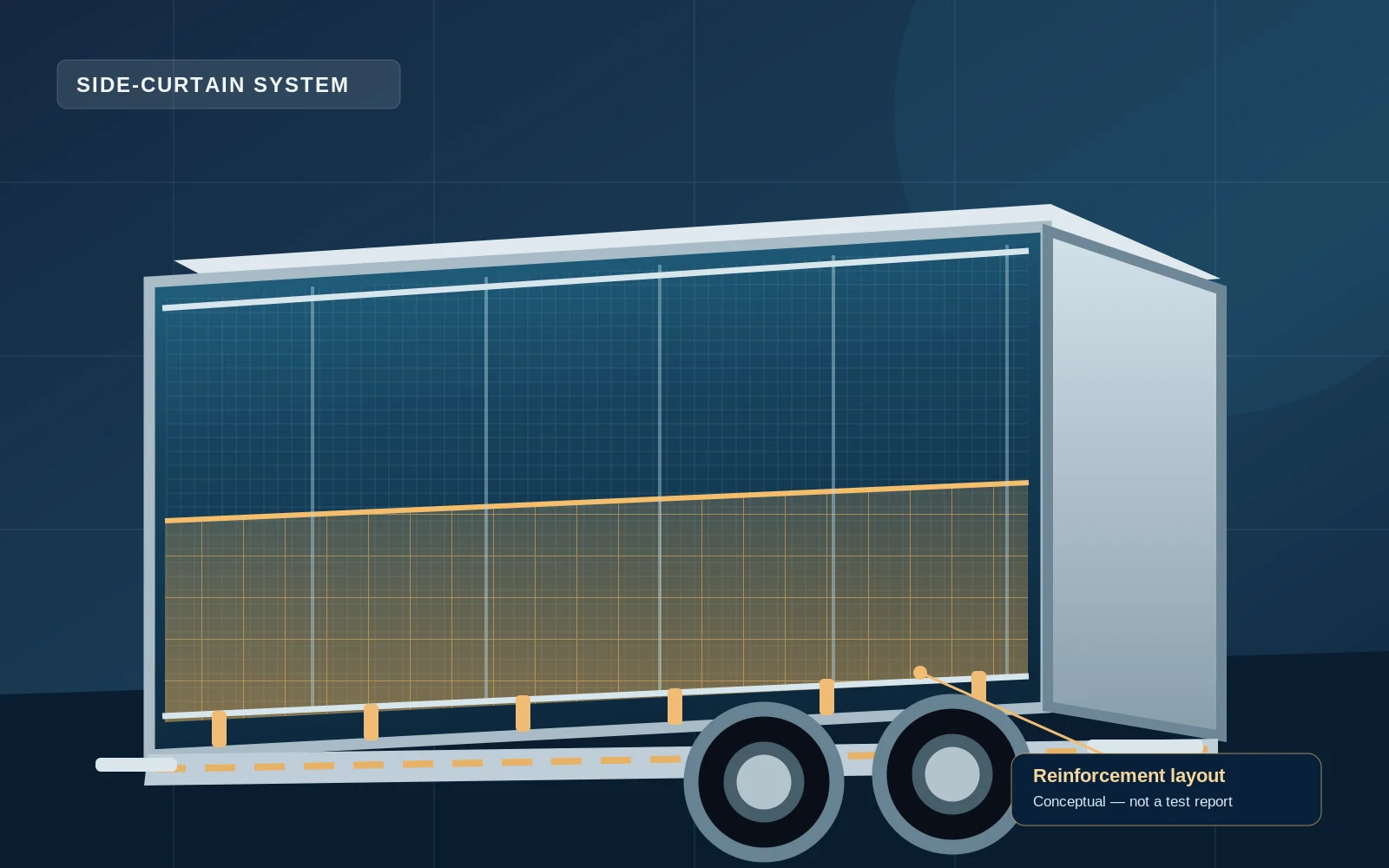
What makes a truck curtain “anti-vandalism”?
Anti-vandalism truck curtain fabric is a fabric-and-reinforcement approach intended to make opportunistic damage or unauthorized entry more difficult. The underlying side curtain still needs to open, fold, travel on its rail and withstand outdoor service. The finished security level depends on the integrated construction—not merely the nominal fabric weight.
Short answer: standard PVC-coated polyester provides weather protection and a weldable structural base; localized patches manage wear at interfaces; an engineered wire or mesh layer may add resistance to slashing or forced openings. None of these elements independently guarantees a theft-proof trailer.
A working curtain has several jobs
During daily operation, it experiences folding, top-track movement, buckle tension, pallet contact, road contamination and high-cycle handling. A reinforcement placed in the wrong position can stiffen the curtain, overload its attachment points or complicate welding. Security upgrades must preserve functional opening and closure, not only make the sheet harder to penetrate.
For baseline weatherproof curtain materials, explore DERFLEX PVC curtain-side tarpaulin and PVC coated fabric for trailer curtains options. This page covers a different buyer problem: which additional material layers and construction details should be evaluated when damage or intrusion is the concern?
Separate three specifications
- Base fabric: woven polyester, PVC coating, finish, weight and roll width.
- Reinforcement: localized patches, webbing, cable or mesh layout, interface bonding.
- Complete curtain: seam design, keder, rail/roller movement, buckles and locking system.
A coated fabric test report cannot establish a complete trailer's burglary resistance.
Engineer the reinforcement — not only the GSM
Additional material weight can help abrasion or tear performance, but it is not the same as resistance to a blade. For a practical tender, distinguish proven base-material supply from reinforcement systems that still require engineering trials.
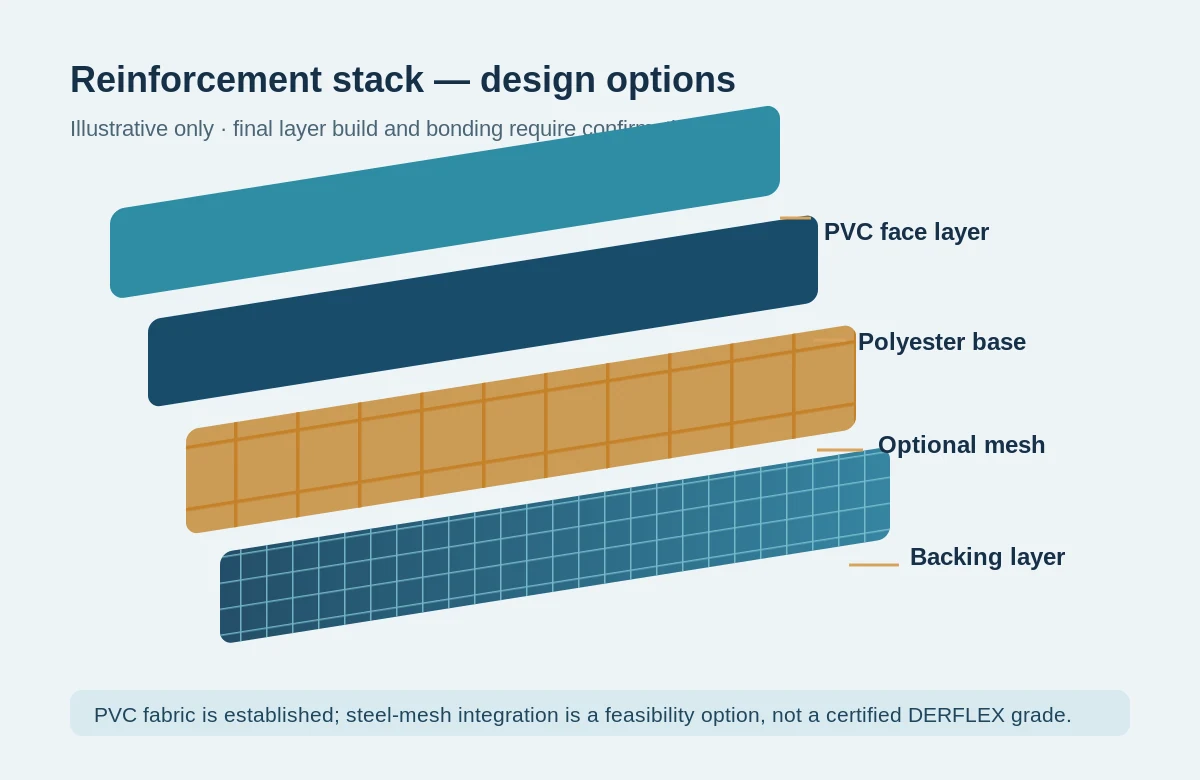
01. PVC-coated polyester base
DERFLEX already describes fabric constructions for side curtain applications, including typical 650–900 g/m² PVC-coated polyester choices. These are ordinary curtain fabric reference weights, not anti-cut ratings. They support discussions about coating adhesion, handling, welding and surface finish.
See also 900 gsm curtain fabric for a heavier conventional base-material direction.
02. Zone-specific patches and webbing
Reinforcing contact and buckle zones can reduce local mechanical stress and protect assembly interfaces. It does not convert a curtain into an intrusion-resistant steel-mesh system.
Related reading: abrasion-resistant curtain fabric.
03. Cable or steel-mesh layer
Specialist market solutions use wires or mesh incorporated into PVC textiles to impede rapid slashing. Mesh pitch, wire retention, corrosion protection, folding behavior and panel edges must all be considered. DERFLEX supply and tested performance are not established for this construction.
04. Composite face layers
A laminated or welded protective facing may isolate metal components from freight and reduce snagging. Assess coating-to-reinforcement adhesion, local stress concentrations, total weight and repair accessibility with representative samples.
05. Detection is a different system
Electronic intrusion detection requires conductive paths, sensors, wiring and telematics integration. These are separate electronic-system deliverables and should not be implied by a reinforced PVC sheet specification.
Reinforce the zones that matter in real service
Start with the likely access point, then check moving geometry and repair needs. A continuous heavy layer across the entire curtain may add expense and hinder handling without giving the intended result.
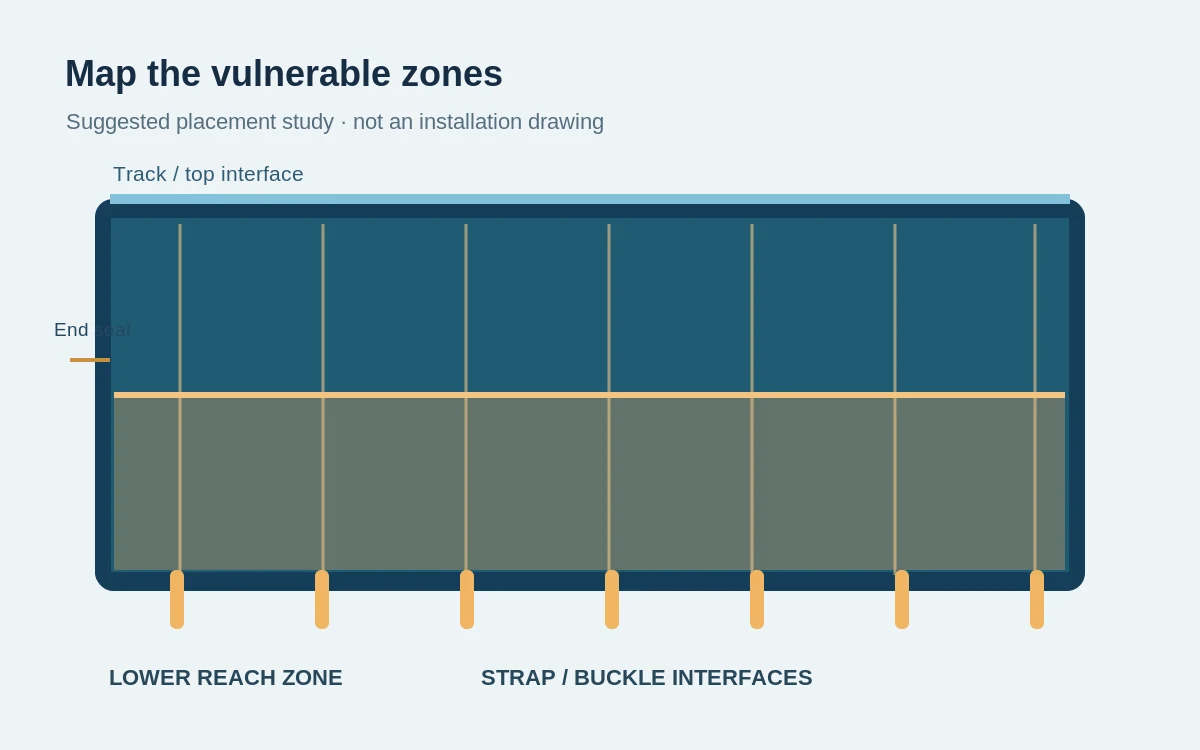
Accessible lower curtain
Identify reachability from road level, planned reinforcement height and proximity to cargo.
Vertical ends & closures
Protect the transition near end posts and closures without compromising sealing or operation.
Straps & buckle line
Design local load distribution and avoid hard mesh or wire ends near fasteners.
Top track & flex folds
Verify free movement, stacking thickness and fatigue as the curtain travels.
Choose a material route by risk and production stage
This matrix differentiates a conventional curtain fabric program from a security-enhanced system. It does not imply all routes are existing DERFLEX SKUs.
| Buyer need | Proposed material route | What it can address | Qualification gate |
|---|---|---|---|
| Weather protection / ordinary truck operation | PVC-coated polyester curtain base | Water barrier, weldable panels, print finish, movement | Confirm fabric grade, coating adhesion, seam process and hardware layout |
| Premature wear around fittings | Heavier base and localized patches or webbing | Mechanical wear, tearing near straps and contact points | Check patch geometry, seams, folding and repeated operation |
| Attempted slashing or forced entry | Specialist wire or mesh-reinforced composite | Potential obstruction to rapid penetration | Confirm integration feasibility; define actual cutting test and pass/fail criteria |
| Security monitoring | Protective material plus external detection/telematics system | Possible incident alert as part of an engineered system | Electrical installation, integration and security validation by the system provider |
No universal GSM, wire spacing, blade resistance or security classification is promised. These require project-specific construction and validated testing.
What should the technical sheet actually show?
- Material identity, layer order, nominal mass and thickness for the final composite.
- Fabric tensile and tear data, with direction, method and test specimen.
- Seam strength and wire/mesh retention after folding and handling.
- Resistance to the agreed intrusion scenario, with sample geometry, cutting tool, load and opening criterion.
- Requirements for durability, outdoor exposure, corrosion and damage repair.
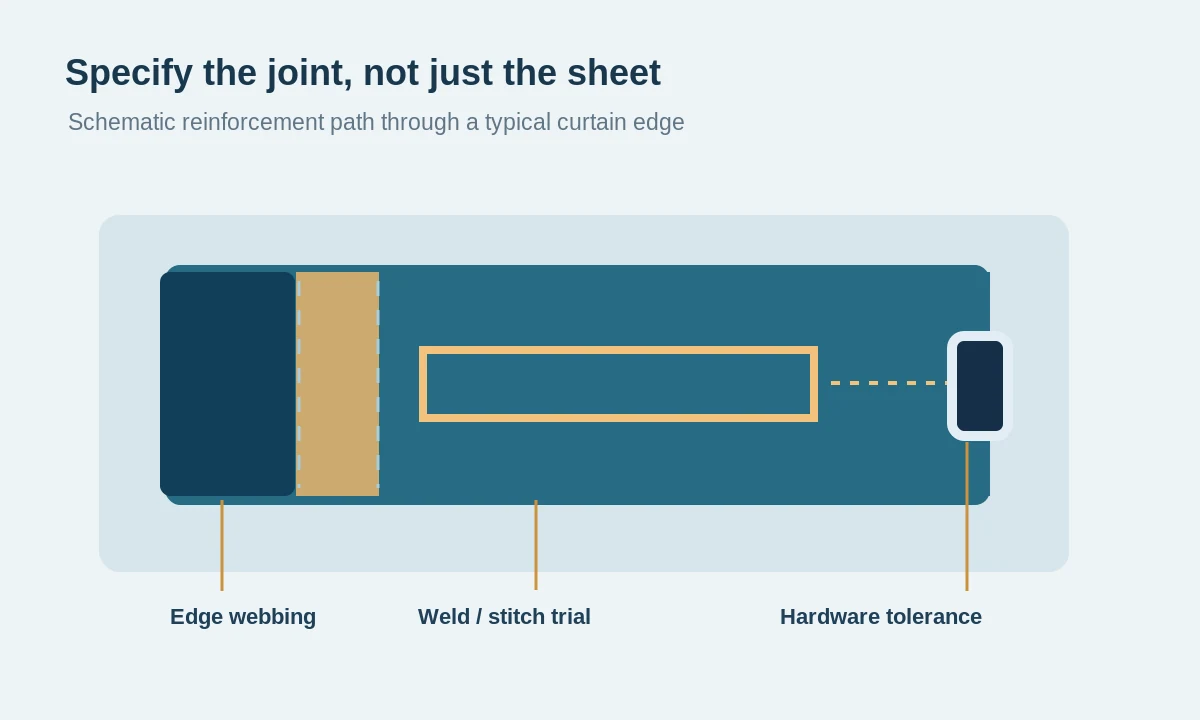
Ask for proof at both material and assembly levels
A security claim should describe exactly what was tested. Laboratory tensile or tear data alone cannot demonstrate that a complete curtain will resist a particular attack or that the trailer as a whole is theft-proof.
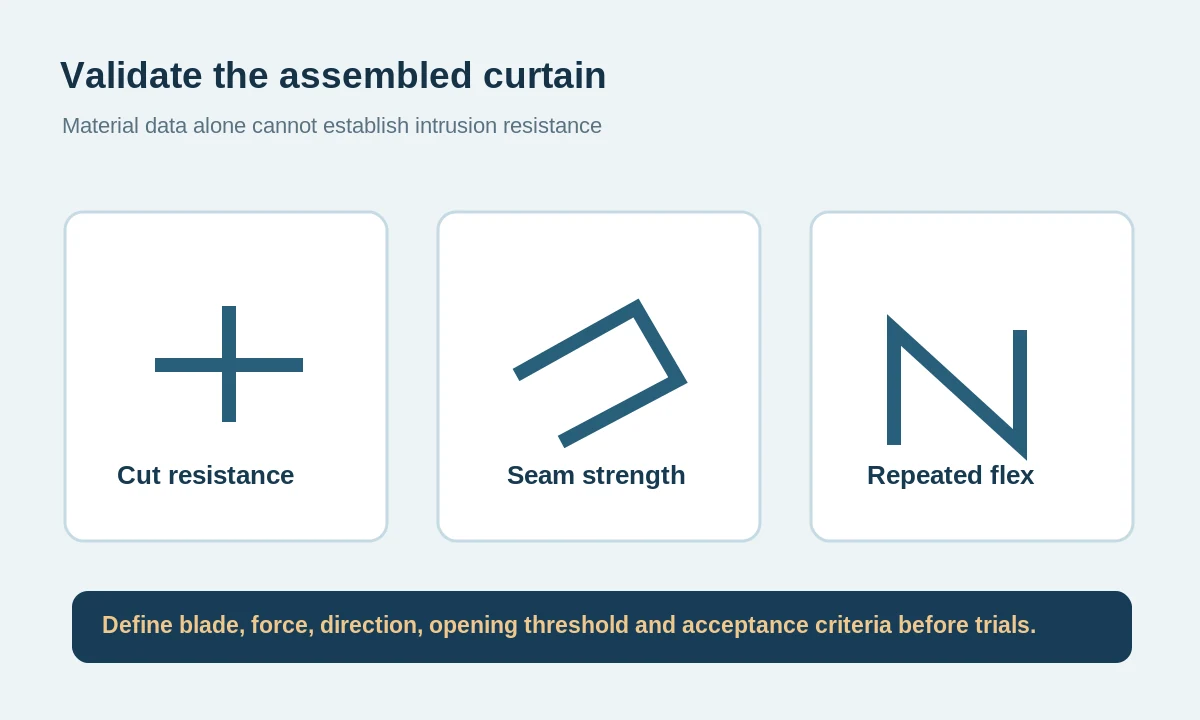
What to test on a representative sample
- Slashing scenario: defined blade type, force, movement, number of cuts, and maximum allowed opening.
- Panel interface: seam, wire termination, keder and edge tensile retention.
- Operation: folding cycles and sliding clearance on the real trailer hardware.
- Exposure: UV, cleaning, water ingress, corrosion and temperature relevant to routes.
- Repair: whether a damaged protective area can be safely patched without defeating the design.
Critical distinction: standard fabric tests quantify material behavior under defined methods; security trials must represent the finished curtain, the proposed reinforcement layout and the buyer's threat model. Agree acceptance criteria before purchase.
Designed around the needs of trailer fabricators and OEM buyers
Trailer body manufacturers
Require repeatable roll goods and manufacturing information: base fabric, coating, seam compatibility, bundle dimensions, top attachments, reinforcements and service clearances. For system design context, see sliding tarp system materials.
Curtain converters & repairers
Need materials they can cut, weld and repair with available equipment. An anti-vandalism build must establish how reinforcement ends are terminated and which zones can be replaced without full curtain removal.
Fleet specification teams
Need a clear balance of risk reduction, operating weight, daily access, cleaning, branded graphics and lifecycle maintenance. For finished replacement requirements, review replacement truck side curtains.
Send the trailer plan
Length, height, closures, track, buckle spacing and folding direction.
Define the exposure
Parking profile, threat scenario, operating region and target coverage.
Review the construction
Base fabric, wire or mesh feasibility, edge detail and sample dimensions.
Approve after trial
Fabrication checks, assembly testing, cost and production scope.
Define supply scope and security claims before the RFQ
What DERFLEX can discuss today: PVC-coated polyester truck curtain material, color/finish options, roll material and conventional panel fabrication routes described by existing DERFLEX truck curtain pages. A reinforced wire/mesh anti-vandalism composite is a project-specific technical proposal, not a confirmed catalog or certified grade.
Send a sketch or existing curtain photo if detailed drawings are unavailable. Include curtain dimensions, expected order quantity, preferred delivery form (roll or panel), number of units, regional weather exposure and whether branded printing is required. If the objective is protection against deliberate cutting, supply the threat and acceptance definition rather than requesting “100% knife-proof fabric.”
Price will vary with composite construction, reinforced area, actual usable roll width, processing complexity, hardware compatibility, sampling and shipment terms. DERFLEX's baseline truck tarp materials and PVC truck cover fabric pages help identify conventional material choices.
Your material review checklist
- Trailer model, panel drawing and current fabric photo
- Dimensions, access points and strap / keder arrangement
- Specified at-risk sections and reinforcement coverage
- Fabrication equipment and panel supply expectations
- Operation temperature, UV exposure and cleaning practice
- Requested cut test, acceptance threshold and documentation
- Estimated quantity, print design and destination
Anti-vandalism curtain material FAQs
Does heavier PVC truck curtain fabric automatically resist knife cuts?
No. A heavier PVC-coated polyester curtain may improve general robustness, but it does not establish knife-cut or intrusion resistance. Those claims require a specified reinforcement system and representative finished-assembly testing.
What reinforcement is most relevant to an anti-vandalism curtain?
The answer depends on the threat. Additional PVC layers and webbing can improve local wear and attachment durability. Steel-wire or steel-mesh reinforcement may impede cutting, but integration, corrosion resistance, flexibility and security performance must be validated for the proposed construction.
Can anti-vandalism material be supplied as a fabric roll?
A standard PVC-coated polyester base can be discussed as roll material. Whether a reinforced composite can be delivered in rolls depends on its build, width, handling radius, weight and processing method. Request feasibility confirmation before specifying roll supply.
Which specifications should a truck curtain converter send?
Share curtain length and height, rail geometry, top and bottom hardware, closure and strap spacing, high-risk zones, target reinforcement coverage, operating climate, quantity and the desired security test or acceptance criterion.
Is a reinforced side curtain the same as a certified cargo-security system?
No. Fabric and reinforcement may be parts of a security design, but locking, the trailer structure, the opening method, installer workmanship and operating procedures also matter. No universal cut-proof or theft-proof guarantee follows from the material alone.
Can a reinforced curtain still be printed and repaired?
Potentially, but the answer depends on the final face coating, wire or mesh placement, welding method, print chemistry and approved repair process. Confirm graphics, seam trials and field-repair instructions on a representative sample first.
Specify the right reinforcement. Validate the finished result.
Share your existing side curtain, drawing or risk scenario. Start with a material discussion, then agree on feasibility and tests before making security or performance claims.
- PVC-coated polyester material selection
- Construction and interface review
- Reinforcement feasibility and sample planning
- Production form and quotation variables