Soft-sided suitcase shells
Review shape retention, drape, coating-to-backing balance and acceptable creasing after forming and packing.




Choose PU synthetic leather for soft-sided suitcases, travel duffels, luggage trims and reinforced panels with a specification built around real handling conditions. DERFLEX supports material discussions on grain, color, coating structure, textile backing, flexibility and roll supply for luggage converters and OEM brands. The right choice balances appearance with corner abrasion, repeated folding, sewing performance and environmental exposure—not a single thickness claim. Start with your panel drawing and target tests to develop an application-matched sample.
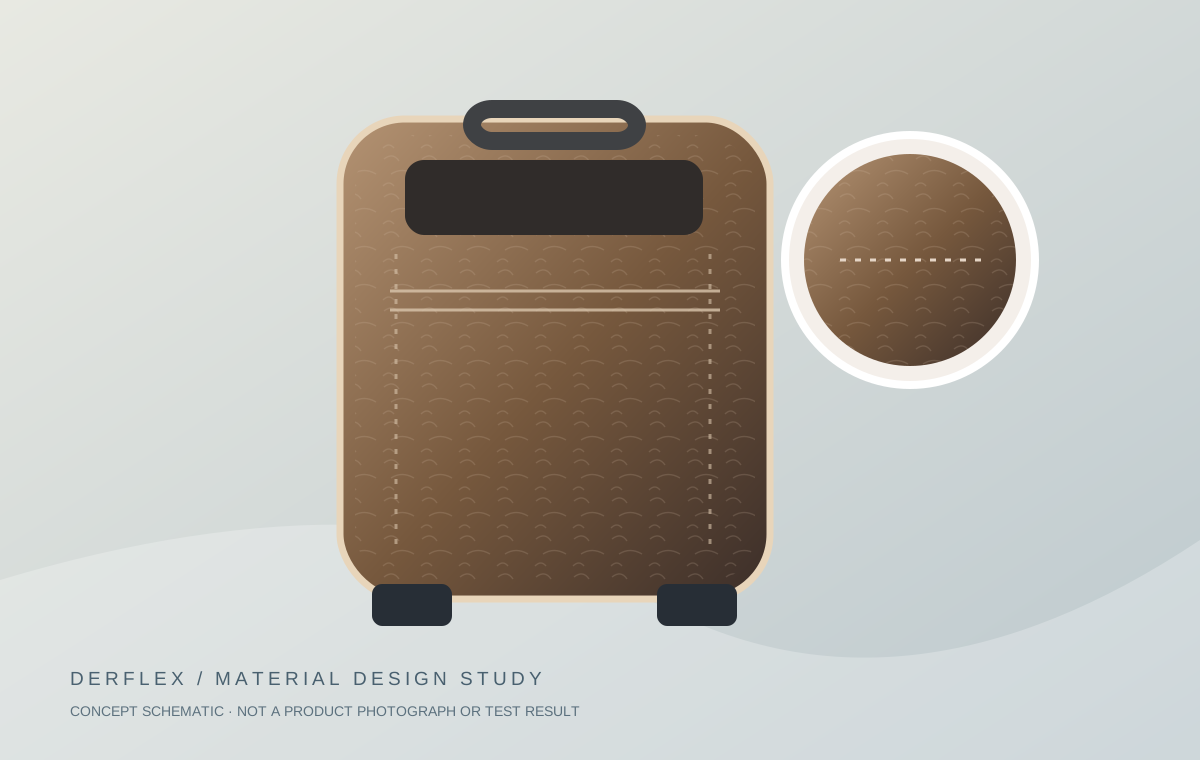
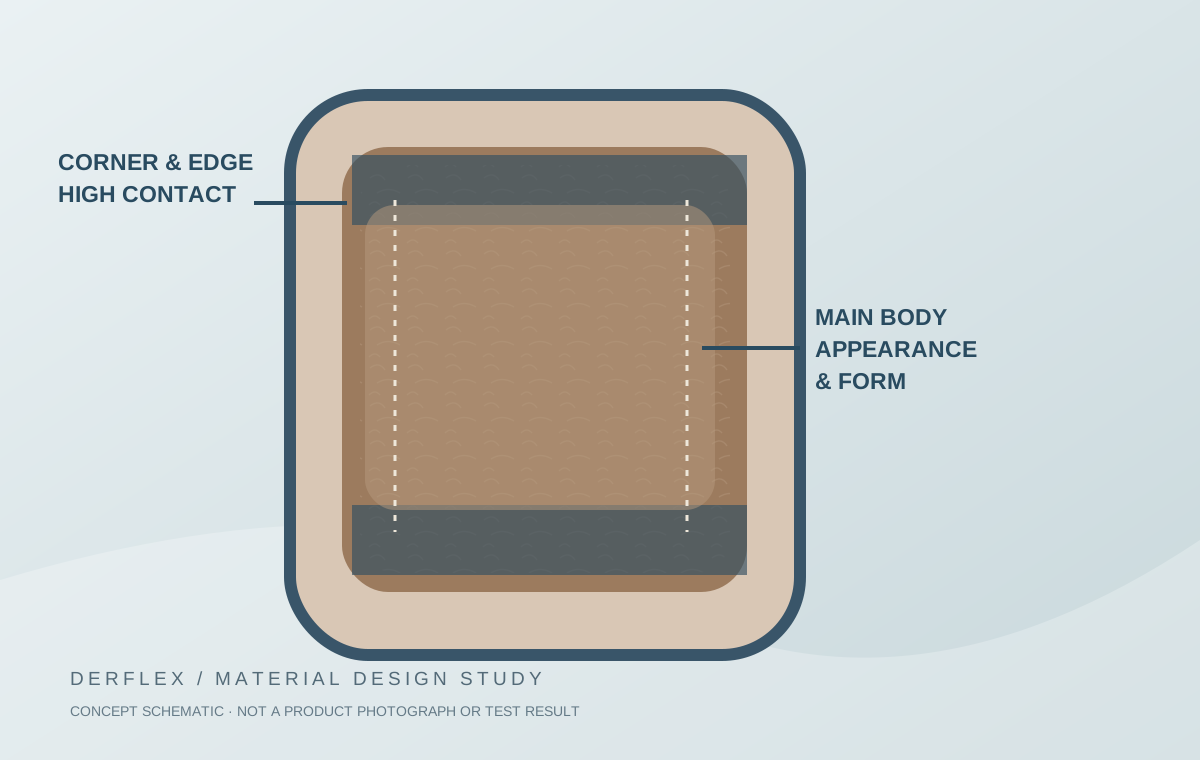
Concept illustration of a luggage panel and grain. Product photography and grade-specific evidence require confirmation.
PU leather for luggage is a polyurethane-coated textile or composite material used as a flexible outer surface, trim or decorative panel. It is not a substitute for a rigid suitcase shell or a complete luggage structure.
Luggage materials face different demands from sofa upholstery or fashion handbags. Wheels, airport conveyors and storage surfaces expose corners to scuffs; handles and seams experience pulling and flex; panels must remain practical to cut, fold and sew in production. Evaluate the coating and the backing together.
For an OEM luggage program, define whether the PU leather is a full exterior panel, a reinforced edge zone, an accent strip or a handle wrap. Those locations determine the necessary balance of abrasion tolerance, hand feel, tear behavior, dimensional stability and surface cleaning.
Specify flexible synthetic leather by contact and fabrication zone rather than using a single unsupported performance description across every component.
Review shape retention, drape, coating-to-backing balance and acceptable creasing after forming and packing.
Prioritize abrasion review and folded-edge performance where repeated rubbing can expose cracks or coating wear.
Match softness with tensile loading, stitch density, reinforcement and tear resistance of the complete assembly.
Check color matching, grain continuity, skiving, adhesive compatibility and edge finishing.
Plan reference swatches, approval standards and color consistency across repeat orders.
Confirm matching grain, dye lot and original backing to avoid an obvious panel mismatch.
The useful question is not simply “What thickness is best?” It is “Which construction will pass our defined panel tests while producing a consistent result?”
| Luggage part / condition | Priority to specify | Trial recommendation | What to confirm |
|---|---|---|---|
| Main exterior panels | Appearance, backing stability, moderate flexibility | Cut, sew, bend and inspect after conditioning | Panel distortion, permanent creasing, color variance |
| Bottom, corners and contact zones | Abrasion and coating adhesion | Compare candidate grades with same rubbing method | Visible wear threshold and reinforcement layout |
| Handles and folded piping | Repeated flex and edge integrity | Fold, stitch, pull and inspect actual assemblies | Stitch tear, cracks, adhesive bond and hand feel |
| Outdoor travel / variable humidity | Aging and hydrolysis behavior | Agree controlled exposure and acceptance criteria | PU grade, test report, cleaning chemistry |
| Multi-color luggage collection | Color, grain and finish repeatability | Approve physical master swatch and production sample | Color tolerance, lot records, minimum production volume |
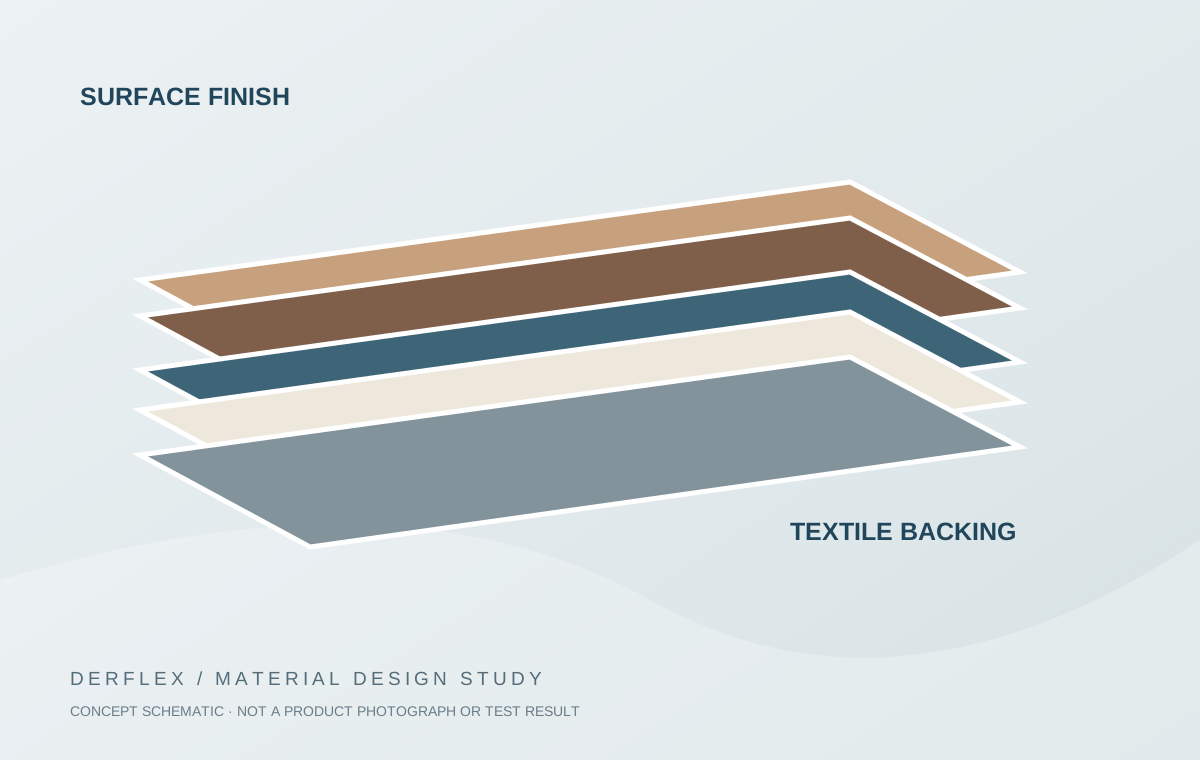
A luggage PU leather proposal should identify the surface treatment, polyurethane layer, any intermediate layer and textile backing. Different bases can change how the material stretches, recovers, cuts and holds stitches.
Ask whether thickness is the total finished construction or only a coating layer. Do not equate greater thickness automatically with longer service life. Coating formulation, substrate and joint geometry all matter.
Illustration note: layer order is conceptual; the actual DERFLEX grade must be confirmed from its technical sheet and sample.
Sampling should reproduce the converter's most difficult operations, including turning tight radii, forming corners and sewing through multiple layers.
Inspect how the material lays flat when unwound, whether the surface marks during cutting, and how the backing behaves around needle penetration. For skived seams, assess whether the edge remains stable and bonds consistently with the chosen adhesive or reinforcement.
Use the production needle, thread, stitch pitch, cutting tools and cleaning procedures in trial runs. A coupon result measured on a flat sheet is not equivalent to durability of a finished handle or corner.
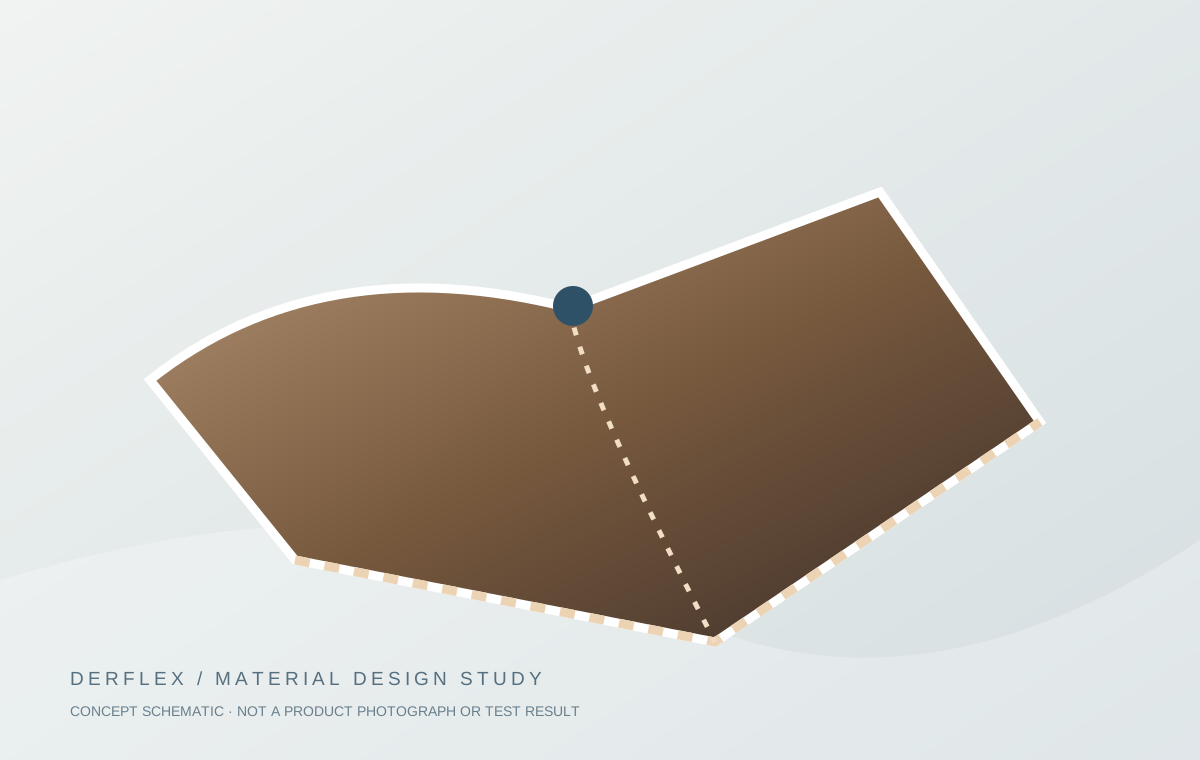
Instead of promising unverified test numbers, DERFLEX recommends setting the test method, sample conditioning, acceptance threshold and report scope together for the actual grade under consideration.
Define rubbing medium, load, cycles and the visual criterion. Report method and result together, not an isolated “high abrasion” claim.
Check crack formation, coating whitening and appearance at representative fold radii and temperatures.
Agree humidity, temperature, exposure time and a meaningful after-aging pass condition.
Compare both fabric coupon tear and stitched-panel integrity; they describe different failure pathways.
Check dry and wet rub, dye transfer and compatibility with intended maintenance agents.
Agree color master, defect grading, usable width, labeling and batch traceability before order acceptance.
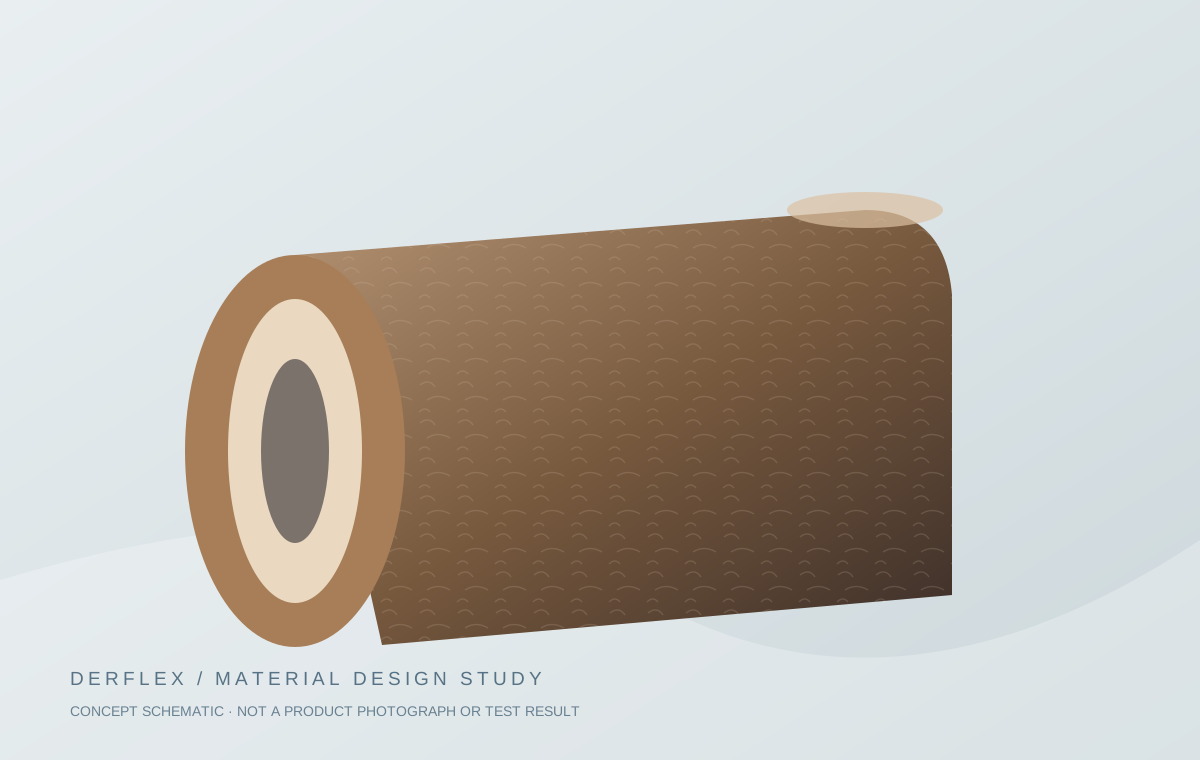
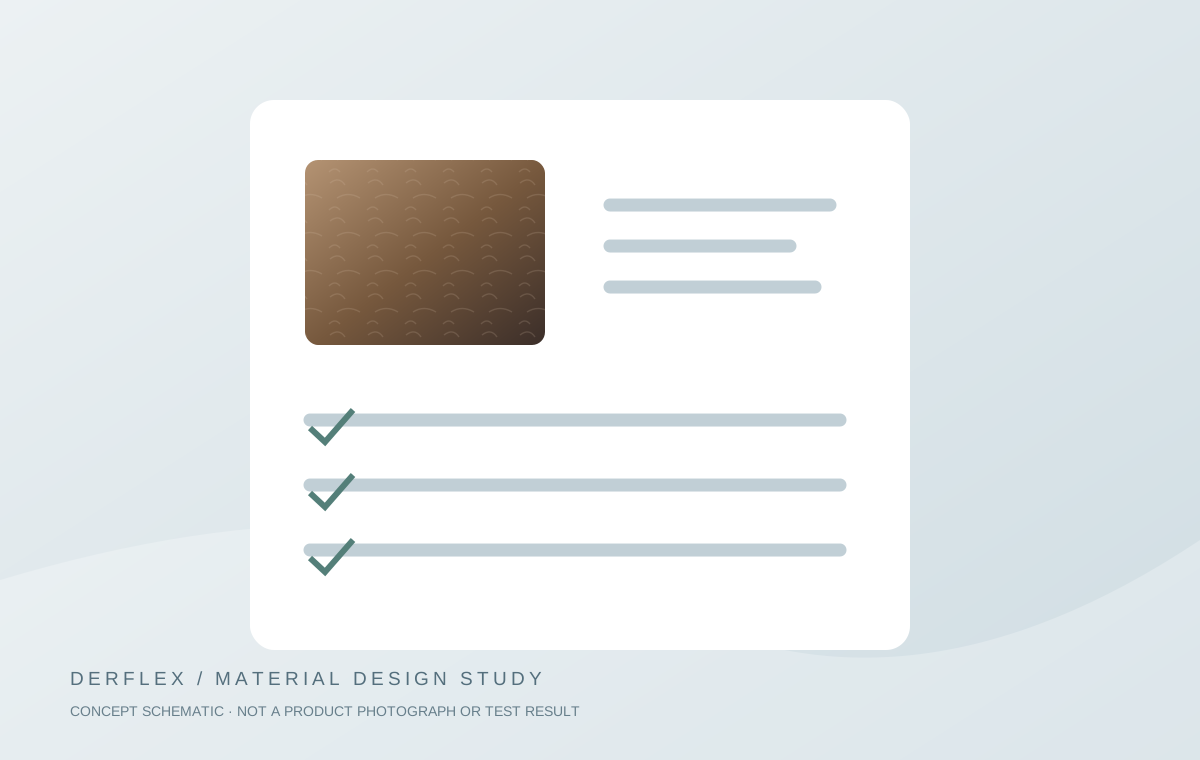
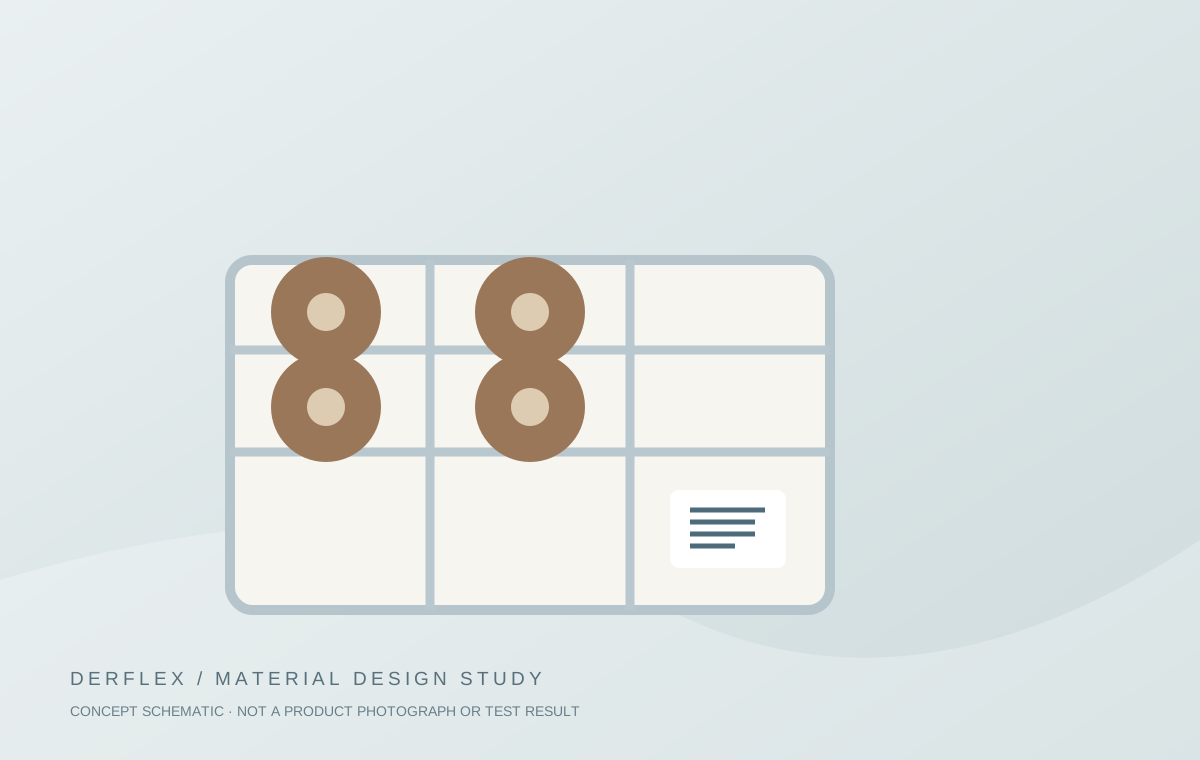
Original technical concept diagrams show the decisions to confirm. Replace with photographed swatches, luggage assemblies and production evidence once verified material imagery is available.
Accurate pricing and production planning require the form of supply, performance target and finished-product context—not only a photo of a preferred grain.
| RFQ field | Buyer input | Why it matters |
|---|---|---|
| Intended component | Main shell, trim, corner, piping, handle, duffel panel | Determines wear and construction demands |
| Appearance master | Grain, gloss, approved swatch, color standard | Defines review and repeat-order criteria |
| Material construction | Preferred textile backing, thickness target, hand feel | Supports suitable coating/backing matching |
| Panel processing | Cutting, sewing, skiving, bonding, embossing | Guides sample trial and limitations |
| Quality and market | Specified test protocol, destination market, documentation needs | Avoids undefined performance claims |
| Purchase plan | Roll width, planned volume, delivery location, target schedule | Enables quotation and packaging discussion |
Submit finish reference, panel use and approximate quantity.
Agree sample construction and key acceptance criteria.
Inspect cutting, sewing, wear and aging as required.
Approve reference sample, roll format, labeling and inspection.
Compare adjacent uses and the DERFLEX supply process before finalizing an OEM luggage specification.
Yes, PU-coated synthetic leather may be used on soft luggage shells, trims and travel-bag panels when its backing, abrasion behavior, flexibility and seam construction fit the design. Suitability must be verified on a representative finished-panel sample.
High-contact zones usually need a construction selected for abrasion, flexing and reinforcement compatibility. Compare candidate materials using the same agreed test method and assess sewn or folded assemblies, not surface appearance alone.
Not as a direct structural substitute. PU leather is generally a flexible covering or panel material; rigid polycarbonate or ABS shells perform a different structural function.
Share the end use, construction drawing, color and grain reference, backing preference, target thickness or hand feel, roll width, estimated volume, required tests and destination market.
Ask for a defined exposure or aging protocol, acceptance criteria and test results for the proposed grade. Hydrolysis behavior varies with PU chemistry, construction and the service environment.
Discuss the color standard, grain reference, approval sample and production tolerances with DERFLEX. The available options and minimum quantities must be confirmed for the selected construction.
Tell DERFLEX how the material will be used, what finish you need and which tests define acceptance. We can discuss a sample path and a roll-supply quotation around your manufacturing requirements.