


Truck Tarp Fabric Manufacturer for Heavy Duty Transport, Dump Truck, Flatbed, Trailer, and Roll Tarp Systems
DERFLEX supplies truck tarp fabric for buyers who need more than a low-cost cover material. We support tarp system manufacturers, truck body builders, fleet accessory brands, dump truck tarp makers, trailer cover fabricators, flatbed tarp distributors, and industrial buyers looking for durable PVC coated truck tarp fabric with stable quality, commercial repeatability, practical customization, and factory-direct support.
Whether the requirement is for dump truck tarp fabric, flatbed tarp material, trailer tarp fabric, truck roll tarp fabric, or multi-purpose transport tarpaulin for regional distribution, the real buying decision usually comes down to the same commercial questions: Will the material stay waterproof in daily use? Can it handle repeated rolling, folding, abrasion, and tension? Is the fabric flexible enough for seasonal operation? Can the supplier support OEM details, consistent lead time, and repeat orders without forcing the buyer to requalify every batch?
What Is Truck Tarp Fabric and Why Does It Matter to Professional Buyers?
Truck tarp fabric is the engineered material used to manufacture protective covers for commercial transport vehicles and cargo systems. In practical industrial use, this material must do more than simply block rain. It has to maintain waterproof performance, resist tearing during daily handling, tolerate UV exposure, stay usable in changing weather, and work with fabrication methods such as welding, hemming, eyeleting, reinforcement, and attachment system assembly.
Buyers sourcing truck tarp fabric are usually not shopping for a generic sheet. They are choosing a material platform that affects finished tarp quality, installation performance, maintenance frequency, resale value, warranty risk, and customer satisfaction. A fleet operator may care about operating life and weather resistance. A tarp system manufacturer may care about strength, weldability, and consistency. A distributor may care about range coverage, price ladder planning, and how reliably the material can be positioned in a local market.
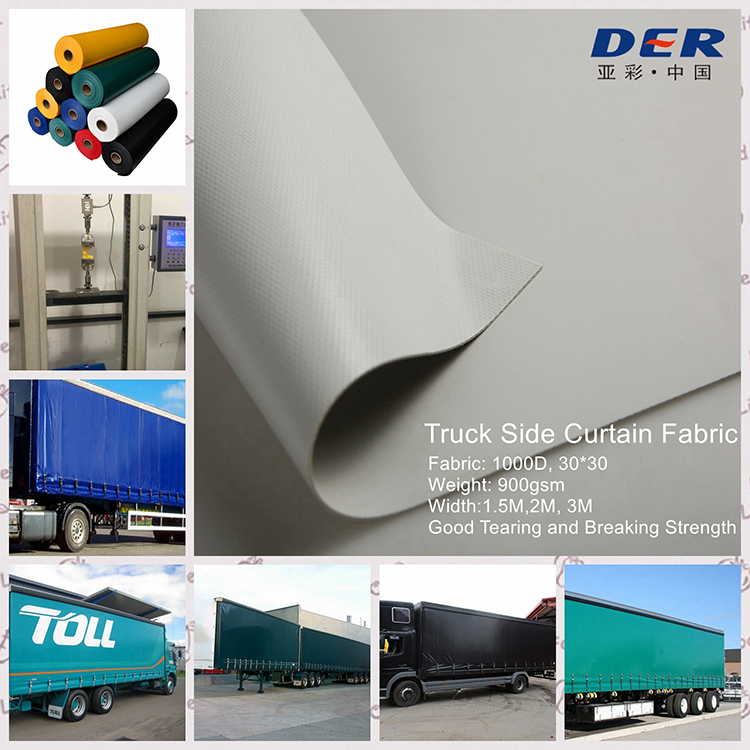
That is why working with a real truck tarp fabric manufacturer matters. A serious supplier does not only quote a fabric weight. The supplier should understand how the material will be used, what kind of cargo environment it will face, whether it will be rolled or folded frequently, whether the application involves abrasive bulk materials, whether flame retardant treatment is relevant, whether the finish needs anti-slip or lacquer support, and whether the buyer is building a premium line, a value line, or a project-specific solution.
For many commercial buyers, truck tarp fabric becomes the hidden foundation of the finished product line. If the base material is unstable, the finished tarp will inherit those weaknesses. If the base material is matched correctly to the application, the buyer gains a more dependable product program and stronger market credibility.
Why Buyers Search for a Truck Tarp Fabric Supplier Instead of a Generic Cover Seller
Truck tarp material sourcing is a specification problem, not a catalog problem. A generic reseller may offer standard stock, but professional buyers often need more control over weight range, fabric base, surface finish, width, flexibility, weather behavior, branding, packaging, and finished fabrication compatibility.
A truck tarp fabric supplier that works at the manufacturing level can help buyers choose between heavier and lighter constructions, adjust material feel, align surface finish with end-use, and coordinate custom programs for fleet, dealer, importer, or OEM sales channels. This is especially important where the buyer is building a repeat business rather than placing a one-time order.
Commercial buyers also care about consistency. One successful order is not enough. If the next order changes in softness, weldability, shade, coating feel, or tear behavior, the buyer absorbs the cost in rework, claims, or lost customer trust. Factory-level production discipline reduces this risk and helps build a more stable product offering.
DERFLEX approaches truck tarp fabric from that commercial viewpoint: matching construction to use condition, supporting OEM or custom development, and keeping the page structure practical for decision-makers who need a clearer path from inquiry to specification approval.
Need help matching truck tarp fabric to your application?
Send your target use, material preference, roll width, weight range, climate condition, and order quantity. DERFLEX can recommend a more suitable truck tarp fabric structure for OEM production, distribution, and project supply.
Key Features Buyers Expect from Competitive Truck Tarp Fabric
The material behind a successful truck tarp program is usually defined by balanced performance rather than one isolated feature. Strength matters, but so do flexibility, coating stability, fabrication compatibility, surface behavior, and commercial consistency across repeat orders.
1. High Strength Base Fabric
Truck tarp fabric typically depends on a reinforced polyester base structure that helps the material resist pulling force, tension stress, and handling damage. For transport covers, the fabric foundation affects tear resistance, long-term shape retention, and how reliably the finished tarp performs around hems, corners, eyelets, and high-stress installation zones.
Buyers comparing dump truck tarp fabric or flatbed tarp fabric often focus first on fabric weight. But weight alone does not tell the whole story. Base cloth quality, yarn construction, weave balance, and coating integration all influence real working performance.
2. Waterproof and Weatherproof Performance
A truck cover fabric must keep cargo protected from rain, splash, road dirt, and changing transport conditions. Waterproof behavior is not only about surface coating; it also depends on coating integrity, seam compatibility, and how well the material performs after repeated folding, rolling, or outdoor exposure.
For trailer tarp material and transport tarpaulin programs, buyers want a fabric that stays practical under actual field use instead of losing reliability after a short service cycle.
3. UV Resistance and Outdoor Durability
Sunlight exposure gradually degrades many materials. A better truck tarp fabric is designed to slow down aging, reduce early cracking risk, and maintain appearance and handling quality through repeated outdoor use. This matters for fleets, open-yard storage, logistics routes, and regional dealers serving hotter or harsher climates.
Buyers sourcing waterproof truck tarp fabric for export markets usually care about how the material performs after months of exposure, not only on the day it arrives.
4. Tear Resistance in Daily Handling
Real truck cover use creates friction, pull force, corner loading, and contact with rough materials or equipment. The material should resist tearing when tension concentrates near fixing points, mechanical arms, rails, or cargo edges. For truck roll tarp fabric and dump truck cover material, this becomes especially important because the tarp may be deployed and retracted frequently.
Good tear performance supports longer service life and lowers maintenance pressure for the finished tarp maker and end user.
5. Flexibility for Fabrication and Operation
Truck tarp fabric needs to work not only in performance terms, but also in process terms. A fabric that welds cleanly, folds predictably, stays manageable during installation, and handles seasonal temperature variation gives the buyer more manufacturing efficiency and better finished product quality.
Flexibility is particularly important for roll tarp material, retractable systems, and custom trailer cover fabric programs where the finished tarp is expected to move repeatedly without becoming difficult to use.
6. Customization and Commercial Positioning
Many buyers need truck tarp fabric that fits their own product logic. That may mean custom color, custom thickness, custom width, lacquered surface, anti-slip finish, flame-retardant option, anti-mildew treatment, branded packaging, or a specification ladder for different market levels.
A capable truck tarp fabric manufacturer should be able to support supplier-level customization rather than forcing every customer into one standard construction.
Technical Specifications for Truck Tarp Fabric Projects
The right truck tarp fabric specification depends on the finished application, fabrication method, operating climate, and expected service life. The table below is designed as a practical selection guide for buyers comparing truck tarp fabric manufacturer options.
| Material Structure | PVC coated polyester truck tarp fabric, PVC laminated transport tarp fabric, and related reinforced tarpaulin constructions for truck cover applications. |
|---|---|
| Base Fabric Options | Common project ranges include 1000D, 1300D, and 2000D polyester depending on target strength, handling profile, and finished tarp design. |
| Weight Range | Typical truck and trailer tarp programs often fall within approximately 450gsm to 900gsm, selected according to operating conditions and product positioning. |
| Thickness Range | Common working range is approximately 0.35mm to 0.85mm, with heavier or more specialized constructions considered for more demanding environments. |
| Maximum Width | Up to around 3.2 meters depending on product structure and production arrangement. |
| Surface Finish | Glossy, matte, lacquered, smooth, anti-slip-oriented, or application-specific surface options based on fabrication and end-use requirements. |
| Color Options | Standard and custom colors for fleet matching, distributor programs, private label positioning, or regional market preference. |
| Temperature Performance | Representative transport tarp products may be designed to operate from approximately -30°C to +70°C depending on chosen formula and construction. |
| Key Performance Options | Waterproof, UV-resistant, anti-mildew, tear-resistant, flame-retardant option, anti-cold behavior, and other application-oriented enhancements. |
| Fabrication Compatibility | Suited for welding, hemming, reinforcement, eyelets, rope edges, patches, sleeves, webbing, and other finished tarp manufacturing steps. |
| Compliance Pathways | Depending on project specification, buyers may request REACH / RoHS aligned formulations and optional flame-retardant pathways for target market requirements. |
| Supply Format | Roll material supply for tarp manufacturers, OEM fabric programs, and specification-based sourcing for transport cover production. |
How Buyers Should Read Truck Tarp Fabric Specifications
Strong truck tarp fabric selection starts with the use scenario. A dump truck tarp material for gravel or demolition work should not be judged by the same standard as a trailer cover fabric for lighter cargo. Likewise, a truck roll tarp fabric used in a retractable system must balance flexibility and structural stability differently from a flatbed tarp material that sees longer spans and more tie-down load.
Many buyers make the mistake of choosing only by gsm, only by price, or only by a competitor sample. In reality, finished tarp success depends on how the fabric behaves in production and in field operation. Buyers should evaluate strength, handle, finish, consistency, coating feel, cut-and-weld behavior, climate suitability, and how easily the material can support the finished tarp design they actually sell.
That is why a truck tarp fabric supplier should be able to recommend not just a number, but a complete material logic: what base cloth to use, what coating style to use, what finish works best, and what level of reinforcement makes sense for the target market.
What This Means for OEM and Private Label Buyers
OEM buyers often need a material range, not a single product. One market may require a stronger heavy duty truck tarp fabric for harsh haul routes, while another channel may need a more economical trailer tarp material that still presents well and performs reliably for standard transport duty.
A supplier that understands specification planning can help build that ladder. This makes it easier for distributors, truck accessory brands, and tarp fabricators to segment their product lines by application, price point, or customer group without losing control of quality and lead time.
DERFLEX supports this type of planning through custom weight, color, finish, and packaging discussions, helping buyers turn fabric requirements into a more commercially usable truck tarp fabric program.
Ready to review truck tarp material options for your market?
Share your target gsm, width, surface preference, and whether you manufacture dump truck tarps, flatbed tarps, trailer covers, or roll tarp systems. We can recommend a more suitable fabric route.
Applications of Truck Tarp Fabric Across Transport and Industrial Markets
Truck tarp fabric demand comes from multiple transport categories. The best material choice depends on how the tarp is used, how often it moves, what kind of cargo it protects, and what service life the buyer is trying to achieve.
Dump Truck Tarp Fabric
Dump truck applications often involve abrasive loads, debris control requirements, repeated rolling, and demanding outdoor exposure. Buyers usually look for dump truck tarp fabric that combines waterproof behavior, good tear resistance, workable flexibility, and durability under frequent deployment.
Where the truck is hauling sand, gravel, recycled materials, asphalt, or demolition waste, the tarp material needs to support more than surface coverage. It needs to remain commercially usable over daily operating cycles.
Flatbed Tarp Fabric
Flatbed tarp material may need to handle broader coverage, tie-down stress, road weather, long-haul conditions, and a variety of cargo shapes. Buyers often prioritize waterproof protection, strength, and fabric stability for large finished tarp panels and reinforced corners.
This category may also involve premium finish expectations because flatbed tarp buyers often care about product appearance as well as service performance.
Trailer Tarp Fabric
Trailer cover fabric is used for cargo shielding, roof cover systems, side coverage, or other transport protection formats. Depending on the design, trailer tarp material may need a balance of lighter handling and strong weather resistance, especially where installation speed and maintenance ease matter.
Buyers in this segment often compare durability, roll width, weldability, and how reliably the material supports finished manufacturing.
Truck Roll Tarp Fabric
Roll tarp systems require material that behaves well during repeated motion. Truck roll tarp fabric needs to stay flexible enough for deployment while keeping adequate strength and outdoor resistance. This is one reason many professional buyers choose PVC coated truck tarp fabric instead of more basic low-cost alternatives.
Good roll tarp material can improve user experience, reduce maintenance pressure, and support a longer operating cycle for the finished system.
Industrial Transport Covers
Some buyers source truck tarp fabric for industrial logistics programs that go beyond standard fleet use. These may include agricultural transport, construction delivery, mining haul covers, or custom commercial protection systems. Here the fabric needs to be chosen around job reality rather than a one-size-fits-all catalog description.
A more capable supplier helps the buyer match material structure to use condition before problems appear in the field.
OEM and Distributor Programs
Truck tarp fabric is also widely sourced in roll form for OEM finished tarp makers, regional distributors, and truck accessory brands that need a dependable upstream partner. In these programs, the material must support not only performance, but also supply continuity, customized branding, and market-specific product planning.
For these buyers, stable quality and specification clarity matter just as much as the base product itself.
Related DERFLEX truck tarp and transport pages
Truck and trailer tarps Dump truck tarp Truck roll tarps PVC tarpaulin material Vinyl tarps Transport tarpsWhy Choose DERFLEX as Your Truck Tarp Fabric Manufacturer
Buyers rarely build a successful truck tarp line from price alone. Long-term results usually come from the right combination of product fit, communication quality, production consistency, export readiness, and the ability to support custom requirements without creating unnecessary friction.
Factory-Oriented Material Logic
DERFLEX works from the perspective of a material manufacturer rather than a pure reseller. That means the inquiry process can focus on application condition, finished tarp design, and commercial target instead of only generic stock availability. This is useful for buyers who need a more dependable path to heavy duty truck tarp fabric, dump truck tarp fabric, flatbed tarp material, or trailer tarp fabric that fits the actual end-use.
Factory-level support also helps reduce sourcing mismatch. Instead of pushing one standard fabric into every scenario, the material can be discussed in terms of weight, base cloth, coating feel, finish, flexibility, and downstream fabrication requirements.
OEM and Custom Support
Many transport buyers need more than standard roll goods. They may need custom color, special finish, private label carton marks, logo support, or a differentiated product ladder for dealer and distributor channels. DERFLEX is positioned to support that style of OEM truck tarp fabric development.
This is especially relevant for importers, truck accessory brands, and tarp system suppliers who want a more tailored truck tarp material program rather than a commodity-only offering.
Stable Quality for Repeat Orders
A truck tarp fabric manufacturer should help the buyer build repeatable business, not just ship one order. Stability in material feel, performance, finish, and production communication supports easier reordering and reduces downstream quality disputes.
For commercial buyers, that consistency can directly affect margin, customer retention, and brand trust in their market.
Lead Time and Commercial Responsiveness
Truck tarp fabric orders are often tied to sales windows, customer projects, seasonal demand, or production schedules. Delayed response or uncertain delivery planning creates cost for the buyer. DERFLEX presents truck tarp fabric supply as a commercial process that should align with quotation flow, sample evaluation, production planning, and export coordination.
Reliable lead time does not mean rushing everything. It means managing communication and production with enough clarity that the buyer can plan inventory, finished manufacturing, or customer delivery more confidently.
Application Awareness
Transport cover buyers need suppliers who understand differences between applications. The right fabric for a dump truck tarp is not automatically the right fabric for a flatbed cover or a retractable roll tarp system. Application-aware guidance helps reduce costly trial and error.
DERFLEX positions this page for buyers who want a supplier capable of discussing how the material will really work, not just how it looks in a basic spec sheet.
Certifications and Compliance Path Support
Depending on market and application, buyers may require material pathways aligned with REACH and RoHS expectations, and in some cases optional flame-retardant solutions. A stronger supplier is one that can discuss these requirements clearly during the quotation stage, so the buyer can plan the right truck tarp fabric route from the start.
This is particularly valuable for brand owners, importers, and industrial customers selling into markets where specification language matters.
Looking for a supplier that can support OEM, custom, quality, and lead time together?
Tell us your target product line, sales channel, and operating environment. DERFLEX can help you narrow the right truck tarp fabric structure faster.
Truck Tarp Fabric Compared with Other Common Cover Materials
Buyers often compare truck tarp fabric not only between suppliers, but also against other material categories. The right choice depends on durability target, fabrication method, budget level, and operating environment.
| Material Type | Main Strength | Main Limitation | Typical Use Logic |
|---|---|---|---|
| PVC Coated Truck Tarp Fabric | Balanced waterproofing, tear resistance, outdoor durability, fabrication compatibility, and commercial customization. | Usually more specification-driven than basic low-cost covers, so the best result depends on correct matching. | Preferred for dump truck tarp fabric, flatbed tarp material, trailer tarp fabric, roll tarp fabric, and OEM transport cover programs. |
| PE Tarp Material | Lower entry cost and broad availability for general cover use. | Often less suitable for heavier transport duty, repeated rolling, premium fabrication, and higher-end commercial programs. | More common in lighter-duty or short-term coverage where cost sensitivity outweighs lifespan and fabrication quality. |
| Canvas | Traditional look and some breathability advantages in selected applications. | May involve more moisture management concerns, maintenance considerations, and different waterproof logic depending on treatment. | Selected where a traditional material profile is preferred, but less common for many modern PVC transport tarp systems. |
| Mesh Tarp Material | Airflow and debris control in applications where full waterproof cover is not required. | Not designed to provide the same full weather barrier as solid truck tarp fabric. | Useful for certain hauling, containment, and screening situations, especially where ventilation matters. |
| Rubber-Coated or Specialty Covers | Useful for selected harsh-use environments or niche requirements. | May carry higher complexity, different handling characteristics, or narrower processing options depending on design. | Chosen for specific industrial use cases rather than general-purpose truck tarp material programs. |
PVC Truck Tarp Fabric vs. PE Tarp for Professional Transport Use
This is one of the most common comparisons. PE tarp can be suitable for lighter or more temporary cover needs, but many professional buyers choose PVC coated truck tarp fabric because it better supports repeated use, stronger finishing, and more serious fabrication pathways. It is also more aligned with OEM finished tarp production where weldability, customization, and product presentation matter.
If the buyer is serving commercial truck cover customers rather than occasional retail demand, PVC truck tarp fabric usually offers a more professional route to long-term product consistency.
Choosing the Right Material by Sales Strategy
Material comparison should follow business strategy. A fleet-focused premium line, a dealer-oriented finished tarp brand, and a project-driven transport cover supplier will not all optimize for the same thing. Some buyers need maximum durability. Some need balanced value. Some need a material that is easy to process into custom finished systems.
The best supplier helps the buyer connect these priorities to a workable fabric structure instead of leaving the decision at a generic material label.
How to Evaluate a Truck Tarp Fabric Manufacturer Before Ordering
Serious buyers usually evaluate more than sample appearance. They look at how well the supplier can support real business needs before, during, and after production.
Material Understanding
Can the supplier explain the relationship between base fabric, coating method, weight range, flexibility, finish, and end-use? If the supplier only repeats catalog phrases, the buyer may be left to solve specification problems alone.
A stronger truck tarp fabric manufacturer should be able to discuss the difference between dump truck tarp fabric, flatbed tarp material, trailer tarp fabric, and truck roll tarp fabric in practical terms.
Customization Range
Can the supplier support custom color, custom finish, branding, packaging, and project-oriented specification adjustment? This matters for distributors, importers, and OEM buyers that need a product line rather than one standard roll.
Buyers with private label goals should confirm what level of OEM support is actually available, not just what is mentioned generally.
Quality and Repeatability
How stable is the material from one order to the next? Does the supplier have a process mindset that supports repeat orders? Batch consistency is a major factor in long-term sourcing success, especially for finished tarp manufacturers.
In truck tarp fabric sourcing, stable quality is often more valuable than a small initial price difference.
Lead Time Discipline
Even a strong fabric becomes commercially difficult if the supplier cannot manage lead time or quotation flow with enough clarity. Buyers should confirm communication speed, sample planning, order confirmation process, and delivery coordination.
This is especially important for seasonal demand, project orders, and customers building repeat procurement cycles.
Export and Documentation Awareness
A supplier serving international transport cover markets should understand export packing, labeling, compliance questions, and how to support buyers that operate across multiple regions. Good production alone is not enough if the order flow is commercially difficult.
Buyers should look for a supplier that treats logistics and documentation as part of the service value.
Application Fit
The simplest test is whether the supplier asks the right questions. What cargo is covered? How often is the tarp moved? What climate does it face? What system is used? What lifespan is expected? These questions separate a truck tarp fabric specialist from a generic seller.
Better application fit usually means fewer downstream problems and stronger end-user satisfaction.
Representative Truck Tarp Fabric Case Scenarios
The examples below are representative project scenarios designed to show how different buyers approach truck tarp fabric selection and why material matching matters in commercial supply.
Regional Dump Truck Tarp System Distributor
A distributor serving municipal hauling and aggregate transport needed a more durable dump truck tarp fabric for customers operating in high-sun and dust-heavy conditions. The previous material source created complaints around premature surface aging and inconsistent handling between shipments.
The project requirement was not simply “stronger fabric.” The distributor needed a fabric that balanced outdoor performance, repeatability, and manufacturing compatibility for local tarp system conversion. A revised PVC coa, ted truck tarp fabric route allowed the buyer to build a clearer premium offer for contractors and fleet service customers.
The commercial result was improved product confidence, more predictable reordering, and a stronger sales story focused on use condition rather than price only.
Flatbed Tarp Brand Building a More Consistent Export Line
An overseas buyer sourcing flatbed tarp material for finished export products needed a truck tarp fabric manufacturer capable of supporting custom color, stable roll quality, and a specification ladder across multiple product grades. Their earlier sourcing approach relied on whichever stock was cheapest at the moment, which weakened brand consistency and complicated sales communication.
By shifting to a specification-led sourcing model, the buyer could define which fabric weight and finish belonged to each finished tarp grade, simplifying both procurement and downstream marketing. The fabric program became easier to explain to customers and easier to reorder with fewer surprises.
This kind of improvement is often invisible in the sample stage, but very important once a buyer starts building a repeatable product line.
Trailer Cover Fabric for Commercial Fleet Accessories
A truck accessory supplier needed trailer tarp fabric that could perform well in custom cover production while keeping a practical balance between flexibility and durability. Their market included buyers who cared about cleaner finish, more professional handling, and longer useful life than entry-level covers usually provide.
Instead of buying only on broad category labels, the supplier reviewed the fabric in terms of finish, handling, width, and fabrication compatibility. This made it easier to match the material to their production method and reduce avoidable rework.
The result was a better-aligned cover material strategy and a more credible final product offer for the fleet and dealer market.
Want to discuss your own truck tarp fabric project?
Whether you are sourcing for dump truck tarp systems, flatbed covers, trailer covers, or OEM transport products, DERFLEX can help match the material structure to your real use condition.
Frequently Asked Questions About Truck Tarp Fabric
These questions address the issues buyers most often raise when comparing truck tarp fabric supplier options for OEM, distribution, and transport cover manufacturing.
What is truck tarp fabric usually made of?
Truck tarp fabric is commonly made from polyester base fabric combined with PVC coating or lamination. This structure helps deliver a strong combination of waterproofing, tear resistance, outdoor durability, and fabrication compatibility for truck cover applications.
What is the difference between truck tarp fabric and a general tarp sheet?
Truck tarp fabric is normally selected for repeated commercial use and finished tarp manufacturing. It is evaluated more carefully for strength, flexibility, weather resistance, width, finish, and how well it works in production. A general tarp sheet may be suitable for lighter or more temporary needs, but it does not always match the performance expectations of transport cover systems.
Can DERFLEX supply OEM truck tarp fabric?
Yes. DERFLEX is positioned to support OEM and custom truck tarp fabric programs, including discussion of color, weight, finish, branding, packaging, and material selection according to the target market or finished tarp application.
Which applications use truck tarp fabric most often?
Common uses include dump truck tarps, flatbed covers, trailer tarp systems, truck roll tarps, general cargo protection, transport accessories, and industrial logistics covers.
What specification points should buyers pay most attention to?
Buyers should focus on material structure, base fabric, weight range, thickness, width, finish, flexibility, waterproofing, tear resistance, UV resistance, fabrication compatibility, and whether the supplier can support stable repeat orders.
Is heavier truck tarp fabric always better?
Not always. Heavier fabric can bring more strength, but the best choice depends on the application. Some tarp systems need more flexibility, easier rolling, or a different balance between weight and usability. The correct fabric is the one that fits the finished design and operating condition.
Can truck tarp fabric include flame retardant or compliance-related options?
Depending on the project and target market, buyers may discuss optional flame-retardant pathways and material routes aligned with requirements such as REACH or RoHS. These points should be reviewed during specification confirmation.
How do I start an inquiry for truck tarp fabric?
The fastest way is to share your application, target product type, preferred gsm or thickness range, roll width, climate condition, quantity, and whether the project is OEM, distribution, or finished tarp manufacturing. That makes it easier to recommend a suitable material route quickly.
Talk to DERFLEX About Your Truck Tarp Fabric Requirement
If you need heavy duty truck tarp fabric, PVC truck tarp material, trailer tarp fabric, dump truck tarp fabric, or truck roll tarp fabric for OEM, custom, or repeat supply, DERFLEX is ready to support your inquiry with a more practical specification-based recommendation.
Send your material target, application, order quantity, and delivery objective. We will help you move from broad product search to a clearer truck tarp fabric solution that fits your market and finished production needs.