A
Containment Zone
For abrasive blasting, sanding dust, paint overspray and debris isolation around hulls, scaffolds and repair areas.




DERFLEX supplies custom shipyard tarps for dry docks, vessel repair zones, painting and abrasive-blasting containment, scaffold enclosures, temporary weather protection, deck equipment covers and project-based marine fabrication.
Available as PVC-coated roll material, cut panels or finished assemblies with welded seams, reinforced webbing, grommets, D-rings, pipe pockets and project-specific attachment details. Material selection is matched to containment level, wind exposure, installation method, handling frequency and requested safety documentation.
Shipyards combine steelwork, surface preparation, coating, mechanical repair, logistics and outdoor exposure in the same operational environment. A general-purpose cover may block rain, but a professional shipyard tarp must also account for abrasive particles, paint mist, wind pressure, scaffold geometry, drainage, lifting points, repeated folding and the way crews install or remove each panel.
DERFLEX develops heavy duty shipyard tarps around the required function: full containment, temporary enclosure, equipment protection or breathable screening. This approach helps purchasing teams avoid specifying one material for every task and allows the finished system to balance strength, weight, airflow, waterproofing and handling.
For abrasive blasting, sanding dust, paint overspray and debris isolation around hulls, scaffolds and repair areas.
For rain, wind and humidity management around coating, maintenance, storage and temporary dry-work areas.
For deck machinery, tools, spare parts, fabricated components, cargo and dockside equipment exposed to marine conditions.
Shipyard projects rarely use one universal sheet. DERFLEX can combine impermeable, reinforced and breathable materials within a modular enclosure or supply each direction as a separate product program.
For projects requiring strong rain protection, visual separation and a low-permeability barrier around maintenance or coating zones.
For collecting or limiting the movement of abrasive media, paint chips, dust and overspray around ship-repair operations.
For reducing wind load and maintaining partial airflow where a fully impermeable enclosure is not required.
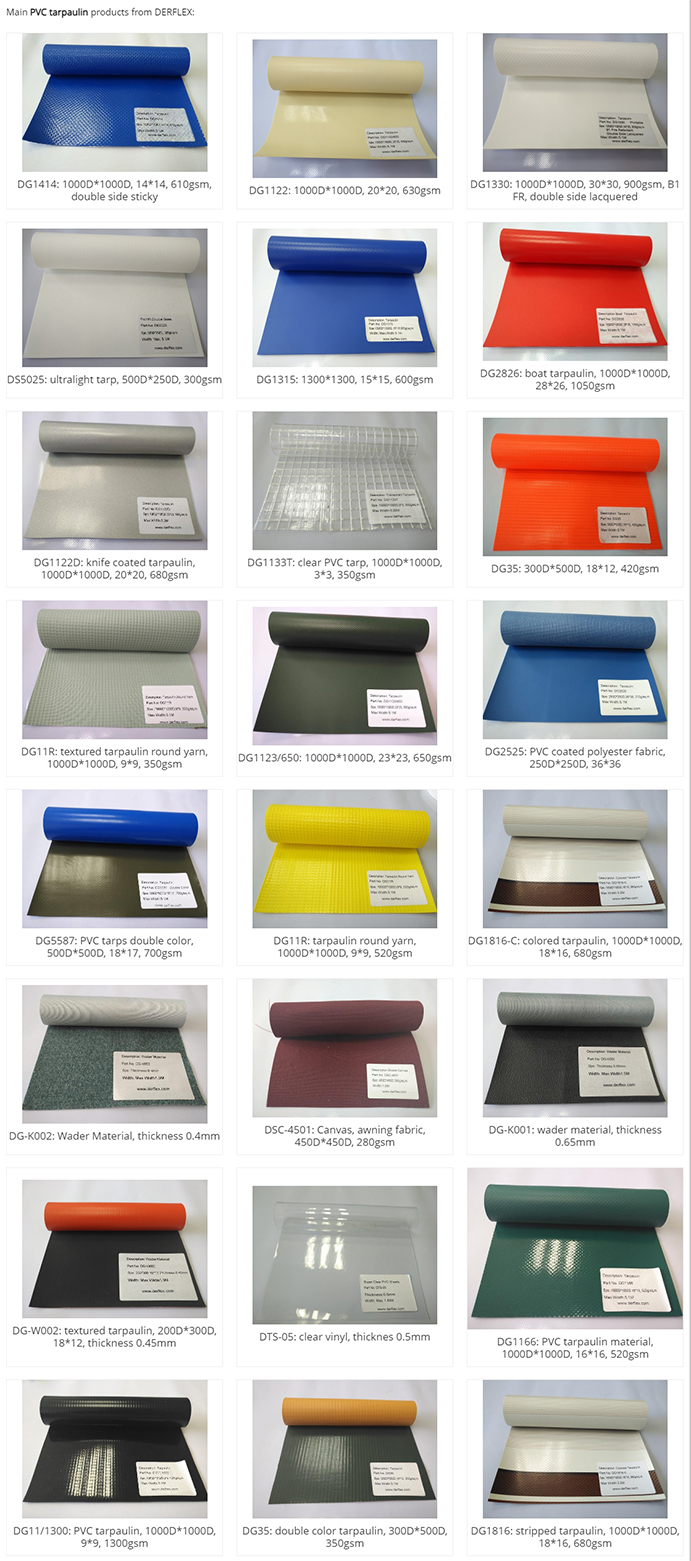
A typical waterproof shipyard tarp uses a high-tenacity polyester scrim coated or laminated with PVC. The reinforcement carries tensile and tear loads, while the coating provides water resistance, cleanability, color, weldability and environmental protection. Optional surface and formulation adjustments are selected according to outdoor exposure, abrasion, cold conditions, mildew risk and requested flame behavior.
Each characteristic should be specified against the actual project environment. Statements such as “heavy duty” or “waterproof” are meaningful only when fabric weight, seam design, exposure, attachment layout and acceptance criteria are also defined.
PVC-coated material can be hot-air or high-frequency welded for large panels. Finished water resistance depends on seam design, penetrations, slope, drainage and installation.
High-tenacity reinforcement and localized webbing help manage wind pressure, suspended loads, repeated handling and stress around grommets or D-rings.
Outdoor-grade formulations can be selected for sunlight, seasonal temperature changes and repeated marine exposure. The required test method should be confirmed before production.
Smooth or lacquered surfaces support routine removal of dust and common site contamination. Cleaning agents should be checked for compatibility with the selected coating.
FR formulations and third-party testing can be discussed for specified projects. The applicable standard, sample, test report and installation conditions must be agreed in advance.
Panel permeability can be adjusted to balance containment, visibility, airflow and wind loading instead of using a fully sealed tarp in every area.
The table below is a project-planning reference rather than a universal product guarantee. Final values depend on selected construction, confirmed sample, test method and purchase specification.
| Product Name | Shipyard tarps, dry-dock enclosure tarps, blasting containment tarps, marine maintenance covers and custom ship repair panels |
|---|---|
| Primary Material | PVC-coated or PVC-laminated polyester fabric; mesh and alternative coated structures can be evaluated for breathable or economy applications |
| Typical Fabric Weight | Approx. 450–1500 gsm for common marine and industrial cover directions; lighter or heavier constructions can be reviewed according to the project |
| Base Fabric | Commonly 500D–2000D polyester yarn structures with custom density and reinforcement according to load and handling requirements |
| Available Width | Typical roll widths from about 1.02 m up to 5.10 m depending on material construction; wider finished panels are created by welding or seaming |
| Surface Options | Matte, glossy, lacquered, embossed, easy-clean, printable or custom finish |
| Performance Directions | Waterproof, UV-resistant, anti-aging, anti-mildew, cold-resistant, abrasion-resistant, flame-retardant or anti-static directions subject to selected grade and agreed testing |
| Fabrication | Hot-air welding, high-frequency welding, sewing, perimeter hems, internal webbing grids, rope edges, reinforced corners and modular joining systems |
| Attachment Hardware | Rust-resistant grommets, D-rings, snap hooks, straps, buckles, pipe pockets, keder-style edges, drawcords and custom lifting or suspension points |
| Supply Format | Roll goods, cut sheets, fabricated panels, replacement sections, complete custom assemblies and private-label wholesale programs |
| Color Direction | White or light colors for visibility and light reflection; blue, grey, black, yellow, orange, green and custom color matching subject to production confirmation |
| Packing | Roll packing, folded bale packing, pallet packing, labeled project bundles or customized export packaging |
Custom shipyard tarps are most effective when the panel map is planned before fabrication. DERFLEX can work from drawings, dimensions, marked-up photos or a customer panel schedule to develop material and finishing proposals for shipyards, coating contractors, containment specialists and marine supply distributors.
For wholesale shipyard tarp programs, repeatable panel codes, labels, packing lists and replacement-piece logic can simplify site inventory and future orders.
Rectangular sheets, shaped panels, hull-side sections, roof panels, curtains, floor sheets and modular enclosure layouts can be produced from confirmed dimensions.
Perimeter webbing, internal load paths, double-layer corners, patch reinforcement and high-stress suspension points can be positioned according to the installation plan.
Grommets, D-rings, straps, buckles, zippers, hook-and-loop, pipe pockets, rope hems, keder edges and overlap flaps can be combined for site assembly.
Panel numbering, printed logos, orientation marks, bundle labels, installation sequencing and separate replacement-piece packing can support complex projects.
Custom colors, private labels, retail or industrial packaging, roll labels, recurring specifications and batch control can be discussed for established wholesale demand.
DERFLEX shipyard tarps can be configured for temporary projects, recurring maintenance cycles or distributor product lines serving marine contractors and vessel operators.
Enclosure panels for limiting the movement of blasting media, corrosion debris, dust and removed coatings around hull preparation work.
Temporary curtains and enclosure skins used around spray-coating work zones, scaffold systems and localized maintenance areas.
Roof and side panels for rain protection, wind reduction and controlled maintenance zones during vessel repair or coating work.
Modular sheets, breathable screens and hybrid panels attached to temporary access structures around ships and large marine components.
Waterproof covers for deck machinery, tools, fabricated modules, spare parts, propulsion components and dockside maintenance equipment.
Reusable covers for steel sections, packaged components, ship chandlery, repair materials and marine cargo awaiting installation or shipment.
A clear project brief reduces unnecessary weight, weak attachment layouts and mismatched performance. The following sequence helps DERFLEX recommend a practical construction.
State whether the tarp is for full containment, rain protection, overspray control, breathable screening, equipment coverage or a hybrid enclosure.
Provide expected wind, sunlight, temperature, salt-air exposure, humidity, abrasion sources, sharp edges and installation duration.
Confirm scaffold bay dimensions, cable spacing, pipe diameter, edge overlap, access doors, lifting points and panel joining method.
Identify required flame, anti-static, tensile, tear, coating adhesion or chemical tests and specify the applicable method or project standard.
Indicate whether panels will be installed once, relocated frequently or reused across projects. This affects weight, reinforcement and packing design.
Share sizes, panel quantity, color, delivery destination, target schedule, packing method, branding and forecast repeat demand.
A typical custom shipyard tarp program can include pre-production sample confirmation and checks on material weight, thickness, color, surface, coating quality, dimensions, seams, reinforcement, hardware placement and packing. The inspection plan should be agreed according to order size and project risk.
DERFLEX serves buyers who need specification support, material customization and repeatable supply rather than only standard retail tarp sizes.
Fabric weight, coating, reinforcement, seam method and attachment hardware are reviewed together around the application.
Support for samples, panel schedules, marked drawings, custom colors, identification and packing requirements.
Roll material, cut sheets, fabricated panels, finished shipyard tarps and OEM/private-label programs for different buyer types.
Specification records, panel coding and packaging logic can support replacement sections and recurring procurement.
Explore related materials, custom fabrication and application pages without splitting closely related shipyard tarp search intent into multiple duplicate pages.
Practical answers for shipyard procurement teams, marine contractors, coating companies, containment specialists and distributors.
Shipyard tarps are used for abrasive-blasting and painting containment, dry-dock weather enclosures, scaffold wrapping, vessel maintenance zones, deck equipment covers, component storage, dockside protection and temporary work-area separation.
PVC-coated polyester is commonly selected for heavy duty waterproof shipyard tarps because it combines tensile strength, tear resistance, weldability, cleanability and outdoor weather protection. Mesh or coated polypropylene directions may be considered where airflow, lower weight or reduced wind loading is more important.
DERFLEX can supply waterproof PVC-coated material and welded panel constructions. Finished system performance also depends on seams, hardware penetrations, overlap, slope, drainage, support spacing and site installation, so these details should be confirmed as part of the project specification.
Flame-retardant material directions can be discussed. The buyer should identify the required test method, classification and documentation before quotation. An FR tarp is not automatically approved for welding, sparks or direct hot-work exposure.
Yes. Custom options can include sheet size, shaped panels, welded seams, reinforced hems, internal webbing grids, grommet spacing, D-rings, straps, pipe pockets, rope edges, overlap flaps, access openings, printed identification and project-specific packing.
A solid coated tarp provides stronger weather protection and lower permeability, while a screen allows more airflow and usually reduces wind pressure. The correct choice depends on the material being contained, environmental controls, ventilation design and site engineering.
Please provide the application, panel dimensions or drawings, quantity, expected wind and outdoor exposure, containment level, material preference, color, reinforcement plan, attachment hardware, flame or other test requirements, reuse plan, packing method, destination and required delivery schedule.
Share the enclosure purpose, panel dimensions, material direction, attachment method, test requirements, quantity and delivery destination. DERFLEX will review the information and propose a suitable material and fabrication route for quotation.
Drawings, scaffold bay dimensions, marked photos, panel schedule, current sample, required standard, packing list or expected annual demand.
Request A Quote