Protect the Opening
Top covers can reduce direct entry of rain, dust and debris into open storage or process tanks when the fixing and drainage design are suitable.




DERFLEX supplies custom industrial tank cover tarps for steel, polyethylene, FRP and concrete tanks, secondary-containment sumps, maintenance openings and outdoor process equipment. The cover can be developed around the tank geometry, exposure conditions, access points and fastening layout rather than treated as a generic flat sheet.
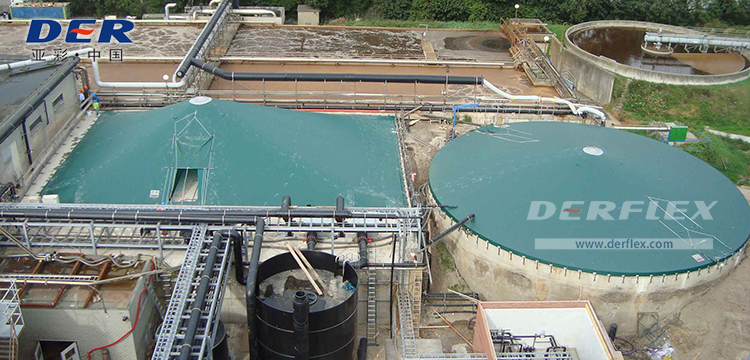
An industrial tank cover tarp is a flexible protective cover used to limit rainwater entry, dust, leaves, bird contamination, sunlight exposure and weather-related surface damage. Depending on the project, it may cover the tank top, enclose the full tank body, protect a secondary-containment sump, or provide a temporary barrier during inspection and maintenance.
Tank covers face different stresses from ordinary storage tarps. Round edges can create uneven tension, tall fittings can push against the fabric, wind can lift loose sections, and a flat cover can collect standing water. A practical design therefore considers drainage slope, fastening-point loads, corner reinforcement, nozzle clearance, access frequency and the way installers will remove or refit the cover.
DERFLEX can supply PVC coated polyester fabric rolls to local fabricators, cut or welded panels for project assembly, and finished custom industrial tank cover tarps for distributors, contractors and OEM equipment programs.
Top covers can reduce direct entry of rain, dust and debris into open storage or process tanks when the fixing and drainage design are suitable.
Full fitted covers can protect external tank surfaces, instruments and insulation from outdoor weather during storage, transport or seasonal shutdown.
Temporary covers can isolate an opened tank during inspection or cleaning while removable panels and access flaps keep the work sequence practical.
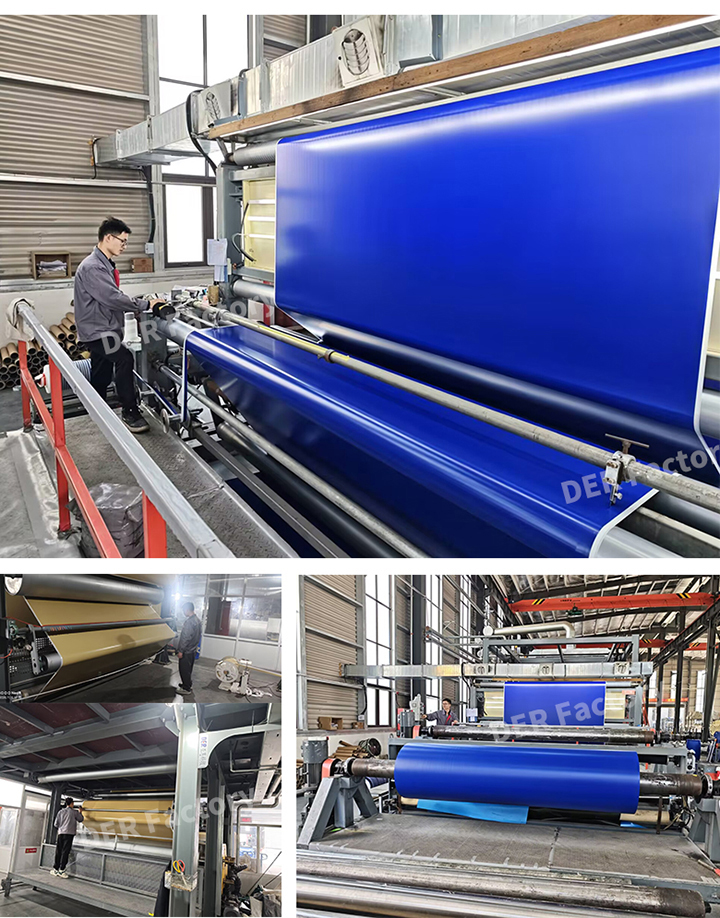
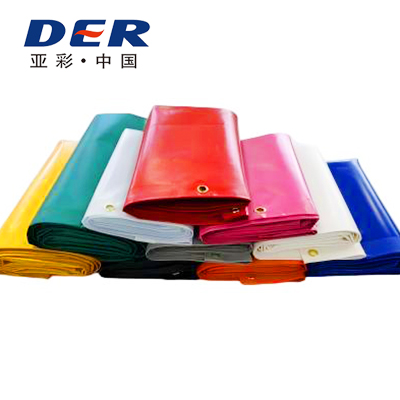
The material system is selected according to cover duty, fabrication method and the substances around the tank.
The woven core provides tensile strength, dimensional stability and tear resistance around seams, tie-downs and shaped sections.
A continuous coating forms a waterproof, cleanable surface and supports thermal welding for larger panels and fitted cover construction.
Glossy, matte, acrylic-lacquered, anti-mildew, UV-oriented, cold-resistant, abrasion-resistant or selected PVDF surface directions can be discussed.
Additional fabric, webbing, corner patches and shaped load-spreading zones help protect edges around eyelets, straps, D-rings and cut-outs.
Performance options should be confirmed against the tank contents, outdoor exposure, fastening tension and expected service routine.
Coated fabric and welded seams can be selected to reduce rainwater entry and wind-driven moisture.
Outdoor formulations and surface treatments can be matched to sunlight, temperature cycling and seasonal use.
Polyester reinforcement and local patches help manage pull around edges, straps, openings and irregular profiles.
Contact zones can use additional layers or protective pads where the cover rubs against flanges, rails or sharp transitions.
Selected PVC surfaces can be wiped or washed according to site procedures and compatibility requirements.
HF, RF or hot-air welding can create wide panels, shaped components and water-resistant seam layouts.
Flame-retardant directions may be discussed where the site risk assessment and applicable standard require them.
Chemical contact, concentration, temperature and duration must be reviewed before material approval.
The table provides a practical quotation range. Final values depend on yarn, coating weight, finish, cover geometry, testing and order quantity.
| Product Direction | Industrial tank cover tarp, fitted tank cover, tank top cover, containment sump cover, maintenance tarp or custom protective cover |
|---|---|
| Primary Material | PVC coated high-tenacity polyester fabric; PE woven or specialty coated structures can be reviewed for selected applications |
| Typical Weight | 450–1200gsm for many PVC cover projects; lighter or heavier structures are available subject to application review |
| Typical Thickness | Approximately 0.35–1.00mm depending on coating structure and target performance |
| Roll Width | Common industrial widths with selected structures available up to approximately 5.10m |
| Cover Geometry | Round, oval, square, rectangular, conical, box-shaped, top-only, full enclosure or drawing-based fitted cover |
| Surface & Color | Glossy, semi-gloss, matte or lacquered; blue, green, gray, black, white and custom colors subject to production conditions |
| Seam Processing | High-frequency welding, radio-frequency welding, hot-air welding, thermal welding or sewing with seam protection where appropriate |
| Edge Reinforcement | Folded hem, PVC reinforcement strip, polyester webbing, rope edge, corner patch or multi-layer load zone |
| Fastening Options | Stainless or plated eyelets, D-rings, straps, buckles, elastic/bungee cord, hook-and-loop, zipper, lacing or project hardware |
| Access Details | Inspection flaps, sampling ports, pipe boots, vent openings, drain points, removable sections and identification marks |
| Performance Options | Waterproof, UV-resistant, abrasion-resistant, tear-resistant, anti-mildew, cold-resistant, anti-static or flame-retardant direction by grade |
| Supply Format | Roll goods, cut panels, welded sheets, semi-finished components or finished custom tank cover tarps |
| OEM / Wholesale | Custom label, logo, color, packing, carton mark, roll core, inspection record and repeat-order specification control |
Chemical resistance and regulatory suitability are not determined by material name alone. Confirm the actual chemical, concentration, contact mode, temperature, exposure time and required standard before production.
A reliable fit comes from mapping the entire tank and service routine, including components that project above or around the cover line.
Panels can be shaped around cylindrical walls, cone tops, square frames, skirt drops, protrusions and irregular transition zones.
Sloped sections, central supports, drain sleeves or tensioning concepts can help reduce water pooling on horizontal covers.
Zip panels, hook-and-loop flaps, rolled access doors, removable segments and labeled openings support routine checks.
Boots, collars, sleeves and reinforced cut-outs can be positioned around valves, vents, mixers, ladders and sampling points.
Webbing loops, bungee, straps, D-rings and closely spaced eyelets can be arranged according to available anchors and wind exposure.
Contact patches and sacrificial layers can be added where repeated movement may cause rubbing against tank edges or hardware.
Logos, orientation marks, warning text, panel numbers and packing labels can support OEM supply and installation control.
Oversized covers can be divided into manageable sections with overlap, zipper, lacing or connection strips for transport and installation.
A tank diameter does not reveal top fittings, wall height, access ladders, flange positions or tie-down points. A dimensioned drawing, site photo and simple marked sketch help DERFLEX recommend whether a flat round cover, supported top cover, fitted cap or full enclosure is more practical.
Each application should be reviewed independently because the required barrier, access and fixing details are not the same.
Opaque solid covers can limit sunlight and debris exposure. The project should address drainage, ventilation, hygiene procedures and water-contact requirements separately.
Custom openings can accommodate mixers, pipes, vents and sampling points while preserving access for operation and maintenance.
Fitted covers can reduce rainwater accumulation and wind-blown debris around portable or fixed containment units.
Temporary heavy duty industrial tank cover tarps can protect open work zones from weather and foreign material during inspection, cleaning or repair.
Material approval must follow a documented compatibility review. The tarp is not a substitute for the tank’s primary containment system.
Full fitted covers can shield tanks, instruments and external finishes during outdoor storage, shipment or seasonal inactivity.
For custom industrial tank cover tarp wholesale and OEM programs, a controlled specification helps later batches match the approved cover.
Confirm whether the cover is for rain, dust, UV, maintenance, transport or temporary isolation.
Check geometry, fittings, access, anchors, sharp zones and possible water-collection areas.
Match base fabric, coating, weight, finish and optional treatments to the actual exposure.
Confirm drawing, finished size, seams, reinforcement, fastening, markings and packing.
Use approved specifications, samples and packing references to support stable ongoing supply.
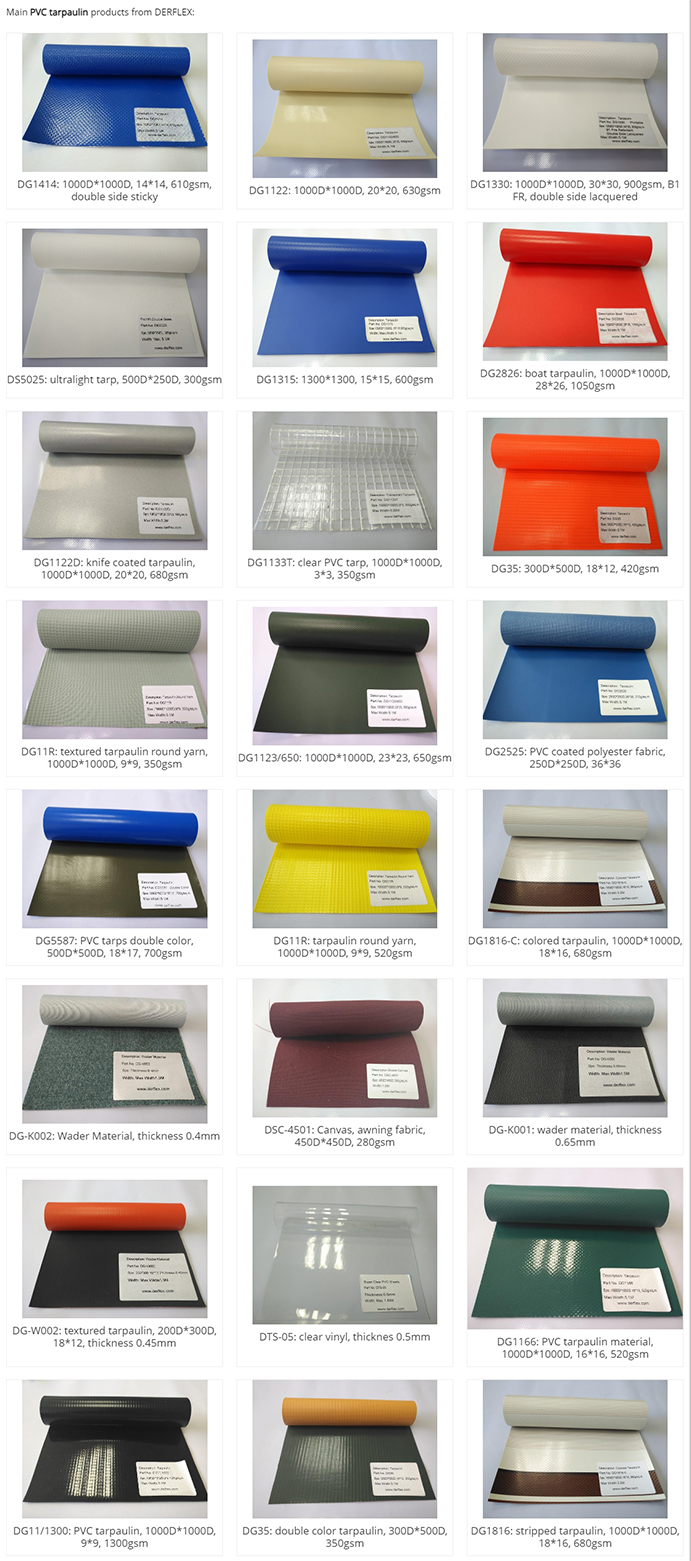
DERFLEX focuses on specification-based supply for fabricators, industrial buyers, distributors and custom tank cover tarp manufacturers.
Fabric weight, color, surface, roll width and specified functional treatment can be checked against the approved order requirements.
Finished dimensions, panel layout, openings and hardware positions can be reviewed against the confirmed drawing or sample.
Welded or sewn seams, edge bands, corner patches and attachment zones can be inspected according to the agreed construction.
Tensile, tear, flame-retardant, UV, chemical or other testing can be discussed based on the selected grade and the required standard.
Labels, panel numbers, folding method, cartons, pallets and export marks can be documented for distribution or project delivery.
The lowest fabric weight or simplest shape may not provide the lowest operating burden if the cover is difficult to secure, drain or remove.
These six pages cover adjacent material, fabrication and engineered membrane requirements.
Practical answers for tank fabricators, plant operators, contractors, importers and OEM buyers.
It is used to protect a tank opening, tank body or secondary-containment area from rain, dust, leaves, bird contamination, sunlight and outdoor weather. It can also provide temporary protection during tank inspection, cleaning or maintenance. The exact function should be defined before the fabric and fastening system are selected.
Yes. DERFLEX can discuss flat round covers, circular caps, box-shaped covers, skirts, cone-top covers, full fitted enclosures and drawing-based panel layouts. Tank fittings, ladders, vents, nozzles and anchor points should be included in the drawing.
PVC coated polyester is commonly selected because it combines a reinforced textile core, waterproof coating and weldable fabrication. The correct weight, surface finish and treatment depend on UV exposure, wind, handling, abrasion, temperature and possible chemical contact.
Yes. Custom details can include zippered or hook-and-loop access flaps, removable panels, sampling ports, pipe boots, sleeves, vent openings, drain points and reinforced cut-outs. Their location should be shown on the tank drawing.
Not automatically. Weather covers and chemical-contact covers must be checked against the actual substance, concentration, temperature and contact duration. Gas-tight, pressurized, odor-control, structural or primary-containment systems require a project-specific engineered membrane rather than a standard tarp specification.
Send a dimensioned tank drawing or marked photos, top and side profile, fitting positions, access requirements, fastening points, exposure conditions, expected quantity, material preference and any performance or documentation target. This allows a more relevant recommendation and quotation.
Send DERFLEX the tank drawing, photos, dimensions, exposure conditions, access details and quantity. The team can review material direction, fabrication details and supply format for your custom industrial tank cover tarp project.