
Pressure direction
Positive-pressure supply can use collapsible structures. Suction and extraction generally need helix or ring support to preserve an open cross-section.



DERFLEX manufactures project-configured industrial flexible duct systems for fresh-air supply, equipment cooling, temporary HVAC, fume extraction, dust control and portable blower connections. Each flexible duct hose can be developed around airflow direction, fan interface, route geometry, handling conditions and the required material specification.
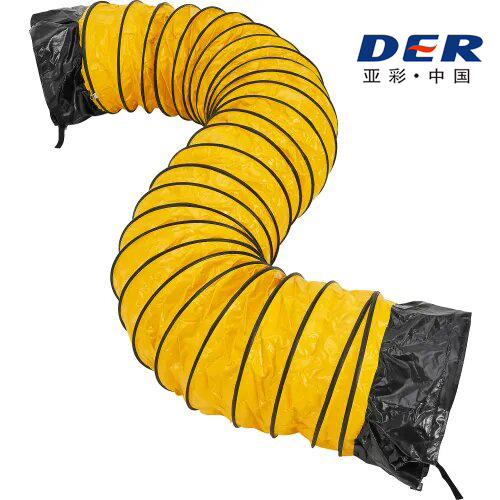
An industrial flexible duct is a bendable or collapsible conduit used to move air between a fan, machine, work zone, extraction hood or discharge point. Depending on the operating direction, the finished duct may use a layflat body for positive-pressure air supply or a continuous steel-wire helix that keeps an industrial duct hose open during suction and exhaust.
The duct wall is commonly made from coated polyester fabric. The textile provides tensile and tear support, while the polymer coating creates an air barrier and helps the surface resist moisture, repeated folding and routine site handling. Welded or sewn construction, cuffs, wear strips, suspension points and identification marks complete the assembly.
The phrase flexible duct hose covers several different constructions. A light portable ventilation hose, a wire-supported fume extraction duct and a long positive-pressure tunnel section may look similar, but they respond differently to pressure, bending, dragging and temperature. A useful specification therefore starts with the system data and expected duty cycle.
These decisions influence material weight, reinforcement, seam method, section length and connection details. Confirming them early helps prevent an overbuilt duct that is difficult to handle or an underspecified hose that collapses, leaks or wears prematurely.
Positive-pressure supply can use collapsible structures. Suction and extraction generally need helix or ring support to preserve an open cross-section.
Fresh air, heat, welding fumes, dust, oil mist and process vapors place different demands on the coating, seam and cleaning method.
Bends, total length, hanging points, dragging, compression and relocation frequency affect wire pitch, wear protection and practical section size.
Blower collars, clamps, zippers, rings, grounding details and any fire or surface-resistance requirement should be documented before approval.
DERFLEX can coordinate the coated textile and finished flexible duct fabrication as one project. This allows the duct wall, reinforcement, seams and interfaces to be reviewed together instead of being sourced as unrelated components.
High-tenacity textile supports tensile and tear loads; the coating creates an air barrier and provides a cleanable, moisture-resistant surface for common industrial ventilation duties.
Spring-steel reinforcement helps the flexible duct hose retain its section during suction, bending or connection to portable ventilation equipment.
High-frequency welded or application-selected seams are combined with reinforced cuffs, lifting points and stress zones according to the approved construction.
External strips can reduce contact wear along the wire path. Zippers, belts, clamps, rings, hooks or webbing loops support field connection and routing.
Terms such as “heavy duty” are useful only when they are connected to pressure, temperature, handling and testing. The following characteristics can be engineered into an industrial flexible duct after the working conditions are confirmed.
The duct can follow temporary layouts, machine connections and obstacles without the elbow inventory and installation time associated with a fully rigid route.
Helical wire pitch and diameter can be selected to balance collapse resistance, bend radius, weight and compressibility for suction or mixed-duty service.
Correct diameter, seam construction, cuff fit and route planning help limit leakage and avoid unnecessary pressure loss at compressed sections or sharp bends.
Fabric weight, external wear strips and local reinforcement can be adjusted for suspended lines, floor contact, dragging or frequent deployment.
Compressible sections, carry straps and storage bags can reduce vehicle space and simplify deployment for service crews and portable blower packages.
Flame-retardant and antistatic formulations can be evaluated against a specified test method. Final suitability depends on the whole duct and ventilation system.
The table is a project-planning reference, not a universal performance declaration. Final values are established by the approved sample, construction drawing, test method and purchase specification.
| Product form | Wire-reinforced spiral flexible duct hose; layflat positive-pressure duct; short equipment connector; portable blower duct; custom fabricated section. |
|---|---|
| Body material | PVC-coated polyester fabric or application-selected technical textile. |
| Typical diameter | 100–2000 mm; custom diameter subject to construction, tooling and order review. |
| Section length | 3 m, 5 m, 10 m or project-defined modular sections. |
| Reinforcement | Spring-steel helix, support rings or non-reinforced layflat construction according to pressure direction. |
| Typical PVC service temperature | Approximately -20°C to +80°C for selected standard constructions; confirm continuous temperature, radiant heat and media before order. |
| Connection options | Soft cuff with clamp, belt-and-buckle cuff, zipper, steel ring, drawcord, flange adapter or buyer-specified interface. |
| Suspension | Eyelets, hooks, webbing loops, continuous fin, straps or custom spacing. |
| Surface and color | Yellow, orange, black, blue, green or custom color; smooth, coated and cleanable surface depending on grade. |
| Optional treatments | Flame-retardant, antistatic, cold-flexible, abrasion-enhanced or application-specific coating options, subject to confirmed testing. |
| Branding and identification | Printed logo, airflow arrow, diameter, section number, part code, inspection mark, storage bag and private-label carton. |
| Inspection options | Material verification, dimensions, seam appearance, connection fit, suspension spacing, packing review and agreed leakage or pressure sample test. |
For corrosive fumes, very high temperatures, combustible dusts or classified hazardous locations, provide the full process and regulatory information. A material label alone does not establish system compliance.
DERFLEX supports custom industrial duct hose programs for ventilation equipment companies, distributors, contractors and project buyers. The objective is a repeatable bill of construction that can be checked before bulk production and reordered without ambiguity.
Standard or non-standard diameters, modular section lengths, tapered transitions and short machine connectors.
Helix diameter, pitch, external abrasion strip and reinforcement placement matched to suction, bends and handling.
Zipper, ring, clamp, drawcord, belt cuff, flange adapter or interface duplicated from an approved sample.
Hooks, tabs, eyelets, fins or webbing loops positioned for horizontal, vertical or equipment-side routing.
Logo, airflow direction, diameter, item code, section number, warning text and distributor packaging.
Compressed bags, straps, cartons and pallet plans configured around crew size, shipment method and deployment frequency.
The same outer form can serve very different applications. Duct construction is selected according to airflow direction, contaminant, temperature, route movement and connection requirements.
Temporary fresh-air supply, machine cooling and local airflow distribution in workshops and production areas.
Compressible ducts for maintenance crews, emergency ventilation, drying, cooling and confined work zones.
Wire-supported routes for welding stations, tanks, fabrication work and temporary exhaust collection.
Flexible links between moving equipment, extraction hoods, collectors and process points where rigid runs limit access.
Temporary air supply, dehumidification, negative-air equipment and removal of dust-laden air from changing work zones.
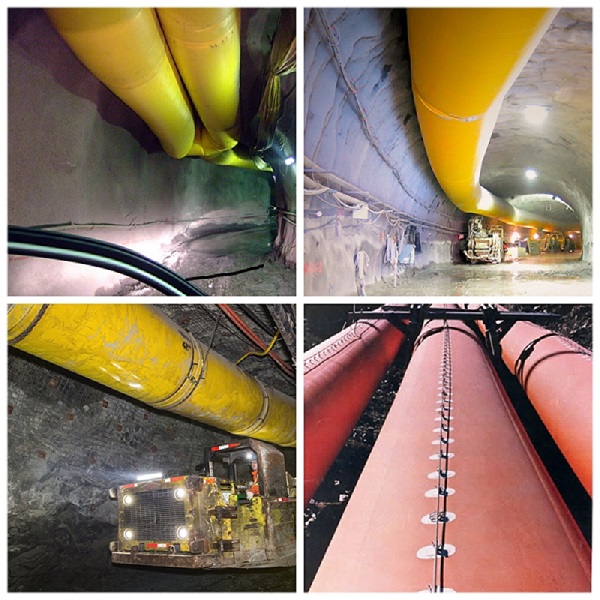
Project-configured supply or extraction sections for underground and enclosed environments, subject to specified safety requirements.
A documented workflow helps align technical expectations, sample approval, inspection and repeat orders for custom industrial flexible duct programs.
Air direction, contaminant, fan data, route and installation method.
Outlet dimensions, cuff geometry, coupling and suspension layout.
Fabric grade, wire support, seam, wear strip, color and marking.
Fit, flexibility, dimensions and agreed performance checks.
Recorded specification, batch inspection, packing and shipment.
Quality requirements are most useful when written into the approved specification. Inspection scope can be adjusted according to the product, order volume, project risk and requested documentation.
Check coated fabric grade, color, weight, finish and any requested flame-retardant or antistatic formulation.
Confirm diameter, section length, cuff size, wire pitch, suspension spacing and mating dimensions.
Inspect seam continuity, local reinforcement, wear-strip position, end construction and visible workmanship.
Verify zipper, ring, clamp, belt or custom cuff geometry against the approved sample or drawing.
Record order identification, artwork, inspection criteria, packing method and critical construction details for repeat production.
A complete RFQ reduces assumptions and allows material, reinforcement and connection details to be reviewed before pricing.
These six related pages help compare alternative duct constructions and supporting material options.
Answers for equipment manufacturers, distributors, ventilation contractors and industrial project buyers.
A flexible duct can bend, compress and adapt to temporary or changing routes. It is often easier to transport and connect to portable equipment. A rigid metal duct generally offers a smoother, fixed route and may be preferred for permanent systems. The appropriate choice depends on pressure, temperature, contaminant, movement and regulatory requirements.
Wire reinforcement is normally considered when the duct must remain open under suction, negative pressure, tight bends or unsupported routing. Wire diameter and pitch are selected according to duct diameter, pressure, section length, bend requirement and handling.
A wire-supported construction may be evaluated for both directions, but the fan data, pressure range, media and full route should be checked. A layflat duct intended only for positive-pressure inflation can collapse when used for suction.
Typical project ranges can cover diameters from approximately 100 mm to 2000 mm and section lengths such as 3 m, 5 m or 10 m. Custom dimensions are reviewed against construction, handling, reinforcement and order requirements.
Optional flame-retardant and antistatic formulations can be discussed. The required test method, limit, sample conditioning and finished-product construction must be confirmed before production. These options do not by themselves certify the entire ventilation system for a hazardous location.
Provide the blower outlet diameter or dimensions, cuff length, flange or guard interference, attachment method and a photo or drawing. Also state whether the blower will push or pull air, because suction duty may require a shape-retaining structure.
Yes. Custom color, logo, part number, airflow arrow, section identification, storage bag and private-label packaging can be included in the approved specification, subject to order review.
Send the blower interface, pressure direction, diameter, route, temperature, contaminant and connection requirements. DERFLEX can review a suitable coated-textile body, reinforcement and finished duct construction for quotation.