Water Resistance
Define splash, wipe-clean, rain, marine moisture or other exposure conditions and select a material/test route that reflects real use.



Custom polyurethane leather developed for buyers who need a leather-like surface with water-resistant, easy-clean and application-matched performance—without treating “waterproof” as a one-size-fits-all claim.
For professional sourcing, the surface, backing, seams, edges, bonding method and finished-product construction all influence water performance. DERFLEX helps define the material specification around the actual end use before sampling and bulk supply.
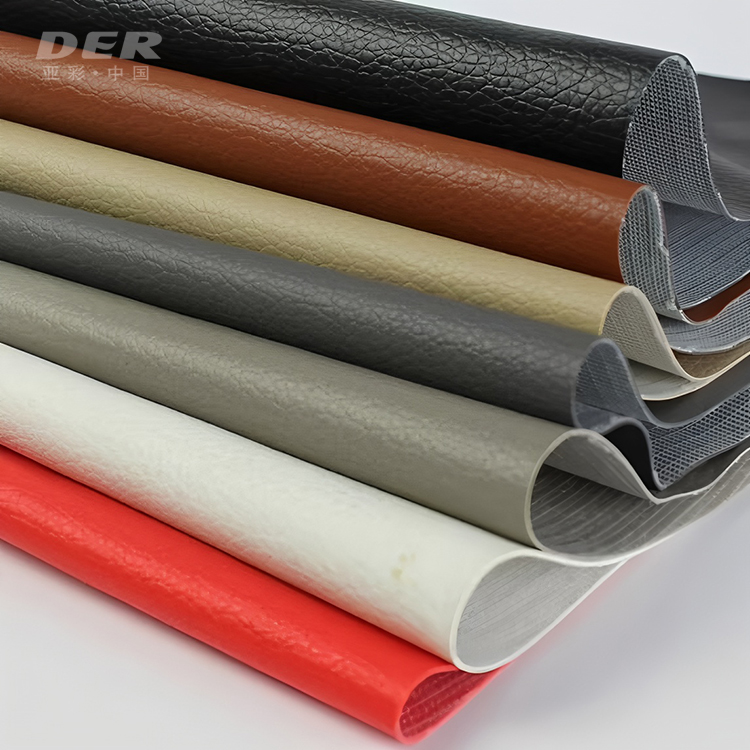
In commercial searches, waterproof PU leather often describes polyurethane synthetic leather designed to resist water on the exposed surface and allow routine wiping or cleaning. The wording does not automatically mean that every roll, seam or finished product will remain watertight under prolonged immersion, pressure or outdoor exposure.
A better sourcing conversation separates the desired water behavior from the material name. That makes it easier to choose coating construction, backing, thickness and testing that match the finished product.
Suitable direction for furniture, bags, hospitality seating and interior surfaces where short contact with liquids and easy cleaning matter.
A more deliberate surface system for repeated splash, moisture exposure or wet-cleaning programs. Backing and finish still need to be matched to the use environment.
Requires evaluation beyond the roll material. Stitch holes, seams, zipper construction, edges, bonding and assembly design can become the actual water-entry path.
PU leather is an engineered layered material. The polyurethane surface creates the leather-like appearance and contributes to cleanability and moisture resistance, while the backing controls body, stretch, dimensional stability, sewing behavior and how the material reacts after repeated flexing.
For a waterproof PU leather project, DERFLEX can discuss the structure around the required touch, grain, backing, thickness, coating route and end-use exposure rather than recommending the same construction for every application.
DERFLEX product visuals show representative leather-look materials. Final waterproof PU leather construction should be confirmed through a project sample and written specification.
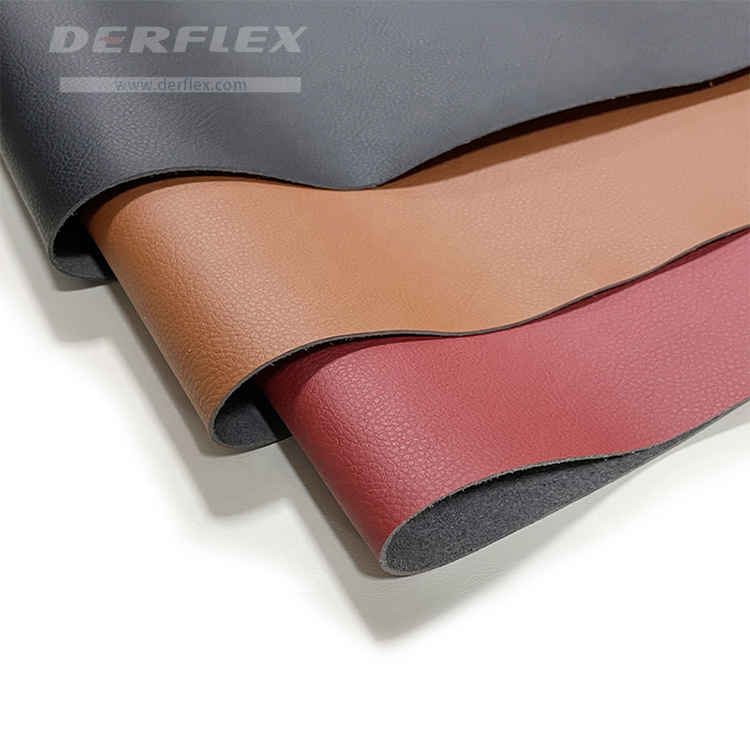
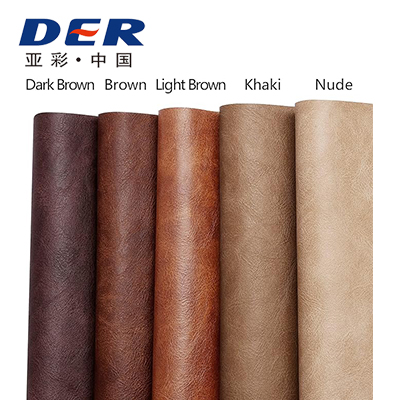
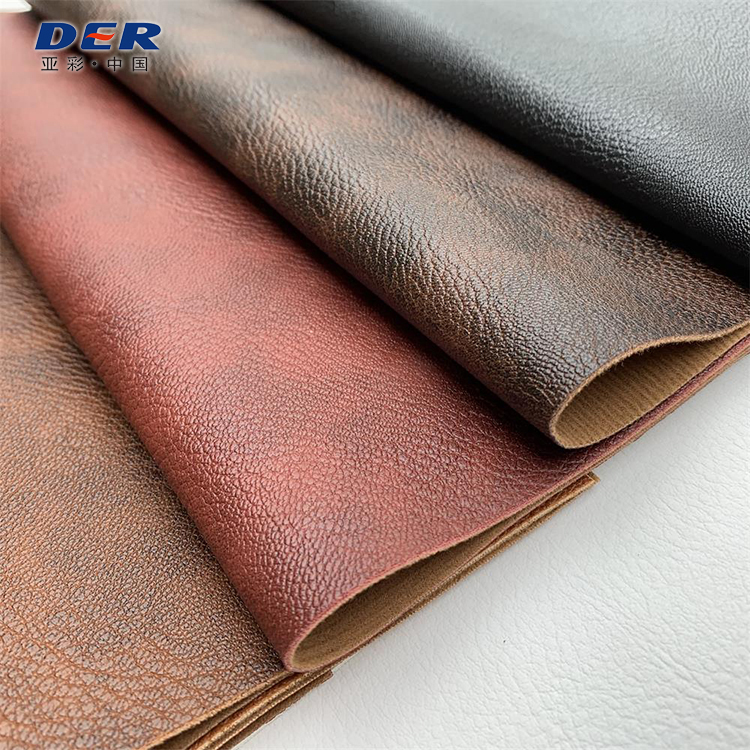
A water-resistant surface can fail commercially if the material is wrong for abrasion, flexing, hydrolysis, cleaning chemicals, backing strength or the converting process. These performance directions should be discussed separately.
Define splash, wipe-clean, rain, marine moisture or other exposure conditions and select a material/test route that reflects real use.
Useful for seating, hospitality, automotive trim and high-contact products. Cleaning-agent compatibility should be confirmed for the project.
Seat edges, bag corners, armrests and high-contact panels often need more attention to rubbing and surface retention than flat decorative areas.
Humidity and heat can affect polyurethane systems over time. Buyers in warm or humid markets should state service conditions and target test expectations.
Marine and outdoor leisure applications may require additional UV, mildew and weather-related evaluation. Interior-grade PU should not be assumed suitable outdoors.
Knitted, woven, nonwoven and microfiber backings can change stretch, body, sewing, wrapping and lamination behavior even when the face looks similar.
The values below are sourcing directions rather than universal product guarantees. Exact construction, tolerance and test performance should be confirmed against the approved sample and purchase specification.
| Specification Point | Typical Discussion Direction | Why It Matters |
|---|---|---|
| Product Description | Waterproof PU leather, water-resistant PU leather fabric, polyurethane synthetic leather, easy-clean faux leather | Use the final application in the inquiry instead of relying on the material name alone. |
| Surface | Napa-style, fine pebble, smooth, matte, semi-matte, gloss, printed, embossed or custom grain | Grain and finish influence appearance, cleaning, touch and perceived product positioning. |
| Backing | Knitted, woven, nonwoven, polyester, microfiber or application-specific construction | Backing affects stretch, body, sewing, bonding, fold recovery and dimensional stability. |
| Thickness | Selected by application; lightweight wrapping grades through heavier upholstery directions | A bag lining, sofa seat, automotive panel and marine cushion do not require the same body or gauge. |
| Width | Commercial roll widths according to construction and production route; custom discussion available | Width influences cutting yield, marker layout, seam count and conversion efficiency. |
| Water Performance | Spill resistance, wipe-clean surface, water-resistance direction or project-specific test request | Exposure time, pressure and finished-product design determine the meaningful test method. |
| Other Performance | Abrasion, flexing, adhesion, hydrolysis, UV, colorfastness, anti-mildew, cold resistance or FR direction | These properties solve different failure modes and should not be replaced by one broad “waterproof” claim. |
| Color & OEM | Standard colors, reference-sample matching, custom collection colors, grain development, roll labels and packing | Useful for furniture brands, automotive programs, bag collections, distributors and private-label supply. |
| Verification | Material swatch, approval sample, processing trial, project-specific testing and written tolerance | Physical approval reduces misunderstandings between visual target, technical performance and production behavior. |
Technical note: material suitability varies with formulation, backing, thickness, finish, storage, processing and final product construction. Where waterproof performance is critical, validate the finished article—not only the flat roll material.
The same keyword serves very different industries. DERFLEX recommends selecting the construction by exposure, processing method and expected service environment.
Sofas, chairs, headboards, restaurant seating and hotel interiors can prioritize soft touch, spill resistance, easy cleaning, color repeatability and abrasion direction.
Car seats, door panels, armrests, headrests and trim need controlled grain, backing behavior, heat/humidity awareness, abrasion performance and interior-cleaning compatibility.
Handbags, travel goods, cases and wallets benefit from water-resistant surfaces, but folding, stitching, skiving, edge paint, abrasion and reinforcement compatibility must also be checked.
Boat cushions and moisture-exposed seating can require stronger attention to water resistance, mildew direction, UV exposure, cleaning and backing durability than indoor upholstery.
Medical furniture, mattress covers and treatment seating may need controlled cleanability, surface integrity and customer-specific chemical or documentation requirements.
Decorative wall panels, wrapped parts, protective surfaces and private-label products can use PU leather where leather-like appearance and repeatable roll supply are important.
The fastest way to reduce sampling rounds is to send the application, exposure condition and conversion method together. DERFLEX can then review surface direction, backing, thickness, color, grain and performance priorities as one material system.
Send Project RequirementsTell us whether the material is for a sofa, car seat, handbag, luggage panel, marine cushion, mattress cover, wrapped panel or another component.
State whether the requirement is spill resistance, wet cleaning, rain, marine splash, outdoor moisture or another measurable condition.
Confirm grain, gloss, hand feel, thickness, firmness, stretch, backing and how the material will be cut, sewn, wrapped, bonded or laminated.
Review appearance, conversion behavior and the agreed performance route on a physical sample before bulk production.
Keep an approved reference and confirm roll packing, labels, tolerance, inspection points and documentation for future replenishment.
A precise inquiry helps the supplier select a closer starting construction and gives purchasing teams a clearer basis for comparing samples.
Final product, exact area of use and expected service environment.
Physical swatch, Pantone direction, gloss, embossing and hand-feel reference.
Current material data, body, flexibility, stretch, foam or lamination requirement.
Exposure condition plus abrasion, hydrolysis, UV, anti-mildew, FR or other priorities.
Estimated volume, color split, roll width/length, label, destination and delivery plan.
DERFLEX supports synthetic leather programs for manufacturers, importers, distributors and product brands that need more than a generic “waterproof leather” listing. The goal is to align appearance, processing, performance direction and commercial supply around the finished product.
Furniture, automotive, bags, marine and medical projects are reviewed against different use conditions.
Color, grain, backing, thickness, touch, finish and packaging can be discussed for OEM programs.
Physical reference, production records and written specification help improve repeat-order consistency.
PU, PVC, microfiber and adjacent synthetic leather systems can be compared before a project commits to one route.
Six closely related internal resources help buyers move from broad material research to application-specific sourcing.
Practical answers for upholstery factories, automotive suppliers, bag manufacturers, marine seating builders, distributors and OEM sourcing teams.
PU leather can be developed with a water-resistant, non-absorbent or easy-clean surface direction, but the term should not be treated as a universal guarantee of complete waterproofness. Coating structure, backing, seams, edges, needle holes and finished-product design all influence water entry. For critical applications, define the exposure condition and test the final product.
In general commercial language, “water-resistant” describes a material that resists moisture to a defined degree, while “waterproof” suggests a stronger barrier. In professional procurement, the useful distinction comes from the test method, pressure, duration and finished construction rather than the label alone.
DERFLEX can discuss custom grain, color, gloss, backing, thickness, softness, roll width, packing and project-specific performance directions such as water resistance, easy cleaning, abrasion, hydrolysis, UV or anti-mildew. Final suitability should be confirmed through sample approval and agreed testing.
Selected PU constructions can be considered for marine seating or moisture-exposed leisure applications, but outdoor suitability also depends on UV exposure, hydrolysis, mildew, temperature, cleaning and backing durability. An indoor upholstery grade should not automatically be used outdoors without evaluation.
There is no universal backing for every application. Knitted, woven, nonwoven and microfiber structures provide different balances of stretch, body, tear behavior, sewing, wrapping and dimensional stability. The correct choice depends on the finished product and conversion method.
Send the final application, water exposure requirement, color and grain reference, target thickness, backing preference, processing method, estimated quantity, roll width or packing needs, destination market and any test or documentation requirements. A physical reference sample is helpful when matching an existing material.