Seams and overlaps
Needle holes from sewing, insufficient weld width or poorly controlled overlap can create leak paths even when the main sheet is waterproof.



 Tarp Selection Lab
The difference is not just how rain beads on the surface. It is whether the complete cover—material, seams, edges and installation—can keep water from reaching the protected load under the expected exposure.
For sustained rain, road spray, temporary roofing or valuable equipment, specify a waterproof barrier and leak-controlled fabrication. For light rain where airflow and condensation control matter, a water-resistant breathable cover may be the more practical choice.
Waterproof means the specified material is intended to stop water penetration under stated conditions. Water resistant means the cover can shed limited moisture but may wet through after longer exposure, pressure, abrasion or loss of surface treatment.
Use the table as a first filter, then confirm material construction, seam method, installation angle and the exposure time expected in service.
| Selection factor | Waterproof tarp | Water-resistant tarp | Buyer implication |
|---|---|---|---|
| Water protection | Barrier grade Designed to prevent water passing through intact coated or laminated material. |
Limited exposure Repels droplets and light rain, but saturation or pressure may lead to penetration. |
Match the claim to rain duration, water pressure, wind-driven rain and the value of the protected load. |
| Typical materials | PVC-coated polyester, vinyl tarp, laminated PE/HDPE and some specially coated technical fabrics. | Treated cotton canvas, polyester canvas and other woven fabrics with wax, oil, silicone or water-repellent finishes. | Material names alone are not enough; coating continuity and construction details determine real performance. |
| Breathability | Usually low because the continuous polymer layer blocks both liquid water and most airflow. | Often higher, helping moisture vapor and trapped humidity escape. | For timber, hay or damp equipment, ventilation can be as important as rain shedding. |
| Seam strategy | Hot-air, hot-wedge or high-frequency welded seams are commonly used for stronger leak control. | Stitched seams are common and may remain vulnerable unless protected or treated. | Ask whether the supplier is describing fabric performance or finished-cover performance. |
| Handling and weight | Heavy-duty PVC grades can be heavier but support repeated handling, welding and reinforced fabrication. | Canvas and lighter treated fabrics may be easier to handle and quieter in use. | Balance manpower, folding frequency, storage space and service-life targets. |
| Best-fit applications | Truck cargo, machinery, construction materials, outdoor storage, emergency roofs and industrial enclosures. | Lumber, hay, breathable equipment covers, drop cloths, temporary shade and light-rain protection. | Choose by failure consequence, not by the lowest initial price. |
Many purchasing problems happen because the word “waterproof” is treated as a complete specification. In practice, water follows the weakest path.
Needle holes from sewing, insufficient weld width or poorly controlled overlap can create leak paths even when the main sheet is waterproof.
Water can enter around grommets, D-rings and fasteners. Reinforcement patches and sensible placement reduce stress and local damage.
A flat tarp can form low pockets. Standing water increases pressure, stretches the cover and can force moisture through vulnerable details.
Sharp corners, cargo movement and rough surfaces can damage the coating. Padding and shape-specific reinforcement may matter more than adding weight everywhere.
A fully waterproof cover can trap humidity. Moisture found below the tarp may come from condensation rather than rain penetration, especially over warm or damp loads.
The construction and finish must be confirmed for each grade. The descriptions below represent typical industry positioning rather than a universal guarantee for every product sold under the same material name.
A polyester reinforcement coated with PVC creates a continuous barrier that can be welded into custom covers.
Woven polyethylene with laminated surfaces is often waterproof while remaining relatively light and economical.
Canvas generally prioritizes breathability and water repellency rather than a fully continuous impermeable barrier.
This four-step path helps prevent both under-specification and unnecessary over-specification.
Light shower, all-day rain, wind-driven rain, road spray, snow, pooling or occasional washdown.
Will small moisture entry be harmless, inconvenient or damaging to cargo, equipment or the project schedule?
Can the load be dried before covering, or does it need ventilation to prevent condensation and mildew?
Confirm seam type, edge reinforcement, fastening layout, drainage pitch and any abrasion-protection zones.
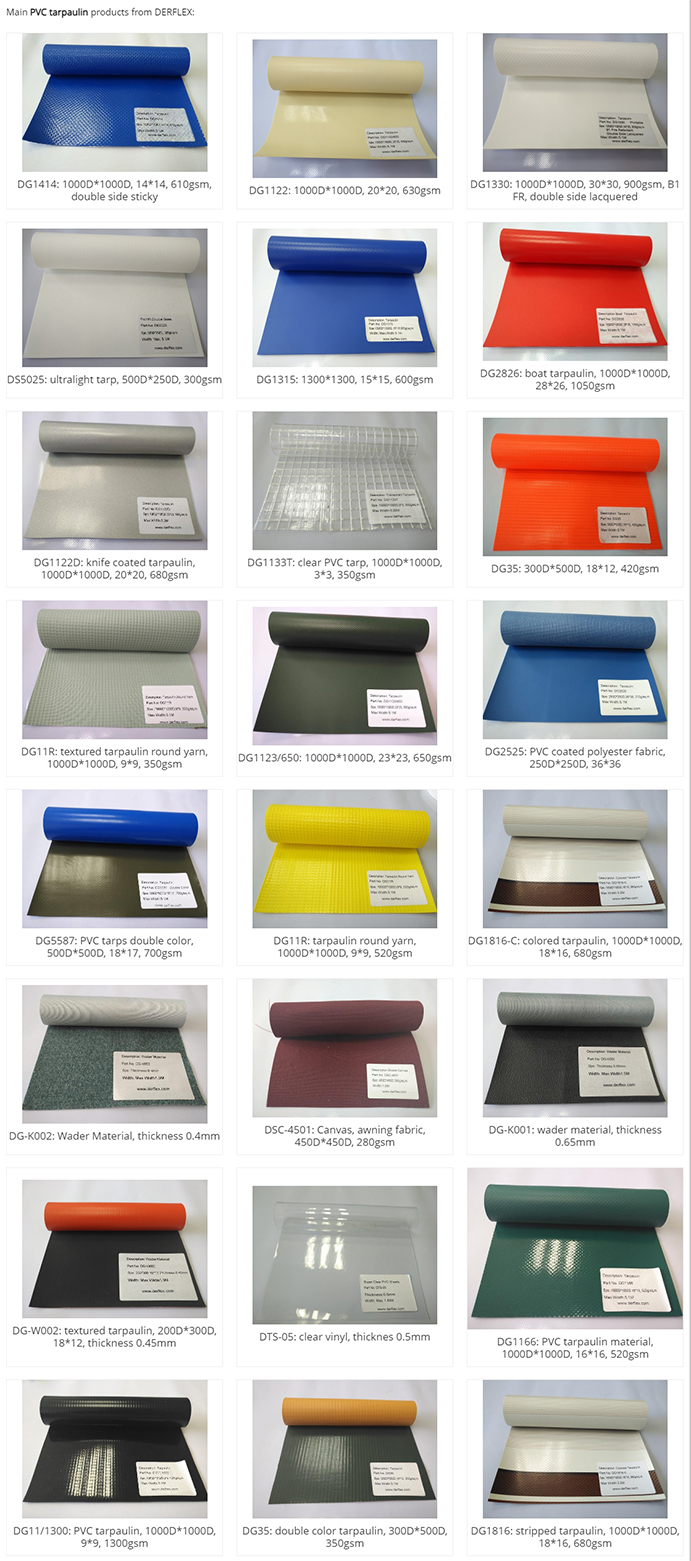
DERFLEX manufactures PVC-coated and laminated tarpaulin materials for distributors, fabricators, contractors, transport fleets and industrial buyers. Instead of selecting only by color or thickness, buyers can match the base fabric, coating, weight, surface finish and finished-cover details to actual service conditions.
These recommendations are starting points. Wind, slope, handling, local climate and the value of the covered item should be reviewed before the final grade is approved.
Road spray, wind load, abrasion and repeated handling make welded PVC tarps a common specification direction.
Cement, insulation, timber packs and staged materials need protection matched to exposure duration and drainage.
Use a fitted or shape-aware cover, with padding at sharp corners and ventilation where residual heat or humidity is present.
Rain control matters, but trapped moisture can also cause damage. A ventilated installation or breathable cover may be appropriate.
The cover should block sustained rain, extend beyond the damaged area and be pitched and secured to avoid pooling.
When liquid exposure is unlikely, a lighter water-resistant or non-waterproof cover may meet the actual requirement.
A clear inquiry helps the supplier recommend a defensible material structure and reduces misunderstandings between sample approval and bulk production.
These six related pages cover waterproof products, PVC construction, heavy-duty selection, customization and application-specific supply.
Clear answers for buyers comparing materials, seams, condensation and heavy-rain performance.
A waterproof tarp is designed to stop water passing through the specified material under stated conditions. A water-resistant tarp sheds limited moisture but can eventually wet through after prolonged rain, pressure, saturation, abrasion or deterioration of its surface treatment.
PVC-coated polyester tarps are commonly specified as waterproof because the continuous PVC layer forms a water barrier. Finished-cover performance still depends on seam construction, punctures, edges, hardware and installation. Welded seams are often selected when stronger leak control is required.
Many canvas tarps are water resistant rather than fully waterproof. Their treatment helps water bead and run off while the woven structure retains some breathability. Performance varies with the coating, age, maintenance and exposure, so the exact product specification should be checked.
A waterproof PVC or suitable laminated PE tarp is generally the safer direction for prolonged or heavy rain. Select sealed or welded seams, provide slope for drainage, prevent abrasion and reinforce fastening points. The installation should not allow large pools of water to form.
Yes. A continuous waterproof layer also limits airflow. Humidity from damp goods, soil, temperature changes or warm machinery can condense underneath. Ventilation, air gaps, dry loading and a breathable cover strategy may be needed where condensation is a concern.
Provide the application, dimensions, quantity, climate, rain duration, UV exposure, target life, required fabric weight or strength, seam type, reinforcement, hardware, color, logo, packaging and any requested test method. A drawing or installation photo is useful for custom covers.
Share your exposure, dimensions, expected service life and finishing requirements. DERFLEX can discuss a PVC tarpaulin structure, sample direction and finished-cover configuration for your market or project.