


Heavy Duty Silicone Coated Fiberglass Fabric for Expansion Joints
Silicone rubber coated fiberglass roll material for expansion-joint fabricators, duct-system OEMs, EPC supply programs and technical textile converters that need a stronger balance of heat-resistant reinforcement, repeated flexing, abrasion protection, weather resistance and custom roll specification.
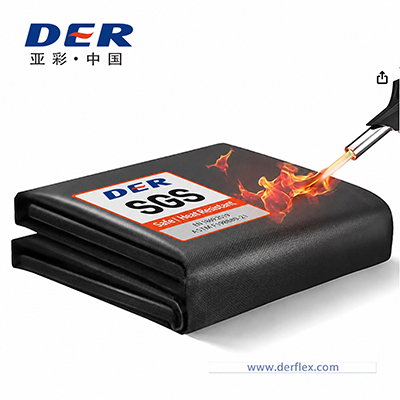
DERFLEX silicone-coated fiberglass material reference. Final coating formulation, weight, thickness, width, color, test route and finished-joint suitability must be confirmed for the ordered grade.
What makes silicone coated fiberglass suitable for heavy-duty fabric expansion joints?
Silicone coated fiberglass combines a dimensionally stable woven glass reinforcement with a flexible silicone rubber surface. In expansion-joint systems it is commonly evaluated as an outer protective, flexible belt or other functional layer where heat, repeated movement, moisture, oil, outdoor exposure and handling abrasion occur together. “Heavy duty” is not one universal GSM threshold: the correct construction depends on layer temperature, movement cycle, pressure, chemical media, seam or splice method and clamp-zone design.
A Heavy-Duty Expansion-Joint Fabric Must Be Specified Around the Joint, Not Just the Roll
Buyers searching for a heavy duty silicone coated fiberglass fabric for expansion joints supplier are usually not looking for a generic heat-resistant cloth. They need a roll material that can be repeated across fabricated belts, bellows, flexible duct joints or multi-layer non-metallic expansion joint assemblies.
DERFLEX supports silicone coated fiberglass fabric with project-based base cloth, silicone coating side, coating amount, total weight, thickness, width, color, roll format and packing. The broader current DERFLEX range publishes approximately 260–2000 g/m2 and 0.25–3.0 mm, with common width directions of 1000 / 1200 / 1500 mm. These are purchasing directions, not a promise that every combination is available or suitable for every joint.
Who typically buys this material?
- Fabric expansion joint manufacturers and belt fabricators
- Power, cement, metallurgy and process-duct OEMs
- EPC contractors and industrial maintenance suppliers
- Flexible connector and duct-accessory manufacturers
- Technical textile distributors and converters
- OEM brands needing repeatable coated fiberglass roll supply
Six Loads the Material May Need to Handle at the Same Time
Thermal Exposure
Specify continuous and short peak temperature at the fabric layer, not only the process-gas temperature.
Flex Fatigue
Axial, lateral and angular movement plus vibration frequency can control service life even when temperature is within range.
Abrasion
Dust, particulate, handling and rubbing near frames or liners can damage a belt that looks acceptable in a static sheet test.
Moisture & Oil
Silicone surfaces are useful where weather, condensation, oil mist and repeated cleaning are part of the operating environment.
Seam / Splice Stress
Raw-fabric strength does not guarantee fabricated-belt strength. The exact joining method must be trialed on the selected grade.
Clamp-Zone Load
Bolted or clamped edges can create local compression, cutting and concentrated strain that need separate reinforcement and geometry review.
Which Silicone Fiberglass Direction Should an Expansion-Joint Fabricator Evaluate First?
Use this as an RFQ starting point. Final approval depends on the complete joint system, required standard and exact ordered grade.
| Operating priority | Starting material direction | Why it may fit | Confirm before ordering |
|---|---|---|---|
| Repeated flexing + weather + handling | Two-side silicone coated fiberglass | Balanced protection on both faces for belts that are folded, handled, exposed or cleaned repeatedly. | Layer temperature, flex cycle, bend radius, coating mass, seam route and clamp geometry. |
| Directional exposure + lower coating mass | One-side silicone coated fiberglass | Useful when one surface carries most moisture, oil, weather or abrasion exposure. | Uncoated-face behavior, seam orientation, edge exposure and required barrier function. |
| Higher handling / abrasion duty | Higher-weight silicone fiberglass within the approved program | More substantial base/coating construction can support repeated handling and protective outer-layer duty. | Do not select by GSM alone; compare weave, coating amount, stiffness, flexing and sewing/splice behavior. |
| Defined flame-retardant requirement | FR silicone coated fiberglass | Project-specific flame-retardant coating direction for protective layers and industrial thermal components. | Exact ASTM / EN / DIN / NFPA / customer method and whether the report applies to the ordered grade. |
| Chemical-facing or low-friction barrier role | Compare PTFE coated fiberglass | PTFE is often considered where chemical resistance, low adhesion or barrier behavior is more important than a grippy silicone surface. | Media composition, condensate, barrier requirement, PTFE loading, seam/splice route and temperature. |
DERFLEX Silicone Coated Fiberglass Fabric — Purchasing Framework
| Specification item | DERFLEX published direction | Why it matters for expansion joints |
|---|---|---|
| Base substrate | Woven fiberglass cloth; E-glass or project-matched fiberglass construction. | Controls dimensional stability, drape, textile strength and the thermal backbone of the composite. |
| Coating structure | Silicone rubber on one side or both sides; FR direction available for project discussion. | Changes liquid/weather protection, handling, cleanability, flexing and total coating mass. |
| Total weight | Approx. 260–2000 g/m2 across current DERFLEX silicone-fabric programs. | Heavy-duty grades generally require a stronger construction, but weight alone does not define flex life or barrier performance. |
| Thickness | Approx. 0.25–3.0 mm depending on base cloth and silicone loading. | Affects bend radius, seam bulk, clamp compression, folding and packing. |
| Common widths | 1000 / 1200 / 1500 mm; other widths depend on product structure and production route. | Width can reduce belt splices, improve cutting yield and simplify repeat production. |
| Color direction | Red, grey, black, white, yellow and project-defined colors depending on formulation/order plan. | Can support plant coding, OEM ranges or application identification. |
| Temperature selection | Many silicone-coated constructions are discussed around approx. 230–287°C continuous silicone-surface exposure; exact grade must be confirmed. | The silicone layer can become the limiting element even when the fiberglass substrate tolerates higher heat. |
| Supply format | Roll goods, slit widths, cut pieces or selected OEM converted directions subject to project review. | Aligns material supply with cutting, sewing, splicing and belt fabrication workflow. |
Reference values are selection directions from current DERFLEX product information. Final tolerances, test data, temperature capability and availability must be confirmed against the exact ordered grade.
Is a Heavier Silicone Fiberglass Fabric Always Better for Expansion Joints?
Short answer: No.
A heavier construction can improve surface protection, thickness and handling durability, but it can also increase stiffness, seam bulk and clamp compression. Expansion joints depend on controlled movement, so a very heavy fabric that cannot flex cleanly may perform worse than a better-balanced construction.
Compare these variables together
- Fiberglass weave and yarn construction
- Silicone loading and coating side
- Total weight and thickness
- Minimum bend radius and repeated movement
- Seam/splice construction and clamp-zone reinforcement
- Actual temperature and media reaching the material layer
The Center of the Fabric Is Rarely the Only Failure Point
1. Fabric-Layer Temperature
Insulation, flow liners, stand-off distance and radiant heat can make the fabric temperature different from duct-gas temperature. Ask the engineer for the temperature at each layer if available.
2. Condensation & Chemical Media
Hot gas may cool into a more aggressive condensate. Provide dry/wet cycle, cleaning chemistry, acids, alkalis, oil mist and any corrosive vapor information.
3. Movement Definition
State axial, lateral and angular movement plus cycle frequency. A rarely moving compensator and a continuously vibrating connector should not use the same selection logic.
4. Particulate & Gas Velocity
Ash, dust and high-velocity flow can abrade flexible belts. Finished-joint designs may need liners or protective layers to shield the textile from direct impact.
5. Seam / Splice Trial
Cut, sew, splice, punch or clamp the actual sample using the same fabrication route planned for production. Do not approve only a flat roll sample.
6. Clamp & Edge Geometry
Check bolt spacing, compression, edge radius, local reinforcement and belt pre-tension. Concentrated loads can damage otherwise strong material.
Where Heavy-Duty Silicone Coated Fiberglass Is Commonly Evaluated
Power & Flue Gas
Protective or flexible layer where heat, vibration, weather and maintenance handling must be balanced; chemical barrier requirements may point to additional materials.
Cement & Minerals
Dust and abrasive particulate increase the importance of liners, abrasion protection, edge geometry and repeat flexing.
Ovens & Dryers
Silicone fiberglass can be a practical direction when the confirmed material-layer temperature and movement cycle fit the selected grade.
Fans & Blowers
Flexible coated fiberglass can isolate vibration and tolerate limited movement between rigid equipment interfaces when the connector design is validated.
Material, Substrate & Technical Coated-Fabric Reference Images
All images below are hosted on DERFLEX.com. The hero is loaded normally; below-fold images use lazy loading for performance.
Use for hero/product context, coated surface discussion and expansion-joint material sourcing.

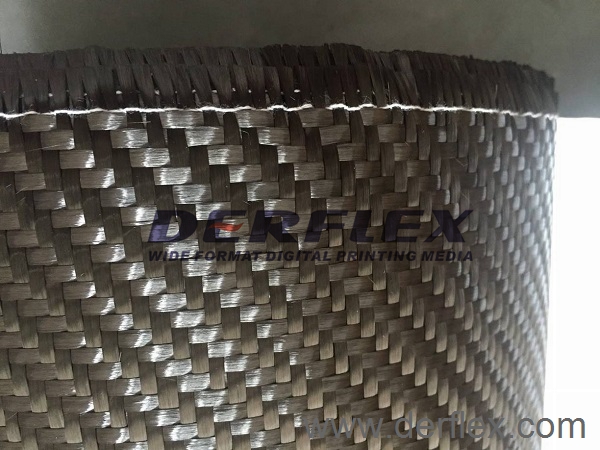
Useful for explaining base-fabric structure, roll handling and converter fabrication.
Shows the textile backbone beneath silicone or other functional coatings.
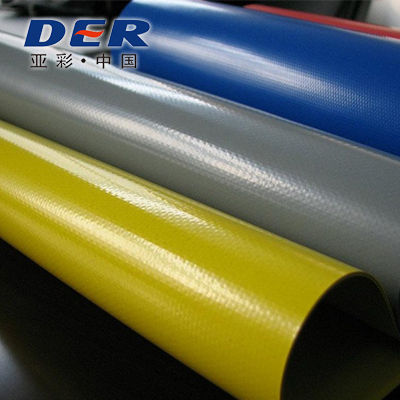
Supports OEM coating, color and broader industrial textile supplier messaging.
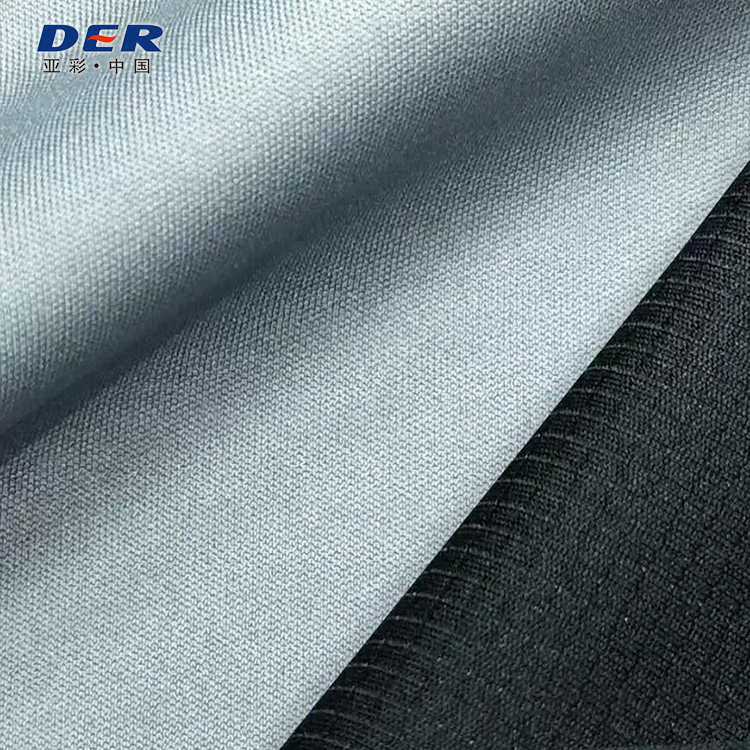
Useful beside explanations of reinforcement, layer function and selection by finished-product duty.
Six Common Mistakes When Buying Expansion-Joint Silicone Fiberglass Fabric
Buying by gas temperature only
State continuous/peak temperature, peak duration, radiant heat and the expected temperature at the coated fabric layer.
Comparing only GSM
Two rolls with similar weight can differ in weave, silicone loading, thickness, stiffness, coating continuity and flexing behavior.
Ignoring condensate
Process media can change after cooling. Include wet/dry cycling, oil mist, cleaning agents and chemical concentration.
Using raw-fabric ratings as joint ratings
Seams, clamps, insulation, frames, pressure, movement and layer architecture can set a lower system limit.
Leaving movement undefined
Include axial, lateral and angular movement, vibration amplitude and expected cycles so flexibility can be evaluated realistically.
Skipping converter trials
Approve the actual cut, seam/splice, edge reinforcement, clamp and fabrication method before bulk roll production.
What to Send a Silicone Coated Fiberglass Fabric Supplier Before Quotation
- Finished application and industry
- Continuous and peak gas / layer temperature
- Gas composition, condensate, oil and chemicals
- Operating pressure, velocity and particulate load
- Axial, lateral and angular movement + cycle frequency
- Joint shape, face-to-face dimension and belt width
- Required layer function: outer cover, load-bearing, gas seal or combined role
- Target weight, thickness, width, coating side and color
- Sewing, splicing, punching, clamping or other fabrication method
- Required ASTM / EN / DIN / NFPA / customer test method
- Sample/trial quantity and estimated bulk demand
- Packing, labels and destination
Why Expansion-Joint Fabricators Source Coated Fiberglass from DERFLEX
DERFLEX’s current technical coated-fabric pages position the company around application review, coating/base-fabric matching, sample coordination, project-specific roll specifications and repeat supply. For expansion-joint converters, the useful supplier discussion is not “red or grey silicone cloth?” but the complete production specification that must be repeated after sample approval.
Application-Based Material Review
Temperature, media, movement, coating side, weight, thickness and converter method can be discussed before sampling.
Custom Roll Specification
Base cloth, silicone coating, width, color, roll length, packing and selected OEM requirements can be matched to the order program.
Sample-to-Repeat Controls
Approved weight, thickness, coating side, surface, width, color, packing and relevant tests should be recorded before repeat production.
Continue Expansion-Joint and High-Temperature Fabric Selection
Heavy Duty Silicone Fiberglass Expansion Joint Fabric FAQs
What is the best silicone coated fiberglass fabric for expansion joints?
There is no universal best grade. A heavy-duty construction should be selected around the required layer function, continuous and peak temperature, chemical exposure, pressure, movement type, cycle frequency, abrasion, coating side, seam/splice method and clamp geometry. Higher weight can improve surface protection but may also increase stiffness, so the finished joint must be considered as a system.
What does “heavy duty” mean for silicone coated fiberglass fabric?
“Heavy duty” is not a standardized GSM threshold. It usually means the construction is selected for stronger mechanical duty, repeated handling, abrasion, larger panels, clamp-zone stress or demanding industrial exposure. DERFLEX publishes silicone coated fiberglass directions across approximately 260–2000 g/m2 and 0.25–3.0 mm, but the correct grade should be approved by application and fabrication testing.
What temperature can silicone coated fiberglass expansion joint fabric handle?
There is no single temperature for every grade. Current DERFLEX information notes that many silicone-coated constructions are commonly discussed around approximately 230–287°C for continuous silicone-surface exposure, while the fiberglass substrate itself can tolerate higher temperatures. The exact composite grade, exposure duration, peak heat, radiant load and finished-joint design must be confirmed.
Should expansion joint fabric be silicone coated on one side or both sides?
One-side coating can suit directional exposure, lower coating mass or greater flexibility. Two-side coating is often evaluated when both surfaces need better protection from moisture, oil, handling or repeated cleaning. The correct choice also depends on seam orientation and the role the material performs in the joint.
Is silicone coated fiberglass fabric the gas seal in every non-metallic expansion joint?
No. Silicone fiberglass can perform different functions depending on the system, including outer protection, flexible belt or reinforcement-oriented roles. In chemically aggressive service, PTFE or another barrier material may be considered. Hotter systems may separate thermal, gas-seal, load-bearing and outer-protection functions into multiple layers.
Can silicone coated fiberglass fabric be sewn or spliced for expansion joint belts?
Many silicone-coated fiberglass constructions can be cut, sewn and converted, but the actual seam or splice should be tested on the selected production grade. Thread, stitch density, overlap, local reinforcement, adhesive or other joining methods can become the controlling part of the finished belt.
What affects silicone coated fiberglass fabric price?
Price changes with fiberglass base construction, silicone formulation and loading, one- or two-side coating, total weight/thickness, width, color, surface specification, required testing/documentation, quantity, packing and any converting. Comparing only price per square meter can be misleading when the constructions are not technically equivalent.
What should I send DERFLEX to get an accurate expansion joint fabric quote?
Send the application, normal and peak temperature, gas/chemical/condensate details, pressure, movement, cycle frequency, layer function, joint dimensions, target weight/thickness/width, coating side, color, fabrication method, required test standard, sample quantity, bulk demand and destination. A drawing or failed-sample photo can make the material review more useful.
Build the Silicone Fiberglass Specification Around the Expansion Joint You Need to Fabricate
Send DERFLEX the application, continuous and peak temperature, process media, movement, pressure, belt dimensions, coating side, target weight/thickness, fabrication method, quantity and required test route. The team can review a practical heavy-duty silicone coated fiberglass fabric direction for sampling and quotation.
Engineering boundary: This page provides material-selection and purchasing guidance, not finished expansion-joint engineering approval. Final performance, system rating, test compliance and suitability must be validated for the ordered grade and complete joint assembly.