Base Fabric
The woven structure carries much of the pulling and tearing load. Yarn size, density, weave and fabric quality matter under tension and repeated movement.



“Heavy duty” is not one universal tarp grade. In manufacturing terms, it describes a tarp whose base fabric, coating, weight or thickness, tear and tensile performance, seams, edge reinforcement, fastening points and weather package are specified for higher stress than a light temporary cover. The correct heavy duty tarp is therefore application-specific—not simply the thickest sheet available.
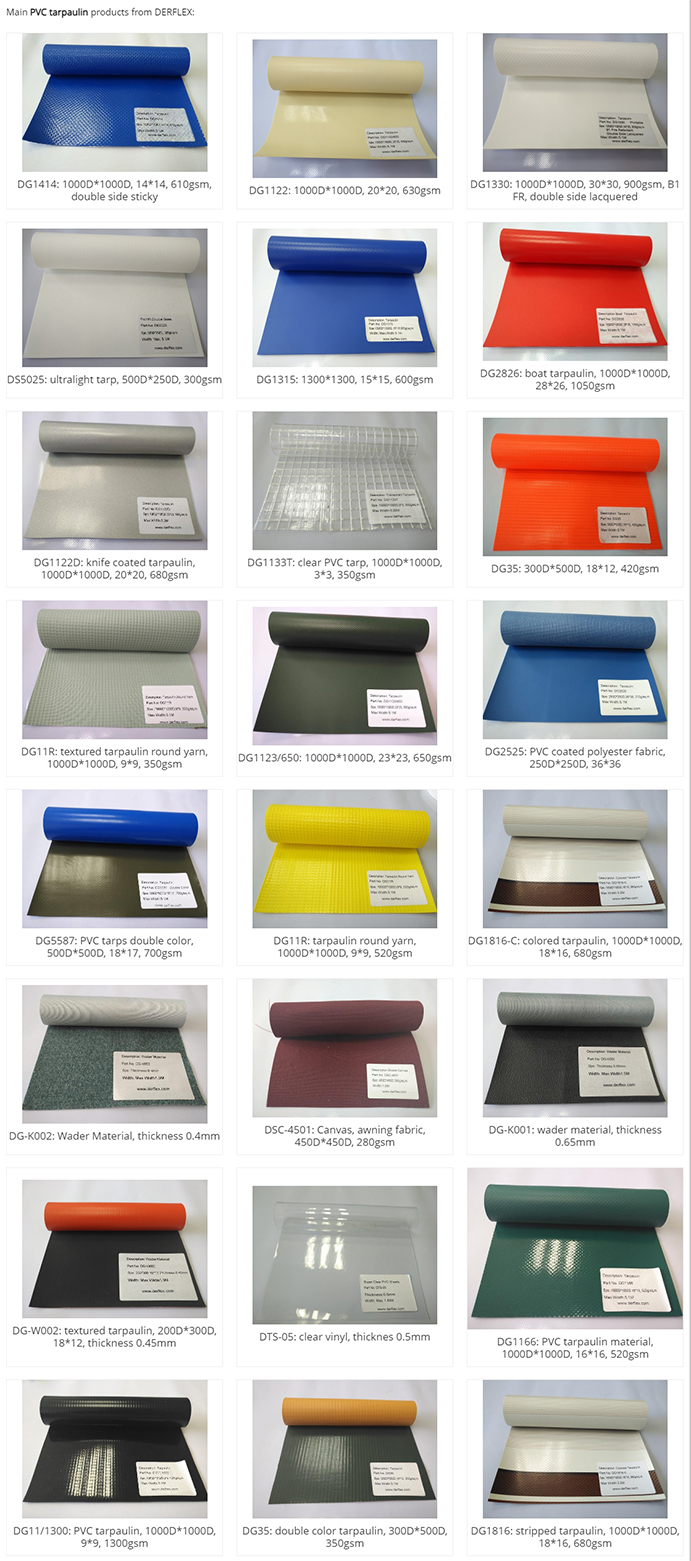
A heavy duty tarp is a reinforced protective cover designed for repeated mechanical stress and demanding exposure. There is no single cross-material GSM, mil thickness or ounce weight that automatically makes every tarp “heavy duty.” A manufacturer evaluates the whole system: material family, structural fabric, coating, strength, seams, hems, attachment points, UV/weather requirements and the way the tarp will actually be handled.
The phrase appears on PVC vinyl tarps, PE tarps, canvas tarps and mesh tarps, but those products are built and measured differently. That is why comparing only one number can lead to the wrong purchase.
“More mils = heavy duty.” Thickness can matter, especially within one material family, but it does not tell you the strength of the base fabric, coating adhesion, tear behavior, seam construction or edge reinforcement.
“Higher GSM always lasts longer.” More material can improve durability, yet a tarp that is unnecessarily heavy can become harder to fold, install, roll or handle.
What is being covered? Is the tarp moving or stationary? How often is it folded? Where does abrasion occur? How is it tied down? Does water need to be sealed out? How much UV exposure is expected? Are flame-retardant or cold-flexible grades required?
The answers define the right construction more reliably than a generic “heavy duty” label.
A practical specification should survive the failure modes of the real job. These seven factors are more useful than a label printed on the package.
The woven structure carries much of the pulling and tearing load. Yarn size, density, weave and fabric quality matter under tension and repeated movement.
On PVC or PE tarps, the surface layer contributes waterproofing, weather protection, abrasion behavior and surface durability.
GSM, oz/yd2 and mil are useful, but they must be read together with the underlying fabric and coating construction.
A tarp that is pulled, strapped or exposed to wind needs enough structural strength to resist crack growth and elongation.
Heat-welded, HF-welded or sewn construction must suit the material and waterproofing requirement. A strong sheet with a weak seam is not a strong cover.
Hems, webbing, rope edges, corner patches, grommets, D-rings and pockets carry concentrated loads and are common failure zones.
UV, cold, heat, mildew, abrasion, chemicals, road spray and flame-retardant requirements change what “heavy duty” should mean for the application.
The final test is whether the construction fits the actual job. A truck tarp, temporary roof, equipment cover and mesh dump tarp should not share one universal specification.
These measurements describe different things. They become useful only when you know which material family you are comparing.
| Metric | What It Describes | Useful For | What It Does Not Prove by Itself |
|---|---|---|---|
| GSM grams per square metre |
Finished material weight per unit area. | Comparing weight classes within similar tarp constructions. | Tear strength, yarn quality, coating adhesion, seam strength or edge durability. |
| oz/yd2 ounces per square yard |
Another weight-per-area measurement often used for vinyl and canvas products. | Comparing commercial tarp grades in markets that specify ounces. | Exact thickness or mechanical strength. As a reference, 1 oz/yd2 is about 33.9 gsm. |
| Mil | Thickness measurement; 1 mil = 0.001 inch. | Commonly used when comparing PE and some vinyl sheet products. | Fabric reinforcement, weave density, coating quality or finished tarp strength. |
| Denier | Linear mass of yarn or fibre. | Understanding yarn size in woven reinforced materials. | Finished tarp strength without knowing weave density, coating and construction. |
| Weave count / density | How the reinforcing yarns are arranged per unit area. | Comparing woven PE or polyester scrim structures. | Weather resistance, coating durability or the quality of finished hems and hardware. |
Compare like with like. A 20 mil PE tarp and an 18 oz vinyl tarp are not two versions of the same material. Their structure, weight, handling, weldability and failure modes differ. Start with the application and material family, then compare the metrics used inside that family.
“Heavy duty” should be interpreted inside the material category, then checked against the job.
Often chosen for reusable waterproof covers, truck tarps, industrial covers and fabricated panels because it can combine a reinforced textile core with a durable, weldable PVC surface.
Popular where low weight, broad coverage and cost efficiency matter. For “heavy duty poly,” examine mil thickness, woven PE structure, lamination quality, UV package, hems and grommet design.
Selected where breathability, abrasion behavior and textile handling are important. Water resistance, treatment and flame-retardant claims must be checked for the specific canvas product.
A heavy duty mesh tarp is not intended to be a rain barrier. Its job may be debris containment, shade or airflow with lower wind pressure. Mesh openness, yarn strength and reinforced attachment zones become central.
A regular tarp may be perfectly adequate for temporary protection. Heavy duty construction becomes relevant when exposure, handling cycles or consequences of failure increase.
| Decision Factor | Standard / Temporary Tarp Direction | Heavy Duty Tarp Direction |
|---|---|---|
| Use cycle | Short-term, occasional or low-risk coverage. | Repeated handling, frequent deployment or long outdoor exposure. |
| Mechanical load | Limited pulling, abrasion and attachment stress. | Higher tension, movement, flapping, abrasion or concentrated tie-down loads. |
| Construction | Basic sheet and standard hem may be enough. | Reinforced base fabric, suitable coating, engineered seams, webbing, patches or hardware may be required. |
| Weather exposure | Temporary rain and sun protection. | Application-defined waterproofing, UV, temperature and mildew resistance. |
| Procurement goal | Lowest practical cost for a short-lived job. | Repeatable performance, reduced premature failure and consistent replacement specifications. |
The specification should be built around the stress profile of the application rather than a generic product grade.
| Application | Main Stress | Heavy Duty Priorities | Questions to Confirm |
|---|---|---|---|
| Truck / trailer cargo | Wind, vibration, road spray, repeated folding, cargo-edge abrasion. | Strong base fabric, weldability, reinforced edges, attachment layout, UV/cold flexibility as required. | Load profile? Drop size? Tie-down method? High-wear zones? |
| Construction cover | Wind, rough surfaces, sharp edges, repeated repositioning. | Tear resistance, edge reinforcement, waterproofing or FR direction where the project requires it. | Temporary roof, scaffold wrap, equipment cover or ground protection? |
| Outdoor equipment cover | Long exposure, pooling, abrasion against corners, temperature cycling. | UV/weather package, shape fit, venting or drainage strategy, reinforced contact zones. | Stationary or moved often? Condensation risk? Sharp corners? |
| Agriculture / storage | Sun, rain, soil contact, wind, seasonal handling. | UV stability, waterproofing, large-panel joining, anchoring and repairability. | Hay, grain, machinery or general storage? Seasonal or year-round? |
| Industrial curtain / enclosure | Repeated movement, welding, cleanability, chemical splash or local abrasion. | Dimensional stability, suitable coating, edge construction, hanging hardware and project-specific compliance. | Fixed or sliding? Indoor or outdoor? Any FR or anti-static requirement? |
| Debris / dump mesh | Wind pressure, loose debris, roller-system cycling. | Mesh strength, abrasion resistance, reinforced pockets/edges and system compatibility. | Airflow requirement? Material being hauled? Roller system type? |
Real DERFLEX site images are used so the page supports image search, product understanding and manufacturing credibility.
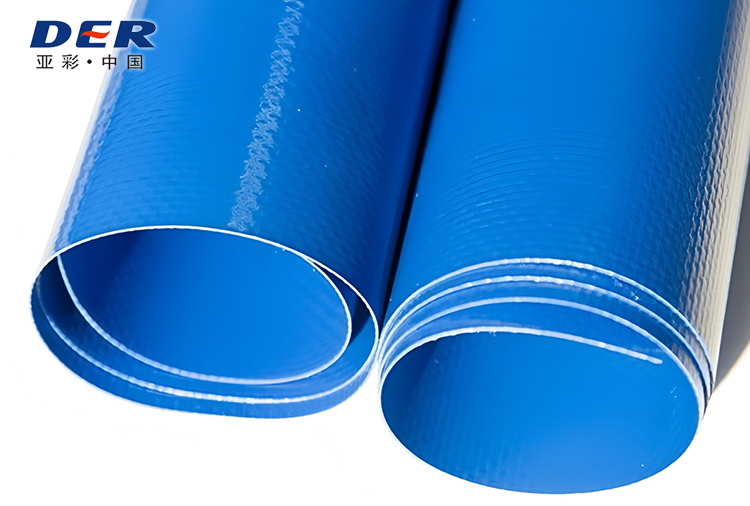
Close-up of PVC coated tarpaulin material. For heavy duty selection, surface thickness should be considered together with the reinforced textile structure beneath it.
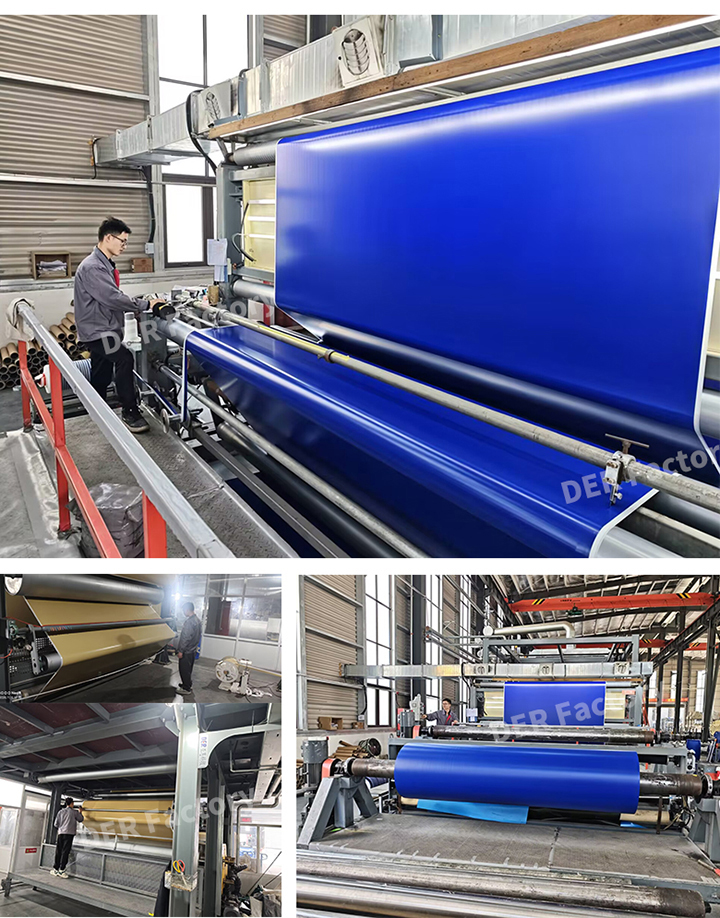
Coated-fabric production illustrates why “heavy duty” starts before the tarp is cut: the base fabric, coating process and material consistency affect finished-cover performance.
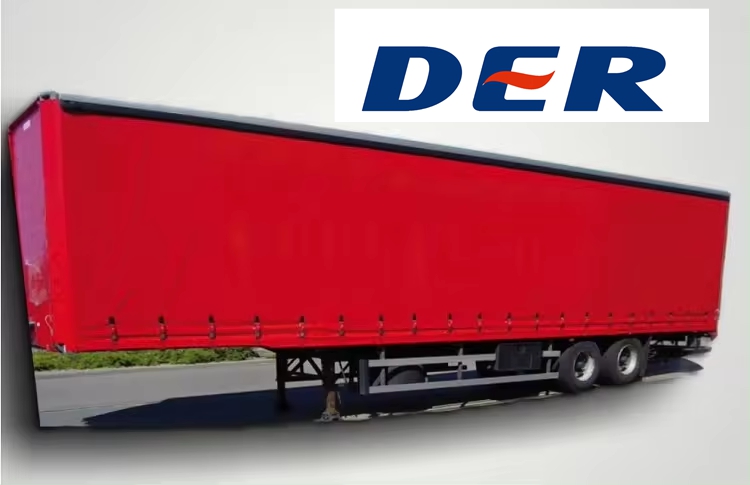
A transport tarp must handle motion, wind, fastening loads and repeated use. Those operating stresses are why the correct truck tarp specification cannot be selected by thickness alone.
In field use, damage often begins at concentrated stress zones rather than in the middle of the sheet.
Too much tie-down load on a small area can deform the hem or pull out hardware. Reinforcement and attachment spacing should match installation stress.
Sharp cargo or machinery edges can wear through a heavy sheet. Local wear pads or reinforced zones may matter more than increasing the weight of the entire tarp.
Loose spans create repeated dynamic loading. Correct tension, support, edge design and fastening pattern help reduce fatigue.
A waterproof tarp can still be overloaded by standing water. Slope, support and drainage are part of a practical cover system.
Large tarps are often fabricated from joined panels. Seam method, overlap and weld or stitch quality must suit the expected tension and waterproofing target.
A heavy waterproof vinyl is useful for many covers, but it is the wrong choice when the application needs airflow. “Heavy duty” never replaces application matching.
Over-specifying a tarp can create new problems: more handling weight, harder folding, higher transport weight, more strain on manual deployment, and unnecessary material cost.
A daily truck cover may need a strong but manageable structure. A stationary industrial cover may tolerate more weight. A roller tarp may prioritize flexibility and repeated cycling. The manufacturer’s job is to balance strength, service environment, fabrication and handling—not simply push the highest GSM or thickest grade.
Use a lighter or standard tarp when the job is temporary, low-risk, lightly exposed, easy to replace and does not involve strong tie-down tension or repeated abrasion.
Move toward a heavy duty specification when the cover is reused often, protects valuable cargo, stays outdoors longer, experiences vibration or wind, or contains high-stress hardware and attachment points.
DERFLEX supplies PVC coated polyester tarp material, fabricated panels and custom finished tarps for B2B applications. Existing DERFLEX product directions span multiple weights, so the correct grade is discussed against the real working condition rather than a single fixed “heavy duty” threshold.
Buyers can specify color, material weight direction, surface finish, panel dimensions, welded seams, hems, grommets, D-rings, webbing, pockets, logo printing and packing according to project requirements.
A useful RFQ replaces the vague label with information a manufacturer can turn into a specification.
These verified DERFLEX pages take the buyer from “what does heavy duty mean?” to specific product and sou, rcing decisions.
Short, direct answers for purchasing teams and search systems.
A heavy duty tarp is a reinforced cover specified for higher mechanical stress, weather exposure or repeated use than a light temporary tarp. The label should be supported by the material structure, strength, coating, seams, edge reinforcement and fastening design—not thickness alone.
There is no single cross-material thickness that defines every heavy duty tarp. PVC vinyl, polyethylene, canvas and mesh products use different constructions and measurement conventions. Compare specifications within the same material family and against the intended use.
18 oz vinyl coated polyester is widely sold in the market as a heavy duty vinyl tarp class, but the ounce weight alone does not guarantee performance. Buyers should also compare the reinforced base fabric, coating, tear strength, seams, hems and hardware.
PVC coated polyester is often selected for reusable waterproof covers, truck tarps and fabricated industrial covers because it is strong, weldable and easy to reinforce. PE can be more economical and lighter for broad or temporary coverage. The better choice depends on service cycle, handling and budget.
No. Higher GSM means more finished material weight per unit area, but strength also depends on yarn, weave, coating, tear behavior, seams and reinforcement. A heavier tarp can still fail early if the high-stress details are poorly designed.
Common failure areas include grommets, hems, corners, seams and sharp-contact zones. Wind flapping, poor tensioning and water pooling can also damage an otherwise strong tarp.
A standard tarp may be sufficient for short-term, low-risk coverage with limited wind, abrasion and handling. Using the heaviest possible tarp can add cost and handling difficulty without improving the job.
Send the application, dimensions or drawing, quantity, material or weight direction, color, environmental exposure, edge reinforcement, grommet or D-ring layout, logo/label requirements, packaging and any project-specific performance requirement.
Send DERFLEX your application, size, quantity, exposure conditions and attachment method. The goal is to match the tarp construction to the job instead of relying on a vague grade name.