


What Is Tarpaulin? Complete Guide to Types, Uses, Materials & Sizes
Tarpaulin, commonly called a tarp, is a large flexible sheet used to cover, shelter, contain or protect goods, equipment and working areas. It can be made from polyethylene, PVC-coated polyester, canvas, mesh or specialty coated fabrics. The right tarp depends on exposure, handling, size, fastening method and required performance—not color alone.
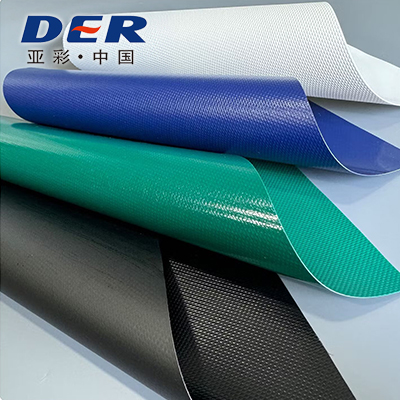
What Is a Tarpaulin?
A tarpaulin is a strong, flexible protective sheet. It may be waterproof, water-resistant, breathable, transparent or air-permeable depending on the material. Most finished tarps combine a sheet material with seams, reinforced edges and fastening points such as grommets, D-rings, webbing, straps or rope hems.
A Tarpaulin Is a Material System, Not Just a Plastic Sheet
Two tarps with the same color and approximate weight can perform very differently because strength and service behavior come from the complete construction.
Base Structure
Woven polyester, woven polyethylene, canvas or mesh provides the reinforcement and dimensional behavior.
Coating / Lamination
PVC, PE, PU or other surface systems control waterproofing, cleanability, weldability, color and weather resistance.
Finished Fabrication
Seams, hems, webbing, grommets, corner patches and attachment layouts determine how loads move into the cover.
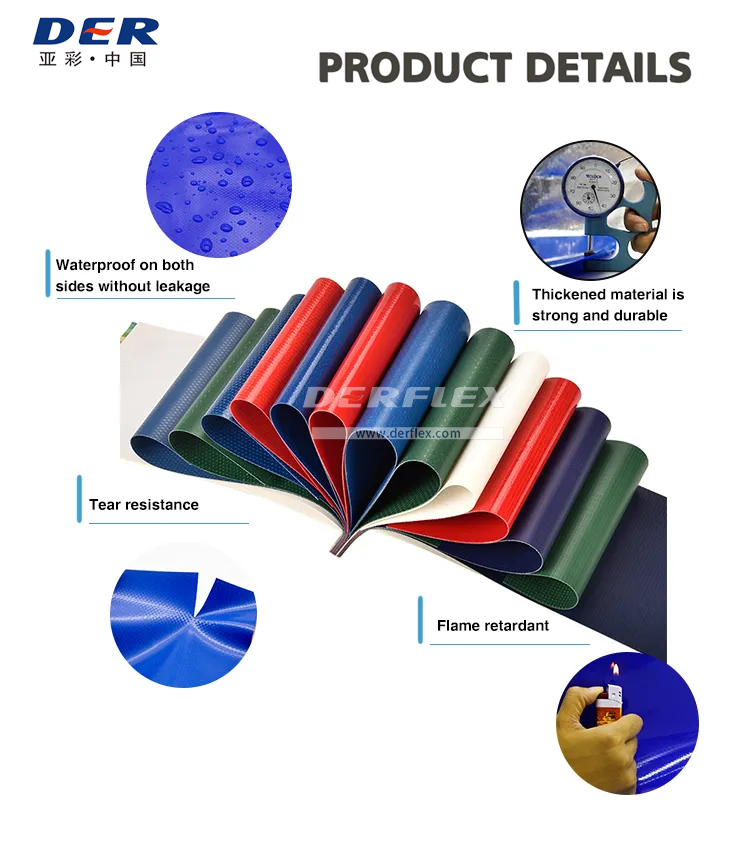
Main Types of Tarpaulin
Some tarp names describe the material; others describe the job. Start with the material family, then define the finished design for the application.
| Tarpaulin type | Typical construction | Main advantages | Important limits | Common uses |
|---|---|---|---|---|
| PE / Poly Tarp | Woven polyethylene with PE film or surface layer | Lightweight, economical, easy to fold and distribute | Grade varies widely; lower grades may age or tear faster under repeated UV, wind and abrasion | Temporary covers, storage, camping, landscaping, short-term site protection |
| PVC / Vinyl Tarp | Polyester scrim coated or laminated with PVC | Strong water-blocking surface, weldable, cleanable, suitable for reinforcement and custom fabrication | Heavier than basic PE; correct coating, yarn structure and flexibility must match the job | Truck tarps, construction, industrial covers, agriculture, tents, reusable outdoor protection |
| Canvas Tarp | Woven cotton or blended textile, sometimes treated | Breathable, abrasion-friendly, lower condensation risk in suitable conditions | Often water-resistant rather than fully waterproof; can absorb moisture and needs drying | Equipment, machinery, breathable storage, painting and selected transport covers |
| Mesh Tarp | Open-weave textile or coated mesh | Allows airflow, reduces wind pressure, provides shade and debris control | Not suitable where sealed rain protection is required | Dump trucks, privacy screens, shade, scaffolding, agriculture and ventilation covers |
| Clear / Transparent Tarp | Clear flexible PVC or reinforced transparent structures | Visibility, light transmission, weather screening | Clarity, yellowing resistance, cold flexibility and scratch behavior need to be specified | Partitions, patios, greenhouse-related uses, observation covers, weather curtains |
| Specialty Tarps | Insulated, flame-retardant, cold-flexible, antistatic or application-specific structures | Targets a defined performance problem | Performance should be confirmed by the exact grade and required test method | Welding protection, temperature control, industrial zones, special projects |
Which Tarpaulin Type Fits the Job?
Need low handling weight?
Start with PE or a lighter coated textile. Confirm the expected exposure period before choosing the thinnest option.
Need repeated waterproof service?
PVC-coated polyester is commonly specified where welding, cleaning, reinforcement and repeated handling are important.
Need airflow?
Choose mesh. A solid waterproof tarp may create excessive wind loading or trap heat where ventilation is required.
Need breathability?
Canvas can help moisture vapor escape, but do not treat untreated or lightly treated canvas as a sealed waterproof roof.
Need visibility or light?
Use clear PVC or a transparent reinforced material chosen for clarity, flexibility and the installation environment.
Need a regulated performance?
Define the exact test or compliance requirement before quotation. Do not buy only from generic claims such as “fireproof” or “industrial grade.”
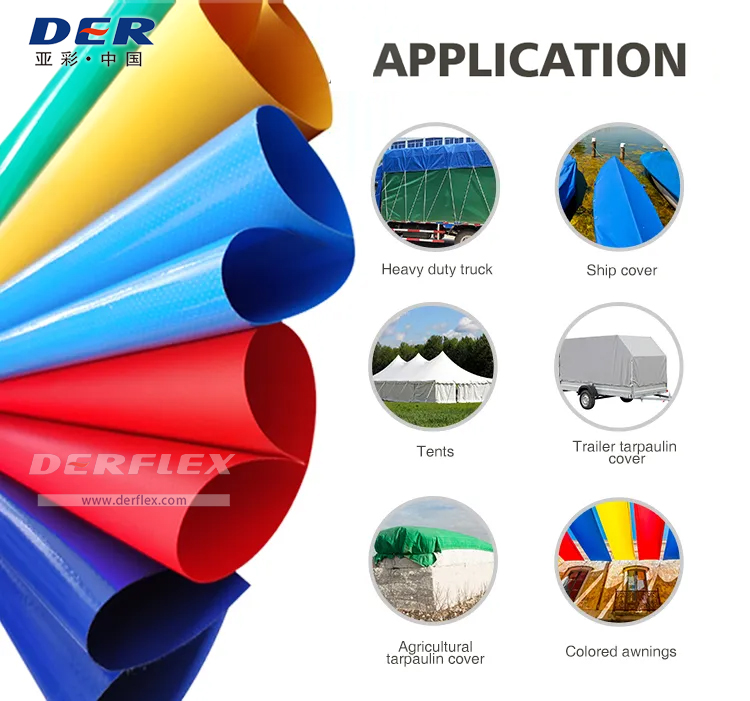
What Is Tarpaulin Used For?
Tarpaulins are used wherever a flexible protective barrier is useful. The finished specification should be built around the real load, exposure and fastening method.
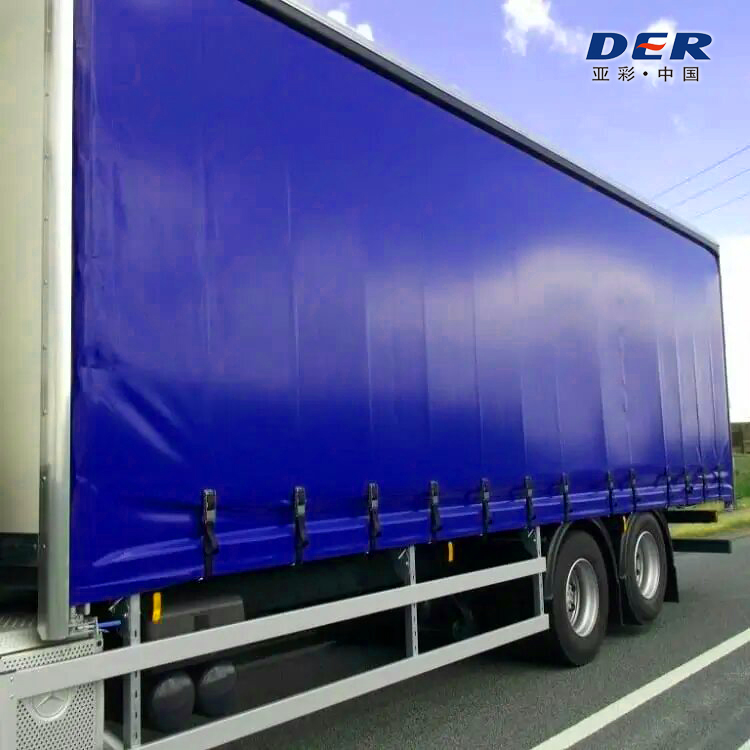
Transport & Logistics
Truck loads, trailer covers, side curtains, cargo protection, open transport and temporary freight weather protection.
Construction
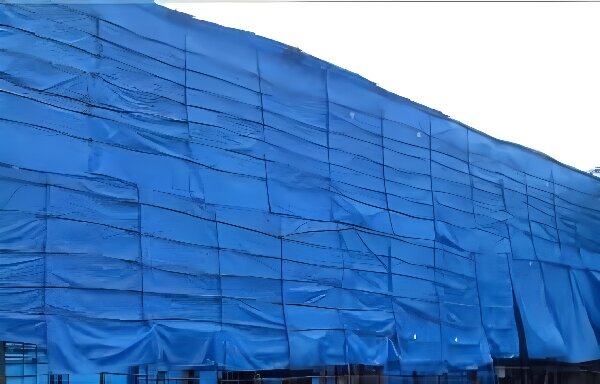
Temporary roofs, scaffold enclosures, ground protection, material covers, dust containment and weather barriers.
Agriculture
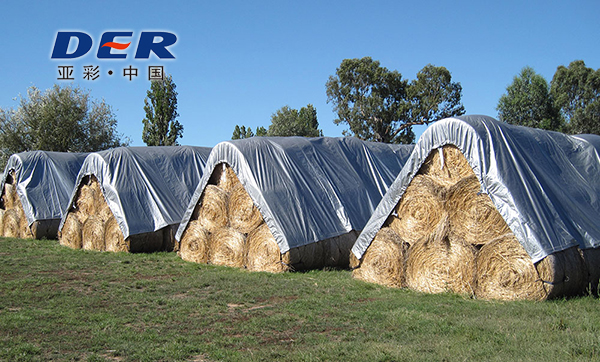
Hay and feed covers, machinery protection, crop and commodity storage, silage, seasonal covers and farm yards.
Industrial Protection
Machine covers, equipment protection, warehouse partitions, temporary curtains, maintenance zones and outdoor storage.
Outdoor Shelter
Canopies, rain shelters, camping tarps, event sidewalls and temporary overhead protection where suitable support is provided.
Containment & Screening
Debris, bulk materials, privacy, shade and wind management using solid or mesh structures selected for the intended function.
What Sizes Do Tarpaulins Come In?
There is no single universal tarp size system. Retail tarps are often sold in common nominal dimensions, while industrial and OEM tarpaulins can be made to custom roll widths, panel sizes or finished-cover drawings.
Simple Measuring Formulas
Flat area: finished length = area length + front overlap + rear overlap Flat area: finished width = area width + left overlap + right overlap Box-shaped object: top dimension + required side drops + allowance for fastening / overlap Irregular loads: measure the actual fabric travel path over the load, not only the footprint | Common nominal reference* | Approx. metric equivalent | Typical direction | Buyer check |
|---|---|---|---|
| 6 × 8 ft | 1.83 × 2.44 m | Small equipment, ground sheet, temporary cover | Confirm finished size and eyelet spacing |
| 8 × 10 ft | 2.44 × 3.05 m | Household, maintenance, storage | Add real overhang rather than choosing only by nearest label |
| 10 × 12 ft | 3.05 × 3.66 m | General-purpose cover | Check wind exposure and tie-down layout |
| 12 × 16 ft | 3.66 × 4.88 m | Larger equipment or jobsite coverage | Verify support and drainage slope |
| 20 × 30 ft | 6.10 × 9.14 m | Construction, storage, larger loads | Large panels may need seam planning and reinforced load paths |
| 30 × 40 ft | 9.14 × 12.19 m | Industrial, agriculture, stockpile directions | Handling weight and wind loading become more important |
| 40 × 60 ft | 12.19 × 18.29 m | Large-area temporary or project covers | Consider custom welding, sectioning, anchoring and installation plan |
*Examples are common market references, not a universal standard. Availability and finished dimensions vary by supplier and material.
GSM, Thickness, Weave and Strength: What Do They Mean?
GSM
Grams per square meter measures finished material weight. Higher GSM often means more material, but it does not by itself prove better tear strength, UV life or coating adhesion.
Thickness / Mil
Thickness helps describe the sheet profile. Compare it with the material construction, base fabric and coating rather than using thickness as the only strength indicator.
Base Yarn / Weave
Yarn size, density and weave affect tensile strength, tear behavior and dimensional stability—especially in reinforced PVC tarpaulin.
Tensile Strength
Indicates how the fabric resists pulling. It matters where covers are tensioned, strapped or exposed to repeated load.
Tear Strength
Indicates resistance to a cut or puncture propagating further. Edge reinforcement and attachment layout also affect field performance.
Coating / Finish
Surface formulation influences waterproofing, abrasion, UV behavior, cleanability, printability, weldability and flexibility.
Are Tarpaulins Waterproof?
Some are; some are not. Waterproof performance depends on the sheet material, coating, seams, edge construction, punctures and installation. Mesh is intentionally permeable, while canvas is often breathable and water-resistant rather than fully sealed.
| Material | Water protection direction | What can still cause leakage or poor performance? |
|---|---|---|
| PVC-coated polyester | Strong waterproof sheet direction | Stitched seams, punctures, worn coating, poor welding, open edges or water pooling |
| PE / poly tarp | Waterproof surface when intact | Pinholes, wear, seam construction, UV degradation and damaged eyelet zones |
| Canvas | Usually water-resistant / breathable unless specifically treated | Standing water, saturation, aging treatment and storage while wet |
| Mesh | Not intended as a sealed rain barrier | Openings intentionally pass air and some moisture |
How to Choose the Right Tarpaulin
Start with the failure you cannot accept, then work backward to material and fabrication.
Define what is being protected
Cargo, machinery, people, crop, building materials and bulk goods create different contact and moisture risks.
Define exposure time
Hours, a few weeks, a season and repeated long-term service require different material economics.
Identify the main stress
Rain, UV, wind, abrasion, sharp edges, cold, heat, chemicals, repeated folding or dragging.
Choose material family
PE, PVC, canvas, mesh or specialty material should follow the operating problem—not the color or lowest price.
Measure the real coverage path
Add only the required drop and overlap, and confirm whether quoted dimensions are cut or finished size.
Design the fastening load path
Grommets, D-rings, straps, webbing and corner patches should match how the cover will be tensioned and moved.
Confirm fabrication and testing
Welding, sewing, printing, FR requirements, UV targets, packing and sample approval should be agreed before bulk production.
Plan handling and storage
Large heavy tarps can be difficult to deploy. Consider crew size, folding, rolling, drainage and dry storage when not in use.
What Makes a Finished Tarp Last Longer?
- Keep fabric under controlled tension. Excess flapping accelerates abrasion and stress at eyelets.
- Avoid sharp-edge contact. Use corner protection or local reinforcement where required.
- Prevent water pooling. Give overhead covers enough slope and support for drainage.
- Put reinforcement where loads occur. More GSM everywhere is not a substitute for better stress-point design.
- Match seams to water exposure. Welded seams are commonly used with compatible PVC materials where stronger water sealing is needed.
- Store clean and dry when practical. Dirt, trapped moisture and careless folding can shorten usable life.
Six Mistakes to Avoid When Buying Tarpaulin
Buying by color
Blue, green or silver does not reliably define strength or duty rating across manufacturers.
Assuming thicker is always better
Extra thickness adds weight. Base fabric, tear strength, coating adhesion and reinforcement may matter more.
Ignoring finished size
Cut size and finished size may differ after seams and hems, which can leave insufficient coverage.
Underestimating wind
Large sheets create wind load. Mesh, better tensioning or a revised attachment design may be safer for some applications.
Using grommets as the only specification
Eyelet spacing is important, but webbing, corner reinforcement, substrate strength and load distribution are equally important.
Quoting before defining the job
A useful factory quotation needs application, size, material direction, quantity, finishing and performance requirements.
What Information Should You Send for a Custom Tarpaulin Quote?
A clear requirement reduces unnecessary sampling and helps the supplier match material, fabrication and packing to the actual application.
- Application and working environment
- Finished dimensions, roll size or drawing
- Material preference or performance target
- Target GSM / thickness if already specified
- Color and surface finish
- Seam, hem, grommet, D-ring, webbing or strap requirements
- Printing, label and private-label packaging needs
- Quantity and reorder plan
- Any required test method or compliance documentation
- Destination / delivery terms for logistics planning
Continue Your Tarpaulin Selection
Use these verified DERFLEX pages to move from general tarp knowledge to material selection, applications and purchasing.
Questions People Ask About Tarpaulins
Is a tarp the same as a tarpaulin?
Yes. “Tarp” is the common shortened form of “tarpaulin.” In industrial sourcing, tarpaulin is often used in formal specifications and export terminology, while tarp is common in retail, trucking, construction and everyday use.
What are the four main tarp material types?
Four widely used groups are polyethylene (PE), PVC/vinyl-coated polyester, canvas and mesh. Clear PVC, insulated and flame-retardant structures are common specialty directions.
Which tarpaulin material is best for heavy-duty waterproof use?
PVC-coated polyester is commonly specified for reusable heavy-duty waterproof covers because it can combine a reinforced textile core, weldable PVC surface and custom edge reinforcement. The correct grade still depends on UV, abrasion, temperature, handling and fastening conditions.
What size tarp do I need?
Measure the actual coverage path, add the required drops and overlaps, then confirm whether the supplier is quoting cut size or finished size. For irregular loads, trucks and equipment, measure over the object rather than using only its footprint.
What does GSM mean in tarpaulin?
GSM means grams per square meter and describes material weight. Higher GSM often means more material, but it should be evaluated together with yarn structure, coating, tear strength, tensile strength and the finished tarp design.
Is canvas tarpaulin waterproof?
Canvas is commonly breathable and water-resistant, but it should not automatically be treated as completely waterproof. Performance depends on the fabric and treatment, and standing water can eventually penetrate many canvas constructions.
What is cut size vs finished size?
Cut size is the sheet dimension before hems, seams and edge finishing. Finished size is the final usable dimension after fabrication. The finished tarp can be slightly smaller, so the purchasing specification should state which dimension is required.
How long does a tarpaulin last?
There is no universal lifespan. Service life depends on material grade, UV exposure, wind movement, abrasion, chemicals, temperature, installation, cleaning, storage and handling frequency. Compare the actual specification and intended duty rather than relying on a generic year claim.
Need a Tarpaulin Specification for Your Project?
Send DERFLEX the application, finished size or roll dimensions, material direction, GSM or performance target, quantity, reinforcement details, required tests and destination. The team can review a suitable specification and quotation route.