


Why 1000D PVC Tarpaulin Is the Gold Standard for Industrial Covers
1000D PVC tarpaulin has become a heavy-duty workhorse for truck covers, equipment covers, large protective sheets, tents and repeat-use industrial products because it balances yarn strength, coating options, weldability, foldability and practical handling better than many lighter or bulkier constructions.
Important: “Gold standard” here means a practical industry benchmark—not a formal ISO, ASTM or EN designation. The final performance of a 1000D PVC tarp still depends on weave density, finished GSM, coating adhesion, UV formulation, seam design and reinforcement.
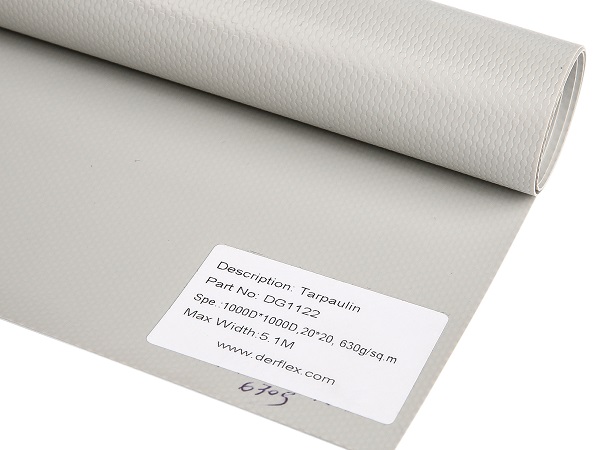
60-Second Answer: Why Does 1000D Work So Well?
1000D PVC tarpaulin is widely used for industrial covers because it offers a strong balance between mechanical performance and convertibility. The 1000-denier polyester scrim can support demanding tensile and tear targets, while the finished material can still be folded, rolled, welded, sewn and packed more easily than many higher-denier constructions.
- 1000D gives a robust base cloth without automatically making every cover excessively stiff.
- Different weave counts and PVC coating weights let manufacturers tune the same yarn family for different duty levels.
- PVC coating supplies waterproofing, abrasion protection and a weldable surface.
- Local reinforcement can protect corners, eyelets, straps and abrasion zones without increasing the weight of the whole cover.
- It is commonly available in industrial supply chains, making sampling, repeat production and OEM standardization easier.
What Does 1000D Mean in a PVC Tarpaulin?
Denier Measures Yarn Linear Mass
Denier is a textile measurement: one denier equals one gram per 9,000 meters of yarn. A 1000D yarn therefore has a linear mass of 1,000 grams per 9,000 meters. A specification written as 1000D × 1000D normally means 1000-denier yarn is used in both warp and weft directions.
This is why 1000D is useful as a sourcing shorthand—but it is only the first layer of the specification.
Read the DERFLEX denier guide →1000D Is Not the Same as GSM or Thickness
Two PVC tarpaulins can both use 1000D × 1000D yarn but have very different finished weight, hand feel and performance because their weave count, PVC add-on, coating route and surface treatment are different.
- Denier: yarn linear mass
- Weave density: how the yarns are arranged per unit area
- GSM: finished mass per square meter
- Thickness: finished material body
- Test values: actual performance under defined methods
Five Reasons 1000D PVC Tarpaulin Fits Industrial Covers So Well
Strength-to-Handling Balance
Industrial covers must survive wind, pull force, repeated folding and abrasion, but they also need to be moved, installed and packed. A 1000D base gives manufacturers room to engineer high-strength constructions without automatically creating the bulk of heavier yarn systems.
Wide Weave Flexibility
DERFLEX publishes multiple 1000D structures, including 14×14, 20×20, 23×23, 28×26 and 30×30 directions. That allows the same denier family to be tuned for general covers, truck tarps, marine covers or denser heavy-duty grades.
Coating Can Be Tuned
PVC add-on and coating route can be adjusted around waterproofing, abrasion, flexibility, lacquer, printability, UV exposure, anti-mildew behavior or flame-retardant project requirements.
Fabrication Friendly
1000D PVC coated polyester can be converted through hot-air welding, high-frequency welding where suitable, sewing, cutting, eyeleting, webbing and reinforced hems—important for large industrial covers and repeat OEM programs.
Easy to Engineer Locally
Instead of making the entire cover heavier, fabricators can reinforce the true stress zones: corners, eyelets, D-rings, roof contact lines, pull handles, pockets and abrasion strips. This is often more efficient than over-specifying the whole panel.
Repeatable B2B Platform
For distributors, fleets, equipment brands and cover fabricators, a 1000D family can be standardized by yarn, density, GSM, color, finish, roll width, reinforcement and packing—making future repeat orders easier to control.
1000D PVC Tarpaulin Specifications Buyers Can Use as Starting Points
DERFLEX publishes several 1000D × 1000D constructions on its PVC tarpaulin material range. They show why “1000D” should be treated as a platform rather than one single grade. Final order data should always be confirmed against the approved sample and production specification.
| DERFLEX Reference | Base Fabric / Weave | Published Finished Weight | Published Width | Best Used as a Sourcing Direction |
|---|---|---|---|---|
| DG1122 | 1000D × 1000D / 20 × 20 | 610 gsm | 1.02–5.10 m | Balanced general heavy-duty cover and truck-tarp starting direction. |
| DG1122D | 1000D × 1000D / 20 × 20 | 680 gsm | 1.02–3.20 m | Knife-coated direction where coating stability and adhesion are important. |
| DG1123/650 | 1000D × 1000D / 23 × 23 | 650 gsm | 1.02–5.10 m | Denser medium-heavy structure for covers and industrial fabrication. |
| DG1330 | 1000D × 1000D / 30 × 30 | 900 gsm | 1.02–3.20 m | High-density, lacquered heavy-duty direction; published with B1 FR option. |
| DG2826 | 1000D × 1000D / 28 × 26 | 1050 gsm | 1.02–5.10 m | Heavier boat-cover / marine-style direction where body and durability increase. |
These are published reference models, not universal recommendations. Mechanical test values, coating formulation, finish, tolerances and compliance requirements should be confirmed for the exact project.
Match the 1000D Construction to the Cover’s Actual Failure Mode
The most reliable way to specify an industrial cover is to identify how it is likely to fail first. A higher denier will not solve every problem.
| Failure / Stress Mode | What to Check First | How 1000D Helps | What May Matter More Than Denier |
|---|---|---|---|
| Panel tension and wind load | Warp/weft tensile data, span, orientation, tie-down layout | Provides a robust yarn platform for high-tension fabric designs | Weave density, dimensional stability, reinforcement and seam direction |
| Tear around eyelets or corners | Tear strength and load concentration | Strong base cloth supports reinforced stress zones | Webbing, patch size, grommet spacing and edge design |
| Surface abrasion | Contact points, drag frequency, coating wear | Heavy-duty base survives after coating protection is engineered | PVC thickness, lacquer, wear strip and edge protection |
| Water leakage | Coating continuity and seam integrity | Supports a stable coated structure | Weld quality, seam overlap, hardware penetrations and cover geometry |
| Cold cracking / stiff handling | Low-temperature formulation and fold cycle | 1000D can retain a manageable balance when formulation is correct | Plasticizer package, coating build and cold-flex validation |
| Frequent folding and deployment | Fold behavior, panel weight and handling route | Often easier to handle than bulkier 1300D/1680D constructions | Finished GSM, lacquer, seam placement and storage method |
When 1000D Is the Better Choice—and When to Step Up
Stay with 1000D when...
- The cover is large and must still be folded, rolled or handled regularly.
- Strength can be achieved through weave density, coating and local reinforcement.
- Converters need efficient welding, sewing, packing and repeat production.
- The main failure risks are seams, hardware or abrasion zones rather than lack of yarn mass.
- You need a versatile base for multiple cover SKUs in an OEM or distributor program.
Evaluate 1300D or 1680D when...
- Long spans or repeated tension genuinely require more fabric body.
- High-wear panels experience severe rubbing, dragging or concentrated contact.
- Finished-product stiffness and extra weight are acceptable.
- Your welding, sewing and handling equipment can process the heavier build.
- Test data confirms that yarn mass—not seam design or coating wear—is the limiting factor.
Where 1000D PVC Tarpaulin Delivers the Most Value
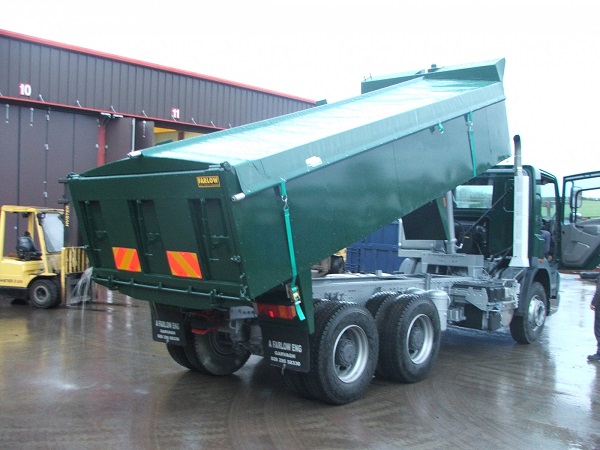
Road use adds wind pressure, vibration, tie-down tension, folding and road spray. 1000D coated polyester is a strong starting platform for waterproof transport covers.
Generators, machinery, construction equipment and stored assets need waterproofing plus reinforced corners, vents, straps and abrasion protection.
Stockpiles, pallets, temporary site protection and storage yards benefit from a material that combines coverage, weldability and manageable handling.
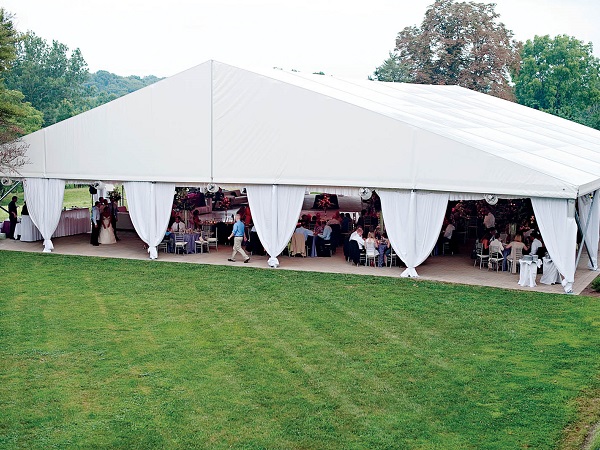
1000D can support stronger welded panels while allowing UV, lacquer and flame-retardant directions to be matched to project requirements.
Heavier 1000D constructions can be used where repeated outdoor exposure, moisture, abrasion and fitted-cover geometry increase the durability requirement.
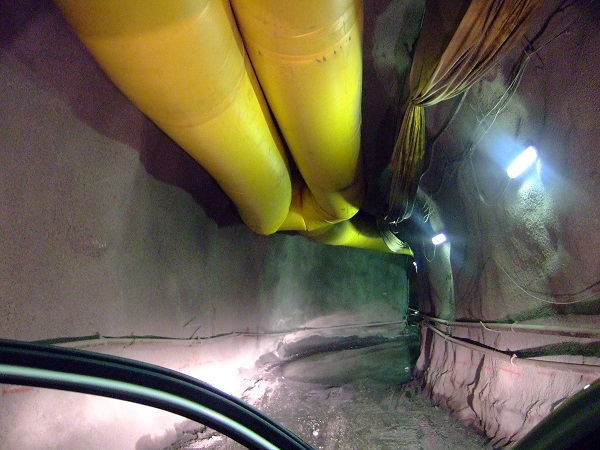
Factories, partitions, protection screens and flexible enclosures benefit from a strong base fabric combined with weldable edges and project-specific finishes.
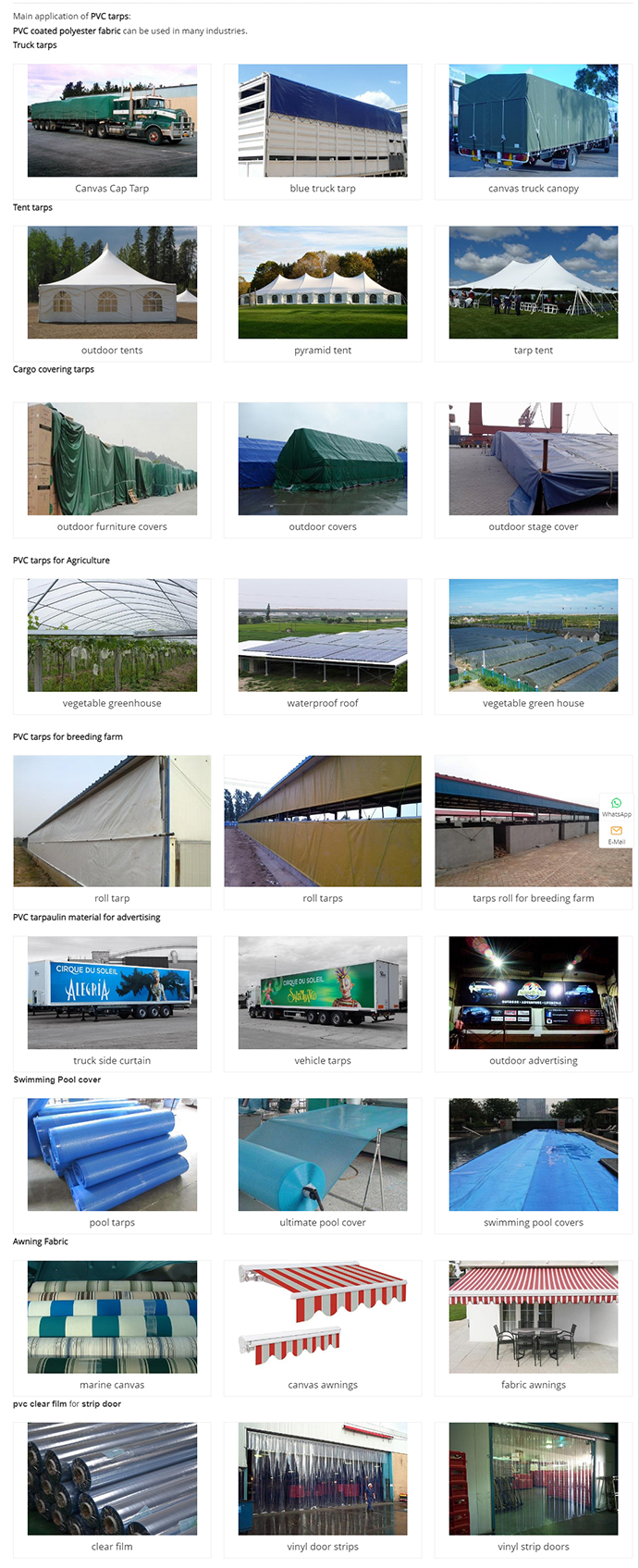
1000D PVC Tarpaulin Material & Application Images
Use descriptive filenames, accurate alt text and application captions when these assets are reused on the final live page. The hero image is loaded eagerly; supporting images are lazy-loaded for better page performance.
Four Construction Details That Decide Whether a 1000D Cover Lasts
1. Weld Width & Seam Efficiency
A heavy fabric with a narrow, inconsistent or contaminated weld can still fail early. Validate hot-air or HF welding parameters on the approved material before full production.
2. Edge Reinforcement
Hems, webbing and reinforcement patches should distribute load into the panel. The attachment layout must reflect real tie-down force rather than a generic spacing pattern.
3. Hardware Position
Grommets, D-rings, straps, pockets and pull bars create concentrated force. Their position and backing structure often matter more than an extra increase in denier.
4. Abrasion Mapping
Identify roof rails, machine corners, cargo edges, dragging zones and folding lines before fabrication. Use wear strips or sacrificial patches where the cover repeatedly contacts hard surfaces.
What to Send Before Requesting a 1000D PVC Tarpaulin Quote
Truck cover, machinery cover, outdoor storage, tent, industrial curtain, marine use, mining or another application; include indoor/outdoor exposure and climate.
Overall dimensions, drops, flaps, pockets, openings, irregular shapes, seams and areas that must clear handles or hardware.
Current sample or target 1000D × 1000D construction, GSM, weave density, thickness, tensile/tear targets and preferred coating route if known.
UV resistance, cold flexibility, anti-mildew, anti-static, flame-retardant direction, lacquer, printability, easy-clean surface or other project needs.
Hot-air welding, HF welding, sewing, reinforced hems, webbing, eyelets, D-rings, straps, vents, zippers or custom hardware.
Roll goods or finished covers, color, width, roll length, quantity, sample need, logo, private-label packing and destination market.
Do Not Buy Industrial Covers by One Number
“1000D means it is strong enough.”
Not necessarily. Confirm weave density, tensile, tear, coating adhesion and the finished reinforcement system.
“Higher GSM always lasts longer.”
Extra weight may come from more PVC without fixing the actual weak point. A well-engineered 650–900gsm cover can outperform a heavier but poorly reinforced construction.
“Waterproof fabric means waterproof cover.”
The sheet can be waterproof while seams, openings, vents or hardware allow leakage. Finished-cover design and welding quality remain critical.
Continue From Material Selection to Finished Cover Design
Questions Buyers Ask About 1000D PVC Tarpaulin
What does 1000D mean in PVC tarpaulin?
1000D means the polyester yarn has a linear mass of 1000 denier. In a 1000D × 1000D base fabric, both warp and weft use 1000-denier yarn. Denier describes yarn size, not the finished tarp's GSM, coating thickness or final strength.
Why is 1000D PVC tarpaulin widely used for industrial covers?
It offers a useful balance: the base yarn is substantial enough for heavy-duty constructions, yet the finished tarp can remain practical to fold, weld, sew, roll and pack. Manufacturers can then tune performance through weave density, PVC coating, lacquer, reinforcement and finishing.
Is 1000D PVC tarpaulin waterproof?
A correctly coated PVC tarpaulin can provide waterproof sheet performance. The finished cover still depends on weld quality, seam overlap, vents, hardware penetrations, openings and installation geometry.
Is 1000D twice as strong as 500D?
No. 1000D yarn has twice the linear mass of 500D yarn for the same length, but finished strength is not a simple 2× relationship. Yarn tenacity, weave density, coating, adhesion and test direction all influence tensile and tear performance.
What GSM is common for 1000D PVC tarpaulin?
DERFLEX publishes 1000D × 1000D examples from approximately 610gsm through 1050gsm and heavier special directions. This range demonstrates that the same denier can produce very different finished materials. Select GSM according to the actual cover duty, coating requirement, handling and test targets.
Should I choose 1000D, 1300D or 1680D for an industrial cover?
Start with the failure mode. 1000D is often the best heavy-duty balance for repeatedly handled covers. Higher denier may be justified for more body, larger spans, severe abrasion or higher edge loading, but targeted reinforcement can be more efficient than increasing the denier of the entire panel.
Can 1000D PVC tarpaulin be welded?
Yes. PVC coated polyester is commonly fabricated through hot-air welding and, where the construction is suitable, high-frequency welding. It can also be sewn, eyeleted and reinforced with webbing or patches. Production settings should be validated on the approved material.
What information should I provide for a 1000D PVC tarp quotation?
Send the end use, finished dimensions, exposure conditions, preferred GSM or existing sample, weave or strength requirements, welding or sewing process, color, surface finish, UV or FR needs, reinforcement details, quantity and packing requirements.
Build a 1000D PVC Tarpaulin Around the Real Cover—Not Just the “D” Number
Send DERFLEX your industrial cover application, dimensions, climate, handling cycle, desired GSM, welding method, reinforcement layout, color, finish and quantity. We can help narrow the yarn, weave, coating and fabrication direction before sample approval.