News
Company News

What Does Denier Mean in Tarp Fabric? 500D vs 1000D vs 1680D | DERFLEX

Update:2026/7/28 18:15:52 Views:
Tarp Fabric Engineering Guide

What Does Denier Mean in Tarp Fabric? 500D vs 1000D vs 1680D

Denier tells you the linear mass of the yarn inside a woven tarp fabric. It is useful—but it does not, by itself, tell you finished fabric thickness, waterproof performance or service life.

This guide explains how to read 500D, 1000D and 1680D specifications, why two fabrics with the same denier can perform differently, and how industrial buyers can combine denier with weave density, coating weight, tensile data and fabrication details.

500DBalanced flexibility and durability
1000DCommon heavy-duty tarp direction
1680DHigh yarn bulk for demanding builds
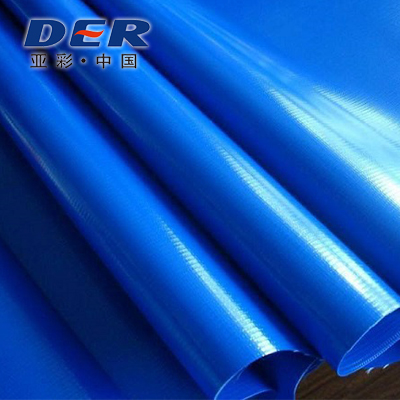
DERFLEX blue 500D polyester tarp fabric
Denier is one layer of the specification Finished performance also depends on polymer, weave, coating, reinforcement and manufacturing control.
Quick Answer

What does denier mean?

Denier, abbreviated as D, is a linear mass measurement for a fiber or yarn. A yarn is 1 denier when 9,000 meters of it weighs 1 gram. Therefore, 9,000 meters of 500D yarn weighs 500 grams, while the same length of 1000D yarn weighs 1,000 grams.

In practical tarp sourcing, a higher denier generally means a heavier and bulkier yarn when the fiber type and yarn construction are comparable. This can support higher strength and abrasion resistance, but it may also increase stiffness, finished weight and processing demands.

Important: denier describes the yarn—not the complete tarp. A 1000D label does not automatically reveal weave density, coating thickness, tensile strength, tear strength, waterproofing, UV package or seam quality.
500D
Reference level: balanced yarn size and easier handling.
1000D
Twice the linear mass of 500D for the same yarn length.
1680D
3.36× the linear mass of 500D; the finished fabric is not automatically 3.36× stronger.
Side-by-Side Buying Guide

500D vs 1000D vs 1680D Tarp Fabric

Use this comparison as a screening tool. Final decisions should be based on a complete specification and representative sample testing.

Comparison Point 500D 1000D 1680D
Yarn linear mass 500 g per 9,000 m 1,000 g per 9,000 m 1,680 g per 9,000 m
Relative yarn size Medium Heavy Very heavy
Typical handling More flexible and easier to fold Balanced for rugged daily handling More structured; may be stiffer depending on weave and coating
Typical durability direction Moderate to strong High for many industrial tarp systems High abrasion and structural potential when properly engineered
Common use direction Portable covers, bags, light-to-medium industrial covers, coated technical textiles Truck covers, equipment tarps, tents, industrial curtains, repeated-use covers High-wear panels, heavy bags, reinforcement zones, demanding protective structures
Processing consideration Generally easier to sew, fold and pack Requires appropriate sewing or welding setup for the finished coating Bulk and stiffness may require stronger equipment and carefully designed seams
Cost direction Often lower than heavier constructions, all else equal Mid-to-high depending on yarn, coating and finish Often higher due to yarn usage and heavy construction
Best reason to select Strength-to-weight balance Heavy-duty versatility Yarn bulk and abrasion-focused construction
Main selection risk May be under-specified for severe dragging or high tension Can add unnecessary weight if the use is light Higher denier can be excessive when flexibility and compact packing matter

Comparison assumes broadly similar polymer type and manufacturing quality. Nylon, polyester, high-tenacity yarn, weave geometry and coating system can change the result substantially.

Detailed Profiles

How Each Denier Grade Behaves in Tarp Design

The useful question is not “Which number is strongest?” It is “Which complete fabric construction matches the job?”

Balanced Construction

500D Tarp Fabric

500D is often selected when a tarp or coated textile needs practical durability without becoming unnecessarily bulky. It can be a useful base for portable covers, equipment protection, bags and medium-duty industrial products.

  • Good foldability and handling
  • Lower bulk than 1000D or 1680D
  • Compatible with PVC, PU and other coating directions
  • Suitable when transport weight matters
Heavy-Duty Workhorse

1000D Tarp Fabric

1000D polyester is widely used as a heavy-duty base cloth direction because it can combine substantial yarn size with workable weaving and coating options. It is common in truck tarps, tents, industrial covers and repeatedly handled products.

  • Strong heavy-duty design potential
  • Useful balance of durability and convertibility
  • Available in different weave counts and coating weights
  • Appropriate for welded PVC tarp constructions
High-Bulk Option

1680D Tarp Fabric

1680D uses a substantially heavier yarn than 500D or 1000D. It can suit abrasion-prone panels, high-wear bags, reinforced covers and other applications where structure is valued more than light weight.

  • High yarn mass and fabric body
  • Potential for strong abrasion-focused designs
  • Often less compact and less flexible
  • Must be evaluated with weave, coating and seam design
Beyond the D Number

Six Factors That Decide Real Tarp Performance

Denier is valuable when it is read together with the rest of the material system.

01

Fiber Material

Polyester and nylon of the same denier do not behave identically. High-tenacity yarn grade, elongation, UV response and moisture behavior matter.

02

Warp × Weft Denier

A specification such as 1000D × 1000D identifies yarn directions. Asymmetric constructions may use different deniers in warp and weft.

03

Weave Density

Threads per inch—or another density specification—changes stability, tear behavior and coating support. Denier and density must be read together.

04

Coating System

PVC, PU, TPU and other finishes influence waterproofing, abrasion, weldability, flexibility, chemical resistance and surface feel.

05

Finished Fabric Weight

GSM or oz/yd² includes the base textile and coating. Two 1000D fabrics can have very different final weights and handling characteristics.

06

Fabrication Details

Weld width, seam design, webbing, hems, eyelets, corner patches and hardware spacing often determine how the tarp survives real loads.

Avoid Common Specification Errors

Denier vs GSM vs Mil: They Measure Different Things

Treating these three numbers as interchangeable is a common reason for mismatched samples and quotations.

Denier (D)

Measures the linear mass of the fiber or yarn. It helps describe the base textile construction, not the total coated fabric.

Example: 1000D × 1000D

GSM

Measures grams per square meter of the finished fabric. For coated tarpaulin, GSM includes base cloth plus coating and finishing layers.

Example: 650 gsm PVC tarp

Mil / mm

Measures finished material thickness. Thickness affects body and puncture behavior, but does not replace tensile, tear or adhesion data.

Example: 20 mil / 0.50 mm
Product Image Display

Denier Becomes Useful When You Can See the Complete Material

Surface, coating uniformity, fabric body and production consistency should be reviewed alongside the written specification.

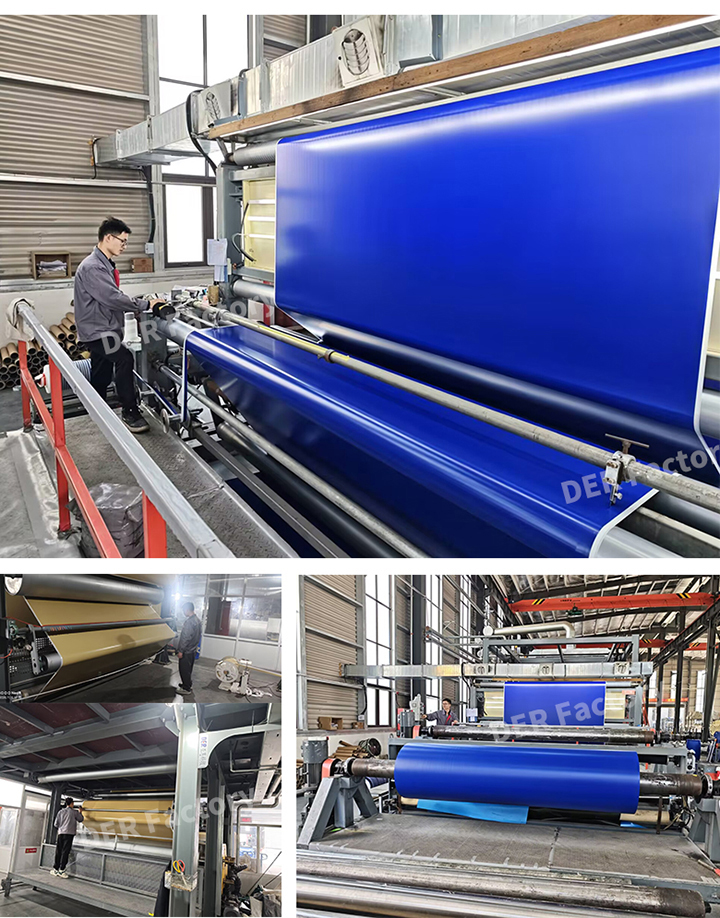
DERFLEX PVC coated tarp fabric production line
PVC coated fabric production Denier selection is coordinated with coating weight, surface finish, process temperature and the required finished-fabric performance.
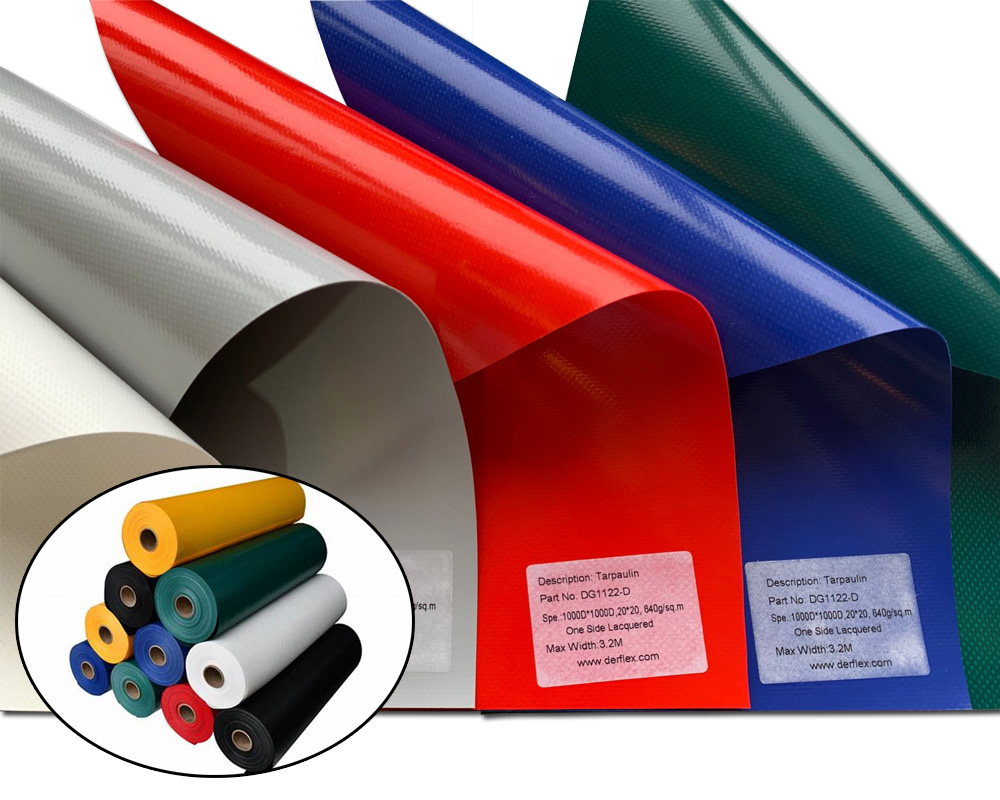
DERFLEX PVC tarpaulin fabric rolls in multiple colors
Coated tarpaulin roll options Buyers can specify yarn construction, weave density, finished weight, color, surface and functional formulation for the intended market.
Application-Based Selection

Which Denier Should You Choose?

Start with the operating environment and handling pattern, then select the lightest construction that can meet validated performance requirements.

500D

Portable or Frequently Folded Covers

Consider 500D when easy handling, compact storage and moderate durability are more important than maximum fabric body. Confirm tear strength and coating weight for the actual size and tie-down method.

1000D

Truck, Tent and Industrial Tarp Programs

1000D is a practical starting direction for many heavy-duty PVC coated polyester tarps. The correct weave count, GSM, lacquer, UV package and reinforcement should be matched to the project.

1680D

High-Wear Panels and Structured Products

Consider 1680D when yarn bulk, abrasion exposure and structural body justify the extra weight. Test fold life, seam construction and production equipment before committing to bulk supply.

MIX

Engineered Hybrid Construction

A full tarp does not always need one denier everywhere. Some products use a lighter main body with heavier reinforcement at corners, edges, wear strips or contact zones to manage weight and cost.

Procurement Checklist

What to Include in a Tarp Fabric RFQ

A complete inquiry helps the manufacturer recommend a realistic construction and reduces sample-to-ord, er misunderstandings.

  1. End use: truck cover, equipment cover, tent, curtain, bag, liner, shelter or another application.
  2. Environment: indoor/outdoor use, UV exposure, temperature range, rain, wind, chemicals, abrasion and cleaning method.
  3. Base cloth: polyester or nylon, target denier in warp and weft, and preferred weave or density.
  4. Finished material: target GSM or oz/yd², approximate thickness, coating type and one-side or two-side coating.
  5. Mechanical data: required tensile strength, tear strength, adhesion, abrasion or puncture test method.
  6. Functional options: UV resistance, flame-retardant direction, anti-mildew, anti-static, cold flexibility or printable surface.
  7. Fabrication: roll width, cut size, welding or sewing, hem, webbing, eyelet spacing, D-rings, straps and corner reinforcement.
  8. Commercial details: sample quantity, annual forecast, packaging, labeling, logo, destination and documentation needs.
DERFLEX Manufacturing Support

From Yarn Construction to Finished Tarp Specification

DERFLEX supports B2B buyers that need coated fabric rolls, converted panels or custom finished tarps for industrial and commercial programs.

Construction Matching

Denier, weave density, coating weight and surface direction can be discussed around the real operating load.

Coating Options

PVC coated polyester and selected PU or TPU coated structures can be evaluated by application and process needs.

Custom Conversion

Roll supply, cut panels, welding, sewing, hems, webbing, hardware and packaging can be planned before bulk production.

Sample Validation

Representative samples and agreed test methods help confirm the selected construction before production-scale orders.

Frequently Asked Questions

Tarp Fabric Denier FAQ

Clear answers for buyers comparing fabric specifications, samples and quotations.

Is 1000D tarp fabric twice as strong as 500D?

Not necessarily. 1000D yarn has twice the linear mass of 500D yarn for the same length, but finished strength also depends on fiber type, yarn quality, weave density, coating, adhesion and test direction. Compare verified tensile and tear data rather than assuming a 2× strength increase.

Is 1680D always better than 1000D?

No. 1680D can provide more yarn bulk and a more structured fabric, but it can also increase weight, stiffness and processing difficulty. 1000D may be more suitable for a tarp that must be folded, rolled, welded or handled every day.

Does higher denier mean waterproof?

No. Denier describes the yarn. Waterproof performance is created mainly by the coating or lamination system, coating continuity, seam construction and finished-product design. An uncoated high-denier fabric may still allow water penetration.

What does 1000D × 1000D mean?

It usually identifies 1000-denier yarn in both the warp and weft directions of the base fabric. The specification should still include weave density, finished GSM, coating type and mechanical test results.

Is denier the same as GSM?

No. Denier is a yarn linear-mass measurement. GSM is the mass of one square meter of finished fabric. A coated tarp’s GSM includes the woven base and coating, so two fabrics with the same denier can have different GSM values.

Which denier is commonly used for heavy-duty PVC tarps?

1000D polyester is a common starting direction for many heavy-duty PVC coated tarp structures, but the correct choice depends on weave, GSM, coating formulation, handling frequency, reinforcement and the required test results. Some projects use 500D, 1680D or other constructions.

Turn “500D vs 1000D vs 1680D” into a complete purchasing specification

Share your end use, fabric weight, coating, size, performance target and quantity. DERFLEX can review the requested construction and discuss a suitable sampling route.

Request A Quote
Product selection should be confirmed through agreed specifications, test methods and representative sample evaluation. Actual performance varies with material construction, processing and service conditions.
Consulting Services
+86-021-54361792 / 54361798
Email
sales@derflex.com