News
Industry News

0.5 mm vs 0.7 mm vs 0.9 mm PVC Tarp Material | DERFLEX

Update:2026/7/29 19:27:09 Views:
PVC Tarp Thickness Selection Guide

0.5 mm vs 0.7 mm vs 0.9 mm PVC Tarp Material

Choose the thickness that matches the load, handling cycle and fabrication method—not simply the thickest sheet on the list.

This buyer-focused comparison explains how three common PVC tarp material thicknesses differ in flexibility, handling weight, abrasion tolerance, seam design and typical industrial use. It also shows which additional specifications must be checked before an order is approved.

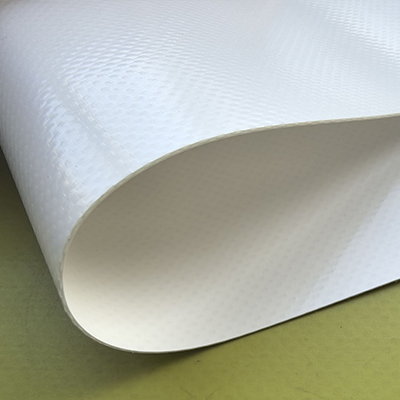
PVC tarp material showing coated polyester structure and thickness
0.5 mm
≈ 19.7 mil
0.7 mm
≈ 27.6 mil
0.9 mm
≈ 35.4 mil
Quick Decision

Which PVC tarp thickness should you choose?

For many projects, 0.7 mm is the balanced industrial choice. Select 0.5 mm when handling ease and lower material mass matter; move to 0.9 mm when abrasion, pressure, repeated commercial use or demanding seam loads justify the added structure.

0.5 mm Flexible covers, bags, partitions, lighter inflatables and applications with frequent folding.
0.7 mm Truck covers, tents, industrial curtains, general inflatables and medium-to-heavy service.
0.9 mm Commercial inflatables, wear zones, heavy covers, containment and high-cycle outdoor use.
Side-by-Side Comparison

How 0.5 mm, 0.7 mm and 0.9 mm PVC tarp material differ

The table below is a selection guide rather than a substitute for a tested product datasheet. Actual weight and strength vary with yarn denier, weave density, coating formulation and production route.

Buyer Criterion 0.5 mm PVC Tarp 0.7 mm PVC Tarp 0.9 mm PVC Tarp
Approx. mil equivalent 19.7 mil 27.6 mil 35.4 mil
Handling character More pliable and easier to fold, roll and manually position. Moderate stiffness with a practical balance of handling and structure. More substantial; may require more labor or equipment for large panels.
Typical weight direction Often selected in lighter to medium coated-fabric ranges. Common in medium to heavy industrial constructions. Usually associated with heavier coated constructions.
Abrasion tolerance Suitable when contact wear is controlled. Better reserve for repeated outdoor handling. Preferred where rubbing, dragging or pressure points are more severe.
Foldability High Medium to high Medium; influenced strongly by temperature and formulation.
Fabrication Convenient for sewing and welding when process settings match the coating. Well suited to common welded tarp and cover fabrication. Requires sufficient welding energy, pressure and seam design for the heavier build.
Typical procurement fit Portable covers, bags, dividers, light-duty containment and compact products. Transport covers, tent panels, industrial curtains and versatile OEM programs. Commercial inflatables, wear-intensive protection, liquid containment and demanding covers.
Cost direction Lower material input, subject to construction and finish. Mid-range project position. Higher material, freight and handling input, but potentially better suited to severe duty.
Important: a dense, well-coated 0.5 mm construction can outperform a poorly specified thicker sheet in certain strength tests. Thickness should be evaluated together with the polyester scrim, coating adhesion and finished-product design.
The Selection Logic

Thickness is only one layer of the decision

PVC tarp material is a composite technical textile. The polyester base cloth carries much of the tensile and tear load, while the PVC coating contributes waterproofing, surface protection, weldability and environmental resistance.

A productive RFQ therefore describes the operating problem first: panel size, wind exposure, contact surface, fold frequency, temperature range, welding method, desired life cycle and any compliance requirement.

1

Base Fabric

Yarn denier and weave density influence tensile strength, tear propagation and dimensional stability.

2

PVC Coating System

Coating weight, adhesion and formulation affect waterproofing, abrasion, flexibility and weathering behavior.

3

Finished Product Design

Seams, hems, webbing, eyelet spacing and reinforcement often determine where a cover fails first.

4

Use Environment

UV exposure, low temperature, chemicals, standing water and repeated dragging change the appropriate specification.

Thickness Profiles

What each thickness is designed to solve

Use these profiles to shortlist a material, then confirm the complete construction with samples and test data.

0.5 mm

Flexible, portable and fabrication-friendly

  • Lower mass can make large covers easier to deploy and store.
  • Useful where frequent folding or compact packing is part of daily operation.
  • Appropriate for controlled-wear covers, industrial bags, curtains and lighter inflatable products.
  • Should not be selected by thickness alone when sharp edges or repeated abrasion are present.

0.9 mm

Substantial build for demanding service

  • Provides additional coating and structural reserve for wear-intensive environments.
  • Often considered for commercial inflatables, containment, heavy covers and repeated outdoor cycles.
  • Can better tolerate pressure points when the scrim and coating adhesion are also appropriately specified.
  • Adds roll weight, freight volume and manual handling effort, especially in wide finished panels.
Performance Trade-Offs

More thickness changes the operating profile

These relative scales illustrate the usual direction of change. They are not laboratory ratings for a specific SKU.

Handling & Fabrication

0.5 mm foldabilityHigh
0.7 mm foldabilityBalanced
0.9 mm foldabilityModerate

Wear Reserve

0.5 mm surface reserveControlled duty
0.7 mm surface reserveIndustrial
0.9 mm surface reserveDemanding duty
Fabrication Matters

Thickness affects welding, seams and finished-product handling

A technically suitable roll can still underperform if the conversion process is not adjusted to its coating mass and base-fabric construction.

01

Hot-Air Welding

Temperature, speed, nozzle position and pressure should be set for the specific coating. Thicker builds may require a slower, more controlled heat input.

02

High-Frequency Welding

Electrode geometry, dwell time and pressure should produce a consistent bonded zone without damaging the reinforcement.

03

Sewn Construction

Needle holes are potential water paths. Waterproof applications may need seam sealing, welded overlays or a different joint design.

04

Edge Reinforcement

Webbing, folded hems, patches and suitable eyelet spacing can be more important than a small increase in sheet thickness.

Application Matrix

Match thickness to the actual use case

The same application category may use more than one thickness depending on size, reinforcement, handling frequency and environmental exposure.

Truck & Trailer Covers

Repeated tensioning, wind movement and contact with cargo edges usually favor a balanced or heavier coated construction.

Start evaluation: 0.7–0.9 mm

Temporary Covers

Where portability, folding and quick deployment matter more than prolonged abrasion, a lighter construction may be efficient.

Start evaluation: 0.5–0.7 mm

Industrial Curtains

Panel height, movement, doorway traffic and edge hardware determine whether flexibility or greater stiffness is preferred.

Start evaluation: 0.5–0.7 mm

Tents & Shelters

Roof tension, frame spacing, wind exposure, translucency and fire-performance requirements must be considered together.

Start evaluation: 0.7–0.9 mm

Inflatable Products

Air pressure, chamber geometry, user load, seam layout and abrasion zones determine the appropriate airtight fabric.

Start evaluation: 0.5–0.9 mm

Containment & Liners

Liquid type, hydrostatic load, ground preparation and puncture risk can make a heavier build or protective underlay necessary.

Start evaluation: 0.7–0.9 mm
Cost per Use

Do not compare purchase price per square meter alone

A lower unit price can be economical when the cover is portable and the wear level is modest. A heavier material can be economical when replacement, downtime or failure consequences are significant.

Costs that rise with thickness

  • Material mass and roll weight
  • Ocean or inland freight contribution
  • Manual lifting and deployment effort
  • Storage space and winding requirements
  • Welding energy and fabrication time in some constructions

Costs that a correct specification may reduce

  • Premature replacement of covers
  • Repairs around seams, corners and contact points
  • Water ingress or cargo exposure
  • Production interruptions caused by material mismatch
  • Inventory complexity from over-specifying every application
RFQ Specification

What to specify beyond 0.5, 0.7 or 0.9 mm

A thickness-only inquiry leaves too many variables open. A clear specification improves sampling accuracy and quotation comparability.

Specification Field Information to Provide
ApplicationTruck cover, tent, curtain, inflatable, liner, equipment cover or other finished product.
Target thickness0.5 mm, 0.7 mm, 0.9 mm or an acceptable production tolerance range.
Target weightDesired GSM or reference sample weight, recognizing that weight and thickness are related but not interchangeable.
Base clothYarn denier, weave density or the required tensile and tear performance.
SurfaceGlossy, matte, lacquered, textured, anti-slip, easy-clean or other finish.
EnvironmentOutdoor duration, UV level, temperature, moisture, chemicals and abrasion exposure.
ConversionHot-air welding, high-frequency welding, sewing, printing, cutting or finished-tarp production.
Order formatRoll width, roll length, color, packing, logo, panel size, hems, eyelets and reinforcement.
DERFLEX Supply Support

Specification-matched PVC tarp material for converters and industrial buyers

DERFLEX supports PVC coated polyester material selection across different thickness, weight, width, color, finish and performance directions. Final availability depends on the approved specification and production plan.

Material Matching

Compare target thickness with fabric construction, coated weight, surface finish and end-use requirements.

OEM Roll Supply

Discuss roll width, roll length, color, packing and repeat-order specification control for conversion programs.

Finished Tarp Options

Project-based support may include cutting, welding, hems, eyelets, reinforcement and custom panel fabrication.

Performance Options

UV-resistant, anti-mildew, flame-retardant and other formulations can be discussed according to project requirements.

Sample Review

Use application details or a reference sample to align appearance, handling and conversion behavior before bulk supply.

Export Coordination

Discuss packing, labeling, loading plan and documentation requirements when preparing international orders.

FAQ

Frequently asked questions about PVC tarp thickness

Is 0.9 mm PVC tarp material always stronger than 0.7 mm?

Not automatically. A 0.9 mm material usually has a heavier build, but tensile strength and tear resistance also depend on the polyester scrim, weave density, coating adhesion and manufacturing quality. Compare tested properties rather than thickness alone.

Is 0.5 mm PVC tarpaulin suitable for outdoor use?

It can be suitable for outdoor applications when the coating formulation, UV package, reinforcement and expected wear level are correctly matched. It is often selected where flexibility and lower handling weight are important.

What is the most versatile PVC tarp thickness?

For many industrial buyers, 0.7 mm is a practical starting point because it balances handling, weldability and wear reserve. The correct choice still depends on panel size, base cloth, application and service environment.

How much thicker is 0.7 mm than 0.5 mm?

Nominally, 0.7 mm is 40% thicker than 0.5 mm. That percentage does not mean it is automatically 40% stronger, because strength is influenced by the full composite construction.

How much thicker is 0.9 mm than 0.7 mm?

Nominally, 0.9 mm is about 28.6% thicker than 0.7 mm. The increase may affect roll weight, stiffness, welding settings and manual handling.

Can DERFLEX customize PVC tarp thickness, color and width?

DERFLEX can discuss project-based thickness, coated weight, width, color, surface finish, roll packing and finished-tarp processing. Availability and minimum order requirements depend on the final specification.

Send the application, not just the thickness

Tell DERFLEX what the tarp must cover, how often it is handled, the expected environment, panel size, welding method and target order quantity. The team can use those details to discuss a more appropriate construction.

Request a specification-matched quotation Include thickness, GSM, width, color, finish, application and annual or order quantity where available. Request A Quote
Consulting Services
+86-021-54361792 / 54361798
Email
sales@derflex.com