


Tarp Mil Thickness Chart: What Mil Tarp Do I Need?
Use this tarp mil thickness chart to compare common 3–40 mil ranges, convert mil to millimeters, and choose a practical starting thickness for temporary covers, outdoor storage, construction, equipment, truck and industrial tarp applications.
Choose Tarp Thickness by Duty Level First
The same mil number can behave differently in PE, PVC vinyl, reinforced coated polyester, clear vinyl and other constructions. Use the ranges below to shortlist the duty level, then verify the full material specification.
Light / Temporary
Painting, dust protection, short indoor storage and low-abrasion covering where portability and low handling weight matter.
General Outdoor
Seasonal equipment, garden storage, temporary weather covers and moderate outdoor service with controlled wind and abrasion.
Heavy Duty
Construction materials, machinery, repeated outdoor handling, transport protection and commercial storage.
Industrial / Repeated
Truck and trailer covers, abrasive contact, large custom covers and longer-term industrial programs where complete construction matters.
What Mil Tarp Do You Need for Common Jobs?
This chart is designed for fast search answers and real purchasing decisions. Ranges are application-oriented starting points rather than a universal industry standard.
| Mil Range | Approx. mm | Duty Direction | Typical Uses | What to Check Before Buying |
|---|---|---|---|---|
| 3–4 mil | 0.08–0.10 mm | Very light | Dust sheets, painting, short indoor protection, disposable or emergency covering. | Low wind, no sharp edges, short service window and minimal UV exposure. |
| 5–6 mil | 0.13–0.15 mm | Light temporary | General temporary covers, light landscaping, camping and seasonal household use. | Weave, reinforced corners, grommet retention and expected exposure time. |
| 8 mil | 0.20 mm | Light / medium | Portable outdoor covers, moderate-weather protection and short-to-seasonal storage. | UV treatment, seam quality, edge reinforcement and abrasion points. |
| 10 mil | 0.25 mm | General outdoor | Equipment covers, yard storage, temporary construction protection and moderate repeated use. | Wind exposure, tear strength, roof slope or water shedding, grommet layout. |
| 12 mil | 0.30 mm | General / entry heavy | Seasonal outdoor protection, construction materials, machinery and more frequent handling. | Material family, denier or base fabric, UV package, hems and corner reinforcement. |
| 14–16 mil | 0.36–0.41 mm | Heavy duty | Commercial storage, machinery, construction, repeated weather exposure and transport protection. | Base fabric strength, abrasion zones, seam method, edge webbing and tie-down loads. |
| 18–22 mil | 0.46–0.56 mm | Heavy industrial | Vinyl/PVC tarp programs, truck and trailer covers, repeat-use equipment protection. | GSM/oz, coating adhesion, cold flexibility, weld quality and hardware reinforcement. |
| 24+ mil | 0.61 mm+ | Special heavy | High-abrasion industrial covers, large OEM systems, severe duty or specialty sheet applications. | Handling weight, foldability, fabrication equipment, attachment loads and lifecycle cost. |
| 30–40 mil | 0.76–1.02 mm | Specialty | Very thick vinyl or specialty flexible sheet applications where physical depth is a design requirement. | Confirm exact material; do not assume a 30–40 mil specialty sheet performs like woven reinforced tarpaulin. |
How Thick Is a Mil?
One mil is one-thousandth of an inch. The metric conversion is exact: 1 mil = 0.0254 mm.
| Mil | Inches | Millimeters | Quick Reference |
|---|---|---|---|
| 3 mil | 0.003 in | 0.076 mm | Very light sheet direction |
| 5 mil | 0.005 in | 0.127 mm | Light temporary range |
| 6 mil | 0.006 in | 0.152 mm | Light-duty reference |
| 8 mil | 0.008 in | 0.203 mm | Light / medium reference |
| 10 mil | 0.010 in | 0.254 mm | General outdoor reference |
| 12 mil | 0.012 in | 0.305 mm | General / entry heavy reference |
| 14 mil | 0.014 in | 0.356 mm | Heavy-duty starting point |
| 16 mil | 0.016 in | 0.406 mm | Heavy-duty reference |
| 18 mil | 0.018 in | 0.457 mm | Heavy vinyl direction |
| 20 mil | 0.020 in | 0.508 mm | Industrial / vinyl reference |
| 22 mil | 0.022 in | 0.559 mm | Heavy vinyl reference |
| 24 mil | 0.024 in | 0.610 mm | Special heavy direction |
| 30 mil | 0.030 in | 0.762 mm | Specialty thick sheet |
| 40 mil | 0.040 in | 1.016 mm | Very thick specialty sheet |
Tarp Mil Converter
Convert a mil value to millimeters. This converts physical thickness only; it does not estimate GSM, ounces or strength.
Tarp Thickness Recommendations by Real Use
Start with the job, then confirm the material and construction. The target thickness should reflect exposure duration, abrasion, wind, handling frequency and attachment design.
| Application | Starting Mil Direction | Why | Checks Beyond Mil |
|---|---|---|---|
| Painting / dust cover | 3–6 mil | Low stress and short duration favor easy handling. | Puncture risk, surface protection and slip/tear risk around corners. |
| Camping / seasonal cover | 5–10 mil | Portable protection without unnecessary weight. | Packability, UV exposure, grommets and water shedding. |
| Outdoor equipment storage | 10–16 mil | More repeated exposure and handling. | UV formulation, ventilation/condensation, hems and abrasion points. |
| Temporary roof / storm cover | 10–16 mil | Weather protection with manageable installation weight. | Anchoring, slope, wind uplift, puncture protection and local safety rules. |
| Construction materials | 12–20 mil | Higher abrasion and repeated moving. | Tear strength, corners, tie-down spacing and sharp-edge protection. |
| Machinery / industrial cover | 14–22+ mil | Frequent weathering, abrasion and longer service expectations. | Base fabric, coating adhesion, UV/cold resistance and reinforced attachment points. |
| Truck / trailer cover | 18–22+ mil direction | Highway airflow, cargo friction and repeated folding increase stress. | GSM/oz, denier, seam welds, webbing, grommets/D-rings and cold flexibility. |
| Large custom / severe duty | Project-specific | Panel size and load path can matter more than a single thickness number. | Engineering drawing, support spacing, fabrication method, anchors and lifecycle target. |
Why Two Tarps with the Same Mil Can Perform Differently
Mil is one dimensional measurement. Real tarp durability depends on how the material is built and how the finished cover transfers load.
PE Woven Tarps
Lightweight woven polyethylene tarps often use mil as a familiar retail specification. Compare weave density, lamination, UV treatment, corner reinforcement and grommet construction before relying on the label.
PVC / Vinyl Tarps
PVC coated polyester is commonly selected for reusable industrial covers because the woven base fabric, coating and weldable surface form a reinforced system. Buyers should compare mil or mm with GSM/oz, denier, coating adhesion and fabrication details.
Clear Vinyl & Specialty Sheet
A 20, 30 or 40 mil clear or specialty flexible sheet may be physically thick but may not contain the woven reinforcement used in an industrial tarpaulin. Compare material type before using the same duty labels.
Match the Failure Mode, Not Just the Mil Number
A tarp usually fails at a real stress point. Adding thickness can help some problems, but it does not fix every failure mechanism.
Edge & Anchor Stress
Flutter and uplift concentrate loads at hems, grommets and corners. Reinforcement and correct spacing can matter as much as the sheet thickness.
Contact-Point Wear
Cargo edges, machine corners and roof surfaces can rub through a tarp. Add pads, smoother load paths or stronger coated construction where contact occurs.
Material Aging
Sunlight can reduce flexibility and strength over time. UV resistance is controlled by material formulation and exposure, not by thickness alone.
Seams & Pooling
Waterproof material can still perform poorly when seams leak or water pools. Use suitable seam construction, slope and installation practices.
What to Specify When a Mil Number Is Not Enough
For repeat orders, converters and industrial projects, define the complete construction so different suppliers are quoting comparable material.
- Material family: PE woven laminated, PVC coated polyester, PVC laminated polyester, clear vinyl or another construction.
- Physical thickness: target mil or mm, plus the measurement method/tolerance if thickness is critical.
- Area weight: GSM or oz/yd² when relevant to coated or reinforced tarpaulin.
- Base reinforcement: denier, yarn density, scrim or approved reference construction.
- Environment: UV, rain, cold, heat, chemicals, abrasion, wind and handling frequency.
- Finished tarp design: cut/finished size, seams, hems, webbing, rope edges, corner patches, grommets or D-rings.
- Commercial details: quantity, color, logo, packing, sample reference, destination and repeat-order expectations.
Five Thickness Mistakes That Create Bad Tarp Specifications
The chart becomes more useful when buyers also know what not to infer from it.
Assuming higher mil always means stronger
Thickness does not reveal the yarn, weave, coating adhesion, seams, reinforcement or hardware.
Comparing PE and PVC by mil alone
Different material systems can have very different mass, reinforcement and fabrication behavior at the same physical thickness.
Trying to convert GSM directly to mil
GSM is mass per area; mil is thickness. There is no universal conversion because material density and construction vary.
Ignoring finished size and tie-down loads
Large covers can place much higher forces on edges and attachment points, even when the sheet material is thick.
Buying a “heavy duty” label instead of a specification
Duty labels vary by seller. Use measurable construction and application requirements for repeatable procurement.
Over-specifying thickness and hurting usability
An unnecessarily thick tarp can be heavier, harder to fold, slower to install and more expensive without solving the actual failure mode.
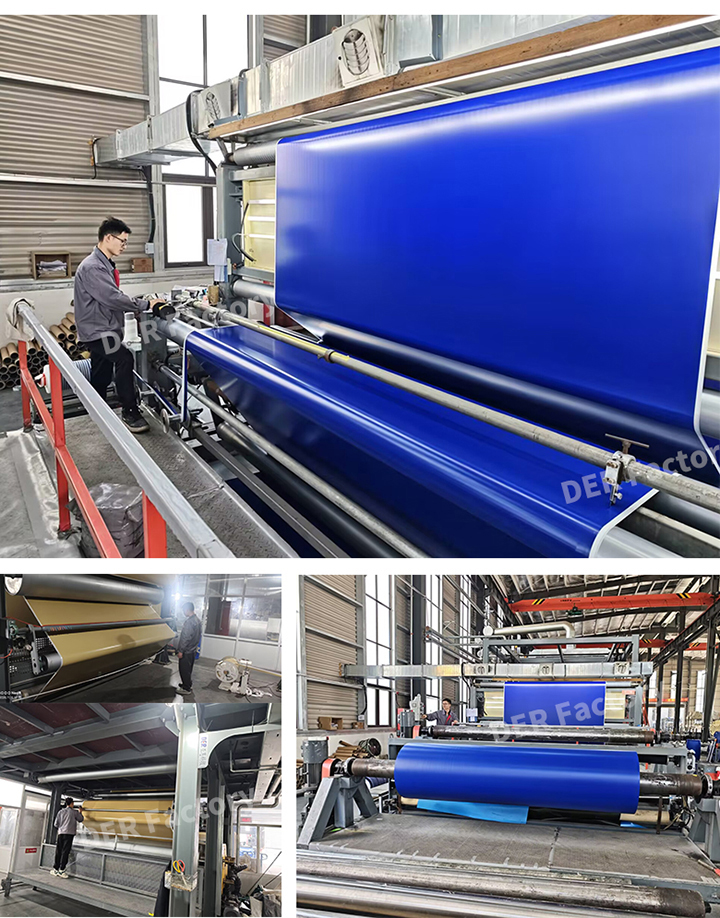
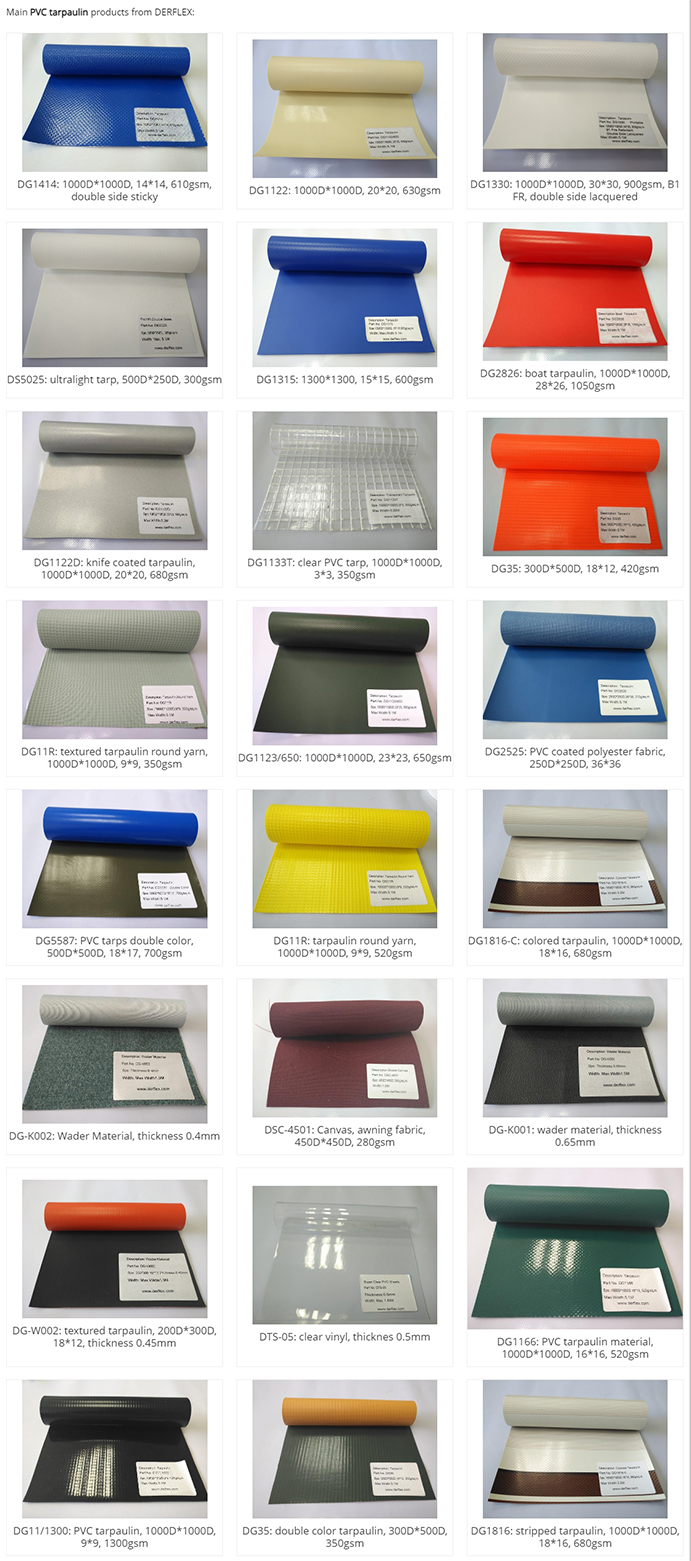
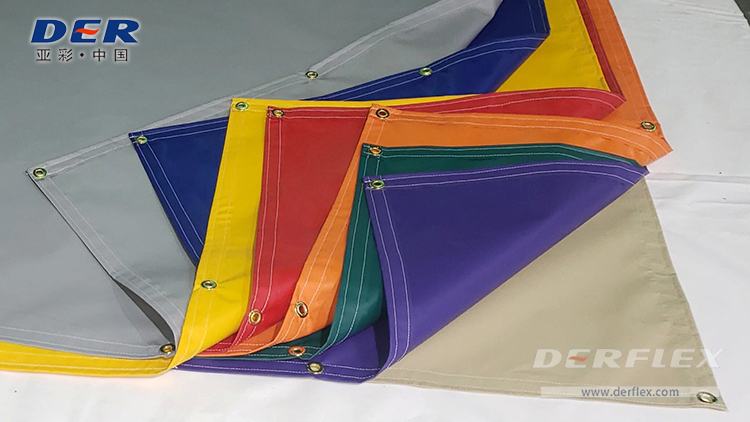
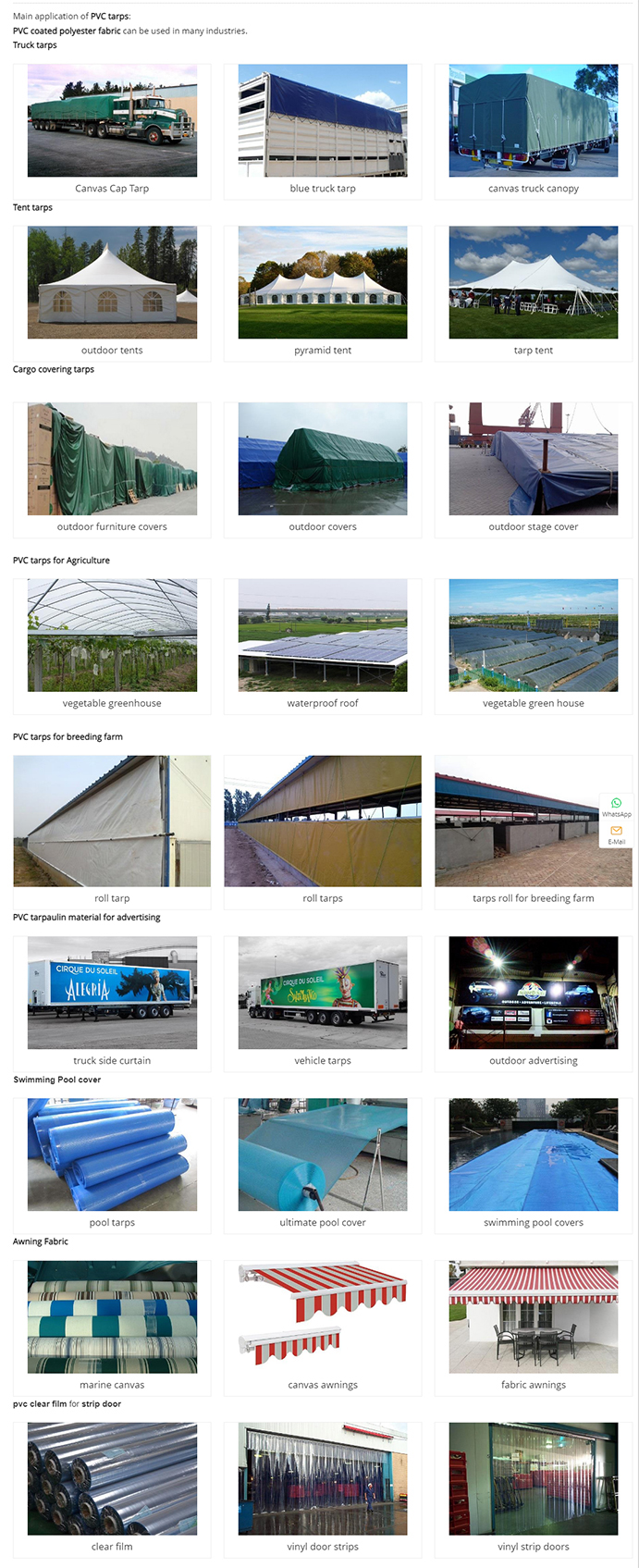
DERFLEX Tarp Material, Factory & Application Images
Real DERFLEX-hosted images help buyers connect thickness numbers with roll material, coating production, finished tarps and application environments.
Continue Your Tarp Specification Research
These verified DERFLEX pages connect mil thickness with material weight, metric thickness, waterproofing, heavy-duty selection and finished tarp hardware.
Need to Match a Mil Thickness to a PVC Tarp Specification?
Send DERFLEX the current tarp thickness, material type, finished size, application, exposure, quantity and any sample or drawing. The team can discuss a practical PVC coated fabric or finished tarp direction for quotation review.