News
Company News

1000D vs 1300D vs 2000D Heavy Duty Tarp Fabric | DERFLEX

Update:2026/9/29 16:29:17 Views:
Heavy Duty Tarp Fabric · Technical Buying Guide

1000D vs 1300D vs 2000D Heavy Duty Tarp Fabric: Strength, Weight & Best Uses

1000D, 1300D and 2000D describe the linear mass of the polyester yarn inside a reinforced tarp fabric—not the finished tarp weight and not a guaranteed strength ranking. For industrial buyers, the useful comparison is the complete system: yarn denier, weave density, finished GSM, PVC coating, tensile and tear data, fabrication method, reinforcement layout and how the tarp will actually be handled.

Updated September 29, 2026 · Written for importers, converters, tarp fabricators, OEM brands, fleet suppliers and industrial procurement teams.
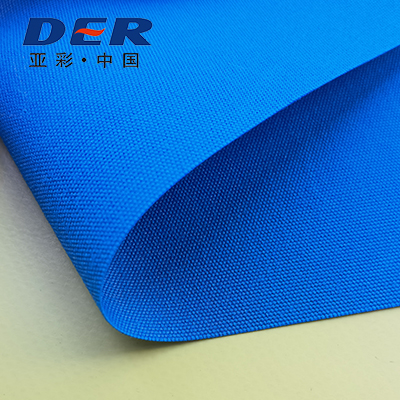
Blue DERFLEX heavy duty PVC coated polyester tarp fabric close-up
Buyer rule: do not buy the “D” number alone. A higher denier increases yarn mass per length. It does not automatically deliver the highest tensile strength, tear resistance, waterproofing or service life.
60-Second Buyer Answer

Which Heavy Duty Tarp Fabric Should You Start With?

Use denier as a starting point for reinforcement architecture. Then confirm the actual weave, total finished weight, coating construction, test values and conversion behavior before approving a bulk order.

1000D

Balanced heavy-duty starting point

Start with 1000D when the finished tarp must combine rugged performance with practical folding, welding, sewing, rolling and daily handling. It is a strong general direction for truck tarps, trailer covers, tents, equipment covers and many reusable industrial covers.

1300D

Controlled step-up in yarn body

Consider 1300D when longer spans, repeated tension, larger panels or a more substantial material body justify more yarn mass than a standard 1000D construction. The gain must still be verified with tensile, tear, seam and handling tests.

2000D

Project-specific high-bulk direction

Evaluate 2000D when severe wear, heavy load paths, structured protective panels or reinforcement zones justify the extra yarn mass. It should not be specified across an entire tarp simply because the number is larger.

Direct answer:

For many reusable heavy duty tarp programs, 1000D offers the most practical strength-to-handling balance. 1300D is a logical step-up when the fabric body or load requirement truly increases. 2000D is better treated as an engineered option for demanding or localized reinforcement needs. None of the three can be called “strongest” without comparing the complete fabric construction under the same test methods.

The Number Behind the Yarn

What Do 1000D, 1300D and 2000D Actually Mean?

Denier is a linear-mass unit for yarn. One denier means 9,000 meters of that yarn weighs one gram. This makes denier useful for describing the reinforcement yarn, but it does not describe the entire PVC coated fabric.

Denier formula

D = grams per 9,000 meters of yarn.

1000D = 1,000 g / 9,000 m Baseline heavy-duty yarn linear mass for this comparison.
1300D = 1,300 g / 9,000 m 30% more yarn linear mass than 1000D.
2000D = 2,000 g / 9,000 m Twice the yarn linear mass of 1000D.

Relative yarn mass

The bars compare yarn mass per equal length only. They do not represent finished fabric strength.

1000D
1.00×
1300D
1.30×
2000D
2.00×
A 2000D yarn has twice the linear mass of a 1000D yarn at equal length, but a 2000D finished tarp is not automatically twice as strong or twice as heavy. Weave density, yarn tenacity, coating mass, fabric geometry and finished construction change the result.
Side-by-Side Engineering View

1000D vs 1300D vs 2000D Heavy Duty Tarp Fabric

This table is a procurement screening tool, not a substitute for a technical data sheet. Use it to choose the first sample direction, then validate the grade with representative testing and your real fabrication process.

Decision Factor 1000D Heavy Duty Tarp Fabric 1300D Heavy Duty Tarp Fabric 2000D Heavy Duty Tarp Fabric
Relative yarn linear mass Baseline 1.00× 1.30× the yarn mass of 1000D 2.00× the yarn mass of 1000D
Typical design role Balanced heavy-duty platform for broad industrial tarp use. Step-up when more fabric body, span control or load capacity is justified. High-bulk, project-specific direction for demanding load paths or wear zones.
Handling & foldability Usually the easiest of the three to fold, roll, pack and handle when finished constructions are comparable. Moderate bulk; still practical when weave and PVC build are controlled. Can become substantially bulkier or stiffer; manual handling and fold behavior should be tested.
Fabrication direction Broad compatibility with welded and sewn heavy-duty tarp programs. Review seam width, webbing, reinforcement and machine settings as material body increases. Machine capability, seam geometry, fold life, packing and finished assembly weight require early validation.
Common starting applications Truck tarps, trailer covers, tents, equipment covers, industrial curtains, repeat-use protective covers. Large transport panels, side curtains, industrial partitions, long-span covers, higher-tension protective systems. Severe-wear panels, protective barriers, high-load cover systems or localized reinforcement where lighter constructions fail.
Main advantage Strength potential without unnecessary bulk for many everyday heavy-duty uses. More yarn body than 1000D without automatically moving to the heaviest possible construction. Very high yarn mass for designs where structure or reinforcement is genuinely needed.
Main purchasing risk Assuming “1000D” alone guarantees enough tear or edge strength. Paying for more yarn when the real weak point is coating, seam, grommet or reinforcement design. Over-specifying the full tarp and creating unnecessary weight, stiffness, conversion difficulty and logistics cost.
What to verify Tensile, tear, coating adhesion, weave density, GSM, weldability and reinforcement layout. All 1000D checks plus dimensional stability, panel span behavior and seam efficiency. Abrasion or wear requirement, machine processing, seam design, fold life, finished product weight and lifting/handling method.
Specification Decoder

Denier, GSM, Weave Density and Thickness Measure Different Things

A strong quotation separates these variables. Mixing them together is one of the fastest ways to compare two tarp fabrics incorrectly.

Denier (D) Yarn mass per length. It describes the polyester reinforcement yarn—not the complete coated fabric.
GSM Finished mass per square meter. It includes the base textile plus PVC and other finished layers.
Weave Density How many yarns are arranged in the warp and weft. This changes reinforcement architecture and fabric body.
mm / mil Finished thickness. Useful for body and fit, but it does not replace tensile, tear or adhesion data.
Specification Item What It Tells the Buyer What It Does Not Prove What to Ask Next
1000D / 1300D / 2000D Relative linear mass of the yarn used in the reinforcement. Finished fabric weight, tensile strength, tear strength, waterproofing or outdoor life. Warp × weft denier, yarn grade, fabric density and mechanical test results.
Finished GSM Total material mass per square meter. How much mass comes from the base cloth versus PVC coating. Base-fabric construction, coating balance, thickness and adhesion.
Threads / density How tightly the reinforcement is arranged. PVC formula, coating adhesion, UV package or finished seam strength. Compare test values using the same method and orientation.
PVC coated / laminated The route used to build the protective polymer surface. A universal quality grade by itself. Coating add-on, adhesion, surface treatment and fabrication trial.
Tensile / tear values Measured mechanical performance under a named test method. Finished-cover strength if seams, hems, hardware and installation are weak. Seam efficiency, grommet/hardware design, abrasion and real-use handling.

For a broader technical specification framework, review DERFLEX's heavy duty PVC tarpaulin GSM, denier and coating guide.

Material & Application Images

What Heavy Duty Tarp Fabric Looks Like Before and After Fabrication

Material close-ups show the coated textile itself; finished tarp and transport images show why seam design, edge reinforcement, hardware and handling loads matter just as much as the denier number.

Blue PVC coated polyester tarp fabric surface and reinforcement texture
Coated fabric surface The visible PVC surface protects the polyester reinforcement. Yarn denier is only one layer of the complete material system.
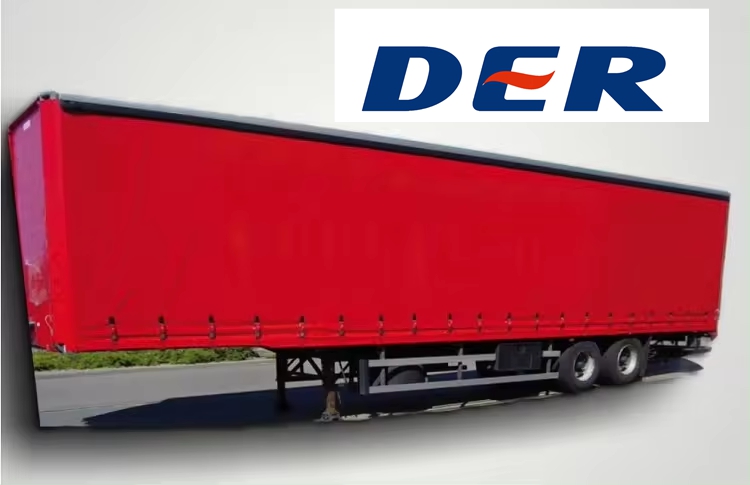
Red heavy duty PVC truck tarpaulin side curtain on trailer
Transport-duty tarp Truck and trailer fabrics face wind movement, repeated tension, road abrasion and hardware loads—conditions that require more than a denier label.
Application-Based Selection

Best Uses for 1000D, 1300D and 2000D Tarp Fabric

The most efficient specification starts from the failure mode. Choose the lightest construction that can meet validated performance requirements, then add targeted reinforcement where the load concentrates.

Start with 1000D

Truck tarps, trailer covers & frequently handled covers

1000D is often the first material direction when converters need a heavy-duty fabric that still folds, rolls, welds and packs efficiently.

  • Confirm weave density and finished GSM for the target cover size.
  • Specify reinforcement around corners, tie-downs and high-contact edges.
  • Check coating adhesion and real welding behavior before bulk production.
Evaluate 1000D or 1300D

Side curtains, large transport panels & long-span covers

Move toward 1300D when panel length, repeated tension, dimensional body or edge loading exceeds what a validated 1000D construction can efficiently support.

  • Review warp/weft load direction rather than only total material weight.
  • Check seam efficiency, webbing layout and mounting hardware.
  • Do not upgrade denier if the real weak point is local abrasion or poor hardware design.
Consider 1300D / targeted 2000D

Mining, construction & severe-contact protection

Abrasion, dragging, sharp contact and repeated equipment movement may justify a higher-denier structure or a reinforced wear zone.

  • Separate surface abrasion from base-fabric tear risk.
  • Use replaceable or localized reinforcement where wear is concentrated.
  • Validate fold behavior and repair strategy before making the entire tarp heavier.
Project-specific 2000D

High-load protective panels & reinforcement zones

2000D should be justified by a real engineering need: higher yarn body, concentrated load, severe contact or a structural design that benefits from heavier reinforcement.

  • Confirm the coating build and machine settings for the selected construction.
  • Check finished assembly weight, lifting, packing and installation consequences.
  • Run seam, abrasion and fold-life trials before committing to a full production program.

If your buying team is still defining the material family, DERFLEX's heavy duty tarpaulin fabric guide explains coating, roll supply and application matching in more detail.

Information Gain

Do Not Make the Whole Tarp 2000D If Only 5% of It Takes the Abuse

Large covers often fail locally—around grommets, corners, webbing, sharp cargo edges, fold lines or rubbing zones. Increasing the denier of every square meter can add handling weight and conversion difficulty without fixing the actual load path.

A more efficient design may use a workable 1000D or 1300D main body with targeted higher-denier reinforcement in compatible wear or load zones. This approach should be validated through welding/sewing trials, seam geometry and representative load testing.

Main body 1000D or 1300D direction for foldability, conversion and total tarp weight control.
Perimeter Webbing, folded hem or compatible reinforcement to spread tie-down loads.
Contact zones Heavier reinforcement where dragging, sharp edges or repeated rubbing actually occur.
Hardware zones Patches around grommets, D-rings and straps so local loads do not tear the main panel.
From Yarn to Finished Tarp

Five Engineering Checks That Matter More Than a Bigger Denier Number

A higher-denier yarn can only add value when the surrounding construction allows that reinforcement to work efficiently.

01

Yarn & weave

Confirm warp × weft denier, yarn grade, density and fabric geometry rather than quoting one “D” number.

02

Finished GSM

Check total material mass and how the structure balances textile reinforcement with PVC coating.

03

Coating adhesion

A thick tarp can still fail when the polymer layer separates during flexing, abrasion or welding.

04

Seam & hardware

Welds, hems, webbing, D-rings and grommets determine how real loads enter the finished tarp.

05

Real-use validation

Test the approved sample with the actual converter process, environment and expected handling cycle.

For a weight-specific heavy-duty example, see DERFLEX's 650gsm PVC tarpaulin fabric guide.

Common Procurement Mistakes

Six Ways Denier Comparisons Go Wrong

Correcting these errors before quotation makes supplier comparisons more meaningful and reduces the risk of approving a sample that does not represent the real production requirement.

1. “2000D is twice as strong as 1000D.” It has twice the yarn linear mass at equal length—not automatically twice the tensile or tear strength of the finished coated fabric.
2. Comparing denier without density. A 1000D fabric with one weave construction can behave very differently from another 1000D fabric with a different thread density.
3. Assuming equal GSM means equal construction. Two fabrics can reach the same finished weight using different base-cloth and PVC coating balances.
4. Upgrading denier to solve a seam problem. More yarn does not repair weak welds, poor hems, badly placed grommets or inadequate webbing.
5. Ignoring processing consequences. Higher-bulk fabrics can change welding windows, sewing requirements, fold volume, roll weight and manual handling.
6. Comparing test values from different methods. Tensile and tear numbers are only useful when units, specimen direction and test methods are comparable.
DERFLEX Manufacturing Direction

Build the Fabric Around the Finished Tarp, Not Around a Marketing Number

DERFLEX's current tarp-fabric program publishes polyester base-fabric options from approximately 500D to 2000D, with an overall material-weight direction around 300–1300gsm and roll widths up to approximately 3.4m on applicable constructions. Exact combinations depend on the selected yarn, weave, coating route and production plan.

For 1000D, 1300D or 2000D projects, the productive starting point is the end use: what the material will become, how it will be cut and joined, where load enters the cover, and which failure mode needs to be controlled.

PVC coated or laminated polyester structures for roll-goods conversion.
Project-specific yarn, weave, GSM, width, color and surface discussion.
Conversion-oriented review for hot-air welding, HF welding, sewing, hems and reinforcement.
Bulk and OEM programs with repeat-order specification control.

Explore the broader DERFLEX tarp fabric manufacturing program or review PVC coated tarp construction options.

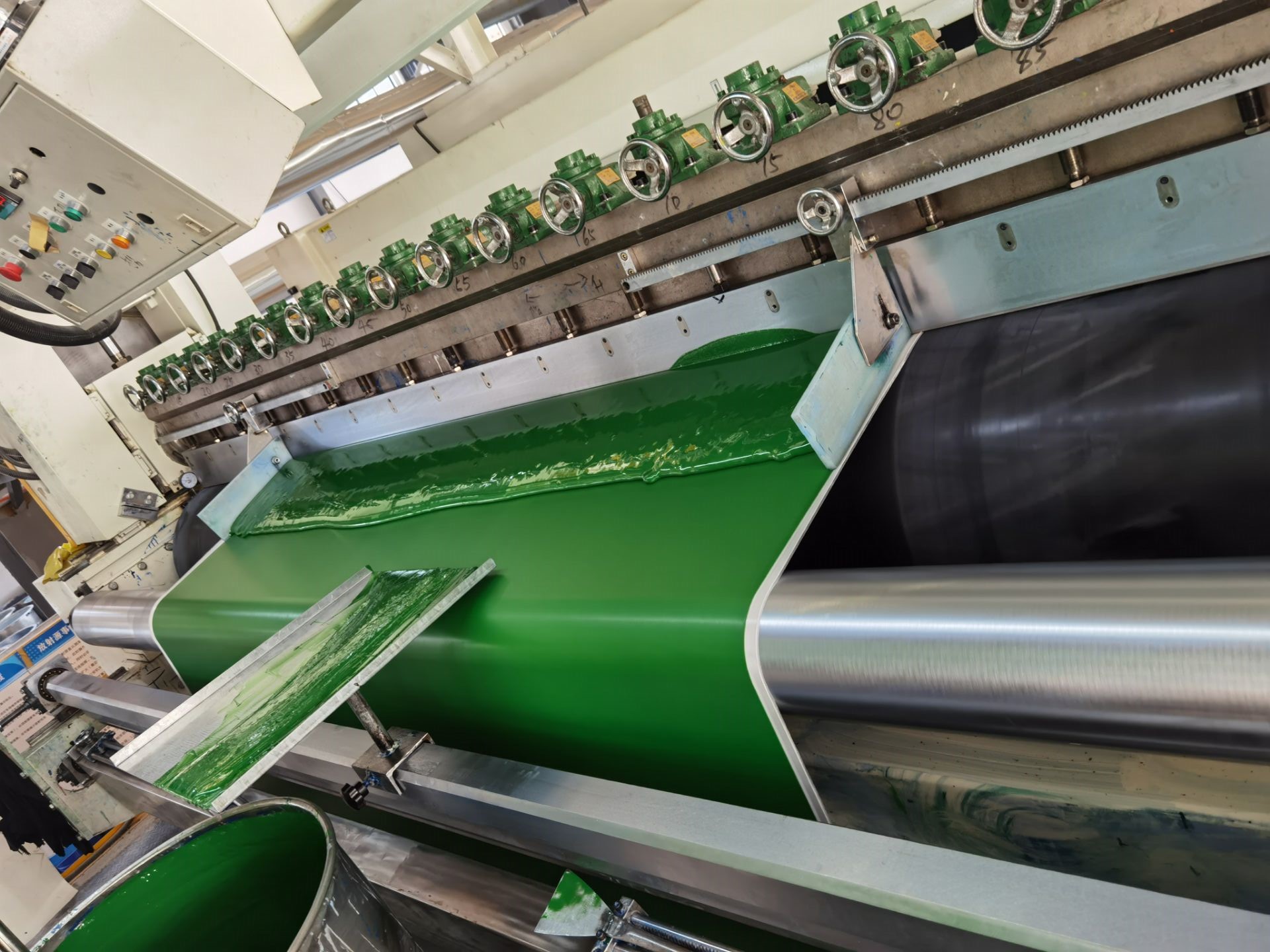
DERFLEX PVC coating line applying green coating to technical polyester fabric
Finished Tarp Construction

The Weakest Zone Often Decides Service Life

Heavy duty tarp fabric is only the raw material. The finished cover must distribute loads through seams, hems, corners and hardware without creating a tear initiation point.

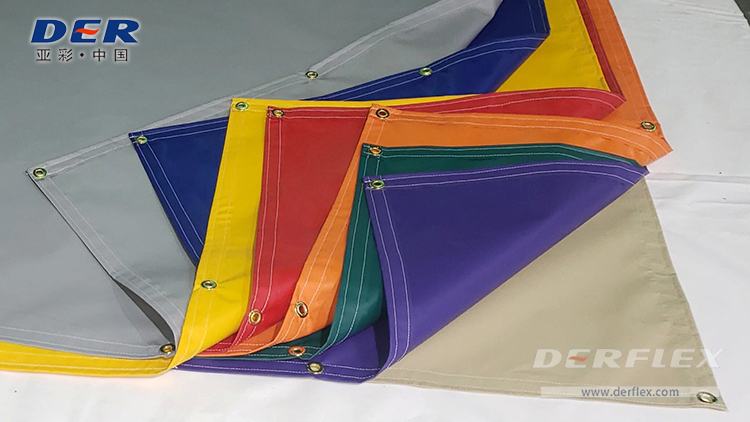
Finished DERFLEX heavy duty vinyl tarps with reinforced hems and metal grommets
Reinforced hems & grommets Edge construction should be designed with the same care as the main body fabric, especially for high wind and repeated tie-down loads.

Ask this before increasing denier

“Where did the current tarp fail?” A center-panel tensile failure, a tear at a grommet, coating abrasion, seam separation and cold cracking require different solutions. Denier is only the right lever when the base reinforcement is actually limiting performance.

Industrial buyers comparing complete cover systems can also review DERFLEX's industrial tarps and custom cover solutions.
Buyer Checklist

What to Send for a 1000D, 1300D or 2000D Tarp Fabric Quote

A useful RFQ starts with the finished application, then defines the construction. If you do not know the denier yet, describe the current failure mode and target use instead of guessing.

Material & performance data

Finished application and dimensions
Preferred 1000D / 1300D / 2000D, if known
Warp × weft denier and weave density
Target GSM and thickness
Required tensile and tear values
Coating adhesion requirement
UV, cold-flex, FR or other required performance
Color and surface finish

Conversion & supply data

Tell the material supplier how the roll will be converted. This can change the best yarn, coating and width direction.

Hot-air / HF welding / sewing
Hems, webbing, D-rings and grommets
Required roll width and length
Estimated quantity and repeat-order plan
Destination market
Packing, labeling and OEM requirement
Buyer FAQ

Questions About 1000D, 1300D and 2000D Heavy Duty Tarp Fabric

Short answers first, followed by the engineering qualifier that matters in real sourcing.

Is 2000D tarp fabric twice as strong as 1000D?

No. A 2000D yarn has twice the linear mass of a 1000D yarn for the same length, but finished fabric strength also depends on yarn tenacity, weave density, warp/weft balance, coating, adhesion and test direction. Compare verified tensile and tear data rather than assuming a 2× strength increase.

Which is better for a heavy duty truck tarp: 1000D or 1300D?

1000D is a practical starting direction for many truck tarp programs because it balances reinforcement with foldability and conversion. 1300D can be evaluated when larger panels, repeated tension, higher edge loads or a more substantial fabric body justify the step-up. The decision should include GSM, weave, seam design and reinforcement.

Is 2000D always heavier than 1300D or 1000D?

The yarn itself has greater mass per length, but finished fabric weight is not determined by denier alone. Weave density, yarn spacing, coating add-on and surface construction can create very different finished GSM values. Always compare the complete specification.

What denier is considered heavy duty tarp fabric?

There is no universal denier threshold that makes a tarp “heavy duty.” 1000D is a common heavy-duty polyester direction, but real duty level comes from the combination of yarn, density, coating, GSM, test performance, seams, hems, hardware and the intended use.

Can 1000D and 1300D tarp fabrics have the same GSM?

Yes, depending on the base-cloth and coating design. Two finished fabrics can reach a similar GSM with different reinforcement mass, weave density or PVC add-on. This is why same-GSM quotations should also list yarn construction, density, thickness and mechanical properties.

Can 2000D be used only in reinforcement zones?

It can be considered as a project-specific reinforcement direction where a compatible heavier fabric is useful at corners, contact zones or concentrated load points. The main body can remain a more workable grade when seam compatibility, welding or sewing and load transfer are validated through samples.

Which tests should I compare before approving heavy duty tarp fabric?

Start with finished weight, width, tensile strength, tear strength and coating adhesion using the same methods and units. Add abrasion, low-temperature, UV/weathering, flame performance, seam efficiency or other tests only when they match the actual service environment and failure risk.

Does higher denier make a tarp more waterproof?

No. Denier describes the reinforcement yarn. Waterproof sheet performance is mainly created by the coating or lamination system, while finished-cover waterproofing also depends on seams, needle holes, hardware zones and installation details.

Need a 1000D, 1300D or 2000D Tarp Fabric Recommendation?

Send DERFLEX the finished application, dimensions, target GSM or current sample, expected load and abrasion conditions, conversion method, quantity and destination. The discussion can then start from a complete construction instead of a denier number alone.

Technical guidance on this page is intended for specification screening. Final product construction, tolerances, test methods, performance values, production availability and compliance requirements should be confirmed in the approved sample, quotation and purchase documents for the specific project.
Consulting Services
+86-021-54361792 / 54361798
Email
sales@derflex.com