News
Company News

Tarp Fabric Manufacturer | PVC Vinyl Tarp Material Rolls | DERFLEX

Update:2026/9/25 17:36:45 Views:
Roll Goods · Fabrication Material · OEM Supply

Tarp Fabric Manufacturer for Heavy Duty Covers, Truck Tarps & Industrial Fabrication

DERFLEX supplies tarp fabric for professional converters, distributors, truck-cover manufacturers, tent makers, agriculture suppliers and industrial OEM programs. The core material is waterproof PVC coated or laminated polyester engineered for cutting, welding, sewing, reinforcing and repeat bulk conversion.

Buyers can specify fabric weight, polyester base construction, roll width, color, surface finish and functional treatments according to the finished tarp, climate, fabrication method and target service conditions.

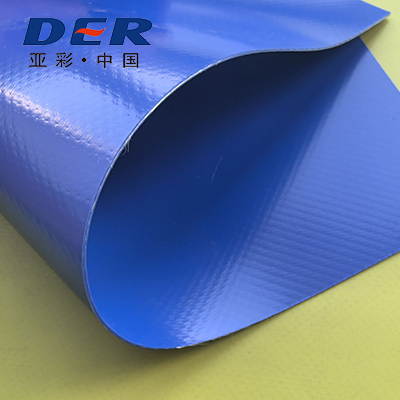
Blue PVC coated polyester tarp fabric material by DERFLEX
PVC coated polyester tarp fabric: flexible, waterproof roll material for downstream tarp fabrication.
300–1300 gsmavailable material-weight direction
500D–2000Dpolyester base-fabric options
Up to 3.4 mroll-width support on applicable constructions
OEM Readycolor, finish, roll and packing programs
Answer First

What Is Tarp Fabric?

Quick answer

Tarp fabric is the sheet or roll material used to manufacture tarpaulins, covers, curtains and flexible protective products. Common tarp fabrics include PVC/vinyl coated polyester, woven polyethylene, canvas and mesh. For reusable waterproof industrial covers, PVC coated polyester is widely selected because it combines a strong textile base with a weldable, weather-resistant surface.

For B2B buyers, the important question is not simply “Which tarp fabric is strongest?” It is whether the base fabric, coating method, total weight, surface, roll format and conversion behavior fit the finished product after cutting and fabrication.

A roll can look acceptable but still create downstream problems if the coating is inconsistent, welding behavior is unstable, the fabric stretches during cutting, color varies between batches or the selected weight does not match wind, abrasion or folding stress. This page is therefore organized around material choice, conversion risk and purchasing decisions rather than a retail list of stock tarp sizes.

Material Selection

PVC, PE, Canvas or Mesh: Which Tarp Fabric Fits the Job?

“Tarp fabric” is a broad category. The material family should be selected first, then the detailed specification should be matched to the application.

Heavy Duty / Reusable

PVC / Vinyl Coated Polyester

A polyester scrim carries tensile load while the PVC surface provides waterproofing, cleanability, color options and fabrication compatibility. Suitable for truck tarps, industrial covers, shelters, curtains and repeat-use OEM products.

Lightweight / Temporary

Woven PE Tarp Fabric

Often selected when low weight, handling convenience and temporary coverage are more important than long-term abrasion resistance or welded industrial fabrication.

Breathable

Canvas Tarp Fabric

Textile-like handling and airflow can make treated canvas useful where breathability is valuable, although the waterproofing, cleaning and welding behavior differ from PVC-based tarp material.

Airflow / Shade

Mesh Tarp Fabric

Open construction reduces wind load and allows air passage. It is used for shade, debris control, privacy and selected transport applications rather than full rain sealing.

For a wider buyer-oriented comparison, see DERFLEX's tarp material selection guide.

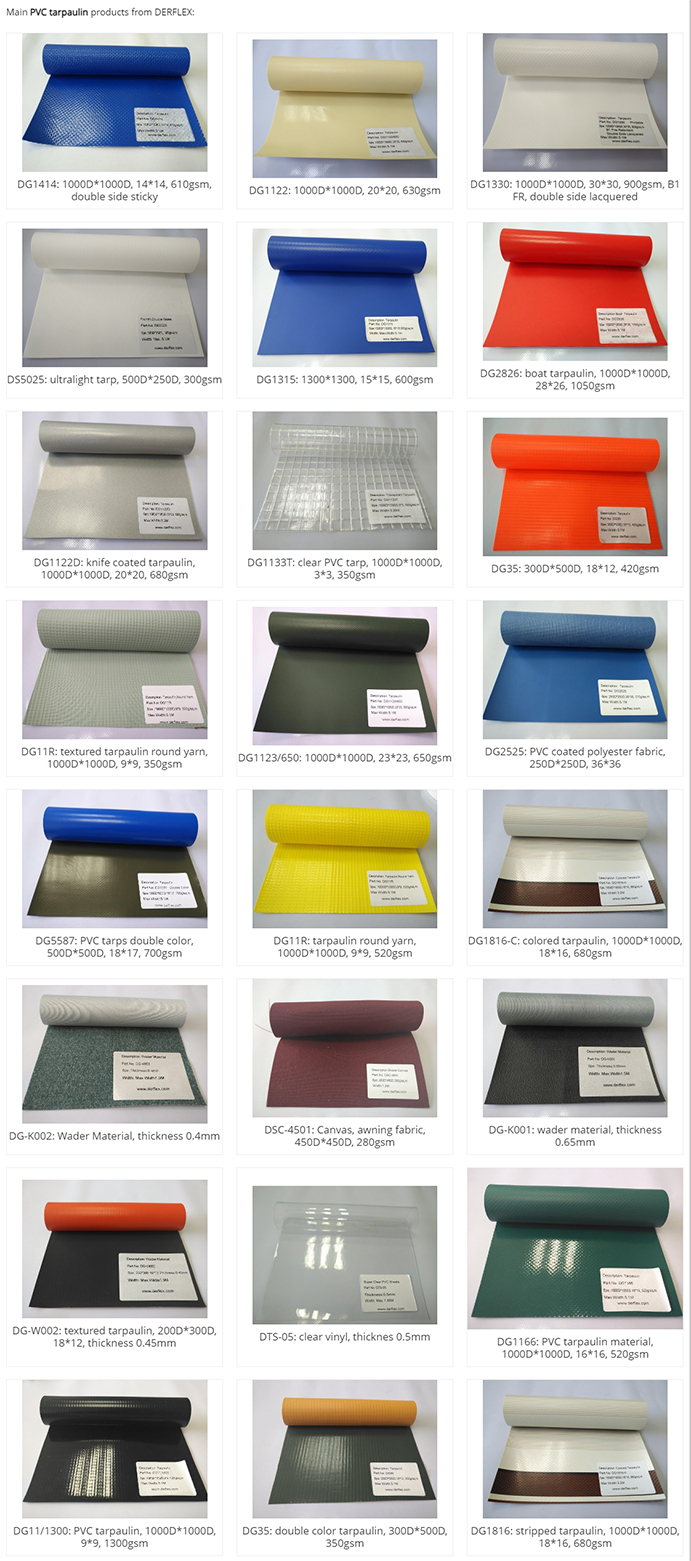
DERFLEX PVC tarpaulin fabric roll samples in different weights colors and constructions
Material Construction

Why the Construction Matters More Than the Color

Professional PVC tarp fabric is a composite textile. The polyester base contributes tensile strength, tear resistance and dimensional stability; the PVC layer creates the protective surface; optional finishing can change gloss, cleaning behavior, printing, outdoor durability or other project-specific performance.

  • Polyester yarn denier and weave structure
  • PVC coating or lamination route
  • Total material weight and coating balance
  • Surface finish: glossy, matte or project specific
  • Color matching for repeat programs
  • UV, flame-retardant, anti-mildew or cold-flex options
  • Welding and sewing compatibility
  • Roll width, length, winding and packing condition

Buyers comparing PVC-specific constructions can review the dedicated PVC tarpaulin fabric page for a narrower product-level view.

Quick Specification Overview

Tarp Fabric Specifications for B2B Sourcing

Final values should be confirmed against the actual end use, climate, conversion method and project requirements. Parameters not publicly verified by DERFLEX are intentionally left project-specific.

Specification Item DERFLEX Supply Direction Buyer Decision
Primary material PVC coated or laminated polyester tarp fabric Select construction according to durability, conversion and cost target.
Material weight Approx. 300–1300 gsm direction on current tarp-fabric program Do not use GSM alone; combine it with yarn structure, coating and finished use.
Base-fabric direction Approx. 500D–2000D polyester options Higher denier can support heavier constructions, but weave and coating still matter.
Roll width Up to approx. 3.4 m on applicable constructions Choose width to reduce seams, cutting waste and conversion steps.
Surface Glossy, matte and other project-specific finishes Balance appearance, cleanability, printing and handling requirements.
Color Standard and custom color directions available by project Confirm color standard and repeat-order tolerance before bulk production.
Functional treatments UV, flame-retardant, anti-mildew, cold-flex and other options by requirement State the destination market and required test or compliance target during RFQ.
Conversion Cutting, heat welding, sewing, eyeleting and reinforcement depending on grade Tell the supplier how the roll will be converted before the final material is selected.
Supply format Roll goods and OEM project support Confirm roll length, core, packing, labeling and downstream production plan.
Selection Matrix

Choose Tarp Fabric by Failure Risk, Not by “Heavy Duty” Label

The fastest way to improve a specification is to start with how the finished tarp can fail: tearing, abrasion, UV aging, seam leakage, grommet pull-out, cold cracking or unstable conversion.

Application Main Stress Recommended Material Direction What to Confirm Before Buying
Truck & trailer covers Wind movement, repeated tension, road abrasion, rain Heavy-duty PVC coated polyester with strong weldability and reinforcement compatibility Base fabric, GSM, seam method, edge reinforcement, hardware zones, roll width
Industrial equipment covers Abrasion, puncture, dirt, repeated handling, long exposure Durable PVC tarp fabric matched to contact surfaces and service environment Surface wear, folding frequency, cleaning, chemicals, shape and fixing points
Tents & shelters Weather, tension, appearance, seam integrity, possible fire requirements Weldable PVC coated fabric with suitable surface and project-required functional treatment Opacity, color, flame requirement, seam process, structure tension, climate
Agriculture covers Sunlight, rain, mud, seasonal storage, large-area handling Weather-resistant tarp fabric balanced for durability and handling weight Exposure duration, storage method, UV direction, cover size, tie-down system
Warehouse curtains & partitions Repeated opening, dust, cleaning, indoor/outdoor exposure Flexible PVC coated textile selected for cleanability and fabrication Panel size, track system, transparency needs, flame requirement, edge design
OEM tarp product line Repeat-order consistency, customer claims, packaging, SKU control Documented roll specification with controlled color, weight, finish and packing Golden sample, approved tolerance, label, carton, barcode, repeat batch records

If you are still defining the finished product, the DERFLEX tarp buying guide explains material, size and specification decisions before quotation.

Fabrication Engineering

Good Tarp Fabric Must Survive the Conversion Process

Roll performance affects cutting yield, welding speed, seam quality, edge finishing and the appearance of the final tarp. These are procurement variables, not just workshop details.

Welding

Confirm hot-air or high-frequency welding compatibility before bulk purchase. The best seam settings depend on coating construction, thickness, machine setup and target seam design.

Sewing

When sewing is used, review thread, stitch geometry, waterproofing expectations and whether the needle line becomes a leak path in exposed service.

Edge Reinforcement

High loads are often concentrated at hems, corners, grommets, D-rings and webbing. A heavier fabric cannot compensate for poor load distribution at these stress zones.

Roll Width & Cutting Yield

Wider material can reduce seam count, but the optimal roll width should also fit cutting tables, welding equipment, container loading and finished-panel dimensions.

Surface & Printing

Gloss, matte, lacquer and printable surface directions should be selected according to branding, cleaning, friction and graphic requirements rather than appearance alone.

Repeat Batch Control

Converters should approve a reference sample and document weight, color, finish, width and key functional requirements to make repeat orders easier to inspect.

For finished PVC cover construction and reinforced tarp options, see PVC coated tarp solutions.

Coated vs Laminated

Which PVC Tarp Fabric Construction Should You Specify?

Both coated and laminated constructions can be used for tarp products. The better choice depends on the durability target, appearance, budget, coating adhesion expectation and downstream fabrication. A buyer should compare the actual product construction rather than relying only on the words “vinyl” or “PVC.”

PVC Coated Fabric

Often selected when buyers prioritize robust coating integration, outdoor performance and stable conversion for demanding tarp programs.

PVC Laminated Fabric

Can be a practical option for applications where cost, appearance, handling or a specific laminated structure fits the project target.

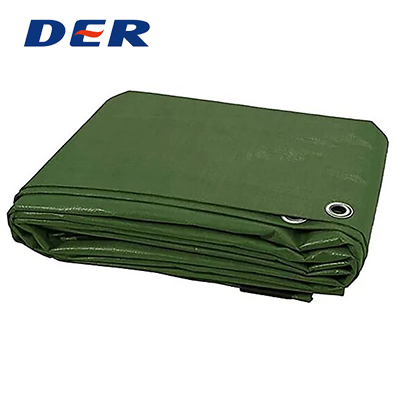
Green waterproof heavy duty PVC tarp fabricated from coated tarp fabric
Manufacturing Flow

From Base Fabric to Shipment-Ready Roll

Stable tarp fabric starts before the coating stage. The structure, PVC formulation, surface treatment, roll tension and inspection all influence downstream fabrication.

Base Fabric

Select polyester yarn and weave direction according to strength, flexibility and target weight.

PVC Preparation

Match the PVC system and optional functional additives to application requirements.

Coating / Lamination

Control coverage, thickness direction, adhesion, flatness and surface consistency.

Finishing

Apply appropriate surface appearance or treatment according to the required end use.

Inspection & Packing

Review roll condition, width, surface, color, winding, labels and export protection before shipment.

Applications

Where Heavy Duty Tarp Fabric Is Used

The same base material family can serve very different markets, but the finished specification should change with the load, climate and fabrication method.

Transport

Truck tarps, trailer covers, cargo protection, curtain systems and logistics covers exposed to movement and weather.

Industrial

Machinery covers, equipment protection, warehouse curtains, partitions, temporary enclosures and custom protective panels.

Agriculture

Seasonal covers, crop and storage protection, farm shelters and large-area outdoor cover programs.

Tents & Shelters

Event tents, temporary structures, awnings, canopies and project-based waterproof fabric systems.

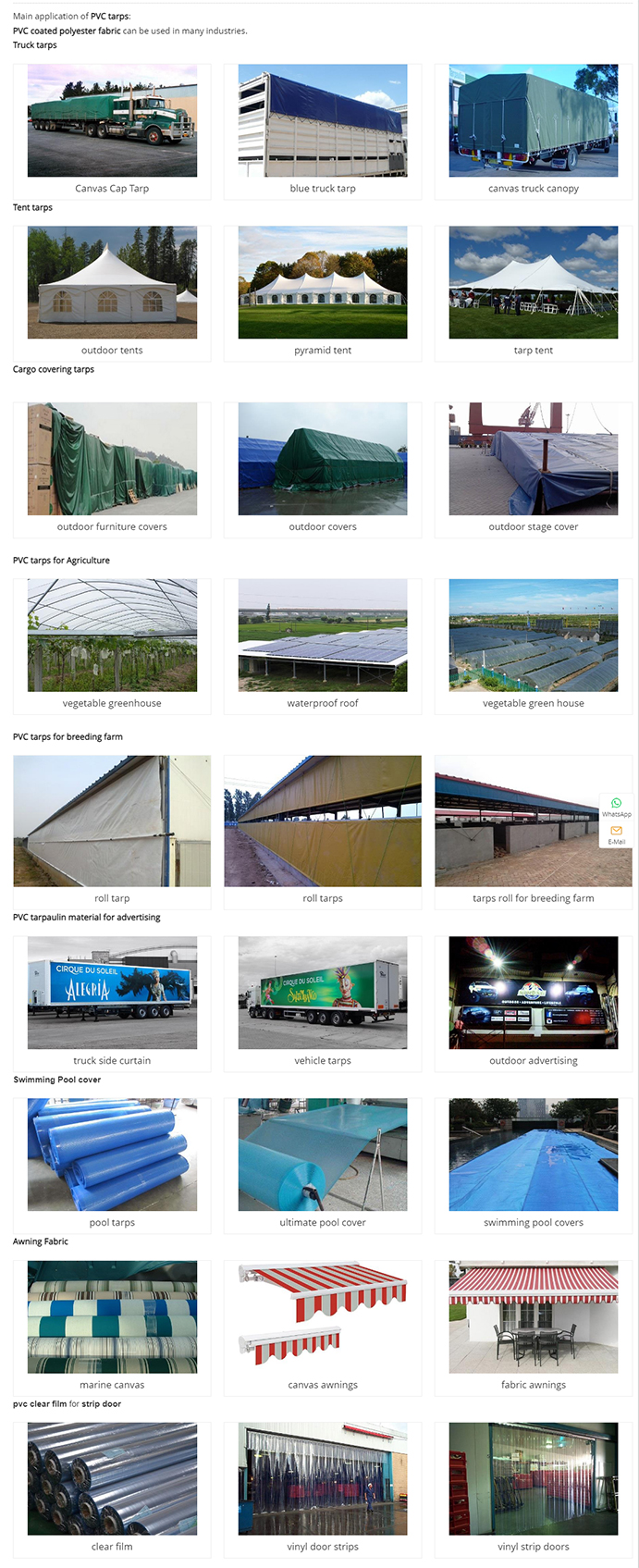
PVC tarp fabric applications including trucks tents agriculture covers pools awnings and industrial protection
Image Package

Material, Finished Tarp & Reinforcement Views

Product imagery is arranged to show the material itself, the finished waterproof tarp and reinforced hardware zones that affect real-world performance.

Procurement Risk

Common Tarp Fabric Buying Mistakes

Small specification omissions can become expensive after the roll reaches a fabrication line or a distributor receives a repeat order.

Buying by GSM only The same weight can hide different yarn structures, coating balance and surface systems.
Ignoring the conversion method Material should be selected with the intended welding, sewing, eyeleting and reinforcement process in mind.
Using “waterproof” as the whole specification Finished waterproof performance also depends on seams, holes, hardware and installation.
Approving color without a repeat-order standard OEM programs should define the reference sample and acceptable production tolerance.
Under-specifying stress zones Corners, hems, grommets and D-rings often fail before the center of the sheet.
Choosing roll width without calculating yield Wider is not automatically better if it conflicts with cutting tables, seam layout or packing.
Buyer Checklist

What Information Should You Send for a Tarp Fabric Quote?

A better RFQ helps the supplier recommend the correct material faster and reduces back-and-forth before sampling.

Send these details if available

  • Finished application: truck tarp, cover, tent, curtain, agriculture cover, OEM product, etc.
  • Target GSM or reference sample / existing specification.
  • Required roll width and preferred roll length.
  • Color or color reference.
  • Glossy, matte or other surface preference.
  • Outdoor climate and approximate exposure conditions.
  • How the fabric will be converted: hot-air welding, HF welding, sewing, eyelets, webbing, etc.
  • Required functional treatment or test target, if applicable.
  • Estimated order quantity and repeat-order plan.
  • Destination country and packaging / labeling requirements.
Why DERFLEX ,

Built for Converters, Distributors & Repeat B2B Programs

The value of a tarp-fabric supplier is measured after the first sample: conversion stability, repeat-batch consistency, workable roll formats and the ability to adapt material structure to different end uses.

Application-Matched Supply

DERFLEX can discuss fabric weight, base construction, surface, roll width and optional treatment based on how the finished tarp will actually be used.

Conversion-Oriented Material

Tarp fabric grades are selected with downstream cutting, welding, sewing, edge reinforcement and hardware installation in mind.

OEM & Repeat Programs

Color, surface, roll condition, packing and labeling can be discussed for distributors, fabricators and private-label product programs that require repeat supply.

For buyers who specifically purchase roll material for local conversion, the tarp fabric by the roll page goes deeper into roll-goods procurement.

Frequently Asked Questions

Tarp Fabric FAQ for Buyers & Fabricators

Direct answers to common material, sourcing and fabrication questions.

What is tarp fabric made of?

Tarp fabric can be made from several material systems, including PVC/vinyl coated polyester, woven polyethylene, canvas and mesh. For many heavy-duty waterproof industrial uses, PVC coated polyester is selected because the textile reinforcement provides strength while the PVC surface provides weather protection and fabrication flexibility.

What is the best tarp fabric for heavy-duty outdoor use?

For reusable waterproof truck, industrial and equipment covers, heavy-duty PVC coated polyester is a common starting point. The final grade should still be matched to abrasion, UV exposure, wind, folding, temperature, seam design and fixing method.

Is tarp fabric completely waterproof?

PVC coated or laminated tarp fabric can provide a waterproof sheet surface. The finished tarp can still leak if seams, needle holes, grommet areas, tears or installation details are not properly designed and sealed. Material waterproofing and finished-cover waterproofing should be specified separately.

What is the difference between tarp fabric and tarpaulin fabric?

In commercial use, the terms usually describe the same material category. “Tarp” is simply the shorter form of “tarpaulin.” What matters in procurement is the actual material structure, GSM, yarn, coating, width, surface, treatments and conversion method.

How do I choose tarp fabric GSM?

Start with the finished application and failure risk. A higher GSM may provide a heavier construction, but GSM alone does not define strength. Base-fabric yarn, weave, coating balance, abrasion exposure, seam design and reinforcement should be reviewed together.

Should I buy coated or laminated PVC tarp fabric?

Coated fabric is often selected for demanding reusable programs where coating integration and robust conversion are priorities, while laminated constructions can fit cost-sensitive or application-specific programs. Compare actual construction, target service life and fabrication method before deciding.

What should I send DERFLEX for a tarp fabric quotation?

Send the application, target GSM or reference sample, roll width, color, surface finish, required performance, conversion method, estimated quantity, destination country and any packaging, labeling or test requirement. If a parameter is unknown, describe the finished use and operating environment.

Start with the Finished Use

Build a Tarp Fabric Specification That Works After Conversion

Tell DERFLEX what the material will become, how it will be fabricated, where it will be used and what quantity you need. A stronger RFQ starts with the real operating condition, then defines GSM, base fabric, width, surface, color, treatments and packing.

Consulting Services
+86-021-54361792 / 54361798
Email
sales@derflex.com