
“Tarp” is the shorter term
It is common in everyday speech, retail listings, truck-cover terminology, construction work and online searches.



In normal conversation, product searches and most industrial applications, tarp is simply the shortened form of tarpaulin. The two words usually describe the same family of flexible protective covers.
People often try to create a technical difference between the two words. In practice, naming varies by country, industry and sales channel. A contractor may ask for a tarp, while an importer or technical specification may use tarpaulin for the same protective sheet.
It is common in everyday speech, retail listings, truck-cover terminology, construction work and online searches.
It appears more often in international trade, material data sheets, factory quotations, customs descriptions and B2B procurement.
PVC or PE, yarn density, GSM, coating method, UV package, edge reinforcement and fabrication quality matter more than the noun on the invoice.
It is not reliable to assume that every “tarp” is thin and every “tarpaulin” is thick. Both words can describe lightweight temporary sheets, reinforced truck covers, breathable canvas covers, mesh shade panels or heavy duty PVC coated polyester products. Always check the material data and intended application.
The table below shows typical usage patterns. These are language tendencies, not mandatory technical definitions.
| Term or phrase | Where it is commonly used | What the buyer may be asking for | What still needs confirmation |
|---|---|---|---|
| Tarp | Retail, contractors, transport, construction and everyday language | A finished cover, sheet, ground cover, truck cover or temporary shelter | Material, duty level, exact size, waterproof requirement and reinforcement |
| Tarpaulin | Manufacturing, export trade, technical documents and industrial sourcing | Roll material, fabricated cover, coated textile or project specification | Base cloth, coating, GSM, width, finish, testing and supply format |
| PVC tarp | Heavy duty cover and finished-goods markets | Waterproof PVC coated polyester cover with welded or sewn finishing | Coated or laminated structure, weight, UV direction and hardware layout |
| PVC tarpaulin | Factory supply, converters, importers and technical procurement | PVC coated polyester fabric in rolls, panels or finished tarp form | Yarn, weave, coating adhesion, surface treatment, width and roll length |
| Vinyl tarp | North American industrial and transport markets | Often another market name for PVC coated tarp material | Actual polymer structure, finished weight, coating and application limits |
The right choice depends on service duration, handling frequency, weather exposure, waterproofing, breathability, welding needs and budget. No single material is suitable for every project.
Often selected for industrial, transport and repeated outdoor use where waterproofing, strength and fabrication flexibility are important.
A lightweight and economical direction for temporary covers, seasonal protection and applications where easy handling is a priority.
A textile-based option chosen when breathability, abrasion tolerance and a traditional fabric feel are more important than complete waterproofing.
A permeable material for shade, wind reduction, debris control and applications that require airflow instead of a sealed waterproof barrier.
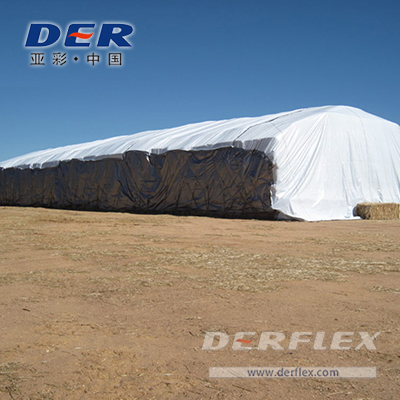
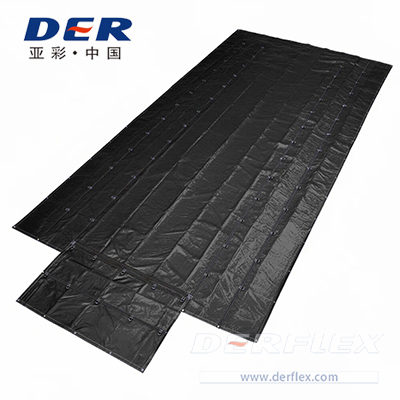
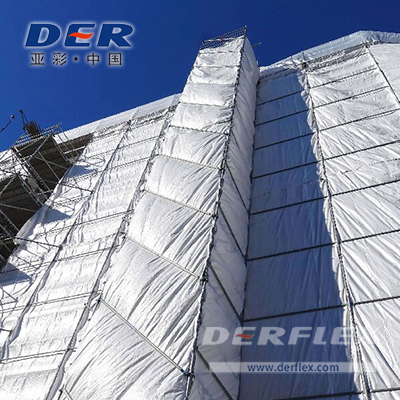
These DERFLEX product images illustrate why buyers should specify the use case instead of relying only on the word “tarp” or “tarpaulin.”
A useful inquiry replaces a broad product name with measurable requirements. The six items below help a manufacturer or supplier recommend a practical structure and reduce sampling revisions.
State what is being covered, where it will be used, the climate, expected movement and any contact with sharp edges, oils, dust or repeated folding.
Confirm whether PVC coated polyester, PE, canvas or mesh is appropriate. For demanding waterproof covers, PVC coated polyester is often the starting discussion.
GSM alone is not a complete strength specification. Yarn denier, weave density, coating distribution and adhesion also influence performance.
Provide roll width and length for converting, or finished length, width, shape and tolerance for fabricated tarps. Clarify whether dimensions are cut size or finished size.
Specify welded or sewn seams, reinforced hems, webbing, rope edges, grommet material and spacing, D-rings, buckles, straps, corner patches and stress-point reinforcement.
List required waterproofing, UV direction, cold flexibility, flame-retardant option, anti-mildew treatment, color, surface finish, logo, packaging and any test reports needed for approval.
The same word can lead to very different material and finishing decisions. These examples show how buyer intent changes the recommended specification direction.
Repeated flexing, wind, road spray, cargo abrasion, branding and secure fastening may be more important than simply choosing the thickest material.
Projects may need custom panel sizes, reinforced tie points, controlled light, printability or flame-retardant options supported by the required documentation.
UV exposure, water runoff, anchor design, large-area welding and seasonal storage practices affect material and fabrication choices.
Indoor dust control may favor a different structure than long-term outdoor machinery protection. Breathability and condensation risk should also be considered.
Packability, weight, seam design, water shedding and installation method can be more important than industrial abrasion resistance.
Repeat color, sizing tolerance, packaging, carton marks, labels, barcodes and batch consistency become part of the product specification.
DERFLEX works with distributors, converters, fabricators, truck-body builders, construction suppliers, agricultural buyers and OEM brands that need material selection and custom finishing support.
Depending on the application and order requirements, DERFLEX can discuss PVC coated polyester roll goods, cut panels and finished tarp configurations.
Partial information is enough for an initial discussion. Sharing the points below helps the technical and sales teams identify a practical starting specification.
Use these six internal resources to move from terminology to material comparison, heavy duty selection and custom manufacturing.
These answers clarify the terminology while keeping the purchasing decision focused on measurable product requirements.
Yes, in most everyday, retail and industrial contexts, tarp is the shortened form of tarpaulin. Both describe flexible sheets used for covering, protecting, sheltering, dividing or containing. The material and specification—not the word—determine performance.
No. That is a market-language assumption rather than a reliable technical rule. A product called a tarp may be a heavy duty PVC truck cover, while a product called tarpaulin may be a lightweight PE sheet. Check GSM, base fabric, coating, reinforcement and intended use.
They often refer to the same PVC coated polyester product family. “PVC tarp” is common for finished covers, while “PVC tarpaulin” is frequently used for roll material and B2B specifications. The exact construction should still be confirmed.
Neither is universally better. PVC coated polyester is often selected for repeated handling, welding, truck covers and demanding outdoor use. PE may suit lightweight, temporary or price-sensitive covering. Service conditions and required lifetime should guide the choice.
Not automatically. GSM is one useful indicator, but tensile strength, tear strength, yarn structure, coating adhesion, reinforcement and fabrication quality also matter. Compare a complete data sheet rather than weight alone.
DERFLEX can discuss PVC coated polyester roll goods, cut panels and finished tarp configurations for B2B projects. Custom options may include size, color, finish, hems, grommets, webbing, logo and packaging, subject to specification and order confirmation.
Send DERFLEX your application, size, quantity and working conditions. The team can help translate “tarp” or “tarpaulin” into a clearer material and fabrication discussion before sampling or quotation.