


Handbag PU Leather Material Built for Cutting, Stitching, Folding & Repeat Production
DERFLEX supplies handbag PU leather material for fashion handbags, structured bags, wallets, backpacks, luggage and accessory programs. Color, grain, gloss, backing, thickness, hand feel, roll format and project-specific performance direction can be developed around the finished bag rather than selected from appearance alone.
- Custom grain, color, matte level and hand-feel direction
- Backing and body matched to soft or structured bag construction
- Sample-led review for cutting, sewing, skiving, folding and edge finishing
- Bulk roll supply, labels and export packing for B2B and OEM programs
What Is Handbag PU Leather Material?
Handbag PU leather material is a leather-look roll material using a polyurethane-based surface system over a selected textile, nonwoven or microfiber backing. It is used in bag manufacturing because the surface can be developed in controlled colors, grains, gloss levels and hand feels while the backing and thickness can be adjusted around cutting, stitching, folding, lamination and shaping requirements.
For professional sourcing, “PU leather for handbags” is only the material family. The complete specification should also define what the bag needs to do: stand upright or drape, accept edge paint, wrap around reinforcement, hold stitch lines cleanly, resist visible scuffing, remain flexible at folds and stay consistent across repeat color programs.
Surface System
Grain, color, gloss, touch and top-finish direction shape the visual identity and visible wear of the finished bag.
PU Body
The polyurethane surface system influences flexibility, grain definition, tactile feel and how the material responds to repeated bending.
Bonding Structure
Intermediate bonding helps the face layer remain attached to the support during folding, stitching, edge turning and repeated flexing.
Backing
Knitted, woven, nonwoven and microfiber directions change drape, body, tear behavior, seam response and dimensional stability.
Choose the Material by Handbag Architecture, Not by a Generic “Premium PU” Label
A single PU leather construction rarely fits every handbag style. The matrix below helps product developers narrow the right material direction before requesting samples.
| Bag / Component | Material Direction | What to Prioritize | Factory Trial to Run |
|---|---|---|---|
| Soft tote / hobo / gathered handbag | Softer PU with controlled drape and flexible backing | Hand feel, fold recovery, grain appearance, lining compatibility | Sew curved seams, turn edges and evaluate drape after assembly |
| Structured handbag / satchel / box bag | PU with more body or lamination-compatible backing | Panel stability, crease appearance, edge finish, reinforcement compatibility | Laminate to board/foam, fold corners and check panel flatness |
| Handle / strap / high-contact trim | Structure chosen around repeated flexing and localized abrasion | Surface wear, backing strength, fold radius, stitching and edge paint | Repeated bend, stitch and edge-paint compatibility trial |
| Wallet / card holder / small goods | Controlled thickness with clean skiving and fold response | Edge cleanliness, thin-fold bulk, embossing, adhesive compatibility | Skive, fold, glue and topstitch the actual small component |
| Backpack / work bag | Stable PU material coordinated with webbing, foam and reinforcement | Seam strength direction, scuff response, body, cutting stability | Stitch through full layer stack including lining and reinforcement |
| Travel bag / luggage panel | PU, microfiber PU or PVC direction depending wear and positioning | Abrasion, cleanability, structure, corner reinforcement, water-resistance direction | Corner abrasion, seam, reinforcement and surface cleaning trials |
One Handbag Can Need Several Different Material Behaviors
The stress pattern changes around the same finished bag. A strong material decision maps the requirements by component before fixing one specification for the entire collection.
DERFLEX can review the bag style, component layout, current material sample and processing route, then discuss whether one PU construction is suitable throughout or whether selected zones need a different backing, thickness or adjacent synthetic leather direction.
Appearance + Shape
Large visible areas expose grain, gloss and color variation. Body and drape should match the silhouette.
Fold + Recovery
Tight turning and repeated flexing can reveal coating weakness, wrinkling or backing mismatch.
Contact + Stitching
High hand contact and concentrated stitch lines call for attention to abrasion, seam behavior and edge finishing.
Scuff + Support
Bottom panels encounter surfaces and localized pressure. Reinforcement and surface wear should be considered together.
Repeated Opening
Frequent bending at hinge lines makes flex behavior and crease appearance important.
Thin Edges + Detail
Small leather goods can expose thickness variation, poor skiving, adhesive issues and bulky folds very quickly.
Approve Handbag PU Leather Through the Same Conversion Steps Your Factory Will Use
A flat swatch can confirm color and touch, but it cannot fully predict the result after cutting, stitching, folding, gluing or edge painting. The production trial should recreate the actual construction.
Cutting & Nesting
Confirm usable width, backing stability, face defects and whether the grain direction affects marker layout or cutting yield.
Needle & Stitch
Run the intended needle, thread, stitch density and seam allowance. Watch for hole elongation, puckering and coating damage.
Skiving & Folding
Check whether the material can be thinned and folded cleanly without unwanted whitening, cracking, bulk or separation.
Adhesive & Lamination
Validate the adhesive or lamination method with the real backing, reinforcement and lining rather than assuming compatibility.
Edge Paint & Finish
For exposed edges, verify adhesion, color appearance and flexibility after bending. Material chemistry and edge system should be compatible.
Hardware Zones
Test punched holes, rivets, eyelets, buckles and handle attachments where localized pressure can concentrate around the coated material.
Handbag PU Leather Material Specification Guide
Use this table to prepare a quotation request. Final values depend on the approved construction, order quantity, production route and required testing.
| Specification Item | Development Direction | Why It Matters |
|---|---|---|
| Product Scope | Handbag PU leather material, PU leather for bags, synthetic leather for handbags, faux leather bag material | Defines the application rather than treating the roll as generic upholstery leather. |
| Surface | Fine pebble, napa-style, smooth, crosshatch, saffiano-inspired, vintage, matte, semi-matte, gloss, printed or custom embossing | Changes brand appearance, scratch visibility, cleaning and edge/fold aesthetics. |
| Backing | Knitted, woven, nonwoven, polyester or microfiber direction | Influences body, stretch, sewing, tear direction, fold behavior and dimensional stability. |
| Thickness | Many bag programs discuss approximately 0.6–1.2 mm; other constructions can be developed by component and end use | Thickness works together with backing, lamination and hand feel; it should not be selected alone. |
| Width | Commercial widths around 137–140 cm are commonly discussed, subject to construction and production route | Usable width affects cutting yield and cost per finished part. |
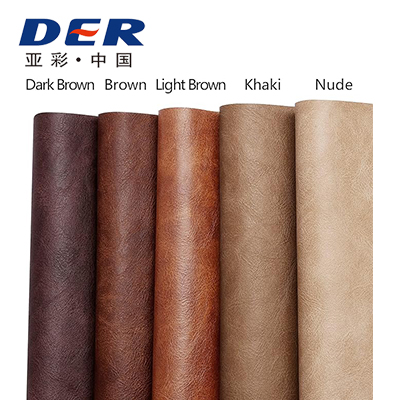
| Color | Standard colors, buyer swatch matching, collection palette or brand-specific development | Color should be approved on the final grain and gloss, not only from a screen image. |
| Performance Route | Abrasion, flexing, adhesion, hydrolysis, colorfastness, cold-flex, water-resistance or buyer-specific test direction | Targets should be linked to the finished product, component and named test method. |
| Processing | Cutting, sewing, skiving, folding, edge painting, gluing, lamination, embossing, printing or logo effect | Process compatibility can determine production efficiency and finish quality. |
| Supply Format | Roll goods, sample swatches, color cards, labels and export packing | Roll identification and packing affect warehouse control and repeat purchasing. |
PU, Microfiber PU or PVC for Handbags?
There is no universal “best” synthetic leather. The right choice depends on bag positioning, hand feel, structure, processing, durability target, cleaning and budget.
Standard PU Leather
Often selected for fashion handbags that need softer handling, broad color development and refined leather-look surfaces.
- Strong design flexibility
- Soft to medium hand-feel directions
- Suitable for bodies, trims and fashion programs
- Confirm hydrolysis, abrasion and backing by project
Microfiber PU Leather
Can be considered where a more substantial support structure, refined touch or cleaner component stability is required.
- Dense backing direction
- Useful for higher-positioned bags and small goods
- Good candidate for structured components
- Review thickness, skiving and cost target
PVC Leather
May suit cost-controlled luggage, travel goods and easy-clean applications where firmer body or practical surface resistance matters.
- Practical water-resistance direction
- Cost-control options for volume programs
- Useful for selected travel and decorative items
- Compare touch, flex and cold behavior before approval
Waterproofing note: a water-resistant PU surface does not automatically make the finished handbag waterproof. Stitch holes, zippers, seams, edge construction, lining and hardware penetrations can become water-entry paths. Finished-product testing is required when waterproof performance matters.
Five Sourcing Errors That Create Problems After the Material Reaches the Bag Factory
What to Send DERFLEX for a More Useful Handbag PU Leather Quote
- Bag type and component: body, gusset, handle, strap, wallet panel, luggage panel or trim
- Physical swatch, product photo or high-resolution grain reference
- Color target and desired gloss / matte direction
- Current or target thickness and backing if known
- Desired hand feel: soft, medium, firm or structure-supporting
- Factory process: sewing, skiving, folding, lamination, edge paint, embossing or printing
- Required performance or test method for your market
- Roll width / length preference, estimated quantity, color split and packing needs
- Destination market and repeat-order plan
Develop the Material Around the Finished Bag and the Factory Process
DERFLEX supports custom PU and synthetic leather roll programs for manufacturers, importers, distributors and product brands. The practical goal is to move from a visual reference to a controlled material specification that can be sampled, converted and reordered.
Application Review
Start from the bag style, component, market, wear zone and conversion method rather than a generic catalog code.
Surface Development
Color, grain, embossing, gloss and touch direction can be discussed for collection-level design programs.
Structure Matching
Backing, body, thickness and roll width can be reviewed around stitching, folding, lamination and cutting requirements.
Repeat Supply
Approved references, roll labeling, packing and written requirements support clearer bulk and replenishment communication.
Continue the Synthetic Leather Selection Process
These verified DERFLEX pages help buyers compare material families, supplier capability and adjacent leather-look solutions.
Handbag PU Leather Material Questions
What PU leather material is suitable for handbags?
The suitable material depends on the handbag structure. Soft totes may need more drape and flexibility, while structured bags may need more body and stronger support. Backing, thickness, fold response, stitch behavior, edge finishing and target durability should be reviewed together before bulk approval.
What thickness is commonly used for handbag PU leather material?
Many commercial handbag programs discuss approximately 0.6–1.2 mm, but there is no universal best thickness. The right value depends on backing, lamination, component, bag structure and hand-feel target. Handles, structured panels and small goods may require different constructions from the main bag body.
Can DERFLEX match an existing handbag leather sample?
DERFLEX can review a physical sample or detailed reference for color, grain, gloss, hand feel, backing and thickness direction. Matching feasibility and tolerance should be confirmed through the approved sample process before bulk production.
Can handbag PU leather be customized with a grain, logo or special surface?
Custom embossing, grain direction, color and selected logo effects can be discussed according to artwork, tooling route, material construction, order quantity and production feasibility. The visual result should be approved on a physical sample.
Is PU leather for handbags waterproof?
The material surface can be developed toward water resistance, but the completed bag is not automatically waterproof. Needle holes, seams, zippers, edges, hardware and lining construction can allow water entry. Finished-product testing is required when waterproof performance is part of the product claim.
How should I compare quotations from different PU leather suppliers?
Compare the full construction, usable roll width, thickness, backing, surface approval, test route, color consistency, roll length, packing and conversion yield—not only the quoted price per meter. A lower meter price may cost more per finished handbag if it creates more waste or rework.
What should I provide when requesting a quote?
Send the bag style and component, sample or photo, grain, color, target hand feel, backing and thickness direction, width, processing route, estimated quantity, required tests, packing needs and destination. This allows a more relevant starting material to be selected for sampling.
Build Your Handbag PU Leather Material Around the Product You Need to Manufacture
Share your bag type, component, reference surface, color, backing, thickness direction, processing method, quantity and required tests. DERFLEX can review a practical material route for sampling and quotation.