News
Company News

Stadium Tensile Membrane Roofing | Project-Ready Roof Fabric – DERFLEX

Update:2026/10/11 19:31:19 Views:
Architectural membrane materials · Project supplyFor technical enquiries ↗
Materials for ambitious sports architecture

Stadium Tensile
Membrane Roofing

Project-ready architectural roof fabric for stadium bowls, spectator grandstands and arena canopies. DERFLEX supplies PVC/PVDF-coated polyester membrane rolls with custom surface, color and fabrication requirements considered from the start.

PVC / PVDF roof fabricEngineering-led selectionInternational material supply
Architectural reference image hosted by DERFLEX; not a claim of project involvement.
The short answer

What goes into a stadium membrane roof?

A stadium membrane roof uses a tensioned architectural fabric as the weathering surface of an engineered roof assembly. The roof's performance comes from the combination of membrane grade, geometry, pretension, seams, support steel, cable forces, edges and drainage—not from fabric weight alone.

This distinction matters to project buyers. A supplier can provide consistent membrane roll material and technical product information; the structural designer and qualified fabricator must validate the complete roof system against site-specific wind, snow, safety and building-code requirements.

For buyers comparing basic stadium roofing materials, DERFLEX also provides a dedicated stadium roof membrane overview. This page goes further into roof-zone decisions and the documentation required before specifying, sampling or purchasing membrane fabric.

Material decision / 02

Three roofing material directions.
Different priorities.

PVC/PVDF, PTFE and ETFE may all appear on a stadium design shortlist, but they are not interchangeable construction systems. DERFLEX’s core material offering for this page is coated polyester architectural membrane in roll form.

01 · Core supply direction

PVC / PVDF
coated polyester

Reinforced, flexible membrane material with weldable PVC coating and optional PVDF or acrylic surface finish. A practical route where project cost, panel fabrication, color and roof appearance must be balanced.

Consider for · grandstands, perimeter canopies, concourses
02 · Alternative architectural system

PTFE-coated
fiberglass

A glass-reinforced membrane direction often evaluated for permanent, high-specification roofs. Dimensional stability, weathering expectations, translucency and fabrication process differ from PVC-coated polyester.

Consider for · long-life landmark tensile roof concepts
03 · Distinct foil envelope system

ETFE foil
assemblies

A transparent or translucent foil route used in specialist single-layer or cushion designs. It requires different detailing, supporting systems and engineering from coated-fabric panels.

Consider for · high-daylight roof inserts and clear zones
Do not specify by acronym alone. A PVDF finish on PVC-coated polyester is not PTFE-coated fiberglass. For cross-material comparisons, request actual product construction, light transmission, approved joining technique and test data for the exact grade under consideration.
Roof-zone strategy / 03

One stadium.
Multiple roof demands.

The same venue can contain a cantilevered spectator roof, high-visibility entrance canopy, daylight-sensitive perimeter and heavily loaded attachment zones. The membrane decision should respond to each location.

For the main bowl, the designer establishes geometry, structural load paths and material demands first. For secondary structures, fabrication efficiency and appearance may carry greater weight. Neither approach removes the need for project-specific code and engineering review.

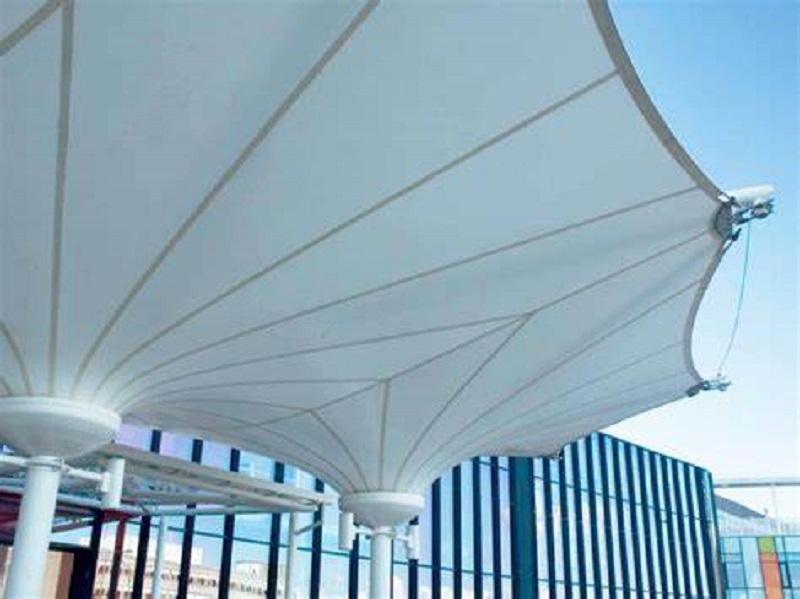
Underside of a tensile membrane canopy showing radial seams, edge connections and tensioned fabric geometry
Reference view · seam direction and membrane connection geometry
Stadium roof zoneMaterial assessmentWhat the buyer must verify
Primary spectator bowl / roof ringEngineer-led PVC/PVDF or PTFE evaluation depending on form, loads, durability objective and budget.Pre-tension, deflection, wind uplift, ponding, snow drift, connection forces and durability plan.
Grandstand and training ground canopySuitable PVC/PVDF-coated polyester is often a practical fabrication and procurement direction.Seam placement, edge details, fire performance, UV exposure, color and replacement strategy.
Entrance / concourse / ticketing shelterCoated textile with desired translucency, finish and workable roll widths.Rainwater discharge, pedestrian clearance, cleaning access, fire review and local exposure.
Daylight-intensive roof strip / skylightReview ETFE and other high-transmission systems separately from standard fabric panels.Optical targets, glare, heat gain, acoustics, framing, condensation and specialist fabrication.
Perimeter, low points and membrane-to-steel transitionsGrade alone does not solve the detail; engineering and compatible edge materials govern.Clamping pressure, load concentrations, movement allowance, seam termination and drainage.

Selections above are project-screening guidance, not an engineered design or a statement that any particular material passes the local building code.

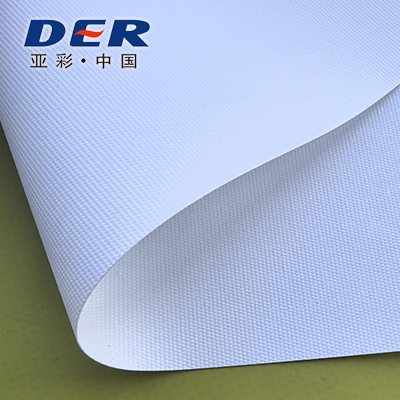
DERFLEX white PVC architectural membrane coated polyester fabric material with visible woven reinforcement
DERFLEX website product image · coated architectural fabric texture
Construction / 04

A stadium roof starts at fabric level.

The architectural surface is a multilayer technical textile—not a generic tarpaulin.

Protective surface

PVDF or acrylic finishes may support dirt resistance and longer-lasting appearance; confirm the coating's weldability before committing to panel fabrication.

Flexible coated layer

PVC provides weathering coverage and the welding interface for compatible polyester membrane grades.

Structural reinforcement

High-tenacity polyester yarns contribute tensile and tear behavior. Warp / weft orientation should be documented in relation to the engineer's cutting patterns.

CustomizedWeight & fabric structure
Project-ledRoll width & panel planning
SpecifiedSurface & translucency
VerifiedTesting & seam method
ParameterWhat to include in the specification
Membrane constructionPVC-coated high-tenacity polyester; PVDF / acrylic surface by approved grade.
Nominal weight / widthPublished stadium reference: 650–1050 g/m²; 1.5–3.2 m. Confirm actual offered product, tolerances and usable width.
Mechanical propertiesWarp/weft tensile and tear figures, elongation, and test methods for the exact grade. Example method: EN ISO 1421 for tensile testing.
Seam propertiesApproved joining technique, overlap, tested seam strength, seam orientation and production process window.
Surface & optical behaviorTopcoat type, finish, color tolerance, translucency / light transmission, color consistency and cleaning requirements.
Weathering & climateDesign exposure, UV and aging requirements, cold behavior, pollution / coastal conditions and maintenance plan.
Fire & safetyLocal code pathway, project-required test standard and grade-specific supporting report; do not assume international classifications are equivalent.
Commercial & traceabilityRoll length, batch ID, lot consistency, packing protection, quantity, destination and required delivery sequence.
Risk controls / 06

Details that decide how
the finished roof behaves.

The highest-cost mistakes in tensile roofing often emerge at interfaces: poorly resolved load paths, insufficient drainage or fabricator assumptions that are incompatible with the supplied material.

01 / WIND & PRETENSION

Design suction and flutter as a system

The roof engineer determines prestress, shape stiffness, dynamic response, anchorage and all relevant load combinations. More gsm alone is not a wind design.

02 / LOW POINTS & RAIN

Prevent ponding before fabrication

Membrane curvature, final deflection and collection points must permit drainage. Coordinate outlets, gutters, slope and maintenance access with the roof design team.

03 / SEAMS & PATTERNING

Plan panels around load direction

Cutting geometry, roll width, warp/weft alignment, weld compatibility and seam testing should be resolved with the fabricator before approval of bulk rolls.

04 / CLAMPS & EDGES

Protect the highest-stress interfaces

Detail cable pockets, keder edges, clamping assemblies, local reinforcements and transitions to steel to avoid unintended load concentration or abrasion.

05 / PUBLIC VENUE COMPLIANCE

Match the jurisdiction's test route

Public assembly spaces may require material fire classification and additional roof-assembly approvals. Require documentation for the exact supplied construction.

06 / LIFECYCLE & ACCESS

Design maintenance into the brief

Consider pollutants, surface cleaning, inspection routes, replacement zones, rainwater outlets and visible color aging during material selection.

Supply responsibility: DERFLEX provides membrane material consultation and roll supply; a qualified architect, structural engineer, fabricator and installer remain responsible for calculation, cutting design, roof assembly and project acceptance.
Architecture and materials / 07

See the material in context.

Images below are sourced from DERFLEX's existing website. They illustrate architectural membrane applications and material appearance, not verified stadium contracts completed by DERFLEX.

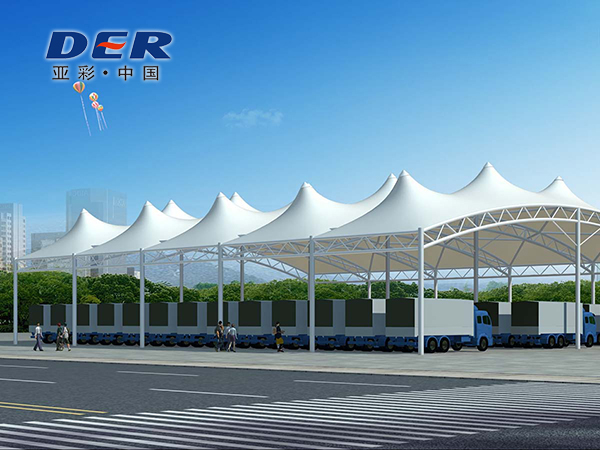
Repeated white tensile canopy peaks supported by a steel frame over a covered logistics area
Modular tensile canopy · repeated peaks with steel-frame support
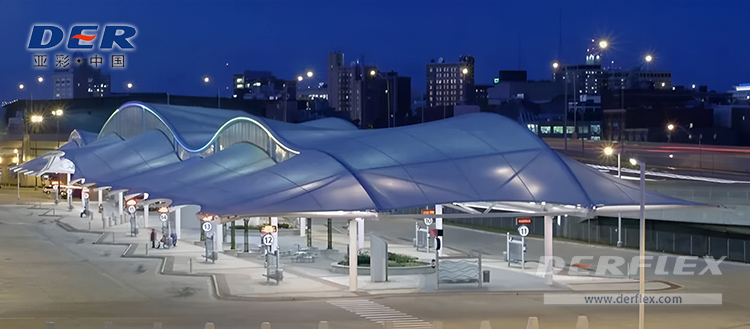
White tensile membrane roof illuminated at night above a transport shelter
Weathered external surface · roof shape and night-time appearance
Buyer checklist / 08

A better quote starts
with a better brief.

Tell us what the stadium roof must do. A clear tender or early-stage concept package helps narrow material choices before sampling and fabricator trials.

DERFLEX can discuss weight, color, roll width, coating, surface treatment and project-oriented supply for coated architectural membrane. Samples and documentation should be requested for the selected grade.

  1. Venue and roof zone: stadium bowl, grandstand, entrance or concourse.
  2. Concept drawings: geometry, span, area, support and edge details if available.
  3. Location and climate: design wind, snow, rain and temperature conditions.
  4. Material priority: service-life expectation, appearance, budget and repair strategy.
  5. Daylight brief: white, opaque, translucent or a defined transmission target.
  6. Fire requirement: project jurisdiction and required test / classification.
  7. Fabrication: preferred joining method, panel widths and roll handling limitations.
  8. Buying details: planned area or quantity, destination, schedule and required records.
Manufacturing fit / 09

Material expertise without promising a turnkey roof.

DERFLEX works from the coated fabric outward: woven reinforcement, coating construction, functional surfaces, roll quality and the manufacturing consistency required by fabricators.

For tensile stadium roof fabric procurement, that approach supports specification discussions about controlled appearance, customizable material structure, suitable roll widths and consistent production batches. It is a more accurate procurement scope than treating a membrane roll supplier as the structural designer or installer.

For related choices, explore high-strength stadium membrane fabric and DERFLEX's PVC architectural membrane range.

Workflow / from brief to roll

Four supplier-side checkpoints

  • Technical brief and target fabric grade discussion
  • Sample, surface and fabrication suitability review
  • Approved specification and bulk roll arrangement
  • Inspection, packing, traceability and shipment coordination

The exact tests, reports, quantities and delivery dates are agreed for each project; no unspecified certification or lead time is implied.

Common project questions / 11

Stadium roof membrane FAQs

Practical answers for architects, tensile fabricators and construction procurement teams.

What is a stadium tensile membrane roof?

A stadium tensile membrane roof is a weather-protective roof in which coated architectural fabric or foil works with pretension, cables, frames and engineered edges. The membrane is one part of a complete structural system, not a standalone rigid roof panel.

Which fabric is commonly selected for a stadium membrane roof?

PVC-coated polyester with a suitable PVDF or acrylic surface is often evaluated for grandstands and stadium canopy zones where weldability and cost matter. PTFE-coated fiberglass is also used for permanent architectural roof systems, while ETFE requires a different foil-system approach. Final selection depends on engineering and local codes.

Is PVDF the same as PTFE stadium roofing membrane?

No. PVDF is commonly specified as a surface treatment on PVC-coated polyester membrane. PTFE-coated fiberglass has a different reinforcement and coating system, with different handling and fabrication requirements.

Can membrane roofing withstand strong wind and snow?

It can be designed for site-specific wind and snow actions, but suitability cannot be judged from the fabric weight alone. Structural engineering must check loads, geometry, pretension, connections, seam orientation, drainage and relevant safety factors.

Can stadium roofing fabric be heat welded?

Compatible PVC/PVDF-coated polyester membrane grades can be welded with an appropriate validated process. Welding parameters and seam performance must be confirmed on the selected material and fabricator equipment; PTFE and ETFE use different fabrication methods.

What should a stadium roof contractor send for a quotation?

Provide the roof zone, drawings or panel concept, climate and loads, expected service period, required fire classification, color and translucency, target material performance, fabrication method, estimated area, delivery destination and procurement schedule.

Your next stadium project

Turn the roof concept
into a material specification.

Share the roof zone, drawings, span direction, fabric performance brief, color, finishing requirement, intended fabrication route and estimated order quantity. DERFLEX can review the coated membrane supply direction and discuss sampling or a project-based quotation.

Consulting Services
+86-021-54361792 / 54361798
Email
sales@derflex.com