Fit reduces flap
Oversized side drops, loose front edges and unsupported areas create moving fabric even when the material is heavy.



Stop tarp flapping before it becomes a torn corner, pulled grommet or failed cover. This practical guide connects field inspections, load-path design and material selection to help fleet, construction and industrial buyers protect their covers.
 5-pointwind-damage control framework
Use a tarp that closely fits the covered load; close windward air gaps; tension reinforced attachment points evenly; shorten unsupported spans; protect corners against rubbing; and inspect seams, grommets, connectors and anchors before bad weather. If the same location repeatedly tears, change the tarp geometry or reinforcement layout rather than simply tightening it harder.
For an immediate noise or flutter problem, see DERFLEX’s tarp flapping diagnosis and correction guide.
Oversized side drops, loose front edges and unsupported areas create moving fabric even when the material is heavy.
Grommets, corners and D-rings perform better when their pull is supported by a planned hem and webbing system.
Distorted eyelets, polishing at contact points and reappearing slack are warning signs to address before the next storm.
Wind rarely destroys a sound tarp in one isolated event. Repeated movement and concentrated forces can turn a small installation issue into extensive fabric damage.
Engineering perspective: this is a qualitative failure sequence, not a wind-speed rating. Pressure, suction and anchor load depend on installation geometry, exposed area and gust conditions.
Use these controls while installation access is safe. They target long-term damage prevention rather than merely silencing a noisy tarp after movement starts.
Center the cover, control loose tails and side skirts, and reduce unsupported fabric. Keep practical drainage geometry so rain cannot create new low pockets.
Restrain leading edges and openings appropriate to the installation. A small air-entry gap can inflate an otherwise well-attached panel.
Work through opposing points progressively. Use enough sound, reinforced positions that one corner or eyelet is not bearing disproportionate load.
Add compatible padding at rail ends, cargo corners, equipment edges and repeatedly rubbing strap paths. Locate old scuff marks before repositioning ties.
Inspect straps, bungees, hooks, lacing, D-rings and anchor locations. A strong sheet still fails if its fixing system shifts or disconnects.
Weather, loads, temperatures and repeated movement can alter tension. Inspect after a safe interval and after major weather or load changes.
The failure location tells you where to investigate. Use this matrix to prevent repeated tarp damage and build a more useful replacement specification.
| Early warning or failure | Likely contributing cause | Prevention / design response | What to verify |
|---|---|---|---|
| Repeated edge snapping | Loose windward edge, extra overhang or long unsupported perimeter | Improve fit, control air entry, shorten moving edge spans | Hem stiffness, adjacent tie points, anchor alignment |
| Grommet stretching or pull-out | High point load, angled pull or insufficient backing | Spread tension across reinforced hems, patches and correctly oriented hardware | Damage around eyelet, washer and surrounding base fabric |
| Diagonal corner tear | Concentrated load entering two edges at a corner | Reinforce the corner geometry; revise pull direction or strap position | Cross-webbing, corner patch extent, sharp contact |
| Seam starts opening | Repeated flexing, load crossing the seam or unsuitable joint construction | Review seam orientation, process compatibility and load-path placement | Condition of weld or stitching and nearby material |
| Polished or abraded stripe | Cover repeatedly moving against a rail, frame or cargo corner | Remove movement; add wear protection or change contact geometry | Sharp edges, padding displacement, strap rub |
| Large center panel balloons | Wind entry, insufficient support or oversized panel | Improve sealing and fit; support or restrain the span using designed attachment zones | Panel shape, pooling, center support and anchor capacity |
A failed fastener is not automatically a faulty fabric. Investigate the whole load path before specifying a stronger replacement. Related engineering background: why tarps rip around grommets.
Material strength matters, but no fabric can compensate for an unsafe anchoring system or persistent flutter. Start with waterproofing and airflow needs, then specify tensile and tear performance, reinforcement and finished fit.
| Material direction | Where it fits | Wind-damage consideration | Procurement note |
|---|---|---|---|
| PVC-coated polyester tarp | Truck covers, equipment protection, reusable industrial covers | Can combine a reinforced woven base with welded finishing and purpose-built attachment zones | Specify target tear/tensile test method, fabrication and actual fixing layout |
| PE laminated tarp | Cost-sensitive, temporary outdoor covering | Lightweight coverings can be vulnerable when oversized, abraded or fastened through weak edge zones | Evaluate intended reuse, reinforced hems and expected handling cycle |
| PVC mesh fabric | Shade, privacy, some debris screens and airflow-permitted enclosures | Porosity can reduce pressure compared with a similar solid sheet in a suitable design, but does not eliminate wind loads | Do not choose when full waterproofing or fine-particle containment is required |
| Specialized custom covers | Repeated failure at the same anchor, contour or wear location | Closer fit, preplanned webbing paths and controlled spans address the failure mechanism directly | Submit a drawing, failed sample and exact anchor map for review |
There is no responsible universal statement such as “this 650 gsm tarp withstands X mph.” Wind resistance belongs to a defined installed system, not GSM alone. See DERFLEX's wind load and anchoring guide for the load-path fundamentals.
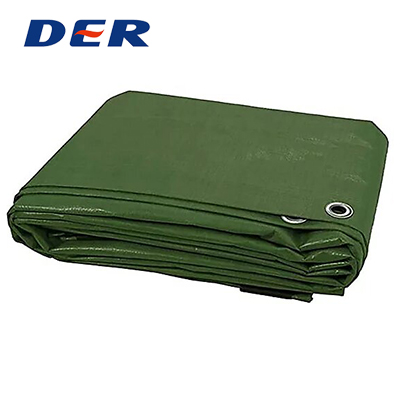
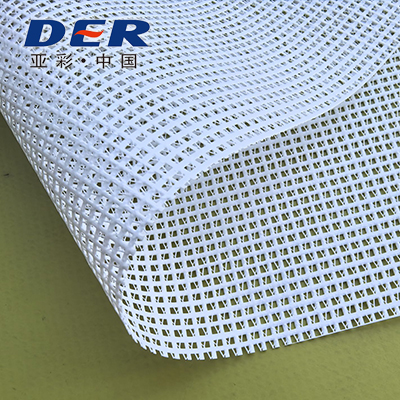
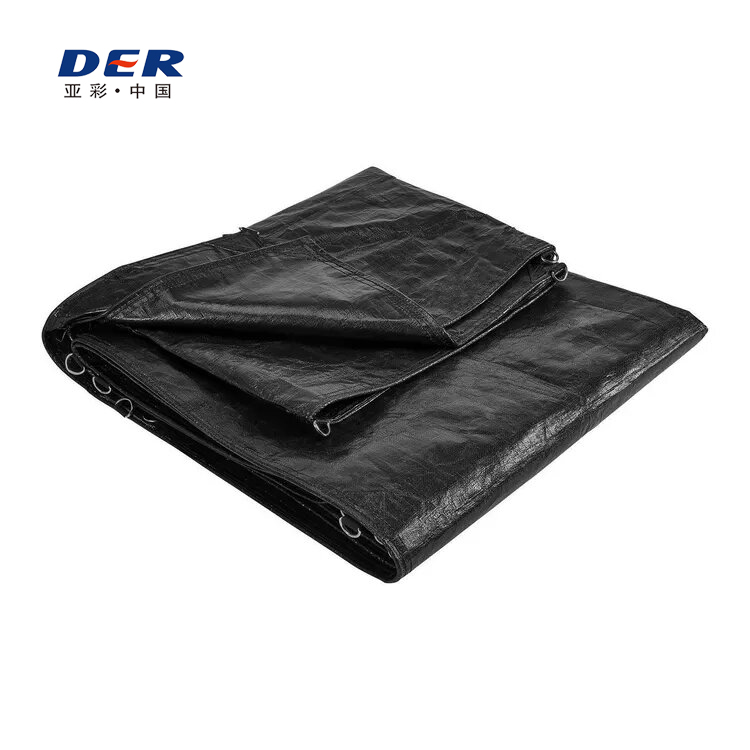
A cover should transfer wind-induced tension from its coated fabric through seams and reinforced borders into compatible fixing hardware and anchors. A heavier center panel cannot repair a poorly positioned D-ring row or a weak corner.
For repeat-use covers, DERFLEX can discuss PVC-coated polyester fabric, finished dimensions, welded seams, webbing-backed hems, D-rings, eyelets, patches, pockets and related OEM finishing according to the actual design requirement.
For attachment layouts and options, review custom tarps with reinforced D-rings.
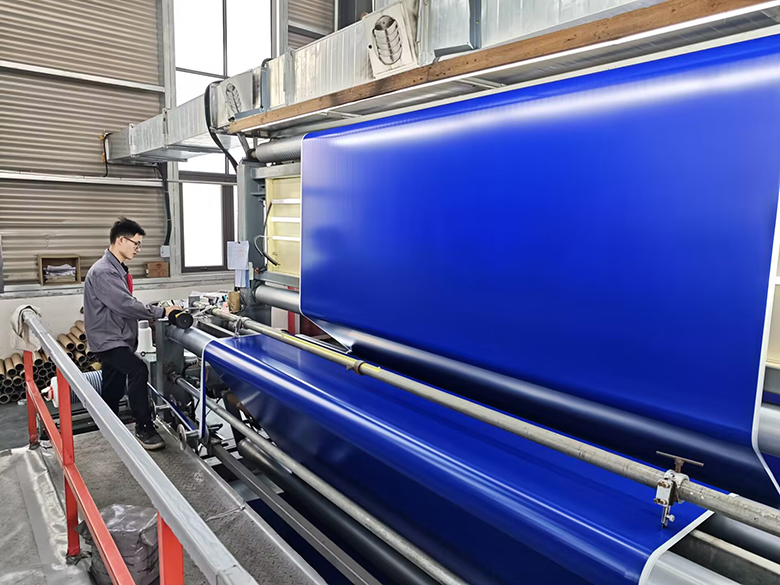
The same tarp can behave differently over static stockpiles, mobile freight or temporary construction structures. Use the operating conditions to guide protection measures.
Control the front edge, vehicle-specific drops, abrasion over cargo and dynamic tension on D-ring rows. Covering cargo is not a replacement for legally required cargo restraint.
Reduce loose skirts, pad projecting features and avoid fixing a wide unsupported sheet only at its corners. Account for maintenance access and safe reinspection.
Large solid panels transmit wind pressure to frames and anchors. Choose solid versus mesh coverage carefully; supporting structure and connection engineering may be necessary.
Manage edge lift, changing stack profiles, drainage and stable anchors. Avoid loose ballast that can move, roll or become a hazard during gusts.
The correct response depends on where the damage occurred and whether the failure cause has been eliminated. Cosmetic patches are not a substitute for sound load-bearing zones.
Small, accessible defects away from high-load areas may be repairable with a material-compatible method after removing the rubbing or puncture source. Assess integrity before reuse.
Recurring corner tears, pulled D-rings or split hems suggest a hardware, fit or reinforcement problem. Update the drawings before the next order.
Extensive tearing, damaged primary load paths, severe brittleness, detached hardware or compromised anchors require withdrawal and professional assessment or replacement.
Do not reuse a damaged tarp in a safety-critical application until a competent person confirms the installation and cover are suitable.
A repeatable inspection habit helps maintenance teams catch the precursor to failure. These checkboxes are a convenient viewing aid; they are not a certified inspection record.
Field access only when weather, traffic, work-at-height and local procedures permit it. Stop use if the cover or anchor system presents a hazard.
For distributors, converters, OEM builders and fleet procurement teams, the useful upgrade is a repeatable construction specification—not simply changing from one fabric weight to the next. DERFLEX supplies custom PVC tarp material and finished tarpaulin options for suitable industrial programs.
Available design considerations include custom size and shape, PVC-coated polyester material direction, hem construction, corner patches, webbing reinforcement, eyelets, D-rings, welded finishing, custom colors and OEM branding. All final performance and commercial terms should be confirmed during technical review.
Explore the DERFLEX custom-made tarp manufacturing range, or send existing damage photos and an installation drawing to begin a specification discussion.
Short, practical answers to questions frequently raised before covering, repairing or replacing industrial tarps.
First remove unnecessary slack and close windward gaps. Then balance tension across reinforced points and shorten unsupported spans. Inspect nearby seams, anchors and rubbing zones; avoid simply pulling one corner harder.
Yes. Even heavy PVC-coated fabric can fatigue, abrade or tear when it repeatedly flaps, rubs on sharp edges or transfers excessive force into a poorly reinforced attachment zone. Material weight does not guarantee an installed wind rating.
Common contributing factors include concentrated pull at a small eyelet, inadequate surrounding reinforcement, diagonal strap alignment, overly wide fixing spans, aging material and repeated flutter. Review the entire attachment path, not only the ring.
Both have roles depending on the application. Controlled elasticity can absorb short movements, but excessive stretch can allow flutter. Adjustable straps help control larger spans but can overload weak fixing points. Use compatible hardware and sound anchors.
No. Thickness and GSM are only parts of a specification. The exposed area, base-fabric strength, tear resistance, seam design, fitting geometry, edge reinforcement and anchors also determine performance. Request test data appropriate to the intended application.
Mesh can reduce wind pressure in some designs by allowing airflow, but the reduction depends on porosity, panel geometry and installation. Mesh is not waterproof and still requires correctly designed fixing points and supporting structures.
Replace or professionally reassess the cover when primary reinforcement, corners, fasteners or wide sections of fabric have deteriorated, or when repairs repeatedly fail at the same load-bearing point. A patch alone does not resolve unsafe anchoring or geometry.
Provide the use case, finished dimensions, climate and exposure, fabric requirement, drawing or photos, actual anchor positions, known wear zones, reinforcement and fastening preferences, quantity and destination. Final construction and tests can then be discussed.
Share the recurring damage point, anchor layout and duty requirements. DERFLEX can review a custom material and finishing direction for a more suitable cover design.