Solar reflectance
The fraction of incoming solar energy a roof surface reflects. Request both initial and aged values for the exact grade and surface finish; a white sample is not a substitute for a test result.



White roofing membrane · Commercial & industrial roofs
DERFLEX supplies white thermoplastic polyolefin (TPO) roof membrane rolls for flat and low-slope commercial roofing. Specify a high-reflectance surface alongside the right reinforcement, thickness, hot-air-welded seams and system documentation—not on color alone. Discuss white TPO roofing supply for warehouse roofs, industrial facilities, retrofit programs and distributor orders.
What the material does
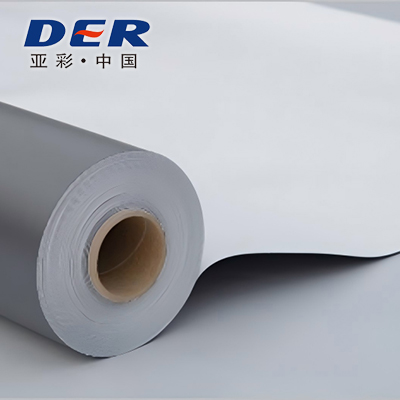
What is a white TPO roof membrane? It is a single-ply thermoplastic polyolefin sheet used as the exposed waterproofing layer of a flat or low-slope roof. A white upper surface typically reflects more incident sunlight than darker alternatives, while appropriately designed heat-welded laps help provide a watertight field membrane.
In a commercial specification, the sheet is only one part of the system. Reinforcement, thickness over scrim, membrane attachment, insulation, flashing details and tested roof-assembly approvals also matter. For the broader product family, see DERFLEX's TPO membrane supply overview.
Design the roof, verify the data
White TPO roofing is often considered where solar heat gain matters, particularly over large roofs in cooling-dominated regions. Energy performance cannot be validated by appearance alone: evaluate the exact offered membrane and the whole building context.
The fraction of incoming solar energy a roof surface reflects. Request both initial and aged values for the exact grade and surface finish; a white sample is not a substitute for a test result.
The ability of the roof surface to release absorbed heat as thermal radiation. It is distinct from solar reflectance; both help characterize a cool roof.
SRI combines reflectance and emittance into a standardized comparative measure. Confirm the local requirement, aging convention and test documentation before specifying an SRI target.
Important: No DERFLEX-specific reflectance, thermal-emittance, SRI, CRRC listing or energy-saving percentage is claimed here without verified data for the exact white membrane grade. A CRRC rating describes measured radiative properties; it does not by itself certify an entire roof assembly.
Selecting by roof conditions
Different roofs place different demands on membrane thickness, seam layout, walking exposure and supporting documents. Use this matrix to frame the project enquiry; final selection remains subject to the qualified roof-system designer and local requirements.
Priority: reflective coverage over a large, exposed roof with manageable installation logistics. Review sheet width, roll handling, wind-zone design and documented radiative values.
Ask: Will wider rolls reduce seams without overloading the handling plan?
Priority: roof penetrations, rooftop services, maintenance traffic and exposure conditions. Review membrane reinforcement, cover board and protection walkways where necessary.
Ask: How is traffic protection incorporated into the approved assembly?
Priority: existing deck, moisture condition, insulation condition and compatible recovery method. Confirm tear-off or recover feasibility with the design professional before fixing the membrane construction.
Ask: Is the proposed backing / attachment approved for the existing roof?
Priority: fire and wind requirements, installation disruption, temperature conditions and submission quality. Request project-specific assembly documents rather than generic marketing certificates.
Ask: Which full-system approvals and submittals must be supplied?
A reflective white roof may reduce absorbed solar energy, but savings depend on insulation, weather, HVAC demand, maintenance and the roof's actual tested radiative properties.
Reflectivity can introduce a winter heating trade-off. Compare expected annual building energy performance instead of assuming that the whitest roof always provides the lowest energy bill.
Technical purchasing reference
The following are published DERFLEX supply directions or procurement fields—not a promise that every thickness, width and length combination is stocked or certified. Confirm the offered grade and technical data before issuing a purchase order.
| Specification | Published / proposed direction | What a buyer should verify |
|---|---|---|
| Material | Thermoplastic polyolefin (TPO), exposed single-ply roof membrane | Exact formulation and intended roofing application |
| Color | White roof-facing surface | Approved color sample and measured initial / aged radiative data if required |
| Nominal thickness | 1.2, 1.5, 1.8, 2.0 mm: DERFLEX published TPO directions | Exact grade, nominal versus minimum thickness, tolerances and method of measurement |
| Reinforcement | Reinforced TPO direction; project-specific alternative constructions require review | Scrim design, coating thickness above reinforcement, intended attachment system |
| Roll width | 2 m, 3 m, 4 m: published supply directions | Grade-specific production width and site lifting / handling limits |
| Roll length | 20 m, 30 m, 50 m: published planning directions | Roll area, finished mass, core, packaging and number of rolls per pallet |
| Field seams | Hot-air weldable TPO | Lap geometry, weld procedure, equipment, test-weld checks and inspection plan |
| Attachment | Mechanically attached / adhered or other suitable designed TPO assembly | Deck, insulation, adhesives or fasteners, perimeter, wind and fire approval |
| Testing / standards | ASTM D6878/D6878M may be relevant for reinforced exposed TPO sheets | Current required edition, exact grade test report and local tender criteria |
| OEM & export | Roll labels, packaging and distributor requirements for review | Batch marks, pallet plan, destination, required documents and order quantity |
Thickness caution: 60 mil is 1.524 mm by unit conversion; that does not automatically make any 1.5 mm product a tested or approved 60 mil specification. If the tender requires a particular imperial thickness class, specify the governing designation, tolerances and thickness-over-scrim requirements. See DERFLEX's 60 mil TPO purchasing guide.
Material and assembly compatibility
For common commercial field membranes, the TPO sheet includes reinforcing fabric or scrim. That reinforcement contributes to dimensional stability and handling strength. The exposed upper ply, scrim position and thickness above scrim may be evaluated independently of nominal overall sheet thickness.
Where a project cites ASTM D6878/D6878M, note that the standard covers reinforced TPO roofing sheets. It does not approve the entire assembled roof against fire, wind uplift, substrate compatibility or field-welding requirements. Review DERFLEX's reinforced TPO roofing membrane details when specifying a scrim-reinforced material.
Diagram is an explanatory simplification. Scrim is incorporated inside the membrane and is not a separate field-installed layer. The actual assembly may include attachment components and vapor-control layers and must follow project-approved drawings.
What to verify before approval
Do instead: Specify whether you need initial and aged solar reflectance, thermal emittance, SRI or a particular rating. Confirm the exact grade rather than relying on the appearance of a sample.
Do instead: Record the governing mm or mil designation, tolerance and the requirement for thickness over reinforcement; compare like-for-like test reports.
Do instead: Separate sheet-level testing from project fire, wind and installation requirements. Refer to the ASTM D6878 reinforced TPO specification guide when drafting a technical request.
Do instead: Balance nominal seam reduction against roll mass, rooftop access, wind handling and installation labor. Consult the TPO roll width, length and weight guide.
Do instead: Evaluate aged ratings, site dirt exposure, drainage and a safe maintenance plan. Soiling and weathering can change roof-surface radiative performance.
Do instead: Confirm the attachment concept, substrate, seam detailing, compatible accessories and design responsibilities before finalizing the white membrane purchase.
A clear route from specification to shipment
Record climate, building type, area, roof assembly and required energy, wind or fire documentation.
Review white sample, thickness, reinforcement, radiative evidence and the exact product description.
Agree roll format, total volume, palletization, labels and destination requirements.
Verify any specified test reports, acceptance conditions, batch identifiers and export documents.
Manufacturing-focused support
DERFLEX's existing TPO portfolio covers different membrane thicknesses, reinforced material directions, roll formats and project-oriented procurement. For importers, contractors and roofing-material distributors, this provides a basis for discussing a precise product specification rather than simply ordering “white TPO”.
Project quotation
Send enough information to make the first quotation technically meaningful. Our team can review your requested white membrane construction, roll format and procurement documents before discussing supply.
Quotation opens the existing DERFLEX request page. No non-functional form is embedded here.
Frequently asked questions
White TPO is commonly selected when maximizing roof-surface reflectance is the primary color objective. Exact performance varies by product formulation and aging, however. Compare product-specific initial and aged solar reflectance, thermal emittance and SRI rather than assuming that all white membranes perform equally. The broader comparison is covered in DERFLEX's TPO roofing color and reflectivity guide.
No. Building codes and procurement standards may require measured values, aged performance or a specified rating. A white appearance by itself does not establish compliance. Check the jurisdiction, exact product and applicable test or rating documentation.
Choose thickness according to the project specification, approved roof assembly, traffic exposure and relevant test requirements. DERFLEX publishes 1.2, 1.5, 1.8 and 2.0 mm TPO directions, subject to exact-grade confirmation. For a 60 mil tender, specify the governing thickness definition and tolerance rather than substituting a nominal 1.5 mm figure without review.
Yes. Commercial TPO roofing sheets are designed for compatible heat-welded field seams. Good results depend on membrane grade, surface condition, equipment settings, site temperature, overlap details, trial welds and inspection. Follow the roof-system manufacturer's approved installation instructions.
White TPO membrane is widely used for exposed, low-slope commercial roof systems. Suitability depends on slope and drainage, attachment, insulation, deck compatibility, flashing details, local codes and project-specific system approvals. The sheet alone cannot establish whole-roof suitability.
Not necessarily. Dirt, biological growth, local atmospheric deposits and weathering can affect reflectance. Review aged radiative data where specified and plan maintenance based on the roof-system provider's approved procedures.
No. ASTM D6878/D6878M addresses reinforced TPO sheet material properties. Roof-system wind resistance, fire classification and installation compatibility require separate assembly-level evaluation and applicable approvals.
DERFLEX publishes TPO membrane directions covering multiple thicknesses, widths and lengths and discusses OEM or project-specific supply. Share the required construction, grade, roll format, quantity, market and document package to confirm manufacturing feasibility, MOQ, timing and final pricing.