News
Company News

Abrasion Resistant Truck Tarp | Custom PVC Cargo Covers | DERFLEX

Update:2026/8/1 18:02:53 Views:
DERFLEX · PVC Coated Fabric & Custom Tarp Manufacturing
DERFLEX logo Custom transport protection for B2B buyers
Wear-zone engineered truck tarp

Abrasion Resistant Truck Tarp for Repeated Cargo Handling

DERFLEX supplies PVC coated polyester truck tarp material and custom finished cargo covers designed around the places a tarp is most likely to rub, fold, pull and wear. Specify the fabric, coating, reinforcement and hardware as one working system for flatbeds, trailers, construction trucks and fleet replacement programs.

PVC Coated Polyester 550–1100gsm Directions Roll Goods or Finished Tarps OEM Color & Branding
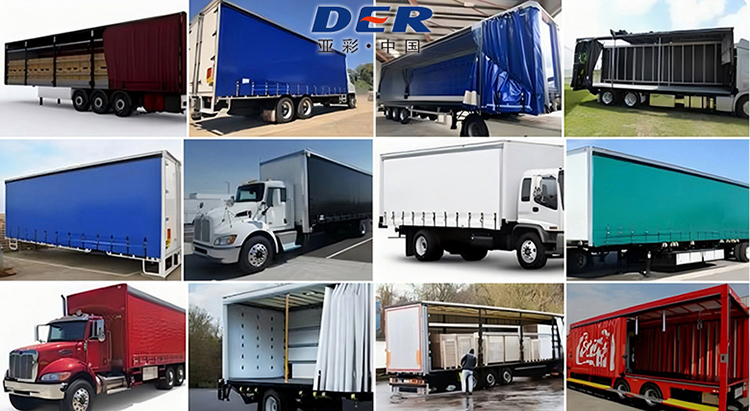
DERFLEX PVC truck tarp applications including flatbed trucks, trailers and curtain-side vehicles DERFLEX product display

Truck Tarp Material & Fabricated Cover Options

Final construction is selected by cargo surface, fastening layout, route exposure, handling frequency and target replacement cycle.

500D–1300DAvailable yarn directions
Up to 5.1mWidth by specification
Custom FinishMatte, glossy or lacquered
Custom HardwareWebbing, rings and eyelets
A practical product definition

What Is an Abrasion Resistant Truck Tarp?

An abrasion resistant truck tarp is a transport cover designed to tolerate repeated rubbing and surface contact better than a light temporary sheet. During real service, the material may slide over lumber corners, steel edges, side rails, straps, pallets and the truck deck. It is also folded, dragged, tensioned and exposed to highway vibration every working day.

For this reason, an effective heavy duty vinyl truck tarp is not defined by coating weight alone. The polyester base fabric carries tensile load, the PVC layer provides the weather barrier and usable surface, the coating-to-fabric bond helps the structure remain integrated, and the reinforcement layout protects local stress points.

DERFLEX develops custom abrasion resistant truck tarp programs for distributors, tarp fabricators, fleet operators, trailer companies and industrial buyers who require repeatable specifications rather than one generic retail grade.

Buyer quick answer

Start with the cargo and failure point. A rough steel load may need local wear pads and edge protection; a lumber tarp may need large drops and reinforced webbing; a fleet curtain may need controlled flex, surface cleanability and consistent color. The correct specification balances durability with tarp weight and driver handling.

Design around the failure point

Six Truck Tarp Wear Zones That Deserve Separate Attention

A uniform sheet can be strong and still fail early at a local contact point. Wear-zone planning places reinforcement where the tarp experiences concentrated friction, movement or tension.

A

Cargo Corners and Protrusions

Sharp or rough corners concentrate pressure into a small area. Removable corner protectors, local wear patches or shaped reinforcement can help isolate this contact from the main tarp panel.

B

Side Rail Contact

The lower side of a truck tarp can rub against rails, rub strips and deck edges during loading, tie-down and highway movement. A reinforced lower band is often more practical than increasing the weight of the full cover.

C

Fold and Roll Lines

Repeated folding works the coating and scrim along the same line. Coating flexibility, low-temperature behavior and fold geometry should be considered for tarps opened and closed every day.

D

Grommet and D-Ring Zones

Tie-down points carry cyclic pulling from straps, wind and vibration. Webbing reinforcement and suitable spacing spread the load across a wider area instead of concentrating it around one hole.

E

Windward Front Edge

The leading edge receives wind pressure, flutter and road contamination. A stable front reinforcement design can reduce movement that accelerates edge and seam damage.

F

Ground and Yard Handling

Dragging a tarp across concrete, gravel or metal quickly consumes the outer surface. Handling procedures matter, while replaceable skid panels can be specified for known high-contact areas.

More than surface wear

A Truck Tarp Performs as a Material-and-Fabrication System

Abrasion resistance addresses rubbing, but truck tarp service also includes wind load, tension, folding, water exposure and hardware stress. These properties should be evaluated together.

01

Surface Abrasion

PVC formulation and finish influence how the outer layer responds to rubbing, dirt and repeated handling.

02

Tear Resistance

The reinforced scrim helps slow propagation after a puncture, cut or cargo-edge stress initiates damage.

03

Tensile Strength

Base fabric construction supports pulling load across the tarp body, especially under tie-down and wind pressure.

04

Coating Adhesion

The bond between PVC and polyester matters during flexing, welding, surface wear and temperature changes.

05

Flex & Cold Behavior

A heavy tarp that becomes too stiff can be difficult to fold and may experience concentrated stress in cold routes.

06

UV & Weather Stability

Outdoor formulation helps the material retain usable flexibility, color and strength through sun and weather exposure.

07

Welded Seam Design

Panel layout, overlap and welding parameters affect waterproof continuity and how loads transfer across large tarps.

08

Hardware Reinforcement

Webbing, rings, eyelets and corners should be positioned according to real securing points and expected pulling direction.

Specification note: test results depend on the selected test method, specimen direction and material construction. For meaningful supplier comparison, confirm the same standard, unit and conditioning method rather than comparing isolated numbers from different data sheets.
Custom manufacturing directions

Abrasion Resistant Truck Tarp Specification Options

The table is a planning guide for quotation and sample development. Final values should be confirmed against the vehicle, cargo, fabrication method and applicable testing requirements.

Specification Item Typical DERFLEX Direction Why It Matters for Truck Use Procurement Note
Material Structure PVC coated or laminated high-strength polyester fabric Combines a reinforced textile core with a waterproof, weldable and cleanable surface. Coated and laminated constructions should not be treated as identical; confirm target duty and budget.
Base Fabric 500D, 1000D, 1300D and custom yarn/density directions Influences tensile strength, tear behavior, dimensional stability and finished tarp weight. 1000D × 1000D is a common truck tarp direction, but cargo and cover size determine the final choice.
Fabric Weight Approx. 550, 650, 750, 900, 1100gsm or customized Higher weight can add coating and structure, while also increasing handling load. Select by failure risk, not by choosing the heaviest grade automatically.
Thickness Approx. 0.45–1.0mm or project-specific construction Affects surface body, wear allowance, folding and welding setup. Compare thickness together with GSM, scrim and coating adhesion.
Roll Width Standard and wide-width production; up to approximately 5.1m by specification Wider material can reduce seam quantity on large truck tarp panels. Available width depends on weight, construction, color and order details.
Surface Finish Glossy, matte, semi-matte, lacquered, smooth, textured or application-matched finish Influences cleanability, friction, appearance, printability and dirt pickup. Approve color and finish under agreed lighting before repeat-order production.
Performance Options UV, anti-mildew, cold-flex, oil-resistant direction, FR direction, REACH/RoHS support as requested Different routes and cargo environments create different aging and compliance needs. State the target standard and market before formulation or sample approval.
Fabrication Hot-air/HF welded seams, reinforced hems, webbing, D-rings, eyelets, rope hems, pockets and local patches Fabrication converts roll material into a usable load-control and weather-protection system. Provide drawings, tie-down spacing and stress direction whenever possible.
Supply Format Roll goods, cut panels, semi-finished sheets or finished custom truck tarps Supports converters, regional tarp brands, trailer makers and direct project buyers. Define inspection and packing requirements for each supply format.
OEM Program Custom color, printed logo, woven label, carton mark and export packaging Supports fleet identity, distribution programs and repeat replacement orders. Use approved references and a controlled specification sheet for repeatability.
Match the tarp to the load

Recommended Design Priorities by Truck and Cargo Type

The same “abrasion resistant truck tarp” description can refer to very different products. Use the actual cargo and handling method to set the design priorities.

Steel, Pipe & Fabricated Parts

High edge risk

Loads with hard edges create concentrated wear and puncture risk.

  • High-strength PVC coated polyester direction
  • Local wear pads or replaceable reinforcement
  • Corner protection and controlled tension points
  • Shorter drop or shaped design where appropriate

Lumber, Plywood & Wallboard

Large coverage

Lumber tarps need large drops, weather protection and practical daily handling.

  • Balanced 650–900gsm direction by route and size
  • Reinforced lower bands and webbing rows
  • Multiple D-ring positions for variable load heights
  • Water-shedding seam and panel layout

Machinery & Oversized Cargo

Custom geometry

Irregular shapes benefit from a cover designed around attachment and protrusion points.

  • Drawing-based panel and seam planning
  • Strategic reinforced corners and access flaps
  • Soft contact layer or padding where required
  • Custom straps, pockets and b, uckle positions

Construction Materials & Jobsite Hauling

Rough handling

Dust, dirt, irregular edges and repeated loading increase surface wear.

  • Abrasion-focused outer finish
  • Reinforced perimeter and tie-down zones
  • Cleanable waterproof PVC surface
  • Repair-friendly welded patch compatibility

Trailer Curtains & Fleet Covers

Repeated flex

Sliding, rolling and daily opening place more emphasis on flex behavior and appearance.

  • Stable color and smooth surface quality
  • Controlled flex and coating adhesion
  • Printing or fleet identity options
  • Repeat-order color and specification control

Waste, Aggregate & Loose Loads

Containment choice

The correct material may be solid PVC or mesh depending on water protection, airflow and the tarp system.

  • Confirm solid versus ventilated cover requirement
  • Check roll-system compatibility
  • Reinforce front pocket and attachment points
  • Match mesh openness to the transported material
Hot-load caution

Standard PVC truck tarp material should not be assumed suitable for hot asphalt or other elevated-temperature cargo. State the load temperature and exposure time so that an appropriate heat-resistant material direction can be evaluated before ordering.

Manufacturer-backed supply

Why Buyers Use DERFLEX for Custom Truck Tarp Programs

DERFLEX combines PVC coated fabric manufacturing with application-oriented tarp development. This lets buyers discuss the base fabric, coating, width, surface finish, welding, reinforcement and packaging within one specification process.

The supply model is suited to B2B orders that need custom material directions, controlled repeat production, roll goods for local fabrication or finished covers for distribution and fleet programs.

Material Structure ControlYarn, density, coating weight, finish and performance direction can be matched to the use case.
Wide-Width OptionsWide roll directions can reduce seams and improve large-panel fabrication efficiency.
Finished Tarp SupportWelding, hems, webbing, rings, grommets, pockets and local reinforcement can be specified.
OEM & Export PackingCustom color, logo, labels, cartons and repeat-order identification support distribution programs.
Sample ConfirmationMaterial, color, finish, weld and construction details can be reviewed before bulk production.
Repeat Specification ControlApproved references help align future batches with the agreed material and finishing requirements.
Reduce bulk-order uncertainty

A Practical Approval Process for Abrasion Resistant Truck Tarps

For repeat fleet, distributor or private-label programs, control the reference before production instead of relying on a product name alone.

Define the Failure Mode

Identify where existing tarps wear, tear, delaminate, leak or become difficult to handle.

Confirm the Material Data

Align GSM, thickness, yarn, test methods, finish, color and optional performance requirements.

Test the Fabrication

Review weld quality, seam overlap, edge reinforcement, hardware placement and repair method.

Approve a Reference Sample

Retain an agreed material or finished-cover sample for appearance and construction comparison.

Set Shipment Inspection Points

Document size tolerance, quantity, packaging, labels, workmanship and required reports before dispatch.

Procurement perspective

Compare the Replacement Cycle, Not Only the Price per Tarp

A lower-priced truck tarp may be suitable for occasional or low-risk use. For a working fleet, however, procurement cost also includes replacement frequency, emergency repair, cargo exposure, driver time and the disruption created by an early failure.

Abrasion resistance is valuable when it is positioned in the correct areas and supported by tear strength, flexible handling and secure hardware. Adding weight everywhere may increase cost and handling burden without solving the actual wear point.

  • 1
    Track failure by locationRecord whether damage starts at cargo corners, seams, grommets, fold lines or the lower edge.
  • 2
    Separate material wear from handling damageDragging, uncovered sharp edges and over-tensioning can shorten the life of any tarp.
  • 3
    Use targeted reinforcementWear patches and reinforced bands can be more efficient than increasing full-panel weight.
  • 4
    Standardize repeat replacementsControlled dimensions, hardware and color simplify fleet inventory and reordering.
Questions from truck tarp buyers

Frequently Asked Questions

Concise answers for fleet operators, converters, importers and custom tarp buyers.

What makes a truck tarp abrasion resistant?

Abrasion resistance comes from the complete material construction: the PVC formulation and surface finish, coating thickness, reinforced polyester base fabric, coating adhesion and local reinforcement. Finished performance also depends on reducing direct contact with sharp cargo and positioning wear pads at known rubbing points.

What material is suitable for a heavy duty abrasion resistant truck tarp?

PVC coated polyester is commonly selected for reusable heavy duty truck tarps because it can combine a waterproof surface, weldability, tear strength, UV options and custom reinforcement. The exact yarn structure, GSM and finish should be matched to the cargo and handling frequency.

What GSM should I choose for a truck tarp?

Many custom truck tarp programs begin around 550–900gsm, while more demanding or highly reinforced applications may use approximately 900–1100gsm or another custom structure. GSM alone does not determine durability; confirm the base fabric, coating, thickness, cover size and driver handling requirements together.

Can a truck tarp resist sharp steel or lumber corners?

No flexible tarp should be treated as immune to an unprotected sharp edge. For steel, machinery and rough lumber, use corner protectors, padding, local wear patches and a reinforcement plan. These measures reduce concentrated cutting and rubbing against the main tarp body.

Is an abrasion resistant PVC truck tarp waterproof?

The PVC coated fabric can provide a waterproof surface. A finished truck tarp also depends on welded seams, panel layout, edge construction, hardware penetration, fit and installation. Water can enter through openings or poor drainage even when the base fabric is waterproof.

Can DERFLEX supply both roll material and finished truck tarps?

Yes. DERFLEX can discuss PVC truck tarp roll goods, cut or welded panels, semi-finished products and custom finished covers with hems, webbing, grommets, D-rings, pockets, reinforcement, logo and packaging for B2B orders.

How should I compare samples before placing a bulk order?

Compare samples using the same test methods and conditioning. Review GSM, thickness, yarn structure, tensile and tear data, abrasion method, coating adhesion, color, surface finish, fold behavior, welding, edge reinforcement and hardware placement. Keep an approved reference sample for bulk inspection and repeat orders.

Build the Truck Tarp Around Your Real Wear Conditions

Share the vehicle, cargo, current failure point, size, quantity and finishing requirements. DERFLEX can review a suitable PVC coated polyester structure and custom fabrication direction for your project.

Product structures, dimensions and performance directions should be confirmed by sample, technical agreement and applicable test standard before bulk production. Images are for product and application reference.

Consulting Services
+86-021-54361792 / 54361798
Email
sales@derflex.com