


PVC-coated polyester absorbs far less surface water than untreated canvas, and anti-mildew formulations can further reduce fungal-growth risk. Poor drainage, dirt and wet storage can still create mildew problems.
Technical Buyer Guide · Humid & Wet Environments
Anti-Mildew and Anti-Rot: The Hidden Benefits of PVC Tarps
Anti-mildew PVC tarps are not simply “waterproof tarps with an additive.” Their real value comes from a system: low-absorption PVC coating, suitable mildew-resistant formulation, a strong polyester base, weldable seams, cleanable surfaces, correct drainage and dry storage.
For importers, tarp fabricators, agricultural suppliers, marine cover makers and industrial buyers, that system can reduce moisture-related staining, odor, contaminated folds and avoidable deterioration while improving repeat-use reliability. DERFLEX can discuss anti-mildew treatment as part of a custom PVC tarpaulin specification rather than as an isolated marketing label.
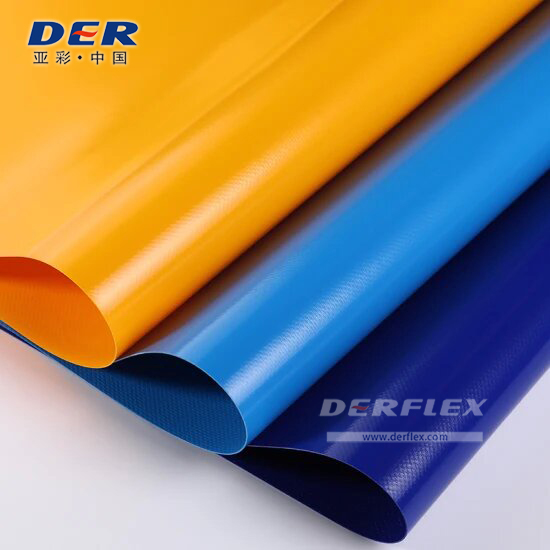
For PVC tarps, “rot resistant” usually describes resistance to moisture-driven biological deterioration and surface contamination—not a guarantee that every wet, dirty or damaged tarp can never develop mold.
Define humidity, water exposure, surface residues, UV exposure, strength, welding method, anti-mildew test requirement, cleaning cycle, finished construction and storage conditions before selecting the grade.
Answer First
“Anti-Rot” Is a System Property, Not a Magic Coating
A PVC tarp is normally built from a polyester reinforcement covered by PVC. Unlike untreated natural-fiber canvas, the coated structure is not designed to soak up water through the face. That helps reduce one of the conditions that supports biological deterioration.
However, mildew can still develop on dirt, plant residue, oils or other organic contamination sitting on the surface. Water can also collect in folds, seams, hems or low points. If cut edges or damaged coating expose yarns, moisture migration can become a separate durability issue.
A credible anti-mildew specification combines material formulation + surface cleanability + seam design + drainage + maintenance + dry storage.
Why PVC-Coated Polyester Is Well Suited to Humid Covering Applications
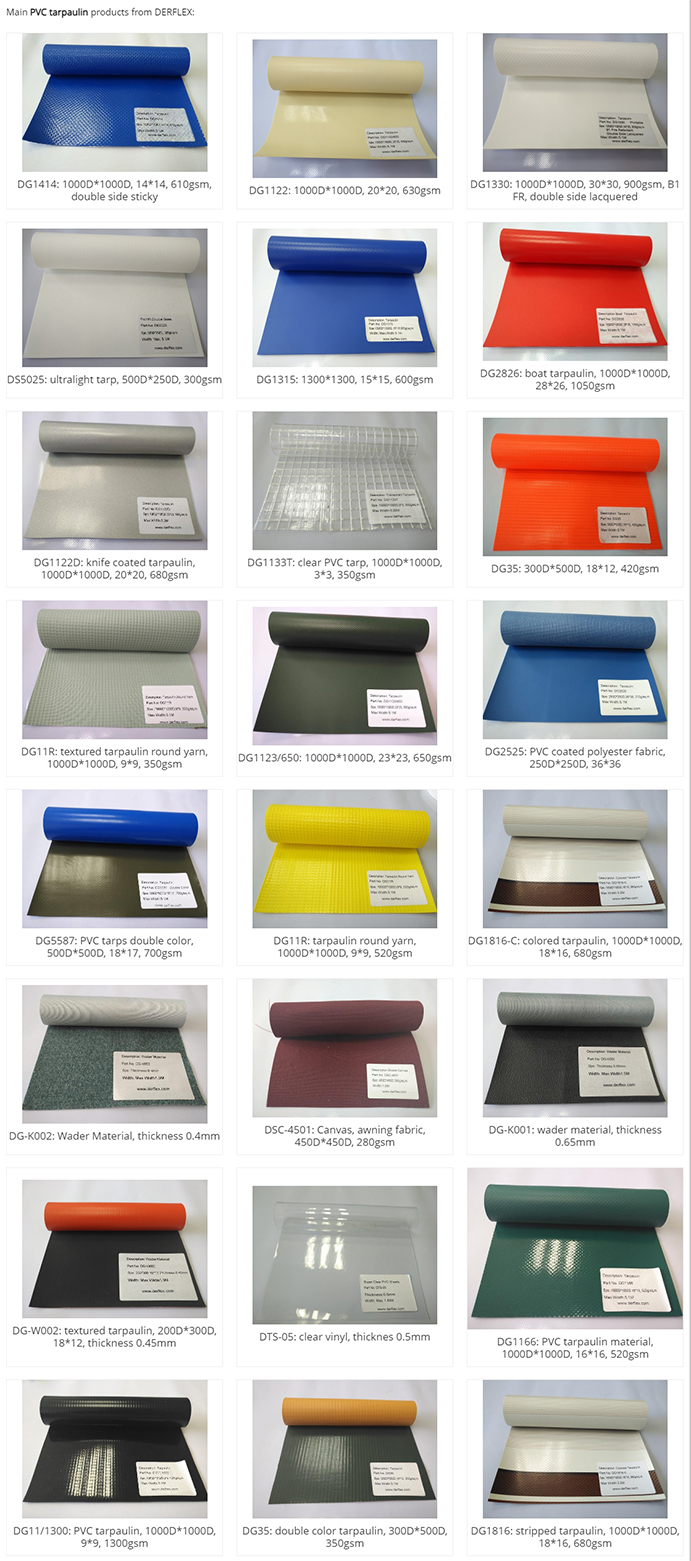
The polyester scrim carries tensile and tear loads, while the PVC layer creates the waterproof, weldable and cleanable surface. DERFLEX’s dedicated anti-mold PVC fabric direction adds mildew-resistant formulation options for wet and humid environments.
That matters because many field failures blamed on “mold” are actually mixed problems: trapped moisture, poor slope, surface contamination, weak seams, exposed yarns, rough cleaning or storing a cover before it is fully dry.
For buyers, the hidden advantage is therefore not only appearance. A better moisture-control system can support easier cleaning, more predictable reuse, fewer contaminated folds during storage and a more stable downstream product experience.
Lifecycle Value
Six Hidden Benefits Buyers Often Miss
Mildew resistance becomes more valuable when it is evaluated as part of product lifecycle, cleaning and repeat-use performance rather than as a single line on a datasheet.
01
Cleaner Appearance After Humid Cycles
A smooth coated surface with an application-matched mildew-resistant direction can make staining and surface contamination easier to manage, especially in shaded or damp storage zones.
02
Lower Odor & Contamination Risk
When surfaces are easier to wash and fully dry, buyers can reduce the conditions that allow musty odor and organic residue to remain trapped in folds, hems and stacked covers.
03
More Reliable Reuse & Storage
Reusable tarps often fail between jobs, not during the job. Cleaning, drying and mildew control help protect inventory that is folded, rolled and stored for the next season or shipment.
04
Better Maintenance Economics
Easy-clean PVC surfaces can reduce labor spent scrubbing absorbent material. For fleets or rental programs, maintenance time can matter as much as initial material cost.
05
More Consistent OEM Presentation
Distributors and private-label brands benefit when finished covers arrive and remain cleaner in storage. Surface condition influences perceived quality even when structural strength is unchanged.
06
Better Fit for Wet-Use Fabrication
PVC can be heat welded, allowing continuous waterproof seams and large fabricated panels. The benefit is strongest when weld design, reinforcement and drainage are planned together.
Root Cause
Why Mildew Can Appear on a Waterproof Tarp
Waterproof does not mean “mildew-proof.” Fungal growth is often supported by what is on the surface and how the finished cover is used, drained, cleaned and stored.
Persistent Moisture
Rain pooling, condensation, damp floors and wet folding create longer moisture contact than the intended use may suggest.
Organic Residue
Dust, soil, grain residue, leaves, marine deposits and oils can remain on a waterproof surface and provide a growth medium.
Low Air Movement
Tight folds, stacked covers and poorly ventilated enclosures slow drying and allow localized dampness to persist.
Edges & Damage
Cut edges, abrasion, punctures and failed seams can expose reinforcement or create pockets where water and contamination collect.
Material Comparison
PVC vs PE vs Canvas vs Mesh in Humid Environments
No single tarp material solves every moisture problem. Select the construction according to whether the priority is a waterproof barrier, breathability, temporary economy, airflow or repeated industrial use.
| Material Route | Moisture Behavior | Mildew / Cleaning Logic | Fabrication | Best-Fit Buyer Use | Main Caution |
|---|---|---|---|---|---|
| PVC coated polyester | Strong waterproof barrier; low face absorption | Easy-clean coated surface; anti-mildew formulation can be specified | Hot-air / HF welding where suitable, sewing, hems, hardware | Truck, marine, agriculture, industrial, tents, reusable covers | Must still manage condensation, pooling, dirt and wet storage |
| PE woven tarp | Waterproof film over woven substrate; lightweight | Surface can be cleaned; grade and coating durability vary widely | Heat sealing / sewing depending on construction | Temporary covers, seasonal use, cost-sensitive protection | Usually less suitable for high-abrasion, repeated long-term duty |
| Treated canvas | More breathable but may absorb moisture depending on treatment | Requires thorough drying and care; traditional mildew treatments may be used | Primarily sewing and fitted-cover fabrication | Applications where breathability is a priority | Absorbency and maintenance can be disadvantages in continuous wet service |
| PVC mesh | Open structure allows airflow; not a full rain barrier | Fast drainage and ventilation can reduce moisture trapping | Welding / sewing / reinforced edge fabrication | Shade, privacy, dump-truck mesh, ventilated screens | Not suitable where complete waterproof coverage is required |
For broader material construction and coating choices, review DERFLEX PVC fabric and PVC coated fabric technical pages.
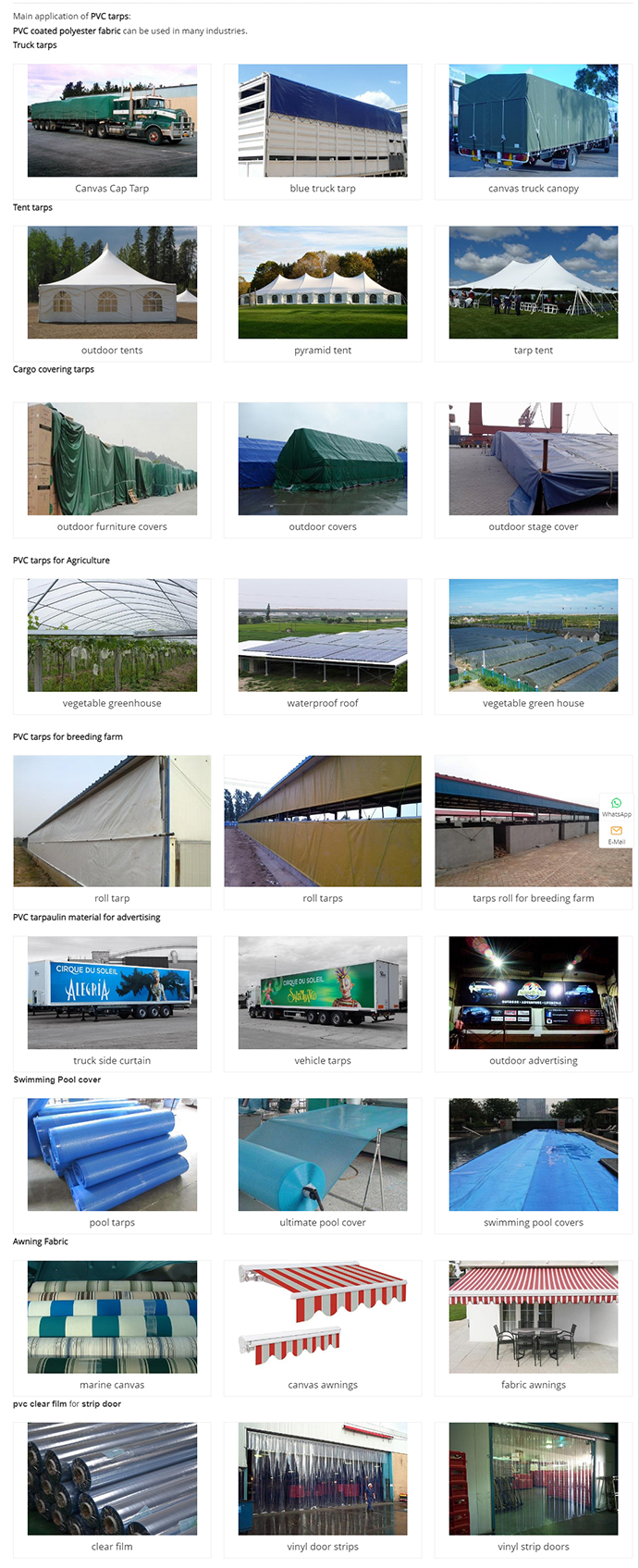
Application Decision Matrix
What to Prioritize by Use Environment
Start from the moisture route and handling cycle, then decide which material and fabrication features deserve priority.
| Application | Moisture Pattern | Specification Focus | Design / Maintenance Note |
|---|---|---|---|
| Marine & boat covers | Spray, high humidity, condensation, salt-air, shaded storage | Waterproof PVC, anti-mildew direction, UV resistance, easy-clean surface, strong tie-down reinforcement | Provide slope and ventilation; rinse residues and dry before storage. See boating tarps. |
| Agriculture & grain covers | Rain, soil, crop residue, seasonal humidity, ground moisture | Waterproofing, anti-mildew, UV, tear strength, reinforced edges | Do not trap wet crop material; keep cover off standing water and manage runoff. |
| Truck & industrial covers | Rain plus road dirt, repeated folding, abrasion and storage cycles | Strong scrim, coating adhesion, abrasion resistance, weldability, easy cleaning | High-wear zones and folded wet covers can become moisture traps. |
| Tents & awnings | Rain, condensation, shade, UV and long installed periods | Surface weathering, anti-mildew, seam quality, color stability, FR if required by project | Design roof pitch and water runoff; inspect shaded lower edges. See awning fabric. |
| Warehouse / equipment storage | Condensation, dusty surfaces, indoor-outdoor temperature cycles | Cleanability, waterproofing, puncture resistance and dimensional stability | Allow ventilation around equipment where condensation is expected. |
| Shade / ventilated screening | Humidity with airflow requirement | PVC mesh rather than solid barrier when full waterproofing is unnecessary | Airflow can be more important than a sealed waterproof surface. |
Specification Framework
Specify the Moisture System, Not Only “Anti-Mildew”
A stronger RFQ separates material structure, functional treatment, finished-cover design and maintenance conditions so suppliers can quote comparable solutions.
| RFQ Item | What to Define | Why It Matters |
|---|---|---|
| End use | Truck, agriculture, marine, industrial, tent, awning, storage, OEM cover | Determines the correct balance of weight, strength, surface and finishing. |
| Humidity / wetting | Rain, splash, condensation, continuous humidity, ground contact, wash-down | Defines the real moisture route rather than a generic “outdoor” label. |
| Surface contamination | Dirt, grain, plant residue, oil, salt, industrial deposits | Different residues change cleaning and mildew risk. |
| Material & strength | Target GSM, yarn/scrim direction, tensile / tear targets if required | Anti-mildew performance does not replace structural strength. |
| Surface system | Matte / gloss / lacquer, easy-clean requirement, anti-mildew direction | Surface finish affects cleaning, appearance and outdoor maintenance. |
| Fabrication | Hot-air / HF welding, sewing, hems, webbing, grommets, D-rings, pockets | Finished construction often controls leak paths and local water traps. |
| Testing | Required standard, edition, conditioning, specimen and acceptance criteria | A “mildew resistant” claim is more useful when test scope is defined. |
| Commercial details | Roll / panel / finished tarp, quantity, packing, destination, repeat-order plan | Lets the supplier align material and production route to the buying program. |
Engineering Notes
Five Details That Decide Whether “Mildew Resistant” Works in Real Use
These fabrication and use details often have more influence on field results than adding another marketing claim to the product name.
1. Slope & Drainage
A waterproof tarp that forms deep low points can hold water for days. Support geometry, tension and pitch should move water away instead of creating permanent ponds.
2. Seam Continuity
For waterproof covers, compatible welding can create more continuous seams than untreated stitching alone. Welding parameters and seam design should be confirmed during fabrication trials.
3. Hems, Pockets & Hardware
Reinforced edges are necessary for load, but multi-layer hems can also trap water and dirt. Drainage, stitch/weld layout and hardware placement should be considered together.
4. Edge Wicking
Waterproofing through the face is different from moisture migration through exposed textile reinforcement. Where cut edges remain wet, consider a low-wick / anti-wicking fabric direction or suitable edge sealing.
5. Cleaning Compatibility
Use cleaning products compatible with the approved coating and finish. Aggressive solvents, stiff abrasion or unsuitable chemicals can damage a surface that was otherwise performing correctly.
6. Dry Storage
The best anti-mildew formulation cannot compensate for folding a dirty cover while wet and leaving it in a warm, unventilated stack. Maintenance practice remains part of the system.
How to Verify a Mildew-Resistance Requirement
If mildew performance is important to a tender, OEM specification or regulated project, do not rely on “mold-proof” wording alone. Convert the requirement into a defined test and acceptance plan.
- Identify the required fungal-resistance standard, such as ASTM G21 or an agreed ISO 846 method, when appropriate for the project.
- Confirm the standard edition, specimen construction, conditioning and evaluation method.
- State the acceptance criterion on the purchase specification before mass production.
- Confirm whether the test applies to raw coated fabric, finished tarp material or a specific treated formulation.
- Keep field drainage, cleaning and storage requirements separate from laboratory fungal-resistance results.
Maintenance Protocol
Five Steps That Protect a PVC Tarp Between Uses
Maintenance is especially important for rental covers, agriculture programs, marine covers and seasonal inventory that is repeatedly folded and stored.
Remove debris
Brush away soil, leaves, grain residue and loose contamination before washing.
Wash gently
Use water and compatible mild detergent unless the approved material specification permits another cleaner.
Rinse seams & hems
Pay attention to folded edges, webbing zones and pockets where residue can remain.
Dry both sides
Do not roll or fold the tarp until the face, reverse side and edge details are dry.
Store ventilated
Keep rolls or folded covers off damp floors and away from leaks, contaminated goods and standing water.
Procurement Guide
What to Send in an RFQ — and What Not to Assume
A good RFQ helps DERFLEX distinguish a normal waterproof tarp from a project that needs a defined anti-mildew, low-wick, UV, FR or high-humidity material direction.
Buyer RFQ Checklist
- Application and whether the tarp is indoor, outdoor or mixed-use.
- Climate, humidity, rainfall, condensation and expected wetting cycle.
- Contact residues: soil, crops, salt, oils, industrial dust or cleaning chemicals.
- Finished dimensions or required roll width, plus target GSM / strength level.
- Color and surface finish requirements.
- Anti-mildew, UV, flame-retardant, cold-flex or low-wick requirements.
- Required test method and acceptance criterion, if applicable.
- Welding / sewing method, edge reinforcement and hardware layout.
- Quantity, supply format, packaging, destination and repeat-order needs.
Common Procurement Mistakes
- Buying by GSM alone: weight does not tell you coating quality, mildew direction, weldability or drainage design.
- Treating waterproof as mildew-proof: surface dirt and trapped condensation can still support growth.
- Ignoring finished seams: hems, pockets and sewing details can become moisture traps.
- Specifying “anti-mold” without a test: important projects need an agreed verification method.
- Storing covers wet: this can defeat the value of the material formulation.
- Using one grade for every application: marine, agriculture, truck and awning covers face different exposure patterns.
Match the Tarp to the Moisture Route
DERFLEX supplies PVC coated polyester fabrics and tarpaulin solutions for B2B buyers that need application-based specification rather than a single generic “mildew-resistant” grade.
Depending on the project, the discussion can include material weight, base fabric, coating structure, surface finish, anti-mildew direction, UV resistance, flame-retardant direction, cold flexibility, roll width, welding, hems, reinforcement and finished-cover details.
- Roll goods, cut panels and finished tarp supply directions
- Custom color, width, surface and OEM packaging discussion
- Fabrication planning for welding, hems, grommets and reinforcement
- Project-specific test requirements confirmed before production
Related DERFLEX Resources
Build the Specification from Material to Finished Cover
Use these verified internal resources to move from general PVC tarp selection to anti-mold formulation, coated-fabric construction and application-specific cover design.
PVC TarpaulinCore material and specification range for waterproof heavy-duty covers.
Anti-Mold PVC FabricMaterial-level mildew-resistant coating and customization direction.
PVC Coated FabricCoating construction, processes and technical textile background.
PVC FabricGeneral PVC coated / laminated material options for industrial conversion.
Boating TarpsMarine covers where humidity, salt-air and storage moisture are major concerns.
Awning FabricLong-term outdoor shade material with waterproof and anti-mildew options.
Low-Wick PVC Coated FabricTechnical guide to moisture migration through exposed textile reinforcement.
Buyer Questions
Anti-Mildew PVC Tarp FAQ
Direct answers to common questions from tarp importers, fabricators, distributors, marine suppliers and industrial procurement teams.
What does anti-rot mean on a PVC tarp?
In PVC tarp sourcing, “anti-rot” usually means the coated textile is selected to resist moisture-related biological deterioration and repeated wet exposure better than absorbent natural-fiber materials. It is not a universal test term and should not be treated as a guarantee against mold under every condition. Define the coating, anti-mildew requirement, moisture route and storage practice.
Can a waterproof PVC tarp still develop mildew?
Yes. Waterproofing prevents liquid water from passing through an intact coated surface, but mildew can grow on dirt, plant residue, oils or other contamination on top of the tarp. Condensation, standing water and folding the tarp while wet can also create favorable conditions.
Is anti-mildew treatment the same as waterproofing?
No. Waterproofing is mainly the barrier function of the PVC coating and properly fabricated seams. Anti-mildew treatment targets fungal-growth risk. Low-wick treatment targets capillary water movement through exposed reinforcement. These are related but different performance mechanisms.
Which applications benefit most from mildew-resistant tarps?
Marine covers, agricultural storage, humid warehouses, outdoor equipment covers, long-term tents and awnings, transport covers and reusable rental tarps can benefit when repeated humidity, surface contamination or wet storage is a realistic risk.
What test can be specified for fungal resistance?
ASTM G21 and methods within ISO 846 are examples used to evaluate fungal or microorganism effects on polymeric materials. Buyers should confirm the exact standard edition, specimen, conditioning, evaluation method and acceptance criterion with the supplier or laboratory before testing.
How should a mildew-resistant PVC tarp be cleaned and stored?
Remove organic residue, wash with a coating-compatible mild cleaner, rinse seams and hems, dry both sides completely, then roll or fold the tarp only when dry. Store it off damp floors in a clean, ventilated area away from leaks and contaminated goods.
What should I send DERFLEX for an anti-mildew PVC tarp quotation?
Send the application, climate and humidity, contact residues, finished size or roll width, target GSM or strength level, color, surface finish, anti-mildew / UV / FR / low-wick requirements, test standard if required, seam and reinforcement details, quantity, packaging and destination.
Is a gas-holder membrane the same specification as an anti-mildew tarp?
No. A gas-holder membrane may require defined gas permeability, chemical compatibility, membrane-layer function, pressure-related mechanical performance and controlled welding. Biogas membrane cost and gas holder membrane price should therefore be evaluated against a dedicated gas-storage specification, not an ordinary tarp grade.
Need a PVC Tarp for a Humid, Wet or Repeated-Storage Environment?
Send DERFLEX the application conditions first. The material direction can then be matched to the real moisture route, handling cycle, fabrication method and testing requirement.
Application & climate · Size / roll width · GSM / strength · Color / finish
Anti-mildew / UV / FR / low-wick need · Seams & hardware · Quantity · Destination