Antistatic surface or formulation
Selected according to target resistance, humidity conditions, durability expectations and the required test procedure.




DERFLEX develops PVC anti static tarpaulin as roll material, cut panels and finished fabricated products for projects where static charge accumulation must be controlled rather than ignored.
Surface-resistance targets, flame-retardant requirements, fabric strength, weld construction and grounding details are reviewed as one specification. This helps industrial buyers source a material that matches the actual environment instead of relying on a broad “antistatic” label.
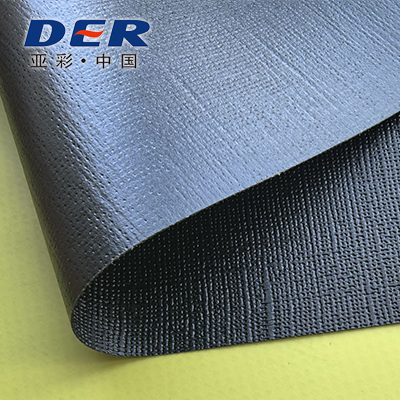
An anti static tarpaulin is a coated technical textile formulated or surface-treated to reduce the accumulation of electrostatic charge. It is used as a cover, curtain, partition, liner or duct body in locations where friction, airflow, dry conditions, powders, plastic surfaces or moving equipment can create static.
The words anti static tarpaulin do not describe one universal grade. A product intended to protect electronic equipment may require a different resistance range, cleanliness level and surface finish from a PVC anti static tarpaulin used for mine ventilation, powder processing or a chemical plant enclosure.
A useful specification therefore starts with the hazard and test requirement, then matches the coating, polyester reinforcement, seams, fastening points and installation method to that requirement.
Static-control performance is important, but industrial service life also depends on the fabric body and the way the finished tarp is fabricated and installed.
Selected according to target resistance, humidity conditions, durability expectations and the required test procedure.
Provides the waterproof barrier, surface finish, cleanability and weldable interface needed for many industrial applications.
Supports tensile stability, tear resistance and dimensional control during tensioning, folding, airflow or repeated handling.
Welded seams, doubled hems, webbing, patches and corner reinforcement help prevent early failure at stress concentrations.
Grounding tabs, conductive contact paths, fastener design and site procedures must be reviewed by the responsible project team.
The table below is a specification-building guide, not one fixed datasheet for every application. Final values should be stated on the approved sample, order specification and test documents.
| Product format | PVC anti static tarpaulin rolls, cut panels, welded curtains, equipment covers, liners, flexible duct bodies or custom finished tarps. |
|---|---|
| Base construction | High-tenacity woven or knitted polyester reinforcement with PVC coating on one or both sides; structure selected by load, flexibility and fabrication method. |
| Antistatic target | Project-defined. A common dissipative sourcing discussion may begin around 106–109 Ω/sq, but the applicable range, unit and test method must be confirmed for the intended market and use. |
| Fabric weight | Common project discussions may fall within approximately 500–1200 g/m²; lighter or heavier constructions can be evaluated according to ducting, curtain, cover or containment requirements. |
| Width and roll length | Custom production planning; widths up to approximately 3.2 m may be evaluated depending on construction. Roll length is matched to weight, processing and shipping requirements. |
| Color | Black, yellow, orange, gray, blue or custom color, subject to antistatic formulation, pigment compatibility, quantity and approved sample. |
| Mechanical properties | Tensile strength, tear strength, adhesion and weld performance are selected around installation load, airflow, handling frequency and required service conditions. |
| Optional performance | Flame-retardant, UV-resistant, cold-resistant, mildew-resistant, abrasion-resistant, oil-contact or easy-clean options may be discussed separately. |
| Fabrication | Hot-air or high-frequency welded seams, reinforced hems, webbing, eyelets, D-rings, zipper sections, grounding tabs, sleeves, pockets and printed identification. |
| Quality documents | Approved sample, production specification, dimensional inspection, selected mechanical tests and antistatic test report according to the agreed order plan. |
| Supply model | Anti static tarpaulin supplier programs for fabricators, distributors, mining and ventilation contractors, industrial users and private-label buyers. |
Do not use a resistance value from another project as an automatic acceptance standard. Measurement method, electrode, humidity, conditioning time and material face can affect reported results.
A qualified anti static tarpaulin manufacturer should not quote solely from size and GSM. The target static behavior must be connected to the application, environmental conditions, fabrication and required proof.
DERFLEX can review the request as a material-and-fabrication package so the approved sample and bulk production are evaluated against the same written criteria.
Identify dust, vapor, sensitive electronics, moving air, dry conditions, friction points and the consequences of a static event.
Provide the surface-resistance range, test method, conditioning, acceptance tolerance and whether both faces require verification.
Confirm flame-retardant, mechanical, waterproof, cold, UV, oil-contact, cleanability or color requirements as separate line items.
Review fabric weight, seam method, reinforcement, fastening, grounding provision, dimensions and a representative pre-production sample.
Agree inspection points, sampling frequency, report format, labeling, traceability and packaging before wholesale production.
The correct material depends on how the tarp moves, what it contacts, how it is cleaned and which safety system it becomes part of.
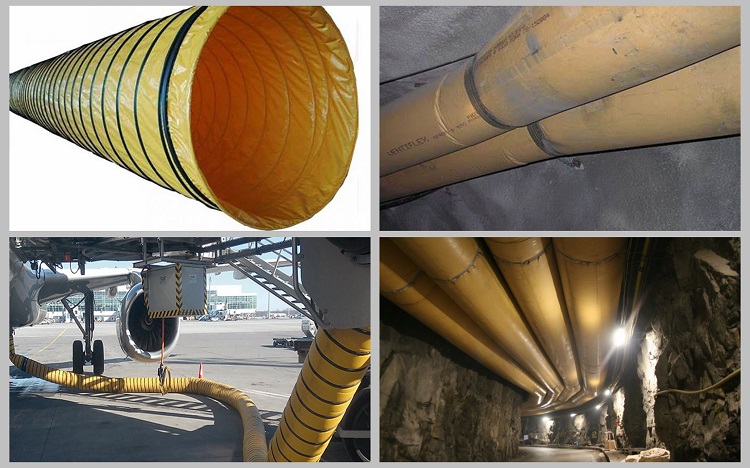
Duct bodies, sleeves and flexible sections where airflow, dust and local safety requirements must be reviewed together.
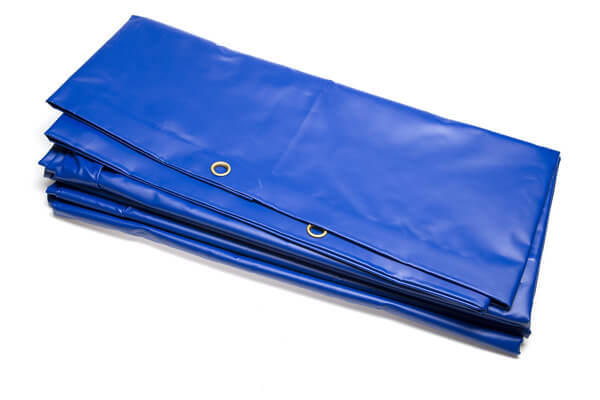
Reusable covers for machinery, controls, instruments and static-sensitive equipment during storage or maintenance.
Flexible curtains, covers and partitions for areas where moving powders and dry materials may contribute to electrostatic buildup. The site engineer should confirm grounding and area classification.
Temporary enclosures, equipment protection and partition systems where antistatic behavior may be combined with selected chemical-contact, flame-retardant or cleanability requirements.
Dust-reducing covers, transport protection and warehouse partitions for components or instruments that require an electrostatic-control plan beyond ordinary waterproof covering.
Covers and curtains can be evaluated for specified static-control and fluid-contact conditions. The actual fuel, oil, vapor exposure and cleaning method must be disclosed before selection.
A waterproof sheet may keep rain out while still allowing charge to accumulate. The two properties answer different procurement questions.
DERFLEX combines coated-fabric selection with downstream fabrication, allowing the material, seams and final installation details to be discussed in one sourcing process.
Resistance targets, application conditions and secondary performance requirements are clarified before a material is presented as suitable.
PVC formulation, polyester reinforcement, surface finish, color and welding behavior can be evaluated as one coated-fabric construction.
Supply can be planned for converters that need roll goods or buyers that need welded covers, curtains, panels, sleeves or custom assemblies.
Custom dimensions, identification marks, packaging, labels and private-label requirements can be incorporated into repeat supply programs.
A clear request reduces unsuitable sampling, shortens technical review and helps the supplier compare the same specification across pilot and bulk production.
These six related pages support material comparison, fabrication and application planning without splitting close search terms into duplicate pages.
Answers are written for industrial buyers comparing a custom anti static tarpaulin supplier, wholesale source or manufacturer.
An antistatic coating or formulation allows electrostatic charge to dissipate more readily than it would on an ordinary insulating tarp surface. The actual result depends on the material design, resistance range, humidity, test method, wear condition and connection to the wider grounding and bonding system.
There is no single correct value for every application. State the target range required by your project, the unit, test method, conditioning environment, electrode arrangement and which face must pass. A dissipative range around 106–109 Ω/sq may be a starting discussion for some uses, but it should not be copied into a purchase order without engineering confirmation.
Not automatically. Antistatic and flame-retardant performance are separate requirements. Tell DERFLEX the required flame test and market standard so a combined construction can be evaluated and documented.
Yes. Quotations can cover roll goods, cut panels or finished fabricated products with welded seams, reinforced hems, webbing, eyelets, D-rings, zipper sections, labels and project-specific grounding provisions.
DERFLEX can review wholesale, OEM and private-label programs. Provide the material specification, dimensions, annual volume, packing, label, logo, target market and required batch documents so production planning can be aligned with your sales program.
At minimum, confirm the agreed static-control test, dimensions, appearance and fabrication. Depending on the project, also review tensile, tear, adhesion, weld strength, flame behavior, waterproofing, chemical contact, cold flexibility, UV exposure or aging. The approved sample and written acceptance criteria should govern production.
Include the application, resistance target, test method, size, quantity, flame requirement and fabrication drawing. DERFLEX will review the material and finished construction before preparing a project-based quotation.