Surface Barrier
The coating or laminate is the first rain barrier. PVC-coated polyester and laminated polyethylene are common choices when water exclusion is a priority.



 Industrial tarp materials & custom cover solutions
Some tarps are designed to block rain; others are only water-resistant. The material matters, but so do the seams, hems, grommets, age of the coating, installation angle and whether water is allowed to pool.
For industrial buyers, the more useful question is not simply “is this tarp waterproof?” but “will the complete tarp system stay dry in my actual application?”
A tarp can start with waterproof sheet material and still let water reach the protected item if the finished cover has vulnerable seams, open fastening points or poor installation. For trucks, machinery, construction materials, farm storage and outdoor equipment, buyers should evaluate the entire cover assembly.
The coating or laminate is the first rain barrier. PVC-coated polyester and laminated polyethylene are common choices when water exclusion is a priority.
Large covers are assembled from panels. Hot-air or high-frequency welding can create a sealed seam in suitable PVC materials, while sewn seams may need additional sealing.
Reinforced hems, corner patches, flap design, grommet placement, tension and drainage all influence how well a tarp protects in real rain and wind.
If the cost of water damage is high, do not buy only by color, thickness or the word “waterproof.” Ask for the material construction, finished weight, coating or lamination method, seam method, edge reinforcement, expected outdoor exposure and a sample or production specification that matches your application.
Material choice determines the starting point. The table below separates true rain-barrier materials from breathable or open structures, then adds the procurement detail that is often missing from simple consumer guides.
| Tarp Material | Water Protection | Breathability | Typical Fit | What B2B Buyers Should Confirm |
|---|---|---|---|---|
| PVC coated polyester / vinyl tarp | Waterproof barrier | Low | Truck covers, equipment covers, industrial storage, construction covers, reusable outdoor tarps. | Base fabric strength, PVC coating weight, seam welding, UV package, cold flexibility, hem and grommet reinforcement. |
| PE / poly tarp | Waterproof sheet | Low | Temporary roof cover, construction protection, seasonal storage and cost-sensitive projects. | Film thickness, weave density, UV treatment, eyelet spacing and expected reuse cycles. |
| Treated canvas tarp | Water-resistant | Moderate | Lumber, equipment and storage applications where airflow or reduced condensation matters. | Water-repellent treatment, maintenance needs, saturation behavior and seam construction. |
| Mesh tarp | Not rain-sealing | High | Shade, debris containment, dump-truck covers, wind pass-through and ventilation. | Shade rate, mesh openness, tensile strength, edge reinforcement and wind load. |
In field use, water under a tarp does not always mean the coating failed. The source can be a construction detail, installation problem or trapped moisture. Separating these causes helps avoid ordering a heavier material when the real issue is elsewhere.
Needle holes or worn seam areas can admit water even when the surrounding fabric remains waterproof. For suitable PVC fabrics, welded seams can reduce this risk.
Fastener openings and stress points can become channels for water, especially if the tarp is pulled unevenly or reinforcement is insufficient.
Flat installation allows water to collect. Pooling adds weight, increases stress and can push water toward seams, folds and openings. A positive drainage angle is important.
Repeated contact with sharp edges, cargo corners or rough surfaces can thin or puncture the coating. Wear protection and corner reinforcement matter for reusable covers.
A waterproof tarp also restricts airflow. Warm, humid air can condense on the underside, making the cover appear to leak even when rain has not passed through the fabric.
Outdoor exposure can gradually change flexible materials. UV stabilization, climate matching and periodic inspection help maintain performance over the intended service period.
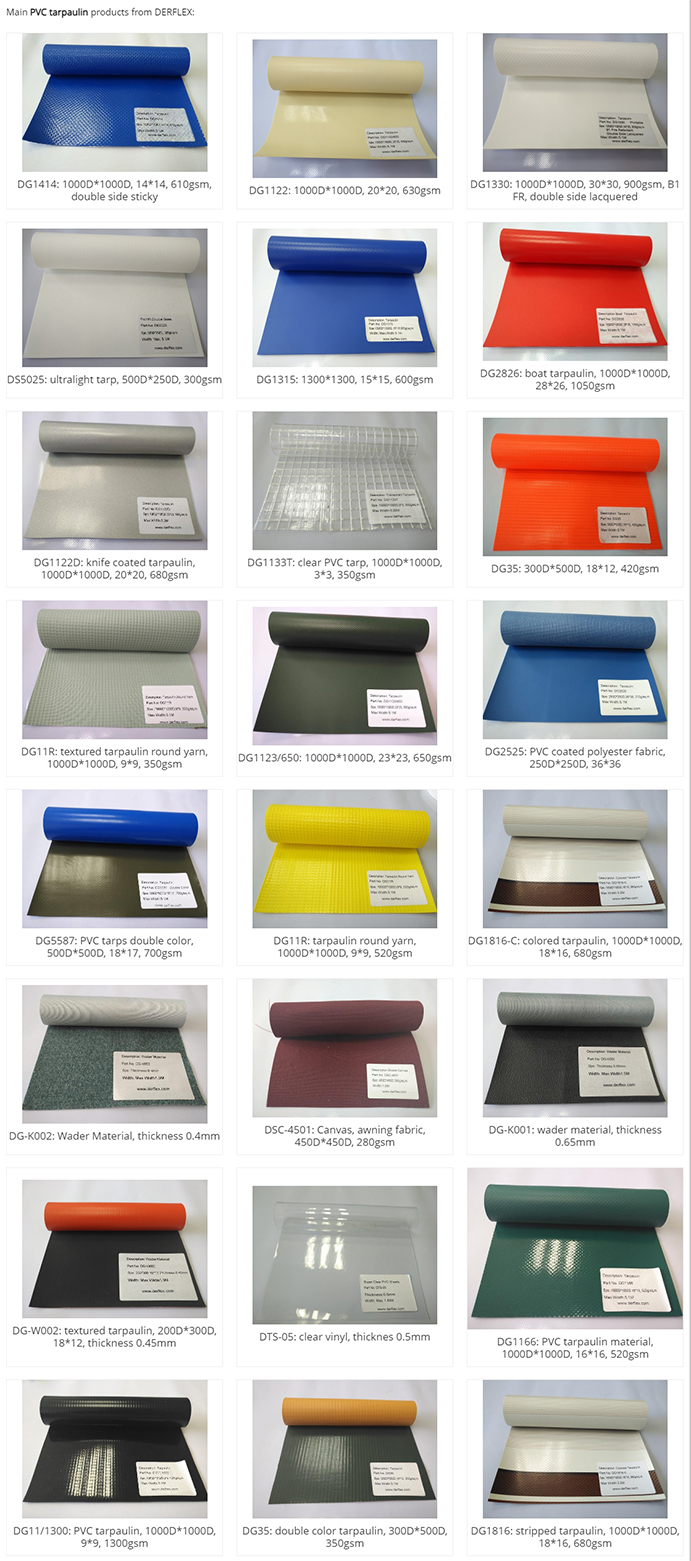
DERFLEX supplies PVC tarp material and finished-tarp solutions for transportation, agriculture, construction, outdoor storage and industrial cover applications. The polyester reinforcement provides mechanical strength, while the PVC coating creates the water barrier and gives the material heat-welding capability for fabricated covers.
Instead of treating every waterproof tarp as the same product, specification can be adjusted around service life, climate, handling frequency, reinforcement and finishing.
Final specifications should be confirmed against the project environment, required test methods and approved sample.
For commercial and industrial purchasing, the finished tarp should be specified as a protection system. These are the details that usually have a greater effect on field performance than a generic “heavy duty” label.
Confirm whether the tarp is PVC coated polyester, PE laminated woven fabric, treated canvas or another technical textile. Ask for finished weight, base fabric construction and coating or laminate structure.
If multiple panels are required, confirm welding or sewing method, overlap width and any seam-sealing treatment. A waterproof sheet can still fail at the joint.
Hems, webbing, rope, corner patches and grommet reinforcement distribute tie-down stress and help protect the waterproof surface from tearing around fasteners.
Sunlight, heat, cold, wind and chemical contact influence service conditions. UV, anti-mildew, lacquer or other finish options should be matched to the real environment rather than selected by name alone.
A temporary pile cover and a reusable fleet tarp should not be specified the same way. Start from the consequence of failure, exposure duration and handling frequency, then choose the material and finishing level.
Water protection requirements change by industry. The same fabric can need different reinforcement, fastening and seam design depending on how the cover is installed and moved.
Road speed, wind flutter, cargo edges, repeated folding and tie-down stress require waterproofing to be combined with tear and abrasion resistance.
Temporary roofs, material stacks and equipment covers need drainage planning, reliable anchoring and a material suited to the expected project duration.
Outdoor machinery protection benefits from shaped covers, reinforced corners and attention to ventilation where condensation could affect sensitive components.
Rain protection may need to be balanced with airflow, depending on whether the tarp covers fertilizer, machinery, feed, timber or other moisture-sensitive goods.
UV exposure, salt, mildew, wind and frequent handling can be as important as rain. Material finish and edge design should reflect the service environment.
Distributors and cover makers often need stable roll supply, repeatable color and weight, documented specifications, custom packing and finished-panel consistency.
DERFLEX supports industrial buyers, distributors, fabricators and OEM programs with PVC coated tarp material and custom finished-cover options. For teams comparing a waterproof tarp manufacturer, wholesale supplier or custom production partner, a useful RFQ can start with the application rather than a complete technical drawing.
Share what is being covered, indoor or outdoor use, exposure duration, climate, handling method and the main failure you want to prevent.
Depending on project needs, size, color, material weight, welded panels, hems, eyelets, reinforcement and branded packaging can be discussed.
Roll materials, semi-finished panels or finished tarps can be considered for distributors, tarp converters, contractors and private-label programs.
Some are. PVC/vinyl and polyethylene tarp constructions can create a waterproof barrier, while treated canvas is more commonly water-resistant and mesh is intentionally open. Finished-cover performance also depends on seams, grommets, wear and installation.
Polyethylene tarps are generally used as waterproof sheet covers. They are lightweight and useful for temporary or cost-sensitive protection, but outdoor life, abrasion resistance and repeat-use strength can differ substantially by grade.
PVC-coated polyester tarps are commonly selected when waterproofing, weldability and heavy-duty repeat use are required. For a finished tarp, buyers should also specify seam welding, edge reinforcement and fastening details.
Possible causes include condensation, leaking stitched seams, grommet openings, abrasion damage, water pooling or rain entering from an uncovered edge. Inspect the location and pattern of moisture before assuming the fabric coating has failed.
No. Thickness can improve durability in some constructions, but waterproof performance depends on the barrier layer and the complete cover design. A heavier tarp with poor seams or damaged fastening points can still leak.
PVC-coated polyester is often specified for reusable industrial covers because it combines waterproofing, mechanical strength and heat-welding capability. The appropriate weight, UV package, reinforcement and surface finish should still be matched to the application.
DERFLEX supports custom PVC tarp and tarpaulin programs with project-specific size, material weight, color, seams, hems, eyelets, reinforcement and OEM requirements. Final options depend on the application and confirmed specification.
Send DERFLEX the application, target size, quantity, outdoor exposure, fastening method and current problem. The team can discuss a practical PVC tarp material or finished-cover direction for quotation.