News
Industry News

Bimini Top Fabric | Marine Canopy & Boat Shade Material | DERFLEX

Update:2026/9/5 19:42:13 Views:
Marine Shade Fabric · OEM Roll Supply · Custom Fabrication Support

Bimini Top Fabric for Marine Canopies & Boat Shade Systems

DERFLEX supplies marine-grade coated fabric for Bimini tops, boat shade canopies, replacement canvas programs and OEM marine accessories where UV exposure, water protection, color stability, low stretch and fabrication performance must be balanced together.

Available as custom roll goods and project-defined marine fabric directions for distributors, cover makers, boat accessory brands, fabricators and OEM buyers.

Quick Answer

What is the best fabric direction for a Bimini top?

A good Bimini top fabric must provide strong UV protection and color stability while staying sufficiently light, dimensionally stable and easy to fold around a marine frame. Water protection matters, but so do ventilation, seam design and resistance to sagging. For coated PVC/polyester systems, the material can provide a strong water barrier and easy-clean surface; fabricators should then plan ventilation and condensation control into the finished canopy.

UV resistance + color stability
Low stretch + stable canopy tension
Water protection + seam planning
Foldability + abrasion resistance
Ventilation + mildew control
Product Definition

Bimini Top Fabric Is a Marine Shade Material, Not Simply a Boat Cover Tarp

A Bimini top is an open marine canopy stretched over a folding or fixed frame to provide shade above a cockpit, deck, helm or seating area. The fabric is exposed to continuous sunlight, wind movement, salt-air moisture, folding cycles and repeated tensioning.

That operating condition is different from a full storage cover. A storage tarp can prioritize maximum waterproofing and heavy-duty protection, while a Bimini canopy must also stay manageable on the frame, resist permanent sag, hold color in strong sunlight and fold cleanly when the top is collapsed.

DERFLEX therefore positions this page around Bimini-specific material selection rather than repeating the broader marine canvas fabric category.

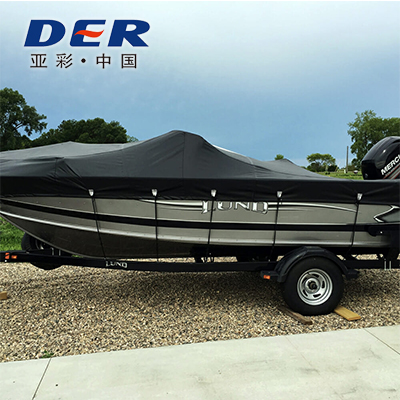
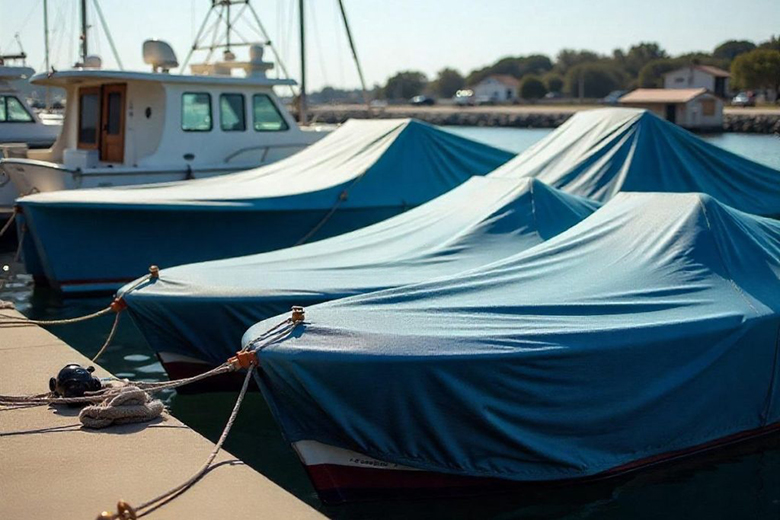
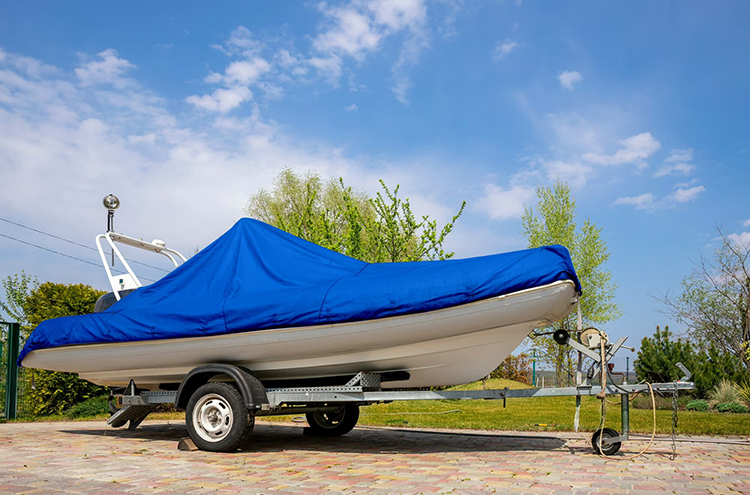
DERFLEX marine fabric used for boat cover and canopy-related applications
Marine fabric selection should consider shade, frame tension, folding, water exposure and long outdoor UV service together.
Material Selection Matrix

Compare Common Bimini Fabric Directions Before You Buy

No single material is ideal for every Bimini program. The correct choice depends on the level of water blocking, breathability, appearance, folding frequency, price position and fabrication method required by the finished product.

DERFLEX Core Direction

PVC-Coated Polyester

  • Strong water barrier and easy-clean surface
  • Good dimensional stability and reinforced textile strength
  • Can support sewing and suitable welding processes depending on grade
  • Custom color, width, finish and UV / anti-mildew directions
  • Ventilation should be considered in the finished canopy design
Industry Comparison

Solution-Dyed Polyester

  • Often selected where lighter handling is important
  • Can provide strong color stability when properly solution dyed
  • May use PU or other water-repellent coatings
  • Common in replacement Bimini and recreational canopy programs
  • Final performance depends on coating, yarn density and UV package
Industry Comparison

Solution-Dyed Acrylic

  • Popular in premium marine shade and sewn canvas fabrication
  • Strong color retention and UV performance are common priorities
  • Typically more breathable than fully coated waterproof composites
  • Water repellency and maintenance depend on the exact fabric system
  • Usually sewn rather than heat welded like PVC-coated textiles
DERFLEX's direct manufacturing focus on this page is coated polyester marine shade material. Acrylic and solution-dyed polyester are included as buyer comparison directions so procurement teams can decide which performance trade-offs matter before asking for a sample.
Performance Priorities

Six Properties That Matter More Than “Waterproof” Alone

Bimini top fabric works under sun, tension and repeated folding. Procurement should evaluate the material as part of a complete canopy system.

01

UV & Color Stability

Continuous sunlight can cause fading, surface aging and polymer embrittlement. High-sun markets should specify an appropriate UV-resistant formulation and colorfastness target.

02

Low Stretch & Shape Retention

Excess stretch can produce a loose canopy, flutter, water collection and poor appearance. The base fabric, coating and cut pattern should work together to maintain tension.

03

Water Protection

Coated fabric can create a strong barrier against rain and spray, but seam construction, needle holes, edge details and canopy slope still affect finished water performance.

04

Foldability

Bimini tops are frequently collapsed into a boot. The fabric should remain flexible enough for folding without creating avoidable coating damage or bulky storage.

05

Mildew & Humidity Control

Marine humidity and condensation make anti-mildew direction and good ventilation important, especially when a coated canopy is packed or stored before it is fully dry.

06

Abrasion at Frame Contact Points

Bow pockets, zipper areas, corners and frame-contact zones can wear faster than open panel areas. Reinforcement and compatible binding should be planned before production.

Quick Specification Overview

Bimini Top Fabric Specification Checklist

Use this table as an RFQ framework. Final values should be confirmed by approved sample, canopy geometry, fabrication route and target market.

Specification Item DERFLEX Direction Why It Matters for a Bimini Top
Material Structure PVC-coated polyester marine fabric / custom coated textile direction Provides reinforced textile strength with a weather-resistant coated surface.
Fabric Weight Project-defined; lighter-to-medium marine grades are generally more practical for folding shade structures Too heavy can make folding and frame handling difficult; too light can reduce stability and durability.
Roll Width Custom width according to material structure; related DERFLEX marine canvas grades are available in multiple widths up to 3.2 m Wider rolls can reduce seam count and improve cutting efficiency for canopy panels.
Surface Finish Matte, semi-matte, glossy or embossed directions Surface affects cleanability, appearance, glare and downstream brand positioning.
Color Navy, blue, grey, white, black, green and project-defined custom colors Color choice affects styling, heat perception and long-term appearance.
Functional Options UV-resistant, anti-aging, anti-mildew, cold-resistant and other project-defined treatments Choose according to climate, storage, exposure level and local compliance requirements.
Fabrication Sewing, cutting, binding, reinforcement and suitable welding direction depending on selected grade Fabrication compatibility must be confirmed before mass cutting.
Supply Format Roll goods, cut panels or project-defined fabricated components Supports marine cover makers, distributors and OEM Bimini programs with different in-house capabilities.
Packaging Export roll packing, tube/core, pallet, label and private-label directions Packaging should protect the roll surface and edges during long-distance shipping.
For broader coated marine fabric specifications, see DERFLEX marine tarpaulin roll material. Bimini programs should normally select from that broader capability around lower handling weight, higher UV priority and repeated folding.
Application Decision Table

Match the Fabric to the Boat and Canopy Use

Frame geometry and operating environment influence material requirements more than a single GSM number.

Bimini Application Material Priorities Fabrication Priorities Buyer Questions
Runabout / Bowrider UV stability, manageable weight, clean appearance, foldability Bow pockets, zippers, edge binding, storage boot compatibility How often is the top folded? Is it used at speed or mainly at anchor?
Pontoon Boat Large-span dimensional stability, low sag, sun blocking, color consistency Long seams, frame tension and reinforced perimeter zones What is the span? Are replacement tops sold in standardized frame sizes?
Fishing / Center Console UV, spray resistance, easy cleaning, abrasion resistance High-contact zones around support points and frequent movement Will the canopy face salt spray, bait/fish residue or frequent wash-down?
Yacht Cockpit Shade Appearance, color stability, controlled stretch, premium surface finish Accurate patterning, low-distortion seams, clean edge detailing Is the priority premium appearance, maximum water blocking or breathability?
Tropical / High-UV Market Enhanced UV / anti-aging direction, mildew control, lighter color consideration Ventilation, drainage and dry-storage procedure How many hours of direct sun and what humidity level are expected?
Buyers sourcing heavy full-boat protection rather than a shade canopy should compare the separate boat cover tarp page, because storage-cover engineering priorities are different.
Fabrication Engineering

A Good Bimini Fabric Can Still Fail If the Canopy Is Built Incorrectly

Material specification and cover engineering should be approved together. The points below are especially important for OEM and replacement-top programs.

1. Control Panel Tension

Cut pattern and frame geometry should keep the canopy smooth without overstretching it. Uneven tension can create flutter, premature seam stress or sagging.

2. Reinforce Bow & Zipper Zones

Bow pockets, zipper strips and perimeter binding carry repeated folding and contact loads. Reinforcement should be designed before production, not added after damage appears.

3. Plan Seams for Water Runoff

Even when the base material blocks water, stitched seams and canopy geometry influence leakage. Orient seams and slope so water drains away rather than sitting on the panel.

4. Provide Ventilation Where Needed

Fully coated textiles can block liquid water but also reduce vapor movement. Boat and canopy design should avoid trapping humid air for long periods.

5. Test Folding Before Bulk Production

Prototype the complete top, fold it into the intended storage boot and confirm the material does not create excessive bulk, hard creases or abrasion against hardware.

6. Match Hardware Contact Surfaces

Sharp frame edges, rough zipper components and exposed fasteners can damage coated surfaces. Hardware and textile design should be reviewed as one system.

Custom Manufacturing

OEM Options for Bimini Top & Marine Shade Programs

DERFLEX can discuss custom material and supply configurations around the finished product, target market and fabrication method.

Color & Finish

Navy, blue, grey, black, white, green and custom color directions with matte, semi-matte, glossy or embossed surfaces.

UV / Anti-Mildew

Project-defined anti-aging and anti-mildew directions for high-sun, coastal and humid marine markets.

Roll Width & Length

Roll dimensions can be discussed around cutting yield, canopy panel size, freight efficiency and downstream production layout.

Fabrication Support

Material selection can be coordinated with sewing, cutting, binding, edge reinforcement and suitable welding routes.

Private Label

Roll labels, packaging, color identification and other OEM presentation details can be discussed for distributor and brand programs.

Sample Approval

Buyers should test the selected grade in the actual frame, seam and folding system before confirming bulk production.

Related Marine Covers

Programs can be coordinated with other marine-cover materials, including yacht cover and general marine tarp directions.

Export Packing

Roll protection, hard core, pallet and packaging direction can be matched to long-distance export handling.

Image Pack

DERFLEX Marine Fabric Images for Material & Application Context

These are existing DERFLEX website images. Replace the hero with a dedicated Bimini-top application photo later if a higher-quality original image becomes available.

Common Procurement Mistakes

Five Mistakes That Create Problems After the Fabric Reaches the Factory

Most avoidable Bimini failures begin with incomplete specifications or an RFQ based only on price and GSM.

Mistake 1: Selecting only by GSM

Two fabrics with similar weight can behave differently in stretch, coating adhesion, foldability, surface feel and color stability.

Mistake 2: Treating “waterproof” as the only requirement

Bimini tops also need UV durability, good tension, foldability, seam planning, ventilation and compatible hardware contact zones.

Mistake 3: Ignoring the frame

Canopy width, bow count, span, support spacing and storage configuration influence the material and reinforcement design.

Mistake 4: Skipping prototype folding tests

A fabric may look good flat but become too bulky, crease-prone or difficult to store when folded around the real frame.

Mistake 5: Using full-cover logic for a shade canopy

Heavy storage-cover grades can be unnecessarily difficult to fold and may not provide the appearance or handling buyers expect from Bimini tops.

Mistake 6: Ordering color without approval control

Marine brands should approve color, finish and sample appearance under realistic daylight before bulk production.

Buyer Checklist

What Information Is Needed for a Bimini Fabric Quote?

  • Boat type and Bimini frame style
  • Finished canopy dimensions or roll material requirement
  • Preferred material direction and target hand feel
  • Required weight / thickness if already specified
  • Color, surface finish and branding requirement
  • UV, anti-mildew, cold or other functional requirement
  • Sewing / welding / binding / zipper fabrication route
  • Required roll width and roll length
  • Order quantity and expected repeat-order program
  • Destination country and any required testing documentation
Procurement Guidance

Do not lock the specification before testing the complete canopy.

DERFLEX recommends approving the fabric together with the intended seam, reinforcement, zipper, frame contact and storage method. A small material swatch confirms appearance, but a prototype canopy reveals tension, foldability, seam behavior and actual water-management performance.

Buyers comparing broader marine-cover materials can also review boating tarps and marine cover programs before finalizing the Bimini-specific specification.

Why Work With DERFLEX

Built for B2B Material Selection, Not a Single Retail Replacement Top

DERFLEX supports buyers who need repeatable roll supply, custom specification control and coordination with downstream fabrication.

Coated Fabric Manufacturing Focus

DERFLEX works with PVC-coated polyester and related technical textiles used across marine covers, outdoor protection and fabricated industrial products.

Application-Based Specification

The material can be discussed around frame geometry, climate, UV exposure, folding cycle, water protection and fabrication method rather than a generic stock-sheet description.

OEM Roll Supply

Color, width, surface finish, packaging and repeat-order consistency can be planned for distributors, marine accessory brands and cover manufacturers.

R, elated Marine Material Cluster

Bimini programs can be coordinated with yacht cover tarp materials and other boat-protection products when a buyer needs a wider marine assortment.

UV-Focused Options

For high-sun markets, buyers can compare the separate UV-resistant PVC tarpaulin material direction and specify the UV exposure expected in the Bimini program.

Marine Product Experience

DERFLEX also supplies related marine fabric applications including PVC fabric for inflatable boats, helping marine buyers consolidate technical textile sourcing where appropriate.

Related Questions

Bimini Top Fabric FAQ

Direct answers to common questions from marine fabricators, distributors, OEM brands and purchasing teams.

What fabric is used for Bimini tops?

Bimini tops commonly use marine-grade solution-dyed acrylic, solution-dyed polyester or coated polyester/vinyl composite fabrics. The best direction depends on UV exposure, water protection, breathability, foldability, appearance, price position and the fabrication method used by the cover maker.

Is PVC-coated polyester suitable for a Bimini top?

Yes, PVC-coated polyester can be suitable when the program needs a strong water barrier, easy-clean surface, dimensional stability and custom coated-fabric production. Because fully coated materials are less breathable than open woven marine canvas, the finished canopy should include appropriate ventilation and should not be stored wet for long periods.

Should Bimini top fabric be waterproof or breathable?

It depends on how the boat is used. A stronger water barrier can be useful for rain and spray, while breathable fabrics can help moisture escape. For coated waterproof fabrics, fabricators can manage the trade-off with canopy slope, vents, open sides and good storage practice.

What makes Bimini fabric different from a full boat cover?

Bimini fabric must remain stretched across a frame, resist flutter and UV exposure, fold into a storage boot and maintain a clean appearance. Full boat covers can prioritize heavier waterproof protection, reinforcement and storage durability over frequent folding and shade-system handling.

How do I prevent a Bimini canopy from sagging?

Use a dimensionally stable fabric, accurate cut pattern and correct frame tension. The canopy should have enough flexibility to fit the frame but not so much stretch that it forms low spots. Low spots can collect water, increase flutter and load the seams.

What color is best for a Bimini top?

There is no single best color. Lighter colors can reduce heat absorption and create a brighter cockpit, while navy, black and darker colors remain popular for marine styling. Buyers should also consider colorfastness, stain visibility, branding and the target market's aesthetic preferences.

Can DERFLEX supply Bimini fabric by the roll?

DERFLEX can discuss custom roll goods for marine cover makers, distributors and OEM programs, including color, width, surface finish, functional treatments, packaging and project-defined fabrication requirements.

What should I send DERFLEX for a quotation?

Send the boat or canopy application, target material direction, finished dimensions or roll width, color, weight or thickness if specified, UV or anti-mildew requirement, fabrication method, order quantity, destination market and any testing or packaging requirements.

Source Bimini Top Fabric for Your Marine Program

Send DERFLEX your canopy size, frame type, preferred material direction, color, roll width, UV / anti-mildew requirement, fabrication method and order quantity. The team can review a practical coated marine fabric direction for sampling and quotation.

  • Marine canopy and Bimini top roll material
  • Custom colors, widths and surface finishes
  • UV, anti-aging and anti-mildew directions
  • Sewing / reinforcement / welding compatibility review
  • OEM packaging and repeat-order support
Consulting Services
+86-021-54361792 / 54361798
Email
sales@derflex.com