



Technical guide · Finished tarp validation
Heavy Duty Tarp Deployment Cycle Test
Evaluate tarp deployment cycles on the exact cover and mechanism your fleet will use. A meaningful roll tarp wear test connects opening and closing effort, completed cycles, friction points, repairs and operational availability to one traceable configuration. Use this guide to prepare a repeatable test brief for a replacement cover or OEM program, then send DERFLEX your daily opening frequency, mechanism details and site wear photos to discuss the fabric and finished-cover specification.
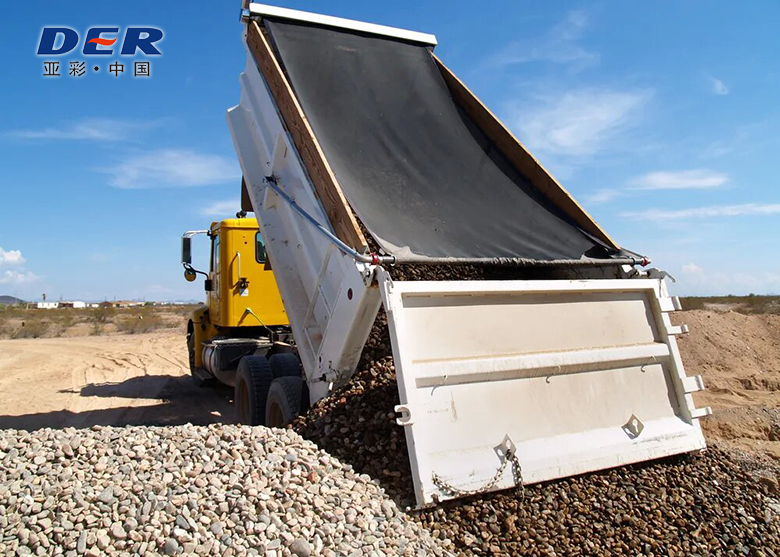
What the test tells you
What is a tarp deployment cycle test?
A tarp deployment cycle test repeatedly opens and closes a finished tarp on a defined mechanism while recording operating effort, completed motion, wear and interventions. Its result applies to the tested cover specification, hardware, settings and conditions. Report the observed cycle count together with repairs and the final functional condition; that count alone does not establish a service-life rating.
For a roll tarp, choose explicit start and finish positions. One full cycle can be defined as fully covered → fully open → fully covered, including tensioning or latching when these actions are part of normal service. Keep the definition unchanged throughout the test.
A coupon abrasion test answers a different question about surface wear under controlled rubbing. Use the tarpaulin abrasion resistance test guide for material screening, then assess the finished cover on its operating system.
01 / Freeze the configuration
Connect every result to one cover and one mechanism
Create a configuration record before cycling. A replacement fabric, revised pocket, different bow spacing or changed drive setting can alter the result and must remain visible in the record.
On smaller screens, scroll the table horizontally to view every field.
| Record group | Identify and measure | Keep with the report |
|---|---|---|
| Finished cover | Cover ID, drawing revision, finished length and width in mm, pocket geometry, seam positions and attachment layout. | Dimensioned drawing and photographs of the installed cover at both travel endpoints. |
| Fabric and fabrication | Material code and lot, construction, measured mass in g/m² and thickness in mm, seam design, reinforcement positions and fabrication revision. | Actual specification sheet and batch or sample traceability. Do not substitute a generic catalogue range. |
| Mechanism | Manufacturer, model or uniquely identified rig, hardware revision, roller outside diameter in mm, travel in mm, bow or rail positions and clearances. | Hardware drawing, contact-point photos and the applicable operating instructions. |
| Drive and settings | Manual crank or powered drive; handle radius, spring or tension settings, control limits, speed and supply conditions where applicable. | Recorded settings, instrument IDs and measurement locations. |
| Exposure and sample count | Temperature in °C, dry/wet state, dust or debris, load profile, cycle timing and dwell; number of independent covers tested. | Condition log, test schedule, inspection intervals and predefined stop criteria. |
02 / A repeatable operating sequence
Measure effort through the full opening and closing path
-
Establish the baseline
Inspect the cover, pockets, seams, fixings and hardware. Mark wear zones and photograph them with a scale. Record any bedding-in cycles separately and state whether they count toward the reported total. Take baseline measurements after the agreed setup procedure.
-
Record opening and closing separately
For a manual system, measure tangential handle force in N at a fixed radius and direction, using a suitable instrument. Record peak effort, the agreed travel checkpoints and cycle time in s for each direction. Handle torque is force × perpendicular lever arm in m; keep the geometry traceable.
For a powered system, record travel time, supply voltage, current profile and control events as relevant. Electrical current is a drive diagnostic, not a direct force measurement without a validated relationship.
-
Run defined blocks and inspect
Use the agreed speed, dwell, tension and environmental conditions. Count completed cycles and aborted attempts separately. At each inspection, repeat the same force measurements, capture the same wear zones and check tracking, coverage, seams, pockets and attachments.
-
Log every intervention and the final state
Record the cycle count and time at each stop, its cause, the repair or adjustment and the restart check. Photograph the affected area before and after intervention. End with the achieved count, final function, unresolved damage and reason for stopping.
This is a project-specific assessment framework. It does not assign a universal test speed, cycle target or pass threshold, and it does not claim compliance with a named system test standard.
03 / Follow the contact path
Map friction before changing the fabric
Give each recurring contact location a stable zone ID. Pair a fixed overview photo with a close-up at every inspection, keeping orientation, scale and lighting as consistent as practical.
Scroll horizontally on smaller screens.
| Wear zone | Record what changes | Investigate before revising the cover |
|---|---|---|
| W1 · Roller and pocket | Polishing, local crease, coating loss, pocket opening damage, skewed roll build-up. | Tube surface, bar ends, pocket fit, trapped grit and local thickness at seam overlaps. |
| W2 · Bows, rails and guides | A repeated rub line, exposed yarns, thinning or drag at the same travel position. | Alignment, clearance, roughness, sharp transitions and contact pressure. |
| W3 · Weld and reinforcement transitions | Lifted edges, cracks, separation or a repeatable force peak as a joint passes a contact. | Seam location, stiffness transitions, roll build-up and interaction with hardware. |
| W4 · Fixed edge and attachments | Hole elongation, edge distortion, loose fixing, webbing damage or loss of coverage. | Load distribution, restraint layout, tension settings and interference through the travel path. |
Once the contact path is confirmed, use the wear-patch placement guide to discuss targeted reinforcement. Recheck rolling clearance and effort after adding local layers.
04 / Build an auditable record
Keep cycles, effort and repairs on the same timeline
A useful log shows the condition of the assembly at each count. Keep the original observations, instrument files and photo IDs so a reviewer can follow the sequence through every interruption.
At each inspection checkpoint
- Date and time, specimen ID, configuration revision and operator.
- Completed cycles, aborted attempts and the count at the first observed change.
- Opening and closing effort in N or measured torque in N·m, with measurement position and geometry.
- Opening and closing time in s, environment and powered-drive diagnostics where relevant.
- Wear-zone condition, photo IDs, seam and attachment status, tracking and coverage.
- Stop reason, intervention ID, attributable downtime and the decision to continue, pause or stop.
Record what failed, where it failed and when it was detected. Describe the patch, pocket replacement, hardware adjustment or other intervention, including materials and drawing changes where relevant.
Keep the cumulative cycle counter intact. Add “cycles since intervention” as a separate field. If the cover is replaced, assign a new specimen ID. If the design changes, record a new configuration revision and analyse the segments separately.
A repaired specimen's later performance describes that repaired assembly. It must not be presented as uninterrupted performance of the original cover.
05 / Interpret function and availability
Decide against criteria agreed before testing
Assess whether the cover still travels, covers and secures as required. A rising force trace, repeated jam or repair can matter even when the fabric has not worn through.
Define functional acceptance
Set limits for opening and closing effort, travel completion, coverage, securing, pocket integrity, seam condition and attachments. Identify which cosmetic changes are acceptable and which damage requires a stop. Set limits from the application and mechanism requirements, not from a generic tarp weight.
Pause for unexpected force spikes, recurring binding, exposed reinforcement, seam opening or damage that affects secure operation. Inspect the complete assembly before assigning the cause to the fabric.
Define availability consistently
For a field trial, define the scheduled service window and cover-related downtime in advance. A practical measure is: availability (%) = (scheduled service time − attributable downtime) ÷ scheduled service time × 100, using the same time units and a positive service window.
Include repair and return-to-service checks in the applicable downtime category. State how planned inspections, external delays and spare-cover changes are handled. A bench cycle count alone cannot establish field availability.
What a completed test supports
State how many independent covers were assessed, the actual counts achieved, the interruptions and the final condition under the recorded setup. If cycling stopped at the planned endpoint without failure, describe it as an observed run to that endpoint.
What needs further evidence
Calendar life, fleet-wide reliability and performance on another mechanism require relevant additional evidence. Daily usage estimates help plan an evaluation; dividing test cycles by cycles per day does not validate a service-life or warranty claim.
For fleet procurement context, see the dump truck tarp buyer's guide. Keep material comparison, system function and field performance as separate evidence streams.
Start with the wear you can see
Tell us how often the tarp opens each day, where the current cover rubs and how a repair interrupts service. These details make a replacement-cover discussion more useful than a fabric-weight request alone.
From evidence to a cover specification
Discuss fabric, pockets and reinforcement together
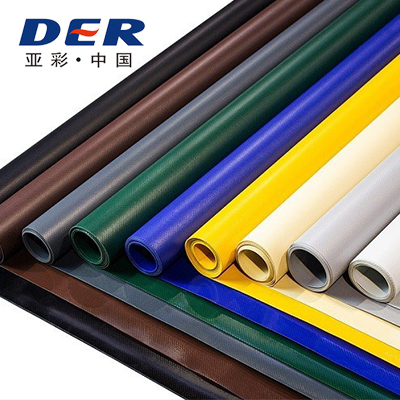
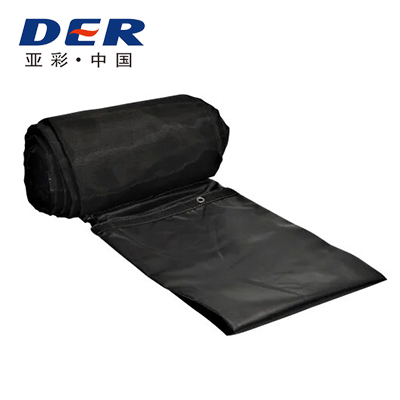
DERFLEX supplies PVC-coated fabrics and custom tarp covers for transport and industrial applications. For an OEM or replacement program, connect the requested cover construction to your measured travel path, fit requirements and acceptance record.
Define whether you need roll goods, cut panels or a finished replacement cover. Include seam locations, pocket dimensions, reinforced contact zones and the required attachment layout. For container-hauling applications, the roll-off tarp replacement guide helps frame the system and cover interfaces.
Cover supply, drive hardware, installation and cycle-test execution need explicit scopes. Do not assume that a fabric or replacement-cover quotation includes a complete operating mechanism or an independently witnessed test. Agree the sample and validation requirements before confirming a production specification.
06 / Before you order
Send a focused brief for your operating cycle
- Daily duty: typical and peak complete cycles per day, operating days, dwell periods and seasonal changes.
- Mechanism: manufacturer/model or rig ID, manual or powered drive, roller and pocket measurements, travel path and settings.
- Finished cover: drawing or measured sample, finished dimensions, seam and attachment layout, material records if available.
- Site evidence: overview photos, marked friction points, close-ups with a scale and photos before and after repair.
- Acceptance: required operating effort, coverage and securing criteria, intended cycle plan and the permitted repair policy.
- Commercial scope: sample or production quantity, required documents, destination and supply form. Confirm quotation, MOQ and lead time for the agreed specification.
If a drawing is unavailable, begin with the installed cover's open and closed views, daily opening frequency and the worn sample or clear photographs. Keep dirt, cargo contact, weather exposure and maintenance changes in the history.
Practical questions
Deployment cycle test FAQ
What counts as one complete tarp deployment cycle?
Define it before testing. For a roll tarp, a useful definition is fully covered to fully open and back to fully covered, including normal securing actions when these are in scope. Count partial movements and aborted attempts separately. Motor revolutions and control-switch operations are not automatically complete tarp cycles.
Can an abrasion test replace a roll tarp wear test?
An abrasion test can compare material surfaces under its specified rubbing conditions. It does not reproduce every pocket, welded joint, attachment, alignment setting or drive action in a finished system. Use material tests and the deployment-cycle assessment for their respective questions.
Why can opening effort increase before the cover wears through?
Possible causes include misalignment, grit, pocket distortion, local thickness build-up, altered tension or damaged hardware. A force peak at a repeatable travel position helps locate the issue. Inspect the complete system and compare the same direction, handle geometry and conditions with the baseline.
Can a repaired tarp continue in the same test?
It can if the agreed protocol permits continued assessment and the assembly is cleared to resume. Record the intervention, keep the cumulative count, add cycles since repair and identify any changed configuration. Report performance before and after repair separately; do not describe the whole run as repair-free.
How many tarp deployment cycles prove a service life?
No universal count proves a service life. A result depends on the actual cover, mechanism, environment, duty cycle, maintenance and endpoint. A completed test supports a statement about the observed run under those conditions. Service-life or warranty claims need evidence appropriate to the intended field use.
What should I send DERFLEX for a replacement-cover discussion?
Send your daily opening frequency, cover dimensions or drawing, mechanism identity, roller and pocket measurements, quantity and destination. Add overview photos, close-ups of the friction points and a short repair history. State whether you want fabric, cut panels or a finished cover.
Build the next cover around your duty cycle
Send your daily opening frequency and wear photos
Describe the mechanism, where the current tarp rubs and what interrupts service. Discuss a material or finished-cover specification that can be checked against your actual operating requirements.
A useful first message
Application + daily cycles + mechanism + cover size + wear photos + quantity.
Email: sales@derflex.com
Fabric and finished-cover enquiries · OEM and replacement programs