



Reusable Construction Tarps: Cost per Use
A reusable construction tarp earns its value when it returns from the jobsite fit for another assignment. Calculate tarp lifecycle cost using purchase, crew handling, cleaning, repairs, storage and retirement—not purchase price alone. For contractors and project suppliers, DERFLEX offers PVC tarpaulin materials and custom finished covers; the right specification starts with your work conditions and recovery process.
Procurement guide with an explicitly illustrative cost model. No customer savings or validated reuse life is claimed.
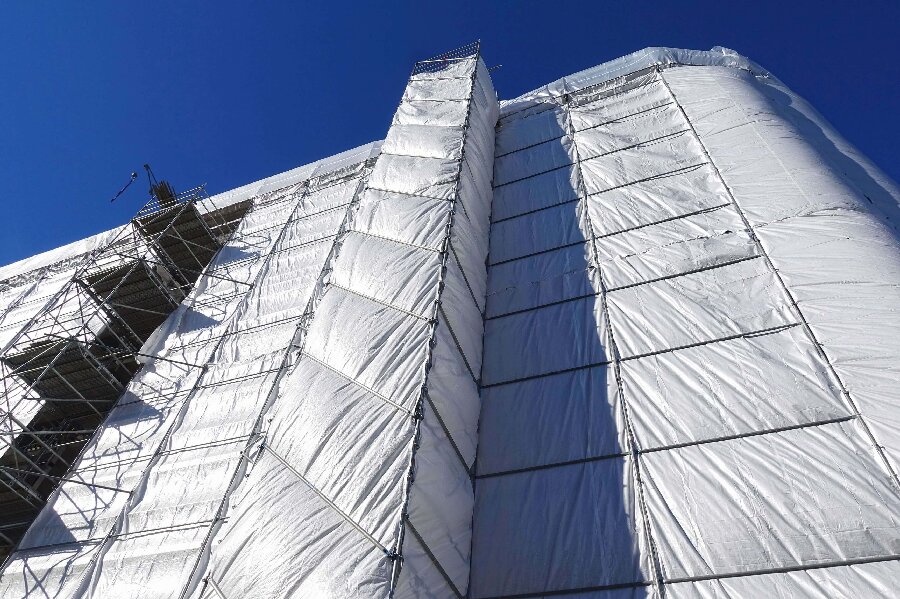
What is the cost per use of a construction tarp?
Cost per successful use is the total cost of supplying and operating the covers divided by completed, accepted protection assignments. Include every purchased replacement and the cost of failed attempts. Count an assignment only when it meets the agreed coverage, duration and protection requirements.
For this guide, one use means an installation, its agreed protection period and removal. A fold, an inspection or moving a cover inside the same assignment is not automatically another use. If assignment lengths vary substantially, compare cost per protected m²-day alongside cost per assignment.
The jobsite costs a purchase order misses
Use the same net protected area, assignment duration, exposure and acceptance criteria for both options. Compare a finished cover with a finished cover, including the work needed to put it into service.
Scroll the table horizontally to compare all columns.
| Cost category | Include in the record | Keep the comparison fair |
|---|---|---|
| Landed purchases | All covers bought, fabrication, packaging, freight and applicable nonrecoverable duties or taxes. | Include replacement sheets and covers lost between jobs. Do not add material cost again if it is already in the finished-cover price. |
| Crew handling | Installation, removal, folding and unplanned repeat visits; use crew-hours × loaded hourly rate. | Two people working for 30 minutes equal one crew-hour. Keep equipment hire separate if charged separately. |
| Cleaning & inspection | Labor, consumables, drying and checks before release. | A recoverable sheet may still be uneconomic if return preparation takes too long. |
| Repair & rework | Approved patching, seam or edge work, replacement fittings and the associated labor. | Repaired does not mean automatically accepted. Record the relevant post-repair check. |
| Transfers & storage | Return collection, inter-site transport, storage and inventory administration. | Include dirty or rejected returns. Allocate shared charges consistently. |
| Retirement & credit | Disposal charges less a documented resale or recovery credit, if one exists. | Do not assume a scrap value. Keep speculative future credits outside the measured result. |
A complete example, with every assumption visible
Assume 12 successful assignments, each providing 60 m² of net coverage for seven days. The reusable option is assumed to complete all 12 assignments with one cover; the replacement option uses six covers, each assumed to complete two assignments. These are calculation inputs, not tested lifespans or DERFLEX prices.
Scroll the table horizontally to compare all columns.
| Cost over 12 assignments | Reusable option | Frequent-replacement option |
|---|---|---|
| Landed cover purchases | 1 × $300 = $300 | 6 × $90 = $540 |
| Installation, removal & folding | 12 × $30 = $360 | 12 × $24 = $288 |
| Cleaning & inspection | 12 × $10 = $120 | 12 × $4 = $48 |
| Repairs, total allowance | $60 | $0 |
| Transfers & storage, total | $48 | $48 |
| Retirement, total; no residual credit | $12 | $36 |
| Total program cost | $900 | $960 |
| Cost per successful assignment | $900 ÷ 12 = $75.00 | $960 ÷ 12 = $80.00 |
| Cost per m² per assignment | $900 ÷ (12 × 60) = $1.25 | $960 ÷ (12 × 60) ≈ $1.33 |
What the example actually shows: the reusable option costs $60 less over this assumed program, despite higher handling and cleaning costs. Fewer completed uses, extra retrieval trips or a major repair can reverse the result. The example excludes financing, discounting, equipment hire, downtime and consequential damage; include them separately if material to your project.
Test the recovery assumption
For the reusable example, $420 is treated as fixed program cost and $40 as the operating cost of each successful use. At the same $80 benchmark, matching cost requires 10.5 uses; a whole-number program needs 11 successful uses to fall below that benchmark.
This is a simplified sensitivity check. Repair, transport and retirement allowances are held fixed; real costs and replacement purchases can change in steps.
How sensitive is the result?
Same assumed $420 fixed cost + $40 per use. These are model outcomes, not achieved field results.
Put your recovery process into the calculation
Replace the example with your own quote and measured operating costs. Use one currency throughout. This simplified model assumes the same operating cost for each successful assignment; include failed-attempt costs in the program allowances or calculate them separately from your ledger.
Planning result
per successful assignment · USD
Planning inputs stay in this page. This tool does not issue a quotation, predict service life or verify field performance.
Follow the same cover from issue to release
Calendar age alone cannot establish economical reuse. Keep one cover ID through transfers and repairs, and close the record only after the next-use decision. A return to the depot is not yet a successful recovery.
Identify the cover
Record cover ID, material or batch reference, finished dimensions, drawing revision and job allocation.
Log the assignment
Capture dates, net coverage, exposure, crew time, protection acceptance and any damage during service.
Account for the return
Record collection labor, transport, missing covers, contamination, drying and temporary storage.
Decide the next step
Approve reuse, authorize a repair, quarantine for review or retire. Link the decision to inspection photographs.
Count the whole issued group
Include lost, unreturned and prematurely retired covers in the cost pool. Reporting only the best surviving tarp understates the cost of a construction reuse program. For mixed sizes, group comparable cover types or report cost per accepted protected area and time.
Record completed-use counts separately from exposure days. A four-week fixed enclosure and a series of daily equipment-cover deployments are different duties, even if both are described as “reusable.”
Download blank reuse logWhere reuse is likely to make commercial sense
A higher material weight does not automatically produce a lower lifecycle cost. Match the cover construction to exposure, handling and the work needed to return it to service.
Scroll the table horizontally to compare all columns.
| Jobsite condition | What to specify or measure | Economic decision |
|---|---|---|
| Repeated equipment or material covers | Finished fit, reinforced contact areas, edge interfaces and removal access. | Consider a reusable fabricated cover when the same geometry recurs and the return route is reliable. |
| Short jobs with frequent site moves | Cover mass, packed volume, crew time and return transport. | A lighter alternative can cost less if retrieval and handling dominate. Compare actual grades. |
| Rough or sharp contact points | Contact protection, local reinforcement and a repair acceptance plan. | Correct the damage mechanism before paying for additional material weight. |
| Scaffold or weather enclosure | Panel layout, fastening interfaces, drainage and the project’s exposure requirements. | Evaluate the installed arrangement. Cover reuse does not establish the supporting system’s wind capacity. |
| Heavy contamination or uncertain returns | Cleaning compatibility, segregation, collection ownership and loss records. | Do not assign a long reuse life when the cover cannot be economically cleaned or recovered. |
Materials and finished-cover references
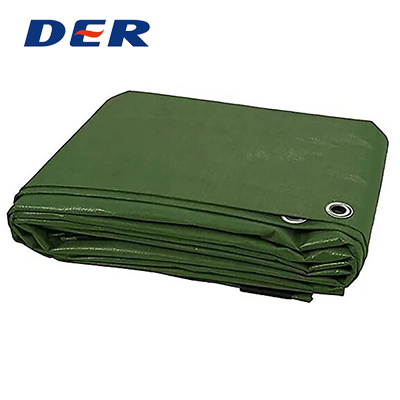
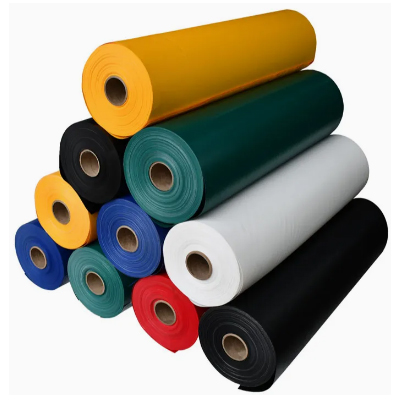
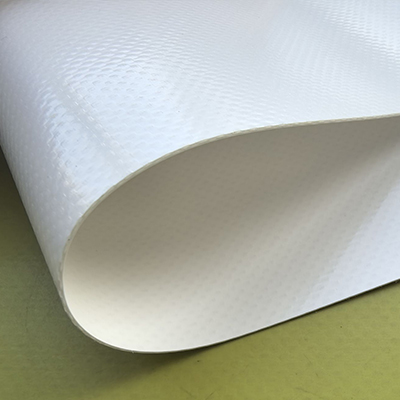
These DERFLEX website images illustrate supply formats and material details. They are not photographs of a documented reuse trial.
Agree what “ready for the next job” means
Start with a representative sample or trial batch and a written inspection rule. A cost target is useful only when the cover still provides the required protection.
Measure the installed coverage
Distinguish cut size, finished size and net protected area. Allow for overlaps, slopes, anchors and access openings. Avoid trapping water or moisture against the protected asset.
Match panel size to the crew
Check actual cover weight and packed volume. Larger panels may reduce seams but increase lifting, folding, transport and storage work. Validate handling with the intended crew and equipment.
Inspect seams, edges and contact areas
Look for damaged coatings, growing tears, open seams, distorted eyelets and weakened reinforcement. Remove the damage source and define whether a repair can meet the next assignment’s requirements.
Clean, dry and segregate returns
Use a cleaning procedure compatible with the specified material. Avoid dragging covers over abrasive ground; inspect after drying and keep dirty or suspect returns separate from released stock.
Verify special performance after reuse
A new-material report does not automatically cover a cleaned, weathered or repaired finished cover. For regulated projects, review the required evidence for the actual material and use condition.
Fix the supply boundary
Confirm whether the quotation covers rolls, cut panels or finished tarps. Frames, anchoring systems, installation labor and engineering are separate unless explicitly included.
Use boundary: this guide concerns protective covers. It does not qualify a tarp for personnel protection, debris lifting, fall arrest or structural loading. A claim of reduced waste or carbon impact needs its own evidence; lower cost per use does not establish an environmental footprint.
Practical answers before a reuse trial
Define the task, measure the return and compare the complete program.
How many times can a construction tarp be reused?
There is no universal reuse count. Material construction, seams, reinforcement, abrasion, exposure, cleaning and handling all matter. Use an application-specific trial and release each cover against agreed inspection criteria. Neither GSM nor a material name is proof of a fixed number of uses.
Is a reusable PVC tarp always cheaper than a replacement sheet?
No. Reuse can lower acquisition cost per assignment, but heavier handling, repairs, cleaning and return transport may offset it. Compare actual finished-cover specifications over the same protection task, including all replacements and lost covers.
Should failed deployments count as uses?
They belong in the cost record, but not in the successful-use denominator. Record the reason for failure and all associated handling, replacement and recovery costs. If only some assignments meet the agreed protection requirement, divide by those accepted assignments.
When is cost per m²-day more useful?
Use it when protected areas or exposure periods differ substantially. Divide total program cost by the sum of accepted protected area multiplied by accepted protection days for each assignment. Keep protection requirements comparable; a low unit cost does not make an unsuitable cover acceptable.
Can a repaired tarp return to construction service?
Sometimes, after a repair suited to the material and damage location, followed by an appropriate check. Inspect the surrounding fabric, seam and fastening areas too. Confirm any special performance required for the next job; retire or quarantine a cover that cannot meet it.
What should I send DERFLEX for a reusable tarp quotation?
Send the application, exposure, finished dimensions or drawing, quantity, fastening layout and photographs of current wear. Add your handling method, intended reuse frequency, cleaning process, destination and required documents. State whether you need material rolls, panels or finished covers.
Quote the cover around the way it will be reused.
Share the jobsite task and current failure points. Ask DERFLEX to review the material and finishing options for a representative sample or trial batch.
Email your drawing or wear photographs ↗Include with your enquiry
- Cover task, exposure and expected assignment duration.
- Finished dimensions, fastening sketch and quantity.
- Handling, cleaning, storage and return arrangements.
- Photographs of tears, edge wear or failed seams.
- Supply format, destination, timing and required records.
DERFLEX supplies materials and custom finished covers. Confirm the agreed scope, sample criteria and commercial terms in the quotation.