Low-Permeability Gas Barrier Direction
For gas-contact layers, the coating and finished seam system can be specified around low gas permeability to reduce unintended methane loss. The required test criterion should be agreed before production.




DERFLEX manufactures reinforced biogas cover tarpaulin for anaerobic digesters, tank-mounted covers, double membrane gas holders, manure lagoons, wastewater treatment tanks and industrial organic-waste projects.
A biogas cover is not selected like a general-purpose waterproof tarp. Gas barrier direction, membrane role, H?S and condensate exposure, UV aging, seam weldability, tank geometry and anchoring all influence the specification. DERFLEX supports project buyers with PVC-coated polyester, PVC/PVDF surface options, TPU directions and custom OEM fabrication requirements.
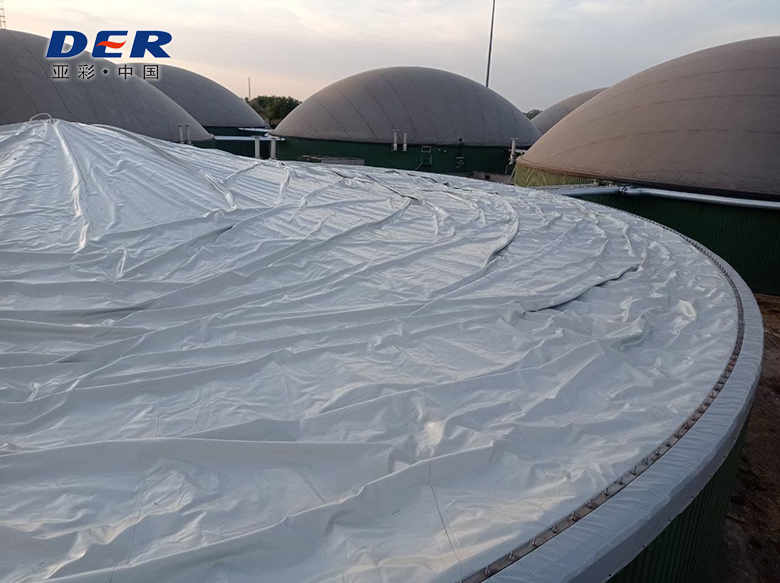
A cover used above methane-producing tanks or lagoons must perform as a technical membrane, not only as a rain cover.
A biogas cover tarpaulin is a reinforced flexible sheet or fabricated membrane used to cover anaerobic digestion tanks, gas-storage structures, slurry or manure lagoons and related treatment vessels. Depending on the system, the cover may help contain methane-rich biogas, control odor, isolate the process from rain and wind, or act as the weather-protection layer above a gas-holding membrane.
The word “tarpaulin” describes the flexible coated textile construction, but the project requirements go far beyond everyday tarps. A suitable grade must match the gas environment, pressure movement, seam design, outdoor exposure and structural loads defined by the cover-system engineer.
A waterproof biogas cover tarpaulin can resist rain and liquid water at the surface, but waterproofing alone does not establish methane-barrier performance. For gas-contact applications, the coating structure, permeability criterion and welded seams should be defined and verified for the project.
The specification should address the conditions that cause covers to leak, age, tear or become difficult to fabricate.
For gas-contact layers, the coating and finished seam system can be specified around low gas permeability to reduce unintended methane loss. The required test criterion should be agreed before production.
Biogas may contain hydrogen sulfide, moisture, carbon dioxide, ammonia and organic condensate. The coating direction should be reviewed against the actual chemistry and contact side.
Exposed outer covers require UV-stabilized coating, weather resistance and sufficient tensile/tear performance for wind, rain and temperature changes. PVDF surface direction can be considered for exposed projects.
Stable coating thickness and adhesion support HF/RF, hot-air or hot-wedge fabrication. Seam width, overlap, welding parameters and joint testing should be defined by the fabricator.
High-tenacity polyester reinforcement helps distribute membrane loads around tank rims, anchor lines, welded joints and local details. Reinforcement should match the structural design rather than relying on weight alone.
Ports, sleeves, inspection hatches, reinforced edges, lifting points, attachment zones and panel geometry can be coordinated with drawings so the cover is practical to install and maintain.
DERFLEX can develop a custom biogas cover tarpaulin around high-strength polyester reinforcement with PVC coating on both sides. For exposed outer layers, a PVDF surface direction may be considered where stronger weathering and cleanability are required. TPU-coated directions can also be discussed for selected projects with different flexibility or chemical-performance needs.
Inner and outer membranes do not have to use the same specification. The gas-facing layer may prioritize permeability, chemical exposure and cyclic flexibility, while the external cover may prioritize UV aging, tensile strength, surface durability and weather load.
Use this table to prepare an RFQ. Final values should be confirmed against project drawings, gas composition, membrane role, local climate and the approved technical data sheet.
| Specification Item | DERFLEX Custom Direction | Why It Matters |
|---|---|---|
| Base Fabric | High-tenacity polyester woven reinforcement; yarn and weave customized by project | Controls tensile strength, tear resistance, dimensional stability and fabrication behavior. |
| Coating | PVC on both sides; optional PVC/PVDF surface or TPU direction | Provides waterproofing, weldability, flexibility, weather and gas/chemical performance direction. |
| Common Heavy-Duty Weight Direction | Approx. 900–1500 g/m2, project dependent; other structures can be developed | Balances strength, handling, flexibility, puncture resistance and finished panel weight. |
| Gas Barrier | Low-permeability direction available according to project test requirement | Relevant when the tarpaulin forms part of the gas-containing envelope. |
| Outdoor Surface | UV-resistant PVC; optional PVDF surface direction | Supports exposed outer covers facing sunlight, rain, dirt and long-term weathering. |
| Chemical Exposure | Formulation direction can be discussed for H?S, ammonia, humidity, condensate and organic vapor | Biogas chemistry differs by feedstock and process; actual exposure should be disclosed. |
| Welding Method | HF/RF welding, hot-air welding, hot-wedge welding or project-defined process | Seam compatibility is essential for fabricated cover panels and gas-tight joints. |
| Temperature Direction | Common project direction may be around -30°C to +70°C depending on formulation | Cold flexibility and heat exposure affect handling, welding and long-term membrane behavior. |
| Optional Treatments | FR, anti-mildew, anti-wicking, anti-static, custom color and surface finish by request | Allows the material to be matched to project, market and fabrication requirements. |
| Supply Form | Roll goods, cut panels, fabricated membrane sheets, OEM labels and export packing | Supports membrane fabricators, EPC contractors, distributors and repeat system programs. |
Reference ranges are not a substitute for project engineering or a final DERFLEX TDS. Confirm test methods, acceptance criteria and batch requirements before order approval.
The correct material changes with the cover geometry, pressure behavior and exposure side.
Flexible cover material installed on a digestion or fermentation tank for gas collection, process isolation, odor management and weather protection.
Tank roof / gas collectionSeparate inner gas membrane and outer weather membrane. The two layers should be selected by their different jobs rather than automatically using one identical grade.
Inner + outer membraneCover material for manure or wastewater lagoons that may rise and fall with liquid level while supporting odor control and, when engineered for it, biogas collection.
Floating / supported coverFlexible membrane direction for municipal or industrial tanks where vapor containment, odor reduction, gas capture, rain exclusion and maintenance access matter.
Municipal / industrialThese checks help EPC contractors, system builders and fabricators compare a biogas cover tarpaulin supplier on technical fit rather than only unit price.
DERFLEX supplies coated membrane material for multiple stages of biogas production, storage and environmental containment.
Farm biogas systems processing dairy, swine, poultry or mixed manure feedstock.
Industrial digestion for food waste, processing residues and high-organic wastewater streams.
Sludge digestion, odor-control tanks and gas storage before CHP, heating or upgrading.
Floating or supported covers for manure ponds and treatment lagoons with gas-management requirements.
Flexible membrane components for raw biogas handling and storage upstream of upgrading systems.
Repeatable roll goods and custom membrane specifications for gas-holder manufacturers and fabricators.
DERFLEX can support custom material development for buyers who need more than a standard tarp roll.
Confirm tank, lagoon or gas-holder type; inner/outer position; gas-contact side and service environment.
Select base fabric, coating structure, weight, surface treatment, color, roll width and optional treatments.
Review welding method, seam trials, panel layout, reinforcement details and the buyer’s acceptance criteria.
Standardize the approved specification, inspection points, packing and labeling for project or wholesale programs.
For gas storage and environmental projects, the acceptance plan should be linked to the material specification and the way the cover will be fabricated.
Review fabric construction, coating appearance, weight/thickness direction, adhesion and visible defects against the approved standard.
Tensile and tear testing can be aligned with the agreed test methods and structural requirements for the selected membrane grade.
For gas-contact materials, welding compatibility and gas-barrier requirements should be confirmed using the test plan agreed for the project.
A complete inquiry reduces back-and-forth and makes supplier quotations easier to compare.
These related pages help compare membrane roles, coating directions and cover-system applications.
Practical answers for project engineers, membrane fabricators and procurement teams.
A biogas cover tarpaulin is a reinforced coated flexible membrane used over anaerobic digesters, gas storage tanks, manure lagoons or wastewater treatment vessels. Depending on the design, it can provide gas containment, odor control, weather protection or an external protective membrane.
Reinforced PVC-coated polyester is a common direction because it combines textile strength, waterproofing, flexibility and weldability. PVC/PVDF surface options may be considered for exposed outer covers, while TPU directions can be discussed for selected chemical or flexibility requirements.
No. Waterproof performance relates to liquid water, while gas containment requires a defined gas-barrier performance and suitable welded seams. If the cover will contact or contain biogas, specify the gas-permeability criterion and seam test requirements separately.
DERFLEX can discuss custom material weight, coating structure, color, width, surface treatment, welding compatibility, reinforcement and panel requirements based on project drawings and technical specifications. Final fabrication scope should be confirmed during quotation.
Yes. DERFLEX supports project and repeat supply for membrane fabricators, gas-holder manufacturers, EPC contractors, equipment companies and distributors, including custom roll specifications, OEM labeling and export packing where agreed.
Send the cover type, dimensions, membrane role, gas composition, pressure range, H?S level if known, wind/snow/temperature conditions, welding method, material or strength target, color, quantity, destination and any drawings or project standards.
Send DERFLEX your tank or lagoon drawing, membrane role, gas conditions, climate, welding method and quantity. The quotation can then be based on an application-specific material direction instead of a generic tarp grade.