


 PVC Coated Fabric for Biogas Membrane Systems
PVC Coated Fabric for Biogas Holders, Digesters, Domes and Lagoon Covers
DERFLEX supplies gas-tight PVC coated fabric for biogas projects, including double membrane gas holders, anaerobic digester covers, biogas domes, biogas balloons, tank-mounted roofs, lagoon covers and OEM gas storage membrane systems.
- Gas-tight reinforced PVC coated polyester fabric
- Inner, outer, cover and bottom membrane options
- UV-resistant, weldable and weather-ready structure
- OEM customization for biogas system builders
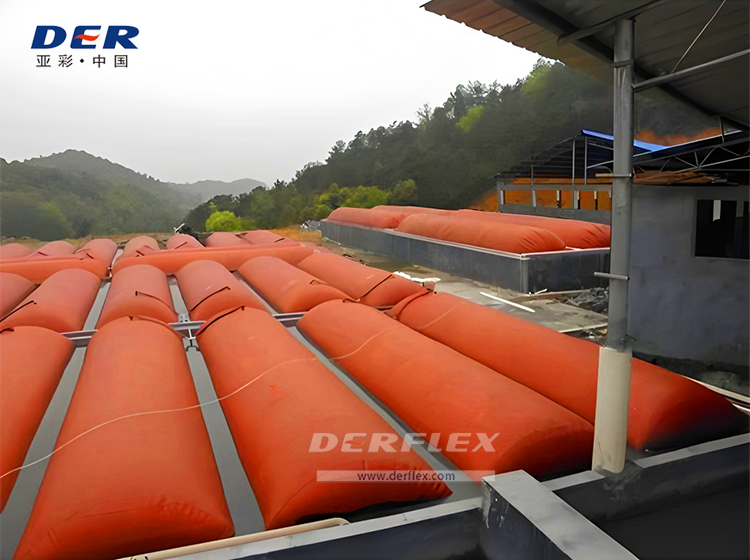
Material-Focused Support for Biogas Projects
Many pages only list general biogas cover features. DERFLEX explains the material itself: base fabric, PVC coating, surface lacquering, gas barrier direction, weldability, tensile strength, outdoor durability and OEM repeatability.
What Is PVC Coated Fabric for Biogas?
PVC coated fabric for biogas is a reinforced technical textile used as a gas-tight, weldable and weather-resistant membrane material for biogas storage and cover systems.
Reinforced Coated Textile Structure
A typical biogas fabric uses a high-strength polyester base fabric coated with PVC on both sides. The textile base provides tensile strength and dimensional stability, while the PVC coating provides waterproofing, gas barrier direction, weldability, flexibility and outdoor protection.
Designed for Biogas Environments
Biogas projects may involve methane, carbon dioxide, hydrogen sulfide, condensate, humidity, UV exposure, wind load, microbial activity and repeated membrane movement. The fabric must be selected according to actual gas holder or digester cover conditions.
Where DERFLEX PVC Coated Fabric Is Used
DERFLEX PVC coated fabric can be developed for multiple biogas membrane applications across agricultural, municipal and industrial energy projects.
Double Membrane Gas Holders
Fabric for inner gas-holding membranes and outer weather-protection membranes in low-pressure biogas storage systems.
Anaerobic Digester Covers
PVC coated fabric for tank-mounted covers that support gas collection, odor control and digestion process protection.
Biogas Domes
Reinforced membrane fabric for dome-style biogas storage systems using internal, external and bottom membrane layers.
Biogas Balloons and Bags
Flexible, weldable and gas-tight coated fabric for biogas balloons, temporary gas storage and flexible membrane tanks.
Lagoon Biogas Covers
Floating or supported membrane fabric for manure lagoons, anaerobic lagoons and covered lagoon gas collection.
Wastewater Biogas Storage
Membrane fabric for municipal wastewater treatment plants, sludge digestion and industrial effluent gas recovery.
Agricultural Biogas
Suitable for livestock manure digesters, farm biogas tanks, slurry storage and decentralized renewable energy systems.
Industrial Organic Waste
For food waste, brewery wastewater, dairy waste, starch processing, palm oil wastewater and other high-organic treatment projects.
OEM Gas Storage Systems
Custom fabric supply for system builders, membrane fabricators, tank manufacturers and gas holder OEM programs.
Material Roles in Biogas Membrane Systems
A professional PVC coated fabric page should explain the membrane layer functions, because inner and outer membranes have different performance priorities.
Gas-Holding Layer
The inner membrane directly contains biogas. It should prioritize low gas permeability, chemical resistance, weldability, flexibility and stable performance under changing gas volume.
Weather-Protection Layer
The outer membrane protects the system against UV, wind, rain, snow, temperature and long-term weathering. PVDF surface direction may be considered for premium durability.
System Interface Layer
Cover and bottom membranes must match anchoring, base design, seam layout, pressure behavior and maintenance access requirements.
Technical Specifications for PVC Coated Fabric for Biogas
Final values should be confirmed according to membrane layer, gas holder type, climate, gas composition, pressure range, welding method and project standards.
| Specification Item | DERFLEX Custom Direction | Project Value |
|---|---|---|
| Material Structure | PVC coated polyester fabric, lacquered PVC fabric, PVC / PVDF surface-coated fabric direction | Balances gas tightness, weldability, weather resistance and cost |
| Fabric Weight | Customizable; common heavy-duty biogas direction can be developed by project requirement | Controls strength, flexibility, handling and durability |
| Base Fabric | High-strength polyester woven fabric with custom yarn and density direction | Provides tensile strength, tear resistance and dimensional stability |
| Coating | PVC coating both sides; optional surface lacquer or PVDF surface direction | Supports gas barrier, surface durability and outdoor exposure performance |
| Gas Barrier | Low gas permeability direction available by specification | Helps reduce methane loss and improve gas storage efficiency |
| Weldability | HF welding, hot-air welding, wedge welding or project-specific welding method | Supports large membrane panel fabrication and seam reliability |
| Surface Performance | UV-resistant, anti-aging, dirt-resistant, weather-resistant and abrasion-resistant direction | Improves service life in exposed outdoor biogas systems |
| Chemical Resistance | Biogas, H2S, ammonia, condensate and organic vapor resistance direction can be discussed | Supports harsh digestion and wastewater environments |
| Safety Options | Flame-retardant option and project-specific compliance direction available by request | Supports market and project safety requirements |
| Customization | Color, roll width, panel size, coating formula, surface finish, packaging and OEM labels | Supports EPC projects, system builders, distributors and fabricators |
Performance Advantages of DERFLEX PVC Coated Fabric
DERFLEX develops PVC coated fabric around the real operating conditions of biogas plants: gas containment, weathering, welding, strength and maintenance.
Gas-Tight Direction
Low gas permeability direction helps reduce methane loss and supports stable biogas storage performance.
Waterproof and Weather-Resistant
PVC coated fabric provides waterproofing, rain resistance and outdoor durability for exposed biogas systems.
UV and Anti-Aging Support
Outdoor membranes require UV-resistant coating direction and surface protection for long-term exposure.
High Tear and Abrasion Resistance
Reinforced base fabric and coating design help resist handling damage, wind movement and operational wear.
Excellent Weldability
PVC coated fabric can be developed for HF welding, hot-air welding or other suitable fabrication methods.
Fire and Chemical Resistance Options
Flame-retardant and chemical resistance directions can be discussed according to market and project requirements.
PVC Coated Fabric vs Other Biogas Cover Materials
PVC coated fabric is widely selected because it combines weldability, flexibility, reinforced strength and customizable surface performance.
| Material Direction | Main Advantages | Recommended Use |
|---|---|---|
| PVC Coated Fabric | Weldable, flexible, reinforced, waterproof, cost-effective and customizable | Biogas holders, digester covers, biogas domes, balloons and lagoon covers |
| PVC / PVDF Surface Fabric | Improved weathering, cleanability, dirt resistance and long-term exposed surface durability | Outer membranes, exposed tank roofs, premium gas holders and long-service-life projects |
| HDPE Sheet | Good chemical resistance and liner performance, but less flexible for fabric-style gas holder structures | Containment liners, pond liners and rigid geomembrane applications |
| Rubber / Other Flexible Sheets | Flexible, but may have different welding, weight, maintenance and cost considerations | Special applications where elastomeric properties are required |
How to Choose PVC Coated Fabric for Biogas Projects
The right fabric should be selected by membrane role, gas environment and project conditions—not only by GSM.
Choose by Membrane Function
- Inner membrane: prioritize gas tightness, chemical resistance, weldability and flexibility.
- Outer membrane: prioritize UV resistance, tensile strength, weather resistance and surface durability.
- Tank cover: consider tank diameter, anchoring, pressure and maintenance access.
- Lagoon cover: consider floating behavior, gas collection and liquid-level fluctuation.
- Biogas balloon: consider folding behavior, pressure cycling and seam reliability.
Choose by Project Condition
- High UV exposure: consider enhanced UV formula or PVDF surface direction.
- High H2S environment: review chemical resistance and coating formula direction.
- Cold climate: confirm flexibility and welding behavior at lower temperatures.
- Wind / snow load: review tensile strength, tear resistance and system design assumptions.
- OEM programs: standardize color, width, coating, surface and inspection parameters.
For EPC Contractors
Receive a practical material direction for anaerobic digestion, wastewater, agriculture and renewable gas projects.
For Gas Holder Builders
Develop standardized inner and outer membrane material grades for repeatable gas holder production.
For Membrane Fabricators
Improve fabrication consistency with stable base fabric, coating behavior, roll width and welding performance.
DERFLEX vs Typical PVC Coated Fabric for Biogas Pages
Competitor pages often highlight general durability. DERFLEX builds a stronger buyer page with material selection logic, OEM details, technical specification and application-based guidance.
| Buyer Need | Typical Competitor Page | DERFLEX Upgrade |
|---|---|---|
| Feature Coverage | Lists waterproof, UV-resistant, tear-resistant and abrasion-resistant benefits. | Explains how each performance property connects to gas holder, digester cover and lagoon cover operation. |
| Material Specification | May list GSM, color and basic material type. | Adds base fabric, coating structure, gas permeability, welding method, surface treatment and membrane layer function. |
| Biogas Chemistry | May mention gas resistance or weather resistance. | Discusses methane, CO2, H2S, ammonia, condensate, microbial conditions and surface durability direction. |
| OEM Support | Often presented as product supply or local supplier page. | Targets EPC contractors, tank manufacturers, system builders, fabricators and international distributors. |
| Conversion Path | Often uses a general enquiry form. | Provides a detailed quotation checklist and multiple CTAs to reduce inquiry friction. |
OEM Manufacturing Support
DERFLEX supports custom PVC coated fabric programs for biogas system companies, membrane fabricators, tank suppliers, EPC contractors and distributors.
Custom PVC Coated Fabric Development
DERFLEX can support custom fabric weight, tensile strength, PVC coating formula, surface finish, PVDF direction, color, roll width, welding method and packaging according to project needs.
Private Specification and Repeat Supply
- Custom fabric weight
- Custom tensile strength
- Custom PVC coating formula
- PVDF surface direction
- Custom color and roll width
- Custom packaging and labeling
- Batch inspection support
- OEM repeat production
PVC Coated Fabric for Biogas Project Workflow
A clear workflow helps reduce specification mistakes and improves communication between engineers, fabricators and material suppliers.
Confirm Application
Define whether the fabric is for a gas holder, digester cover, dome, balloon, tank roof or lagoon cover.
Define Performance
Confirm gas tightness, tensile strength, UV exposure, chemical exposure, fire requirement and welding method.
Select Structure
Choose base fabric, PVC coating, surface treatment, PVDF direction, color, width and packaging method.
Produce and Support
Support sampling, bulk production, roll inspection, packaging, export delivery and repeat OEM supply.
Need PVC Coated Fabric for a Biogas Project?
Send your application, gas holder type, membrane layer, tank diameter, storage volume, pressure range, material requirement, color, roll width and quantity. DERFLEX will help recommend a practical material direction.
Case Study: PVC Coated Fabric for Double Membrane Biogas Holder
Example scenario for a gas holder manufacturer or EPC contractor developing a repeatable PVC coated fabric specification.
Buyer Challenge
A biogas system company needed PVC coated fabric for inner and outer membrane layers. The inner layer required gas barrier direction and chemical resistance, while the outer layer required UV resistance, tensile strength, surface durability and reliable welding.
DERFLEX Solution Direction
DERFLEX structured the inquiry into two fabric directions: a gas-barrier-oriented PVC coated fabric for inner storage and a weather-resistant PVC / PVDF surface direction for the outer membrane. Color, roll width, coating, welding and packaging were standardized for repeat supply.
Engineering Value
Better alignment between fabric layer, gas storage function and outdoor exposure.
Procurement Value
Clear material specifications for quotation, sample approval and repeat ordering.
OEM Value
Consistent membrane fabric identity for gas holder system companies and project-based supply.
Related DERFLEX Pages
These internal links help build topical authority around PVC coated fabric, biogas membrane, gas holder fabric, digester covers and industrial membrane applications.
PVC Coated Fabric for Biogas FAQ
Buyer-focused answers for Google search, AI search and real procurement decision-making.
What is PVC coated fabric for biogas?
PVC coated fabric for biogas is a reinforced technical textile used as membrane material for biogas holders, anaerobic digester covers, biogas domes, biogas balloons, lagoon covers and other low-pressure gas storage systems.
Why is PVC coated fabric used in biogas systems?
PVC coated fabric is used because it is weldable, flexible, waterproof, reinforced, customizable and suitable for gas-tight membrane structures when properly specified for the biogas environment.
Can PVC coated fabric resist methane and biogas exposure?
Properly specified PVC coated fabric can be used in methane-rich biogas environments. Chemical resistance direction should consider gas composition, H2S, ammonia, condensate and project operating conditions.
Can PVC coated fabric be used for both inner and outer membranes?
Yes. PVC coated fabric can be developed for inner gas-holding layers and outer weather-protection layers. Inner layers focus on gas tightness and chemical resistance, while outer layers focus on UV resistance, tensile strength and weather durability.
What is the difference between PVC fabric and PVC/PVDF fabric?
PVC coated fabric uses PVC as the main coating layer. PVC/PVDF fabric usually means PVC coated fabric with a PVDF surface direction for improved weathering, cleanability, dirt resistance and long-term outdoor surface durability.
Can DERFLEX supply custom PVC coated fabric for biogas?
Yes. DERFLEX can customize fabric weight, base fabric, coating structure, color, roll width, surface treatment, welding method, packaging and OEM specification according to biogas project requirements.
Can PVC coated fabric be welded?
Yes. PVC coated fabric can be designed for high-frequency welding, hot-air welding, wedge welding or other suitable welding methods. Welding performance should be confirmed before bulk production.
What information should I provide for a quote?
Please provide application type, inner or outer membrane use, gas holder type, tank diamet, er, storage volume, pressure range, gas composition, wind and snow load, material preference, color, roll width, quantity and project location.
Build a Better PVC Coated Fabric Specification with DERFLEX
From double membrane gas holders and digester covers to biogas domes, balloons and lagoon covers, DERFLEX can support your custom PVC coated fabric development and OEM supply needs.