

News
Company News

Biogas Gas Holder Fabric Manufacturer | DERFLEX

Update:2026/8/24 16:55:21 Views:
Coated Technical Fabric for Renewable Gas Storage

Biogas Gas Holder Fabric

DERFLEX develops gas holder fabric around the job each membrane layer must perform: gas retention on the inside, weather protection on the outside, and stable fabrication at every welded seam. For OEM gas holder builders, EPC contractors and membrane fabricators, the result is a more practical way to specify gas storage fabric than choosing by GSM alone.

Final material values should be confirmed against gas composition, membrane position, system pressure, local climate, structural loads, welding process and the project’s required test standards.

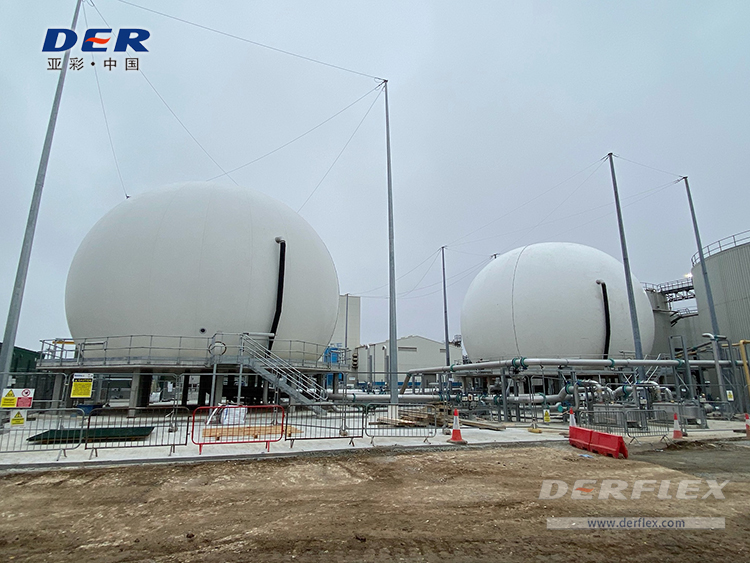
DERFLEX biogas gas holder fabric used for double membrane biogas storage systems
DERFLEX gas holder membrane application Product image from DERFLEX showing flexible membrane gas storage structures used in biogas projects.
For Gas Holder OEMs Standardize inner and outer fabric grades for repeatable system models.
For EPC Contractors Convert project conditions into a clear, comparable membrane material specification.
For Fabricators Review roll consistency, weldability, surface finish and batch-to-batch behavior before production.
For Replacement Projects Match membrane role, geometry, welding method and target performance to an existing holder design.
Material Architecture

A gas holder is a fabric system, not a single sheet.

The phrase “biogas gas holder fabric” often hides three different engineering jobs. Treating every membrane as the same grade can create unnecessary cost on one layer and insufficient performance on another. DERFLEX therefore starts with membrane role first, then builds the coated fabric direction around that duty.

01

Inner Gas-Holding Fabric

The inner layer moves as storage volume changes and remains closest to methane-rich biogas, condensate and process vapors. Its specification should prioritize low gas permeability, chemical compatibility, flex behavior and dependable weld seams.

  • Low gas-permeability direction
  • Gas-contact coating selection
  • Flex and fold behavior
  • HF/RF or hot-air weld compatibility
02

Outer Weather-Protection Fabric

The outer membrane maintains the visible dome shape and faces sunlight, rain, wind, temperature cycles and contamination. Here, weathering resistance, mechanical strength and surface durability often carry more weight than extreme flexibility.

  • UV and weather resistance
  • High-strength reinforcement
  • PVDF surface option
  • Dirt-resistant finish direction
03

Bottom / Sealing Fabric

Some freestanding gas storage designs use a bottom membrane or gas-tight base interface. The selection should be coordinated with foundation contact, sealing geometry, seam layout, mechanical loading and the system designer’s anchoring concept.

  • Gas-tight sealing direction
  • Foundation compatibility
  • Mechanical resistance
  • Welded perimeter design support
Performance Envelope

What professional gas storage fabric should be evaluated for

General waterproof tarpaulin and gas holder membrane fabric may look similar from a distance, but their evaluation criteria are different. Procurement should focus on the interaction between textile reinforcement, coating system, gas barrier behavior, surface protection and seam fabrication.

01 / Containment

Methane Permeability

Specify the gas-permeability test method and acceptance value required by the project. DERFLEX can develop a low-permeability membrane direction and provide sample testing support according to the agreed specification.

02 / Chemistry

H?S, Moisture & Condensate

Biogas chemistry varies by feedstock and process. H?S, moisture, ammonia and condensate should be considered when selecting the coating and gas-contact surface rather than assuming one formulation fits every digester.

03 / Fabrication

Weld & Seam Reliability

Roll material only becomes a gas holder after welding. Coating behavior, welding window, seam peel strength and repeatability should be verified on the customer’s equipment before bulk fabrication.

04 / Structure

Tensile & Tear Strength

High-tenacity polyester reinforcement supports dimensional stability and helps the membrane respond to pressure, anchoring and structural loads. Required values should come from system design calculations.

05 / Exposure

UV & Weathering

The outer membrane sees direct exposure. UV formulation, top finish and optional PVDF surface treatment can be selected according to climate, appearance expectations and required test criteria.

06 / Movement

Flexibility & Pressure Cycling

Inner gas-holding fabric repeatedly changes geometry as gas volume moves. Flex resistance, coating adhesion and cold-temperature behavior should be evaluated for the actual operating range.

Specification Framework

Biogas gas holder fabric technical specification direction

Instead of presenting one “universal” grade, the table below shows how a professional buyer can define a project specification. Exact values and tolerances should be finalized after project review and sample approval.

Specification Item DERFLEX Material Direction Why Buyers Should Define It
Base Fabric High-tenacity polyester woven reinforcement; yarn count and weave can be adjusted by required strength. Controls tensile strength, tear resistance, dimensional stability and fabrication handling.
Coating System PVC coated polyester; PVC with acrylic lacquer; PVC/PVDF surface direction; TPU coated fabric for selected demanding applications. Links gas barrier behavior, weldability, chemical exposure, flexibility, weathering and cost.
Fabric Weight Project-specific. Common biogas membrane programs may use medium-to-heavy coated textile grades, with final GSM selected by membrane role and structural design. GSM alone does not define gas tightness or service suitability; it must be tied to layer function and performance tests.
Gas Permeability Low-permeability direction available by agreed test method and acceptance requirement. Directly influences methane retention and should be written into the purchase specification rather than described only as “gas-tight.”
Surface Finish Acrylic/lacquered inner grades; PVDF or weather-resistant outer surface options depending on project needs. Inner and outer layers face different environments; their finishes do not need to be identical.
Welding Method HF/RF welding, hot-air welding, hot-wedge or project-specific heat welding, subject to formulation and fabricator trials. Seam integrity is part of gas containment; the material should be qualified on the buyer’s actual welding process.
Mechanical Strength Custom tensile, tear and coating-adhesion targets based on system size, membrane position and structural loads. Provides a measurable basis for design review, receiving inspection and repeat orders.
Optional Performance UV resistance, flame-retardant direction, anti-mildew, anti-wicking, cold-flexibility and selected chemical-resistance options. Allows regional requirements and project-specific risks to be addressed without over-specifying every order.
Supply Format Roll goods, custom widths, project packaging and repeat OEM material codes; fabricated panel support can be discussed by project. Reduces fabrication waste and helps OEM builders standardize procurement.

Engineering note: storage pressure, gas composition, H?S level, wind/snow load and structural calculations belong to the gas-holder system design. Membrane material selection should be coordinated with the system designer and applicable local standards.

Layer Selection Matrix

Choose the fabric by membrane role

A practical biogas holder fabric manufacturer should help buyers separate the functional priorities of each layer before price comparison. The matrix below can be used as a starting point for RFQs and technical discussions.

Inner membrane

Gas-contact grade

Primary concernLow gas permeability and chemical compatibility
MovementRepeated volume change and flexing
Surface directionGas-contact coating / lacquer as required
Fabrication focusStable welding window and seam peel performance
Buyer should ask forPermeability method, flex behavior, welding trial, batch control
Outer membrane

Weather-exposed grade

Primary concernUV, rain, wind and weathering resistance
MovementShape stability under support air and external loads
Surface directionWeather-resistant lacquer or PVDF option
Fabrication focusHigh-strength seams and surface consistency
Buyer should ask forTensile/tear values, UV test direction, top finish, color consistency
Bottom / sealing membrane

Foundation interface grade

Primary concernGas sealing and mechanical contact conditions
MovementLower dynamic movement but localized installation stress
Surface directionSelected for sealing and foundation environment
Fabrication focusPerimeter seam and anchor-zone compatibility
Buyer should ask forBase details, seam layout, protective layer, mechanical requirements
Quality & Fabrication

What to validate before bulk production

Buyers often compare datasheets but discover problems during membrane fabrication. A stronger approval process connects laboratory properties with the real welding line, finished panel geometry and repeat-order quality control.

Gas permeability Define gas, method, conditioning and acceptance value for the approved grade.
Weld trial Approve machine settings, seam width and peel behavior on the buyer’s process.
Tensile & tear Review warp/weft values against the membrane’s structural requirements.
Coating adhesion Check the bond between coating and textile reinforcement, especially after flexing.
Surface & pinholes Inspect coating continuity, marks, edge condition and visually detectable defects.
Batch traceability Use repeatable material codes, approved color/finish and agreed inspection records.
Applications

Where DERFLEX gas holder fabric can be specified

The same coated-fabric family can support several low-pressure renewable-gas storage configurations, but the material grade should be adapted to the membrane’s position and exposure.

Storage

Freestanding Double Membrane Gas Holders

Inner gas storage, outer weather shell and project-specific bottom membrane directions.

Tank mounted

Digester Gas Storage Roofs

Fabric grades for tank-mounted inner/outer membrane assemblies over anaerobic digesters.

Municipal

Wastewater Treatment Biogas

Membrane material for sludge digestion gas storage, buffering and recovery systems.

Agriculture

Farm & Manure Biogas Plants

Coated membrane fabric for livestock, manure and decentralized anaerobic digestion projects.

Industrial

Food & Organic Waste Digestion

Gas storage fabric direction for high-organic wastewater and food-processing digestion projects.

Renewable gas

Biomethane / RNG Buffer Storage

Flexible membrane storage upstream or within renewable-gas treatment and utilization systems.

Flexible storage

Biogas Domes & Gas Bags

Weldable coated fabric for dome, balloon and flexible bag-style gas storage applications.

OEM

Replacement Membrane Programs

Project matching for existing holders where drawings, material samples or legacy specifications are available.

Procurement Checklist

Send the right data and get a more useful quotation

A quote based only on “900 GSM gas holder fabric” may not be comparable across suppliers. For a technically meaningful RFQ, include both system information and fabrication requirements.

System & operating data

  • Gas holder type: freestanding, tank-mounted, dome, bag or replacement
  • Membrane role: inner, outer, bottom or cover
  • Storage volume, diameter and operating pressure range
  • Biogas composition and H?S level if known
  • Project location, UV exposure, temperature, wind and snow conditions
  • Applicable standards or customer-specific test requirements

Material & fabrication data

  • Required GSM, thickness or legacy material specification if available
  • Tensile, tear and gas-permeability targets
  • Surface finish: lacquer/acrylic/PVDF direction
  • Welding method and fabrication equipment
  • Ro, ll width, color, quantity and packaging needs
  • Drawings, old material sample or existing gas holder model for replacement work
Why DERFLEX

A biogas holder fabric manufacturer focused on material specification

DERFLEX works from the coated technical-fabric layer upward. That makes the page especially relevant to gas-holder OEMs, converters and EPC teams that already have a system design and need dependable roll material, project-specific coating directions or standardized repeat supply.

Coated fabric manufacturing focus

Experience across PVC coated, PVC/PVDF surface-coated and TPU coated technical fabrics supports multiple membrane directions.

Layer-specific material development

Inner and outer gas holder fabrics can be specified separately instead of forcing one generic grade onto every membrane position.

OEM specification support

GSM, base fabric, color, width, coating, finish, labeling and packaging can be discussed for repeatable project programs.

Fabricator-oriented approval

Material selection can include welding-method review and sample approval so the coated fabric is evaluated on real fabrication equipment.

Batch and repeat-order consistency

Standardized material codes and inspection items help buyers reduce ambiguity when the same gas holder model is produced again.

Export project communication

DERFLEX supports international buyers with project-based requirements, technical discussions, sample coordination and export packaging.

FAQ

Biogas gas holder fabric questions from buyers

Answers below are written for material selection and procurement. Final engineering requirements remain project-specific and should be confirmed by the gas-holder system designer and the approved material specification.

What is biogas gas holder fabric?

Biogas gas holder fabric is a reinforced coated technical textile used to form flexible gas-storage membranes. In a double membrane system, the inner fabric typically contains the biogas while the outer fabric maintains the weather-protection shell. Some designs also use a bottom or sealing membrane.

What is the difference between inner and outer gas holder fabric?

Inner fabric is selected primarily for low gas permeability, chemical compatibility, flexibility and seam performance. Outer fabric is selected primarily for UV/weather resistance, mechanical strength, surface durability and appearance. The same GSM does not mean the two fabrics should have the same coating or finish.

Is PVC coated polyester suitable for biogas gas holders?

Reinforced PVC coated polyester is widely used for flexible biogas membrane structures because it can combine textile strength, flexible coating behavior and heat-weldable fabrication. The formulation and test requirements still need to be matched to gas composition, membrane role, climate and the project standard.

Can DERFLEX provide PVDF surface fabric for the outer membrane?

Yes, a PVC/PVDF surface direction can be discussed for exposed outer membranes where weathering, cleanability and surface durability are important. The exact top-finish system should be confirmed together with the required welding process and project test criteria.

What gas permeability value should I specify?

There is no single value that should be copied into every project. State the required gas, test method, conditioning and acceptance value used by your system design or standard. DERFLEX can then evaluate a material direction and arrange sample approval against the agreed requirement.

Which welding methods can be used with gas storage fabric?

Depending on the coating formulation and membrane grade, HF/RF welding, hot-air welding or hot-wedge welding may be used. Fabricators should approve welding parameters and seam performance on their own equipment before bulk membrane production.

What information should I send to a biogas holder fabric manufacturer for quotation?

Send the holder type, membrane role, storage volume, diameter, pressure range, gas composition/H?S if known, climate, wind/snow conditions, welding method, target gas permeability, tensile/tear requirements, surface finish, roll width, color, quantity and any drawings or legacy material data.

Build the fabric specification before you compare price.

Send DERFLEX your membrane role, system type, gas conditions, welding process and target test requirements. We can discuss a practical inner, outer or bottom gas holder fabric direction for sampling and quotation.

Useful RFQ attachment Gas holder drawing + membrane layer + material/test requirements + annual or project quantity. Request A Quote
Consulting Services
+86-021-54361792 / 54361798
Email
sales@derflex.com