Loaded face width
Measure the actual widest forward face of the loaded cargo. Add intended wrap around both sides, plus the allowance required by your hem and fastening plan.
Start width = face width + 2 × side return


Protect the front of a loaded flatbed without covering more freight than the job requires. DERFLEX supports custom PVC coated polyester nose tarps with fit-focused dimensions, planned tie-down points and reinforced high-wear zones.
For tarp distributors, open-deck fleets, truck equipment brands and fabricators. Specify finished smoke tarps or discuss roll goods and semi-finished panels.
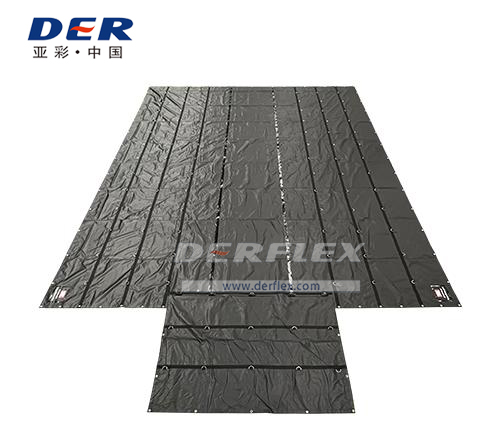
A smoke tarp, also called a nose tarp, is a compact protective cover fitted over the front-facing portion of a flatbed load. It helps reduce contamination from exhaust soot, road spray, insects, dust and wind-carried dirt during transport.
Unlike a full-length flatbed tarp, it targets the leading face and a selected amount of side or top coverage. It may be used alone where only localized shielding is needed, or coordinated with a longer cover for freight that requires broader protection.
A flatbed smoke tarp protects the nose of a load; its dimensions and tie-down layout should follow the loaded cargo profile—not the trailer size alone.
Not an emissions filter, fire-protection tarp or substitute for compliant cargo securement.
Helps shield exposed face from soot and road contamination.
Side return and top coverage reduce open edges.
Secure fittings to approved trailer attachment points.
A 10 × 12 ft label does not tell you how the tarp will sit on your freight. Start with the forward load profile and identify where the cover can be pulled tight without exposing a wind-facing loose edge.
Measure the actual widest forward face of the loaded cargo. Add intended wrap around both sides, plus the allowance required by your hem and fastening plan.
Start width = face width + 2 × side returnDetermine the exposed front height and how far the cover should extend over the top. Include the necessary lower edge reach and fabrication allowance.
Coverage path = front drop + top returnLocate trailer anchors, bulkhead clearance, vulnerable cargo corners and any adjoining tarp. Review the fold and tension path before finalizing size.
Finalize from a load sketch / fitted sampleExample only: a 96 in wide leading face with a desired 12 in return on each side needs at least 120 in (10 ft) across the front before any hem or final fit allowance. The other tarp dimension still depends on the required vertical drop, top return and the way the cover is deployed.
Typical market listings include 10 × 12, 12 × 16 and 12 × 20 ft smoke tarps. These are references, not confirmed DERFLEX stock sizes; project dimensions should be approved before production.
The highest-value question is whether the cargo needs localized front shielding or a complete weather enclosure. Use the load exposure—not simply the tarp name—to set the covering plan.
| Flatbed load | Front-cover starting point | What to check before ordering |
|---|---|---|
| Wrapped building-material pallets | Compact front sheet with side return; full tarp only if required by moisture sensitivity. | Packaging height, front face width, pallet corners and whether roadside water can enter below the cover. |
| Crated machinery / equipment | Fitted nose profile or reinforced front module for repeated shapes. | Protrusions, irregular contours, anti-scuff contact protection, anchor clearance and vibration wear. |
| Steel bundles / fabricated metal | Reinforced front wear section coordinated with a steel-style cover where broader coverage is needed. | Sharp edges, lifting pockets, surface-finish protection and proper corner/edge guards. |
| Timber / wallboard / tall loads | Front smoke tarp only for partial protection; deep-drop cover for sensitive tall cargo. | Height, top exposure and how the front piece overlaps a larger lumber cover. |
| Mixed-freight fleet / repeat routes | Standardized flat nose tarp with consistent hardware pattern where shapes permit. | Most frequent load profiles, driver handling weight, fold size and repeatable replacement SKU. |
Useful when the main problem is contamination at the front of a load rather than full-length rain and road-weather exposure.
For weather-sensitive cargo, the nose cover can be planned as the windward portion of a coordinated cover system.
The cover is a complete assembly: coated fabric, seams, perimeter reinforcement, hardware and load-specific fitting. Values below are common industry references or DERFLEX customization directions; quotation details require confirmation.
| Item | Reference / customizable direction | Practical purchasing note |
|---|---|---|
| Core material | PVC / vinyl coated polyester textile | Reinforced base with coated, cleanable faces; ask for the relevant material sample or datasheet. |
| Fabric weight | 18 oz/yd² (about 610 gsm) is a common market reference; DERFLEX existing smoke-tarp range discusses approx. 550–900 gsm. | Choose by abrasion, climate, fold frequency and driver handling. Do not treat weight alone as durability proof. |
| Finished sizing | Custom cross-load span, front drop, top return, side wrap or fitted corners. Market examples: 10 × 12, 12 × 16 and 12 × 20 ft. | Final finished dimensions must be agreed from the load drawing or reference sample. |
| Perimeter & stress zones | Reinforced hems, webbing, corner patches, abrasion strips and high-pull reinforcements. | Mark actual corner rubs, strap paths and repeated-fold zones. |
| Fastening hardware | D-rings, grommets / eyelets, webbing loops, rope hem and specified tie-point rows. | Confirm ring positions against usable trailer anchors; do not assume one standard spacing fits all trucks. |
| Seam direction | Hot-air or high-frequency welding, sewing or hybrid methods, according to design. | Assess seams, stitches and openings together when water resistance matters. |
| Weather options | Discuss UV exposure, cold-weather folding, abrasion and any buyer-required tests. | Claims about test values, flame resistance or low-temperature ratings require project-specific evidence. |
| Supply program | Material rolls, cut panels, semi-finished assemblies or finished OEM covers; color, label, logo and packing options. | Choose the supply stage that matches the importer’s or fabricator’s capabilities. |
Important: Coated material may be water-resistant or waterproof under a defined test, but the assembled cover’s protection depends on its seams, punctures, overlap, geometry and field installation. A smoke tarp is not a load restraint. Protect sharp load edges and follow applicable cargo-securement requirements.
Consider textile strength, surface cleanability, weldability and field flexibility together.
Design around strap contact, lower hems and corners where tension concentrates.
A detailed D-ring / eyelet map is more actionable than a generic “heavy-duty” claim.
Approved finished measurements help fleets reorder a cover that fits the same way.
These images are hosted by DERFLEX. They document related flatbed tarp hardware, fabrication geometry and transport use rather than representing a finished smoke tarp in every photograph.
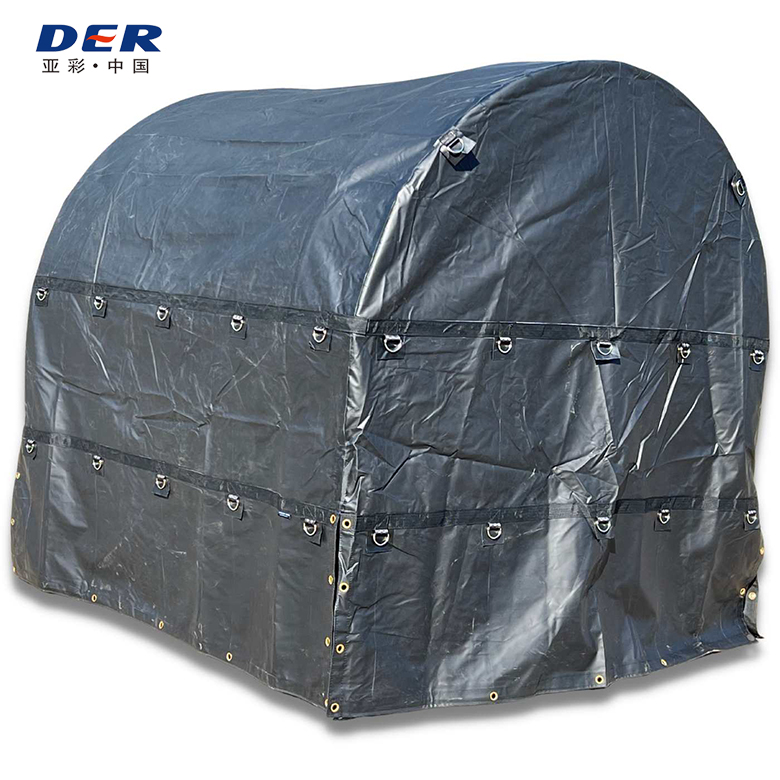
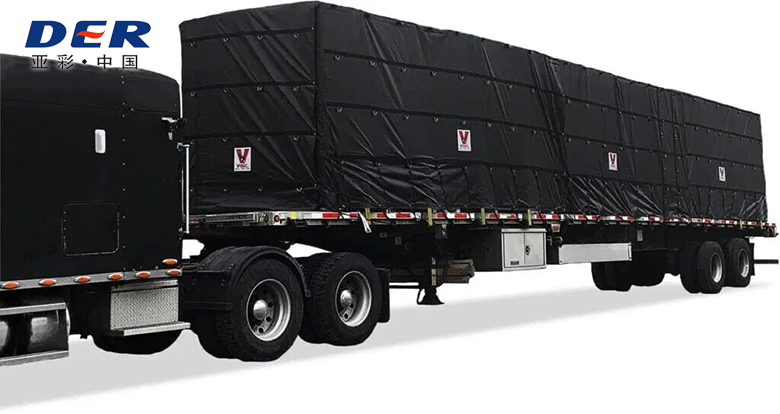
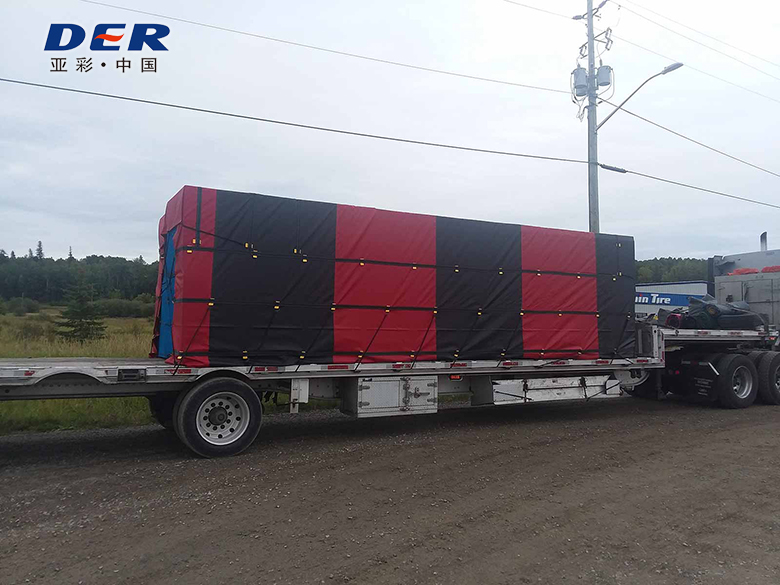
For final procurement approval, request a photo or sample of the specific smoke tarp geometry, not merely a similar flatbed product photograph.
A practical pre-dispatch review can catch preventable coverage gaps and early-wear risks. The checks below are not a substitute for fleet training or applicable regulations.
Verify protection across the exposed cargo width and down to the intended lower edge—not just when the sheet is laid flat.
Check the front edge and any joint with a larger tarp. Choose the overlap arrangement that discourages wind from entering beneath the covering.
Position D-rings or grommets so forces transfer through prepared stress zones rather than unsupported material.
Use suitable edge protection on metal, crates and machinery. A heavier sheet alone will not eliminate concentrated puncture wear.
Check handling mass, reach, folding sequence and cold-weather flexibility, especially when the tarp is deployed frequently.
Store photos, finished dimensions, hardware map and material reference so replacements remain compatible with the fleet.
For a broader system involving long flatbed covers, compare the DERFLEX flatbed tarp range; the front smoke tarp should be engineered to complement—not conflict with—the rest of the cover set.
For distributors and fleets, the real saving comes from matching the first approved cover to future shipments, replacements and regional operating conditions.
DERFLEX can discuss coated textile selection and fabricated tarp requirements, including project-specific reinforcement and private-label elements. The dedicated smoke tarp manufacturing page covers the broader flat, fitted and supply-format options.
No unverified MOQ, delivery time, test grade, pricing or warranty is stated here. Ask DERFLEX to confirm these for the actual specification.
Attach a simple sketch and load photos if available. A clear RFQ should include:
Questions frequently raised when specifying a front-position cargo cover for a fleet, importer or tarp product line.
It shields the leading face of the load from exhaust soot, road dust, insects, spray and wind-driven dirt. It does not cover all surfaces of a load and does not function as an air filter.
No. Although 10 × 12 ft is a common market reference, choose the finished dimensions from the cargo width, front height, side wrap, top return and tie-down points. Confirm which dimension runs across the load before ordering.
There is no one-size-fits-all layering rule. Plan the joint so incoming air cannot readily enter an open leading lip and rain sheds away from the cargo. Test the overlap direction on the actual load and covering system.
Loose fabric, poor alignment with trailer anchors, rubbing against corners, overstressed D-rings and frequent folding are common contributors. Improve fit, wear protection and hardware placement before selecting a heavier textile.
Both are useful in different positions. Reinforced grommets can serve perimeter attachment points; D-rings on patches and webbing can suit frequent tensioning. Match fittings to your securement method and expected stress zones.
DERFLEX can review OEM projects for flat or fitted geometry, coated polyester material, reinforcement, hardware, colors, labels and packing. Supply format, order quantities and specifications are confirmed during quotation.
No. A smoke tarp is for protective covering. Cargo must be secured separately using the legally required systems appropriate to its weight, shape, vehicle and route.
Share a front-facing load photo, basic measurements, target material, hardware concept, quantity and delivery market. DERFLEX can review the proposed smoke tarp construction and available OEM supply route. No nonfunctional on-page submission form.