Radiation is not contact heat.
A bright reflective face works differently from insulation thickness or a material pressed against hot metal. Record the heat path before comparing fabric prices.



Home Material selection Fiberglass comparison
Two high-temperature textile families. Two very different jobs.
Compare heat reflective fabric vs silicone fiberglass for radiant exposure, direct-contact risk, repeated folding, surface integrity, sewing and total conversion cost. Built for insulation-jacket manufacturers, equipment OEMs and industrial fabric buyers deciding what to sample—not just what to quote.

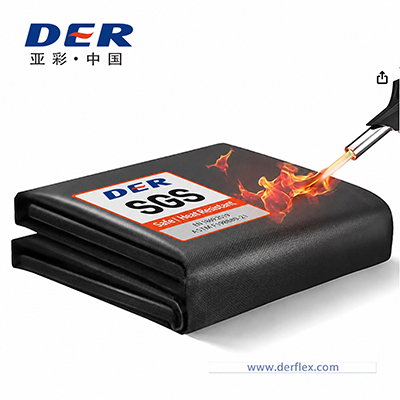
Aluminized fiberglass combines a woven glass backing with a reflective aluminum-bearing facing. Silicone coated fiberglass uses cured silicone rubber over woven glass. Their fiberglass cores may look similar, but the exposed surfaces solve different engineering problems.
A bright reflective face works differently from insulation thickness or a material pressed against hot metal. Record the heat path before comparing fabric prices.
An installed static radiant shield and a reusable valve jacket face different bend, abrasion and closure stresses, even at the same nominal temperature.
Adhesive, polymer carrier, silicone coating, seams and insulation layers can set the actual continuous or peak exposure limit.
These are starting directions for material selection, not substitute test reports. Compare complete constructions under the same operating conditions.
Reading tip: on mobile, swipe the table horizontally to see both materials.
| Buyer criterion | Aluminized fiberglass | Silicone coated fiberglass | What to ask the supplier |
|---|---|---|---|
| Radiant heat | Often preferred Reflective aluminum face can reduce absorbed radiant load when oriented toward the source with an appropriate air space; performance depends on cleanliness and construction. | Not a dedicated metallic reflector. Select for composite durability, protective coverage and the thermal duty it is qualified to withstand. | Reflective-face type, emissivity/reflectance evidence, source distance, air gap, surface contamination and actual laminate temperature. |
| Contact heat / conduction | Case specific A shiny facing does not establish direct-contact resistance. Bonding adhesive, foil and any polymer film can limit service. | Case specific Silicone coating can be exposed to heat only within its qualified conditions; pressed metal contact and local hot spots need assessment. | Continuous and peak fabric-layer temperature, contact pressure, dwell time, bonding/coating limits and whole-assembly review. |
| Repeated folding | Foil may crease or crack; metallized carriers may fatigue or delaminate. Performance depends on bend radius, laminate thickness and bonding. | Good starting point Often preferable for reusable covers and movement-prone parts, though stiff or heavily coated grades still require flex tests. | Cycles, minimum bend radius, heat-aged flex trial, crack/peel acceptance limits and edge reinforcement. |
| Surface integrity & cleaning | Reflective benefit can decline with scratches, dust, creases or peeling; cleaning methods must preserve the metallic facing. | Rubber-like coating can protect the glass textile from routine scuffing and handling; oil, chemicals and cleaners must be checked for compatibility. | Abrasion method, surface inspection criteria, cleaners, oil exposure, delamination and appearance after service. |
| Cutting, sewing & joining | Plan for facing orientation, cut-edge fraying, seam perforation, fold damage and bonding or tape qualification. | Commonly cut, sewn, hemmed and mechanically fixed after grade-specific trials; coating can affect needle drag and seam bulk. | Needle/thread system, seam allowance, edge binding, fasteners, roll width, pattern nesting and converter trial. |
| Cost & replacement economics | Foil gauge or film type, adhesive, coating, surface protection, damage allowance and usable yield influence installed cost. | Silicone loading, one- vs two-side coating, glass weave, finished weight and grade influence roll cost; reuse may alter lifecycle economics. | Like-for-like construction, price per usable area, scrap rate, repairs, service interval, MOQ, sample cost and delivered terms. |
Important: No grade-independent winner exists for temperature, fire protection or installed thermal performance. Exact material construction, test route and fabricated-system geometry must be approved.
A material described merely as “silver fiberglass” or “high-temperature silicone cloth” is not a complete purchasing specification.
A woven fiberglass backing supports either a distinct aluminum foil sheet or a metallized polymer carrier, joined with a grade-specific bonding system. They are not interchangeable.
Woven fiberglass is coated with a cured silicone-rubber formulation on one or both sides. Coating weight, base yarn, finish and cure determine drape, surface grip, thickness and conversion behavior.
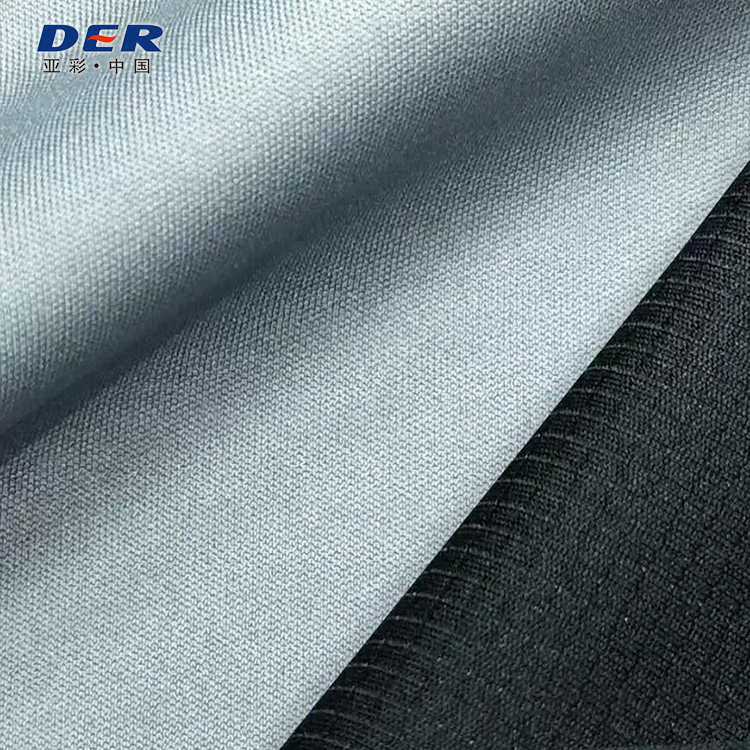
Glass yarn, weave density and finish influence tensile behavior, dimensional stability, cut-edge handling and drape under either surface system. This DERFLEX-hosted close-up is a technical textile reference, not identification of the coating or fiberglass grade shown in the diagram.
Hero photographs and the textile close-up are existing DERFLEX-hosted material references; appearance does not prove the backing construction, tested temperature or ordered grade. Confirm the complete build on an approved sample.
Material selection changes when a reflective surface is suspended near a hot source, pressed against a pipe or exposed to flowing exhaust air. A complete assembly often combines multiple protection functions.
Evaluate aluminized fabric facing the source across the specified gap. Dust, damage and geometry influence the actual radiative benefit.
A hot bracket, crushed insulation layer or tightly clamped seam transfers heat independently of the reflective appearance.
Airflow can heat the material even when part of the radiant load is reflected. Verify actual fabric and bond temperatures.
Dedicated hot-face textile, insulating core and coated outer layer may each be selected for a different heat and handling function.
For a project near exhaust, steam or industrial process equipment, establish temperature at the actual material layer before choosing a coating, reflective laminate or full jacket construction.
If yes: begin with a qualified aluminized glass laminate, a declared reflective face and an engineered air space. If direct contact or molten splatter dominates, do not assume either generic option is suitable.
If yes: begin trials with silicone-coated fiberglass for flexible handling. Compare an aluminized alternative only if it survives your real bend radius and post-heat-aging handling tests.
For aluminized fabric, inspect foil or film continuity and adhesion. For silicone-coated fabric, inspect coating cracking, wear, bond quality and fiber exposure at cut edges.
Use the actual cutting pattern, sewing machine, thread, fastener and seam orientation. Review needle holes, binding, overlap and clamping on the finished part—not only a flat swatch.
Lock the approved face construction, base weave, finished GSM, thickness, usable width, tolerances, surface criteria, tests, packing and revision before bulk procurement.
The following directions help OEMs, heat-shield converters and thermal jacket factories choose which material to trial first. Both may be used in different layers of one design.
Protected hoses, wiring or components near a radiant source with a defined mounting gap and limited movement.
Start with: qualified aluminized fiberglass; validate spacing, facing temperature and contamination.Irregular geometry, frequent maintenance, straps and oil or water exposure place high demands on the outer shell.
Start with: silicone coated fiberglass outer shell; design other layers separately.Radiant loading and recurring handling occur together, making surface cracks and fold damage a critical risk.
Start with: side-by-side trials or a qualified multilayer design.Hot-face duty, condensation, insulation thickness and fabric-side temperature need to be distinguished.
Start with: layer-by-layer jacket design; no universal single-cloth answer.Storage folds, oil mist, cleaning and abrasion can control outer-fabric lifespan more than appearance.
Start with: silicone-coated protective shell and a flex/cleaning approval test.Usable roll width, panel nesting, yield loss, process repeatability and packing matter across multiple batches.
Start with: equivalent sample specifications plus delivered conversion-cost comparison.For a complete cold-face, insulation-core and hot-face breakdown, see the DERFLEX removable insulation jacket fabric guide.
A quote should make two candidate constructions comparable on their actual working characteristics. A single GSM or “heat-resistant” label is not enough.
| Specification field | Aluminized fiberglass request | Silicone coated fiberglass request |
|---|---|---|
| Substrate | Fiberglass type, weave, base-cloth mass and reverse finish | Fiberglass type, weave, base-cloth mass and surface treatment |
| Functional surface | Real foil or metallized film; foil gauge or carrier type; adhesive/bond declaration | Silicone formulation direction; one or two coated sides; coating loading and finish |
| Weight / thickness | Confirm finished GSM and total thickness for the offered build; no universal DERFLEX grade stated | DERFLEX published silicone family directions: approx. 260–2000 g/m² and 0.25–3.0 mm across different programs; not all combinations available |
| Roll format | Usable width, roll length, winding orientation, core, tolerance, splice policy | Common DERFLEX width directions include 1000 / 1200 / 1500 mm; confirm offered width, length, color and tolerances |
| Temperature evidence | Full laminate, adhesive/carrier, continuous and peak fabric-layer temperature | Full coated composite, temperature at silicone surface, duration and chemical exposure |
| Conversion evidence | Facing crack/peel behavior, seam tests, cut edges and bend radius | Flex behavior, abrasion, needle holes, seam load and coating integrity |
| Approval and order | Sample ID, layer declaration, grade-specific reports, MOQ, packing, lead time | Approved swatch, coating side, selected tests, grade revision, MOQ, packing, lead time |
Figures above are published family-level silicone purchasing directions, not a promise of stock availability, a universal tolerance or a combined material specification. All foil and silicone terms require grade-level confirmation.
For heat reflective fabric vs silicone fiberglass, the more useful comparison is what survives the converter's actual process and the end user's duty. Use the same application profile for both samples.
Check base weave, layer stack, coating or adhesive, orientation and the exact grade ID.
Cut, fold, stitch, bind and fasten using the intended factory tools and approved thread.
Expose at the specified fabric-layer conditions, including realistic short peaks and durations.
Run the defined bend/removal cycle and cleaning protocol; inspect both surfaces and edges.
Record acceptance criteria, usable width, defects, packing and the repeat-order material revision.
Foil creasing or pinholes, damaged reflective face, film shrinkage, adhesive peel, edge delamination and loss of desired thermal performance in the installed geometry.
Surface abrasion, unexpected stiffness, coating cracking, edge fiber exposure, seam damage or chemical/cleaning-related change after cycling.
Agree the relevant test method and pass/fail criterion for the actual application: heat flux or thermal outcome, peel/bond, fold fatigue, seam strength, abrasion, chemical contact or flame performance as applicable.
Do not transfer a certificate from base fiberglass to the finished coated or laminated composite, or from a fabric to an entire jacket or safety assembly.
Aluminum foil gauge, film carrier chemistry, bond system, silicone loading, base cloth construction and surface quality all affect cost. But the buying decision often changes when you count waste, repairs and replacement intervals.
Quote per m² o, r per usable meter under consistent construction, width, quantity and shipping terms.
Wider rolls are not always cheaper if patterns, face orientation or unusable selvage increase waste.
Seams, backing protection, facing damage and edge finishing may determine conversion time.
Factor in handling frequency, cleaning, inspection access and the cost of premature surface failure.
For adjacent reflector formats and OEM lamination directions, explore DERFLEX aluminum foil laminated fabric and reflective insulation materials. General insulation facing should not be substituted for a qualified industrial hot-zone laminate.
DERFLEX can review the coating/laminate direction, manufacturing feasibility, sample route and bulk roll specification against your application. No online form is embedded in this page; the button links to the official inquiry page.
Review the duty → agree a candidate construction → trial an approved sample → document tolerances → quote the repeatable roll supply. MOQ, lead time, temperature limits and certificates must be confirmed for the exact offered material; they are not assumed here.
Direct answers to the practical questions that arise during material selection and sample approval.
A qualified aluminized fiberglass laminate is generally a stronger starting direction for non-contact radiant heat when its reflective face remains clean, points toward the source and faces a suitable air space. Silicone-coated fiberglass is more commonly specified for a durable flexible surface and frequent handling. Compare exact grades and test the actual assembly.
Silicone coated fiberglass is commonly used as the outer or cold-face shell of removable jackets because of its flexibility, protected surface and repeat-handling behavior. Aluminized fiberglass may serve a radiant-facing function when the installation and repeated bending conditions support it. The insulation core and hot-face textile remain separate design decisions.
Do not assume it can. A metallic reflective face is not evidence of contact-heat capability. The foil or film, adhesive, underlying cloth and the entire joint or mounting system must be qualified for contact temperature, pressure and dwell time.
Silicone coated fiberglass is often the first material to trial for repeatedly removed and folded covers. Real foil can crease or crack, while metallized carriers can fatigue or lose adhesion. Neither material should be approved without bending trials at the actual radius, especially after thermal aging.
Neither has one universal temperature rating. In aluminized fabrics, adhesive and any polymer carrier may limit the composite; in silicone fabrics, the coating can limit service before the glass reinforcement. Evaluate continuous and peak temperature at the relevant fabric layer and include seams and closure components in the finished-system assessment.
No. A foil laminate contains a distinct foil sheet. A metallized-film laminate has a thin aluminum deposit on a polymer carrier. Film chemistry, bond system, foil gauge, stiffness and heat resistance can differ, so request a complete written construction.
Compare matched base cloth, coating or facing construction, usable roll width, required tests, order terms, delivered cost and conversion yield. Include scrap, assembly time, surface damage and replacement cycle; unit roll price alone can hide the higher-cost option.