
01
Cold exposure
Define minimum air, surface and storage temperatures as separate requirements where relevant.



A cold weather tarp should keep its coating intact when the material is folded, rolled or handled at the temperature your operation actually reaches. DERFLEX supports cold-resistant PVC-coated polyester materials and custom tarp construction for winter transport, industrial equipment covers and severe-climate OEM programs. Specify the cold-bend test, handling temperature and finished assembly together—then qualify the selected grade before bulk supply.
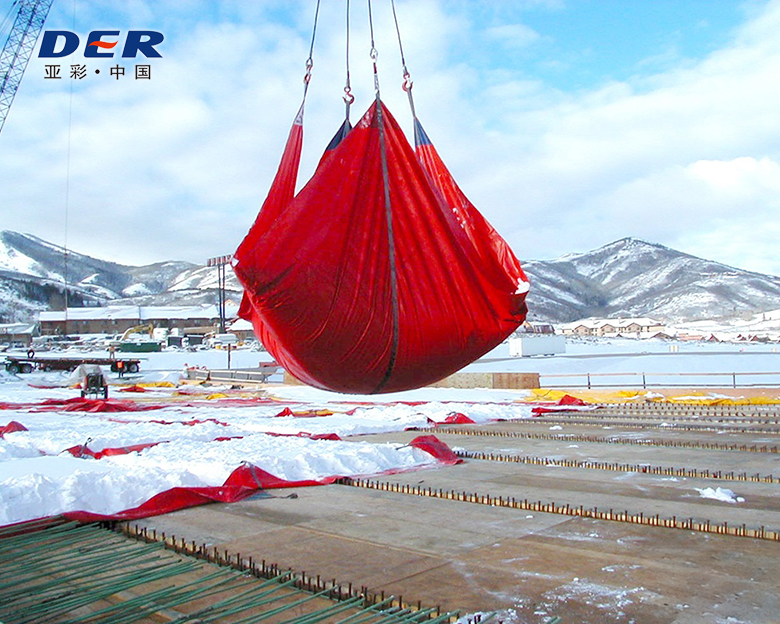
Its performance depends on flexible PVC compound selection, polyester base fabric, coating build, adhesion and the degree of bending. “Cold crack” is therefore a condition-based performance claim, not a promise that every finished cover can be folded or rolled at any temperature below the figure on a product sheet.
For broader temperature guidance, see the DERFLEX tarp temperature rating guide. For available extreme-cold materials, review the cold-resistant tarp range and request grade-specific validation.
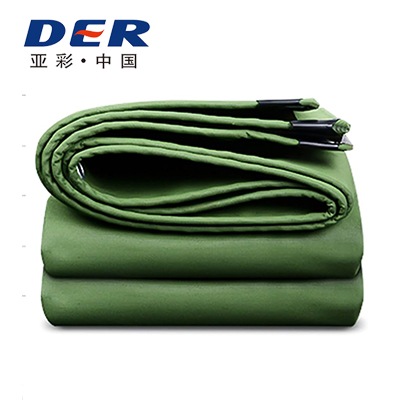
A tarp stored at −30°C is not exposed to the same risk as one rolled daily at −30°C. Movement geometry and the lowest handling temperature should drive the approval plan.
Define minimum air, surface and storage temperatures as separate requirements where relevant.
Record when the cover is folded, rolled, tensioned, removed or reinstalled and how often it moves.
Check the actual seams, pockets, hems, straps, D-rings and grommets under the same duty.
| Cold-duty situation | Starting material direction | Qualification emphasis | Procurement mistake to avoid |
|---|---|---|---|
| Freezing storage / limited movement | PVC-coated polyester grade rated for the specified environment | Cold soak, occasional handling, UV/weathering, attachment and drainage design | Assuming static weather protection proves cold-fold capability |
| Winter truck / trailer cover | Cold-flex PVC grade matched to the truck-cover system | Actual deployment temperature, roll diameter, cycles, pockets, road abrasion | Approving flat-sheet data alone |
| Construction enclosures / equipment covers | Low-temperature PVC coating with suitable polyester reinforcement | Installation folds, panel seams, anchors, ice and wind movement | Using fabric weight as a substitute for cold-bend evidence |
| Severe sub-zero OEM program | Special cold-resistant compound; DERFLEX lists −40, −50 and −60°C options | Named standard and test temperature, retained sample, lot evidence, finished-panel trial | Converting a published nominal temperature directly into a service guarantee |
* DERFLEX publishes cold-resistant grade directions for −40°C, −50°C and −60°C; these are product-selection options, not certification of every material/assembly at all three temperatures. Confirm the ordered grade and agreed test conditions. For a wider PVC/PE/canvas comparison, consult cold-weather tarp material selection.
Cold resistance is a formulation decision, while mechanical durability and fabrication depend on the entire coated-fabric system. The fields below distinguish published product-family directions from requirements to confirm for the order.
Yarn, weave and tensile / tear requirements selected for cover size and loads.
Cold-resistant plasticizer / coating selection to be confirmed for the target bend temperature.
Product-family range referenced by DERFLEX; final available weight depends on the approved cold-resistant construction.
Thickness is not a proxy for cold-crack resistance; select with coating and duty requirements.
Specific width, edges, handling and welding plan are to be confirmed for the chosen grade.
Discuss welds, reinforcing webbing, hem layout, eyelets, pockets, D-rings and project packaging.
Set separate targets and verify them; the low-temperature result alone does not prove these properties.
Quantity, sample schedule, tolerance and lead time are project-dependent and confirmed at quotation.
A pass at a defined low-temperature bend condition helps compare material grades. It does not, by itself, establish the minimum safe operating temperature of a fabricated tarp.
| Reference | What it measures | What to state in the RFQ | Interpretation limit |
|---|---|---|---|
| ASTM D2136-19(2026) | Pass/fail performance of a coated fabric under a prescribed bend at a specified low temperature. | Exact method edition, acceptance temperature, reporting and approved material construction. | The standard notes that the result does not necessarily identify the lowest field-use temperature. |
| ISO 4675:2017 | Resistance of a rubber- or plastics-coated fabric to the effects of low temperature when bent following defined exposure. | Specified temperature, conditioning and a documented method-consistent pass/fail decision. | ISO does not imply a general relationship between this result and actual service performance. |
| Finished tarp trial | Application-specific handling of representative welded, reinforced and fitted samples. | Handling temperature, bend radius, cycle count, locations examined, acceptance criterion. | A supplemental project qualification, not a replacement for the named material standard. |
Even when the central sheet passes a cold-bend test, the finished cover can see greater localized strain around high-stiffness or high-load details. Specify those areas explicitly.
Tight folds increase coating strain. Ask whether the tarp will be folded once for storage, rolled on a drum, or repeatedly creased at the same location in freezing conditions.
A welded overlap changes local thickness. Position and width of the seam should be reviewed where the tarp flexes, especially near regular roll or fold paths.
Cold-stiff fabric loaded by wind or a tie-down can transfer load sharply into eyelets and reinforcement patches. Assess geometry, spacing and surrounding material.
Roll systems combine bending, friction and occasional torsion. Ice, frozen cargo corners and rough handling can damage surfaces regardless of a laboratory cold-crack pass.
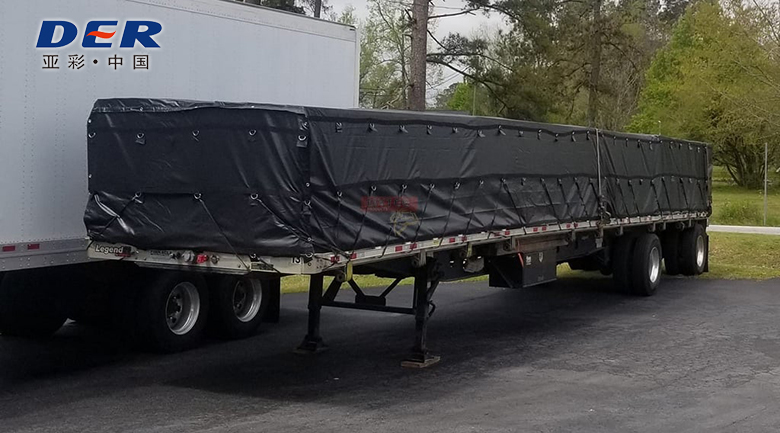
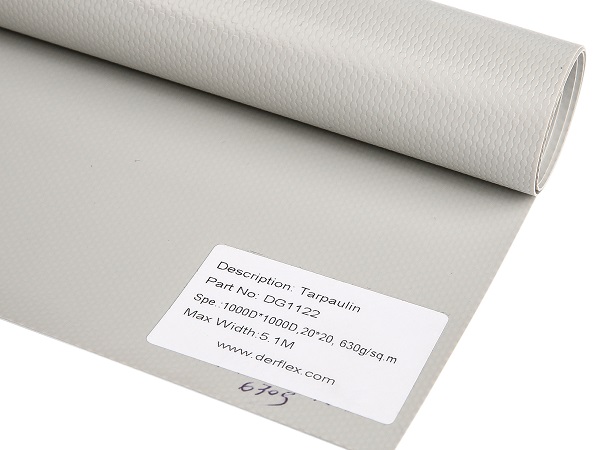
Photographs show DERFLEX-listed tarp material and application examples, not documented low-temperature test outcomes. For wider finished-tarp manufacturing choices, see PVC tarp material for truck covers.
For distributors, converters and fleet-cover manufacturers, the main objective is repeatable purchase specifications—not a single impressive catalog temperature.
State the minimum ambient and handling temperatures, number of bends or rolls, roller diameter, support loads and the exact finished-cover configuration.
Select a formulation, confirm a named cold-bend standard with a pass criterion, then inspect a representative seam, hem, pocket or edge detail if the duty requires it.
Define acceptable construction changes, inspection frequency, roll identification, retained samples and the documents required before dispatch. Agree any third-party testing separately.
A practical procurement package helps ensure that quoted performance refers to the material actually shipped.
Discuss sample approval ↗This is a suggested purchasing workflow; the actual testing and documentation scope must be mutually agreed. DERFLEX provides coated material and fabrication routes; specific records or testing availability should be confirmed during sourcing.
Well-defined requests let suppliers quote comparable constructions and reduce the risk of approving a sheet that is unsuitable for the finished winter cover.
Truck cover, equipment cover, construction enclosure, cut panel, roll goods or branded OEM tarp.
Lowest expected conditions and the temperature at which the sheet must actually bend or roll.
Static, occasional fold or daily roll; roller diameter, fold paths and approximate cycles.
PVC/polyester grade, weight or thickness preference, tensile/tear, waterproofing and UV expectations.
Size, roll width, seams, hems, webbing, grommets, D-rings, color, logos and packaging.
ASTM D2136 or ISO 4675 where applicable, specified temperature and any assembly trial.
Trial order, total volume, roll lengths, destination, delivery plan and any private-label requirements.
Pre-production sample, reports, lot traceability and customer-controlled approval procedure.
If you are still comparing ordinary industrial grades with winter formulations, use the heavy-duty vinyl tarp specification overview as a baseline, then request a specific cold-flex grade.
Answers to the questions that matter when qualifying a reusable winter tarp for industrial procurement.
It is the ability of the coated fabric to resist cracking after a defined bend at a specified low temperature. Meaningful performance claims include the test method, temperature, tested grade and acceptance condition.
No. A laboratory bend test evaluates a defined specimen and deformation. Finished-tarp service adds folds, welds, hardware, wind, ice, abrasion and repeat movements. Validate the selected assembly for the real duty.
ASTM D2136 and ISO 4675 are recognized coated-fabric low-temperature bend test references. Specify the edition, intended test temperature and acceptance criterion; ask the supplier for appropriate grade-specific evidence.
No. Higher fabric weight can support some mechanical requirements but does not establish cold flexibility. PVC compound selection, textile reinforcement, coating adhesion and bending geometry are important to cold-crack behavior.
DERFLEX lists specialist cold-resistant tarp directions at −40°C, −50°C and −60°C. Suitability at an individual target temperature must be confirmed for the exact grade, test method and finished construction before the order is approved.
For demanding winter handling, yes. Seams, hems and hardware may create stiff or concentrated-load areas. A representative assembled sample can help evaluate those details in addition to a standardized material bend test.
DERFLEX discusses PVC tarp roll goods, cut panels and customized finished tarps. State roll width, length, construction, target cold-bend requirement, quantity and downstream welding or conversion process in the quotation request.
Provide application, lowest handling temperature, movement frequency, target material construction, dimensions, seam and attachment design, test requirement, quantity, destination and sample or documentation needs.
Send the temperature where the tarp must move, how it is fabricated and which evidence your buyer requires. DERFLEX can review a suitable PVC-coated polyester direction, customization scope and quotation details for the project.
Useful starting data: minimum handling temperature · fold / roll pattern · size / GSM · quantity · test method.
Request A Quote ↗Quote requests open DERFLEX’s existing request page. No unconnected form is embedded here.