News
Industry News

How Truck Tarpaulin Is Made for Highway Wind Loads | DERFLEX

Update:2026/9/16 17:16:17 Views:
Truck Tarp Engineering · Manufacturing Guide

How Truck Tarpaulin Is Made for Highway Wind Loads

A highway truck tarp is not made wind-resistant by adding more PVC alone. Its road performance is built through a load path: polyester reinforcement, coating adhesion, panel orientation, welded joins, reinforced hems, webbing, D-rings or grommets, correct fit and a fastening layout that limits loose fabric and repeated flapping.

Focus: flatbed, trailer & curtain applications Material: PVC-coated polyester Buyer type: fleets, converters, OEMs, distributors Updated: September 17, 2026
DERFLEX truck tarpaulin with D-rings and reinforced edge construction
Finished truck tarpaulin detail. Highway wind performance depends on how the center panel transfers load into seams, reinforced edges and attachment points.

Quick answer: truck tarpaulin for highway service is made as a reinforced flexible system, not simply as a waterproof sheet. The factory first defines the truck, cargo shape, exposure and attachment layout; builds the required PVC-coated polyester structure; converts the roll material into fitted panels; welds or sews the required joints; reinforces the perimeter and high-load zones; installs hardware; and then checks material, seams, attachment zones and finished geometry. A claimed highway wind capability should be tied to the installed tarp system and validation method—not inferred from GSM alone.

The Core Engineering Idea

Highway airflow loads the whole tarp system

At road speed, the cover sees pressure, suction, turbulence and vibration. A loose edge can repeatedly snap between loaded and unloaded states, creating fatigue at the very places where a tarp is usually weakest: hems, seam ends, grommets, D-ring tabs and abrasion points.

Wind load rises rapidly with relative air speed. In basic aerodynamics, dynamic pressure is proportional to the square of air velocity. That means a higher-speed route, headwind, crosswind or turbulent wake can increase loading much faster than a simple “10 mph more” comparison suggests. Actual tarp force still depends on vehicle shape, cargo profile, slack, exposed area and fastening geometry.

Relative AirflowVehicle speed + ambient wind + passing traffic
Tarp PanelPressure, suction and local flutter
Panel JointWelded or sewn load transfer
HemPerimeter load spreading
Webbing / PatchLocal reinforcement around hardware
D-Ring / GrommetDirectional attachment point
Vehicle AnchorFinal reaction point in the installed system

Important distinction: a truck tarp is primarily a cover, containment surface or curtain. It should not be treated as a substitute for the cargo securement system required for the load. Cargo restraints, tiedowns, blocking and other securement devices must satisfy the rules and working-load requirements applicable to the vehicle, route and cargo.

Manufacturing Sequence

10 stages from highway duty brief to finished truck tarp

The sequence below shows where wind-load performance is created. Exact equipment and fabrication methods vary by tarp type; the key is keeping the load path controlled from the material specification through final installation geometry.

Define the real road condition

Start with truck type, cargo envelope, route speed, likely crosswind exposure, required weather protection, handling frequency, anchor positions and whether the tarp is removable, roll-up, curtain-side or fixed over a frame.

Specify the polyester reinforcement

The woven polyester base cloth carries much of the tensile load. Yarn size, weave density, warp/weft balance and dimensional stability are selected around the duty rather than around finished GSM alone.

Build the PVC-coated composite

PVC is applied by a controlled coating or lamination route to create the waterproof, flexible and weldable surface. Coating adhesion matters because wind cycling can repeatedly flex the composite and its later welded details.

Finish the surface for the route

Color, lacquer, UV direction, cold-flex direction, print surface and cleanability can be matched to the market. These features affect outdoor durability but do not replace the mechanical specification.

Orient and cut panels around the load path

Panel size and orientation influence where joins fall and how force travels across warp and weft. Large truck covers should avoid unnecessary seam intersections in already concentrated load zones.

Join panels with a qualified seam

Compatible PVC-coated panels can be hot-air or high-frequency welded where appropriate. Seam width, overlap, process settings and failure mode should be qualified for the actual fabric—not copied blindly from another grade.

Reinforce the windward edge and perimeter

Folded hems, extra PVC layers, webbing, rope-in-hem or local wear patches can spread force over a larger area. Reinforcement should extend far enough to transfer load into sound main fabric.

Install D-rings, grommets and straps as load-transfer hardware

Hardware spacing must match real vehicle anchors and pull direction. A strong D-ring or eyelet is ineffective if it is attached to a weak hem, pulled diagonally or placed where the tarp is allowed to flap between fixing points.

Control finished fit and tension geometry

A cover that is too loose can inflate, beat against cargo and shock-load hardware; a cover that is over-tightened can overload isolated attachment points. Finished dimensions, drop depth and anchor map are part of the engineering specification.

Inspect the finished system, not only the roll

Material tests should be combined with seam checks, attachment-zone inspection, dimension verification and prototype fit or project-specific validation when a defined highway wind rating is required.

Material Anatomy

What each layer contributes under wind

The center of the tarp and the attachment zone do different jobs. A useful truck tarp specification therefore controls both the roll material and the finished-cover construction.

1

Polyester base fabric

Provides the reinforcement skeleton for broad tensile load, dimensional stability and tear resistance. MD/warp and CD/weft performance should both be reviewed.

2

PVC coating system

Creates the weather barrier, flexible surface, abrasion protection and weldable interface. Adhesion and flexibility matter under repeated road cycling.

3

Seams and panel overlaps

Move load between panel sections while preserving the required weather barrier. Joint strength should be checked separately from parent-fabric strength.

4

Reinforcement + hardware

Hems, webbing, patches, D-rings and grommets transform a flexible sheet into an attachable truck cover and are often the first zones affected by poor load distribution.

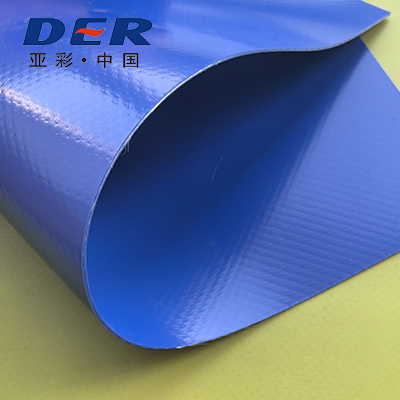
DERFLEX PVC coated polyester tarpaulin showing woven reinforcement beneath flexible PVC coating

Coated textile structure: the polyester reinforcement and PVC surface work as a composite. Wind resistance cannot be judged from coating thickness or finished weight alone.

Buyer Selection Matrix

Match the tarp construction to the highway failure mode

These are specification directions, not universal ratings. Final GSM, strength values, hardware spacing and validation method should be confirmed against the actual truck and route.

Highway condition Dominant risk Material / fabrication priority What the buyer should specify
Tall flatbed load Large exposed area, suction, edge flutter Strong tensile + tear behavior, close fit, windward-edge reinforcement Load profile, tarp drops, anchor map, seam locations, reinforced perimeter
Steel or machinery Wind movement plus sharp-edge abrasion Tear resistance, wear patches, corner protection, controlled slack Contact points, padding plan, local reinforcement zones, repair strategy
Curtain-side trailer Broad panel tension, road vibration, buckle/strap loads Balanced MD/CD strength, weldability, strap-zone reinforcement, print surface Curtain size, buckle spacing, roller/rail system, finish and climate
Dump / roll tarp Repeated rolling, edge movement, loose-cover inflation Flex durability, tear resistance, pocket/roller reinforcement, correct tension Body dimensions, roller system, tarp path, edge hardware, containment need
High crosswind route Higher lateral pressure and turbulence Minimize slack, strengthen exposed edges, shorten unsupported spans Route exposure, operating speed, windward orientation, attachment layout
Debris containment where full waterproofing is not required High drag on a solid cover Consider a suitable mesh structure to allow airflow Containment particle size, mesh openness, UV exposure and roll system
Specification Logic

Do not turn “wind resistant” into one unsupported number

A professional RFQ separates material properties from the finished installed system. The table below shows why one headline GSM or one “mph rating” is not enough.

Specification field What it tells you Why it matters to highway wind
GSM / finished massOverall material mass per square meterUseful for product family positioning, but does not define yarn structure, tear, seam or attachment strength.
Tensile / breaking strengthResistance of intact fabric under defined pulling testRelevant to broad panel tension and load transfer across the tarp.
Tear resistanceResistance to propagation from a cut or local defectCritical where flapping, hooks, corners or abrasion create damage initiation points.
Coating adhesionBond between polymer layer and textile reinforcementRepeated flexing and welded fabrication rely on a stable coated composite.
Seam strengthCapacity and failure mode of the actual joined panelLarge truck covers often contain joins that become part of the wind-load path.
Attachment-zone strengthHow grommet/D-ring + reinforcement + hem carry loadWind force ultimately reaches discrete anchors; weak local construction can fail before the center fabric.
Finished dimensions / fitHow much slack, drop and unsupported area existsLoose geometry increases movement and shock; excessive tension concentrates load.
Project-specific wind validationEvidence for the complete installed system under defined conditionsNeeded if the buyer requires a declared highway wind-speed capability.

DERFLEX truck tarp material direction: published DERFLEX truck tarpaulin pages commonly position PVC-coated polyester in roughly the 450–900 gsm range for truck applications, with heavier or custom constructions available by project. The correct grade should be selected from the actual load path, handling, climate and fabrication—not by choosing the highest GSM automatically.

Critical Detail Engineering

Where highway truck tarps usually need reinforcement

Windward leading edge

The first exposed edge can see repeated lifting and pressure fluctuations. Close fit, continuous reinforcement and usable anchor spacing help reduce flutter.

Corners and flap transitions

Load changes direction at corners, creating diagonal stress. Larger patches or webbing layouts can spread force farther into the parent fabric.

Grommets and D-rings

Hardware should sit inside a reinforced load zone and align with the intended pull direction. More hardware only helps when the surrounding hem can share the load.

Seam ends and intersections

Multiple layers, weld ends and geometry changes can create stiffness transitions. Seam layout should avoid stacking unnecessary stress concentrations in high-movement zones.

Cargo contact points

Sharp corners and repetitive rubbing can weaken the tarp before wind finds the defect. Wear pads, corner protection and correct fit are often more useful than adding mass everywhere.

Roller pockets and curtain straps

Mechanical systems repeatedly cycle the same local zones. Pocket, strap and buckle reinforcements should be treated as engineered components, not decorative accessories.

Quality Control

What should be checked before bulk production?

  • Approved PVC-coated polyester construction, color, finish, width and total weight.
  • MD/warp and CD/weft tensile and tear criteria using an agreed test method and units.
  • Coating adhesion where it is critical to the selected coated-fabric construction.
  • Production seam design, overlap, welding/sewing method and representative seam test.
  • Finished tarp dimensions, drops, flaps, pockets and cut-outs against the approved drawing.
  • Hem depth, webbing width, corner reinforcement and local wear patches.
  • Grommet or D-ring material, position, spacing and backing construction.
  • Attachment map aligned to the real truck anchors—not a generic spacing assumption.
  • Visual inspection for coating defects, seam discontinuity, skipped hardware and distorted edges.
  • Prototype fit / functional review when the project geometry is new or a specific wind capability must be validated.
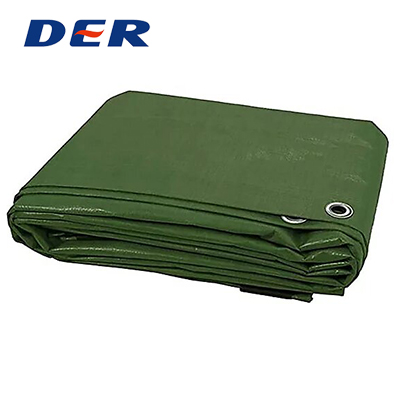
DERFLEX waterproof heavy duty tarp with reinforced grommet edge

Finished-edge inspection: check the relationship between the center fabric, hem, reinforcement and metal hardware.

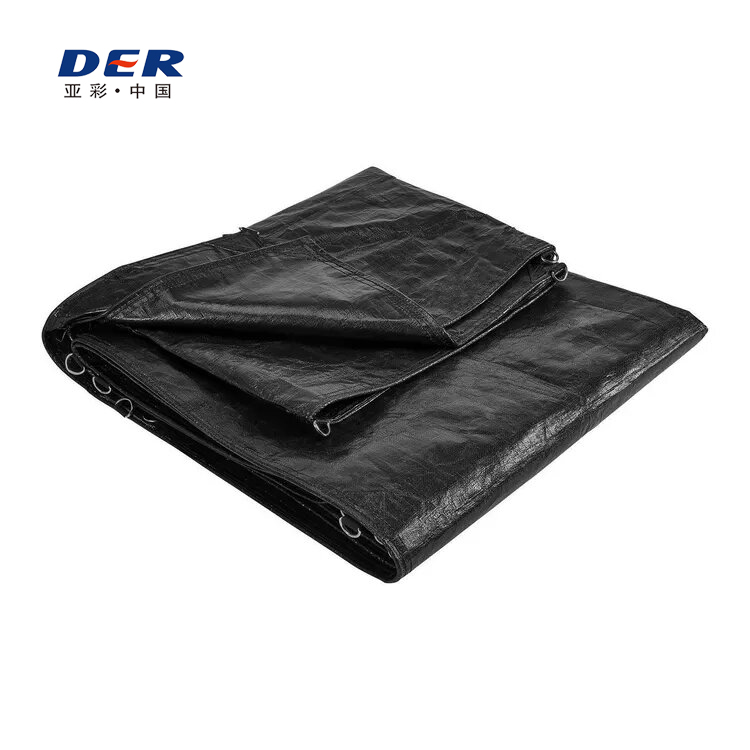
Black DERFLEX truck tarpaulin with D-rings for reinforced truck cover attachment

Directional attachment: D-rings can be useful where a strap or hook pulls in a defined direction, provided the backing reinforcement is engineered for that load.

Failure Prevention

5 procurement mistakes that create wind problems later

1. Ordering by GSM only

Two tarps at the same finished weight can use different yarns, weaves, coating add-on, seam design and reinforcement. Request mechanical and construction details tied to one approved product code.

2. Copying grommet spacing from a stock tarp

Attachment spacing should follow the truck's real anchor positions and load path. Unused grommets do not share load.

3. Using a larger tarp “for flexibility”

Excess material can become uncontrolled slack. At speed, that loose area may inflate, flap and abrade against cargo or hardware.

4. Treating the strongest fabric as the finished tarp rating

The system is only as robust as its weakest relevant detail: weld, hem, reinforcement, hardware, anchor geometry or damaged contact zone.

5. Asking for a wind-speed claim without defining validation

A meaningful mph or km/h rating requires test conditions or system-level engineering criteria. Ask what configuration, geometry, anchors and acceptance method support the claim.

6. Ignoring driver handling and field repair

Daily folding, dragging, re-tensioning and local patching can change the load path over time. Design repairable high-wear zones and document the approved replacement specification.

RFQ Checklist

What to send a truck tarpaulin manufacturer

The more accurately the supplier sees the installed geometry, the easier it is to recommend a construction that controls movement instead of simply increasing material weight.

Vehicle & route

  • Truck / trailer type and body dimensions
  • Typical road speed and route exposure
  • Climate: UV, heat, cold, rain, humidity
  • Removable, roll-up, curtain or fixed-frame system
  • Destination market and applicable requirements

Finished tarp geometry

  • Finished length, width, drops and flaps
  • Cargo shape / maximum loaded profile
  • Anchor positions and pull direction
  • Grommet, D-ring, strap, pocket or buckle map
  • Photos or drawing of the installed system

Material & fabrication

  • Target PVC-coated polyester grade or performance level
  • Required GSM / thickness direction if already defined
  • Tensile, tear, adhesion or seam criteria if required
  • Welded, sewn or hybrid fabrication preference
  • Reinforcement, abrasion patches and edge construction

Commercial order data

  • Roll goods, cut panels or finished covers
  • Color, printing, labels and packaging
  • Quantity and repeat-order expectation
  • Sample or prototype requirement
  • Required inspection, reports or project-specific validation
DERFLEX Image Reference

Truck, tarp material and application context

These DERFLEX-hosted images help buyers connect the manufacturing explanation with real tarp material and transport applications.

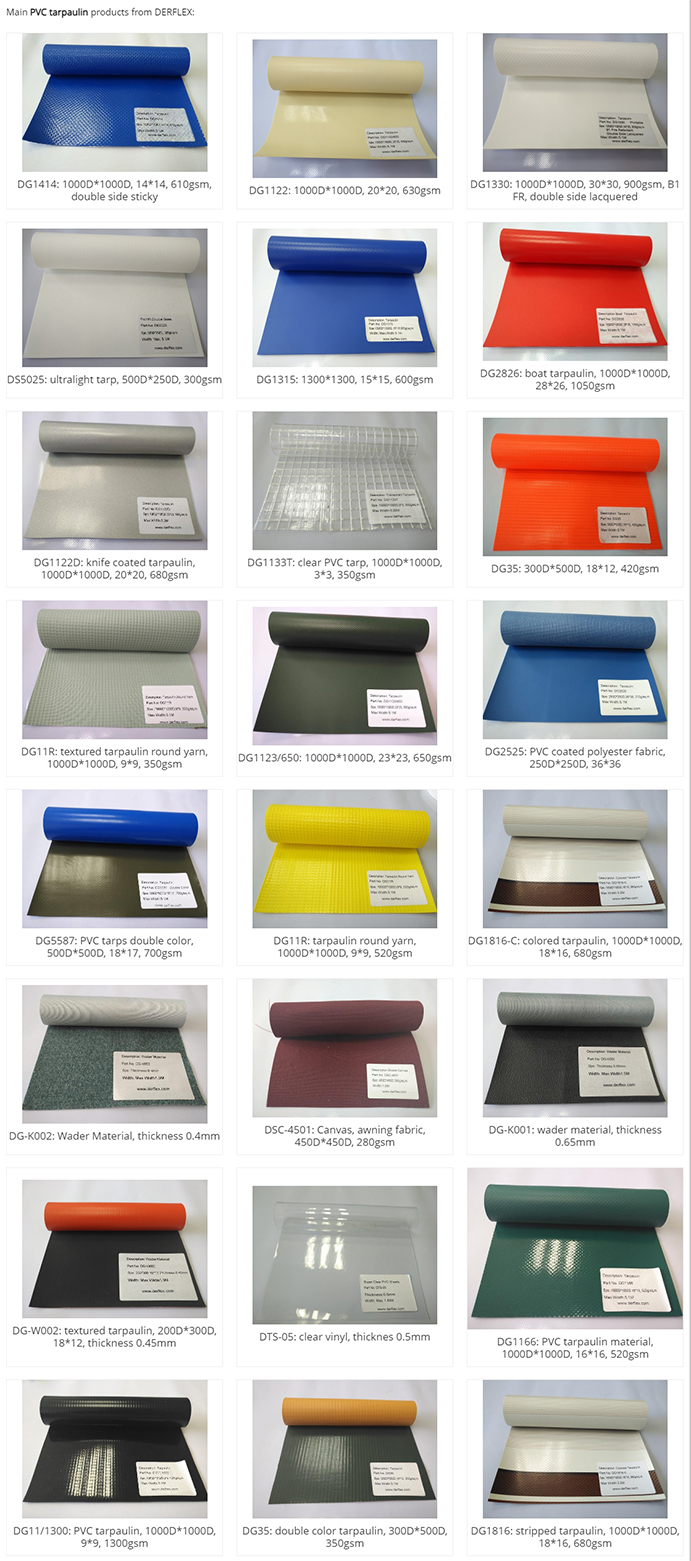
DERFLEX PVC tarpaulin material sample board with multiple coated fabric constructions

Material sample board: finished appearance can look similar while yarn, weave, coating and mechanical properties differ.

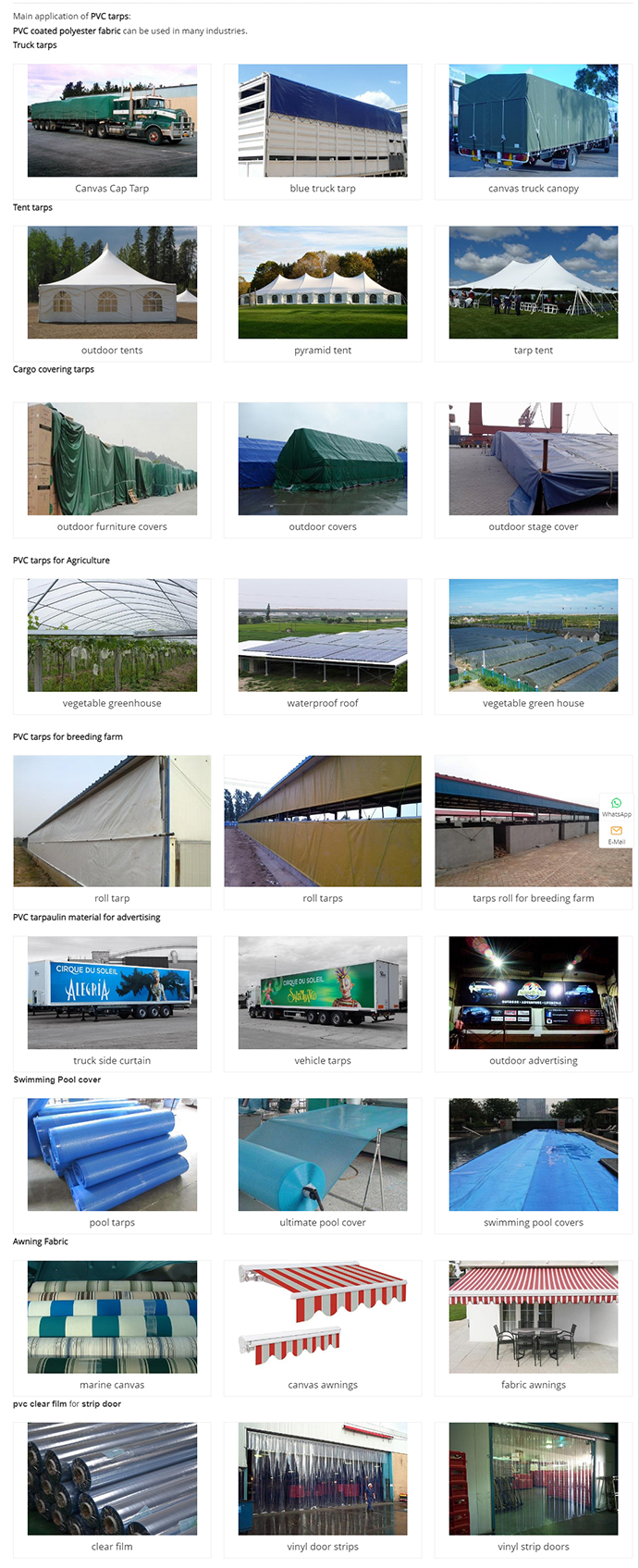
DERFLEX PVC tarpaulin application board including truck covers and side curtains

Application board: truck covers and side curtains place different movement and load demands on the same broad PVC tarpaulin material family.

Buyer Questions

Truck tarpaulin wind-load FAQ

How is a truck tarpaulin made to handle highway wind?

It is designed as a load-transfer system. A strong polyester reinforcement carries panel tension, PVC coating provides the weather barrier and weldable surface, seams join large panels, reinforced hems spread edge load, and webbing plus D-rings or grommets transfer that load into truck anchors. Correct finished fit reduces uncontrolled flapping and shock loading.

Can a truck tarp be rated for 65 mph or 75 mph?

Only if the stated rating is supported by a defined test or engineering validation for the complete installed configuration. Fabric GSM or tensile strength alone cannot prove a vehicle-speed rating because force also depends on wind direction, cargo shape, tarp area, slack, attachment spacing and anchor geometry.

Does a heavier truck tarp resist wind better?

Not automatically. Higher GSM can correspond to a more substantial construction, but wind performance also depends on yarn and weave, tear resistance, seam strength, coating adhesion, reinforcement, hardware and fit. A loose 900 gsm tarp with weak attachment zones can fail before a lighter but better-engineered system.

How do you stop a truck tarp from flapping on the highway?

Start by removing unnecessary slack, securing the windward edge, matching attachment points to real anchors, shortening unsupported edge spans and protecting abrasion zones. Do not solve flapping by simply tightening one or two straps harder; that can shift the problem into a grommet or corner.

Are D-rings better than grommets for high-wind truck tarps?

They can be better for certain directional loads because a D-ring can be connected to a wider webbing tab or reinforcement patch. The real capacity still depends on how the D-ring is attached, the backing area, pull direction and the strength of the surrounding hem and main fabric.

What truck tarp material is commonly used for long-distance highway transport?

PVC-coated polyester is widely used because it combines a reinforced textile skeleton with a waterproof, flexible, weldable surface. DERFLEX supplies custom truck tarp constructions within its broader PVC tarpaulin range for flatbed, trailer, side-curtain and related logistics applications.

What tests matter most when buying a truck tarp for wind exposure?

Review MD/CD tensile and tear performance, coating adhesion when relevant, representative seam strength, finished dimensions and the attachment-zone construction. If a project requires a declared wind-speed capability, define the installed geometry and validation method instead of relying only on roll-material data.

Can mesh reduce truck tarp wind load?

Yes, a suitably open mesh can allow airflow through the cover and reduce pressure compared with a solid waterproof tarp. Mesh is therefore useful for debris containment and selected dump-truck applications, but it is not the right choice when the load requires a continuous rain barrier.

OEM / Fleet / Converter RFQ

Build the truck tarp around the route, not around a generic weight

Send DERFLEX the truck body, loaded cargo profile, finished cover dimensions, anchor map, target material direction, reinforcement details and order quantity. For new geometry or a required wind-speed claim, include the validation method you need before bulk production.

Request a Truck Tarp Quote
  • Truck / trailer type and route conditions
  • Finished size, drop and cargo profile
  • Grommet / D-ring / strap positions
  • GSM, color, finish and quantity
  • Required tests, sample or prototype review

Performance and service life depend on the selected material, finished construction, cargo profile, installation, route conditions, maintenance and operating practice. Final specifications should be confirmed in the quotation, drawing, approved sample and any required test plan.

Prev:Self-Adhesive Aluminum Foil Film Manufacturer | DERFLEX
Next:Inside a PVC Tarpaulin Factory: Yarn to Finished Roll | DERFLEX
Consulting Services
+86-021-54361792 / 54361798
Email
sales@derflex.com