Yellow or brown tint
A color shift. Check whether it remains after approved cleaning and appears through the viewing field.



Material care / Buyer’s guide
Clear vinyl tarp yellowing can come from material aging, surface contamination or chemical contact. The right response starts with identifying the change. For enclosure fabricators, distributors and project buyers, this guide connects what you see with what to clean, what to document and what to specify next. DERFLEX supplies clear PVC roll material and custom panel options; outdoor grade, appearance and care requirements should be agreed for the intended use.
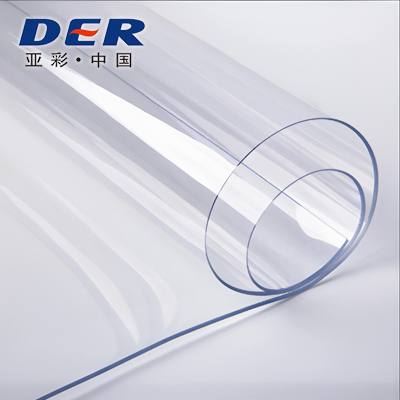
A yellow-looking panel is a symptom. Its color alone does not identify the cause or establish whether the material is still fit for use.
Clear vinyl tarps can turn yellow as sunlight and heat age the PVC formulation. Dirt, residues and chemical contact can also discolor the surface. Approved cleaning may remove deposits; it cannot be assumed to reverse degradation within the film. Compare a small cleaned area with an unexposed reference before deciding to clean further or replace the panel.
A color shift. Check whether it remains after approved cleaning and appears through the viewing field.
A clarity problem. Check for surface deposits, moisture, fine scratches and changes following storage.
A handling or integrity problem. Record it separately from color and assess whether replacement is needed.
Selecting a new cover? The clear PVC tarp range explains material and finished-panel supply options. This guide focuses on appearance changes and acceptance checks.
| What you notice | What to check first | Useful next action |
|---|---|---|
| Broad yellow tint on the exposed area | Compare with a shaded edge or retained sample, after both surfaces are clean and dry. | Record exposure and material grade; request a supplier review if the tint persists. |
| Localized marks near seals, straps or a spill | Map the contact pattern and identify cleaners, rubber, adhesives or other nearby materials. | Check compatibility on an offcut before repeating contact across new panels. |
| Haze after wet storage | Inspect both faces for trapped moisture, deposits or surface growth. Note the storage history. | Follow approved cleaning and drying guidance; reassess when fully dry. |
| Fine lines, scuffs or distortion | Look for rubbing against frames, repeated creases, grit and tension marks. | Review handling and support details; more scrubbing may worsen the viewing surface. |
| Discoloration with cracks or failing edges | Examine seams, attachment points, flexibility and the required viewing function. | Plan replacement where damage prevents the panel from meeting its purpose. |
Flexible clear vinyl is a PVC formulation. Resin, additives, manufacturing history and the conditions of use all matter; “clear” describes appearance, not durability.
Light exposure can trigger chemical changes in PVC, including the formation of structures that contribute to discoloration. UV stabilization helps control degradation, but a generic UV-resistant label is not proof of permanent clarity.[1]
Sun, elevated temperatures and moisture create a different exposure from a sheltered indoor curtain. Record nearby heaters, hot frames and poorly ventilated spaces when discussing the grade. A new sample alone cannot establish the long-term result.
Incompatible cleaners, sprays or contact materials may damage or mark the surface. A patch matching a seal or strap is a useful clue, not proof of bulk PVC aging. Obtain grade-specific care instructions before applying a restoration treatment.[2]
Wet packing and repeated rubbing can create clouding, marks or clarity loss that buyers describe as yellowing. Separate color change from scratches, surface films and moisture effects when documenting a complaint.
Do not judge a grade by a roll edge or a phone photo. Layers, background and lighting alter the apparent tint. Compare single layers at the same thickness and viewing conditions. Blue tint in a new film is not evidence that it will resist outdoor yellowing.
Sometimes the visible change is a removable deposit. Persistent discoloration within the material needs a different decision. Treat cleaning as a controlled check, not a guaranteed restoration.
Use its product label, order record or retained sample. Coated marine windows can require different care from ordinary uncoated clear PVC.
Follow the supplier’s rinsing guidance. Use a clean, soft cloth and avoid dry scrubbing that drags particles across the surface.
Try a small inconspicuous area first. For uncoated PVC, use mild soap and water only when permitted by its care instructions; coated products may require a specified system.
Compare the cleaned patch with the surrounding film under the same light. Stop if haze, tackiness or marking increases.
Replace or obtain a material assessment when cleaning does not restore the viewing function, the film cracks in normal handling, or seams and attachments no longer perform as required.
Before discarding the old panel, keep a labelled offcut, overview photos and the original order details. These help separate material selection from cleaning, contact and installation issues.
Avoid improvised bleaching or solvent treatment. Do not assume peroxide, abrasive pads, glass cleaner, wax or plastic polish is compatible. Follow the exact film maker’s instructions; approval for one brand or coating does not transfer to another.[2]
For a replacement enclosure, review clear vinyl patio curtain planning alongside the film grade. Frame rubbing, access, panel size and roll-up handling remain relevant even when the material changes.
Ask what a claim means for the proposed formulation, thickness and use. “Anti-yellowing,” “outdoor grade” and “UV resistant” need a defined basis for comparison.
On smaller screens, scroll the table horizontally.
| Buyer check | Ask for | What it helps you decide |
|---|---|---|
| Exact grade and construction | Film identification, thickness and tolerance, surface treatment, tint and intended exposure. | Whether the quoted material matches the sample and application, including any coating-specific care. |
| Change in yellowness | Before-and-after color measurements. If ASTM E313 is used, request the measurement conditions, specimen details and applicability.[3] | Whether comparable specimens show a controlled color change. Agree the acceptance limit rather than assuming one universal value. |
| Haze and light transmission | Initial and aged results using a suitable method, such as ASTM D1003, with the procedure and specimen preparation stated.[4] | Whether a panel remains useful to see through. A material can pass light while scattering it and obscuring the view. |
| Weathering conditions | The full exposure method, lamp or source, cycle, temperature, moisture conditions, duration and evaluation criteria. | Whether two reports are actually comparable. ASTM G154 identifies apparatus practice; operating conditions and measured changes still matter.[5] |
| Function after exposure | Relevant checks of flexibility, surface condition and fabricated seams or edges for the proposed panel. | Whether appearance is being assessed alongside the performance the installation needs. |
| Written service terms | Any applicable appearance warranty, exclusions, cleaning requirements and claim procedure. | What is covered for your application. A weathering report and a warranty answer different questions. |
Test hours are not a calendar. Do not turn a laboratory exposure duration into an outdoor service-life promise without a validated correlation for the material and environment. Two “UV tested” films may have been assessed under different cycles and against different failure criteria.
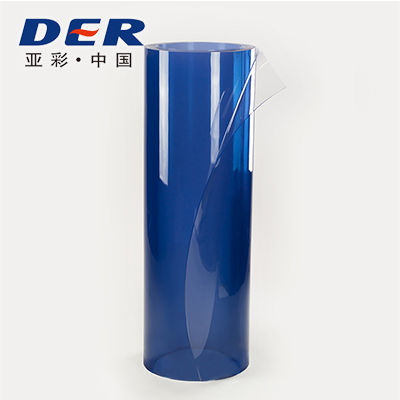
Retain a labelled, protected sample from the agreed grade, including its thickness and batch reference.
Use clean, dry, single-layer samples, identical backgrounds and consistent lighting. Do not stack different numbers of layers.
Include representative seams, border material, seals and cleaning contact. A flat-film test cannot settle every finished-panel interaction.
Record the acceptable tint, haze, flexibility and surface condition, plus the method used to judge them. Link repeat orders to that approved specification.
Source roll goods through the clear vinyl film range. If you are considering another polymer, use the PVC vs PP clear film comparison to review handling and fabrication as well as initial clarity.
DERFLEX’s material and panel options let buyers discuss the viewing field and fabrication together. Start with the following information; a photo and simple sketch are useful when the specification is still being developed.
“We need clear PVC for [application] in [location], exposed [seasonally / continuously]. Required supply is [rolls / finished panels], dimensions [ ], quantity [ ]. Please propose a grade and provide its care instructions, available weathering evidence and a sample for agreement on tint, haze and handling.”
For rain-screen projects, see waterproof clear tarp construction: water management at seams and edges is separate from color retention. For window inserts, review clear PVC tent-window materials and the interface with the surrounding fabric.
What changes the quote: film grade and thickness, usable roll width, panel yield, seam and border work, fastening details, test/document requirements, quantity and packing. Compare quotations against the same scope and acceptance criteria.
Answers for replacement decisions and new clear PVC sourcing.
Color alone does not establish watertightness or mechanical condition. Check for cracks, pinholes, damaged seams and failed attachment areas separately. A tarp may still shed water while its visibility has become unacceptable for an enclosure.
Thickness alone is not a reliable anti-yellowing specification. Formulation, surface treatment and exposure matter, and different thicknesses can also look different in a color comparison. Choose thickness for the panel and handling needs, then ask for suitable aging evidence for that exact grade.
No. UV resistance concerns how the material withstands exposure. UV blocking concerns the radiation transmitted through it. If protection of people or goods behind the panel matters, request spectral-transmission data for the relevant wavelengths as a separate requirement.
There is no useful universal period for all clear vinyl tarps. Grade, location, orientation, heat, cleaning and use affect the result. Specify the viewing standard you need and review comparable weathering evidence and any written service terms before accepting a lifetime claim.
No. Identify whether the film is coated and follow its own care instructions. A product suitable for ordinary vinyl can be incompatible with a specialty coated window. Test an approved method on a small area first and keep the cleaning record if investigating discoloration.
Send the order or grade reference, installation and close-up photos, a timeline, location, sun and heat exposure, cleaning products used, contact materials and storage history. Include a retained new sample or labelled offcut if available. These details help determine which checks are useful.
Plan the next clear PVC order
Send your application, exposure conditions, panel dimensions and quantity. Discuss clear PVC rolls or custom panels with a specification that covers appearance, fabrication and care.