


Packaged biomass / Custom cover development
Wood Pellet Storage Tarp Covers for Moisture Sensitive Stock
Specify an outer weather cover around the way your pellets are packaged, stored and handled. DERFLEX supports PVC coated polyester roll material, cut panels and drawing-based custom covers for distributors, pellet producers and OEM buyers.
Begin with dry stock and suitable packaging. A waterproof tarp controls external rain exposure; the storage plan must also address ground moisture and condensation.
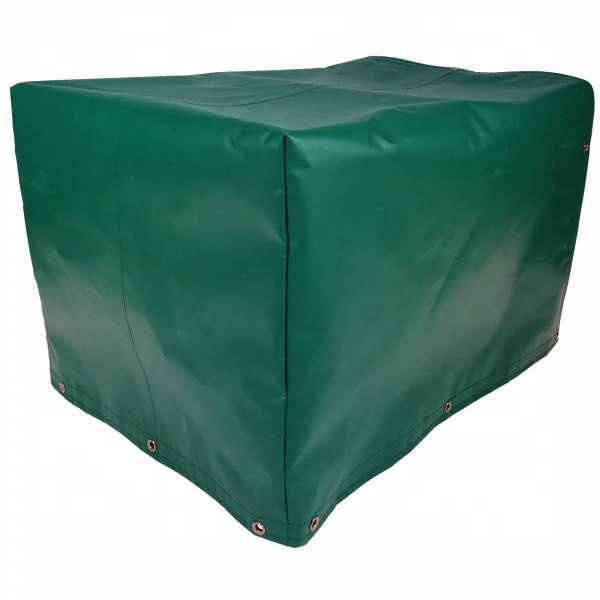
Protect the complete load, including vulnerable bags and corners.
Rain, runoff and ground moisture need separate attention.
Check a sample on the actual stack before repeat supply.
Start with the storage conditions
Can a tarp keep wood pellets dry?
A correctly specified tarp can reduce rain exposure around packaged pellet stock. It cannot dry damp pellets or guarantee humidity control. Use a dry, sheltered storage location where available, raise bagged stock off wet floors and follow the pellet supplier’s packaging and storage instructions.
ENplus guidance recommends keeping bagged pellets on pallets in a ventilated room, protected from moisture and sunlight. An outer cover is an additional layer within that storage arrangement.
Storage reference: ENplus GD 3001:2023, Storage for wood pellets, bagged-storage guidance and §5.9. This reference concerns pellet storage, not certification of a DERFLEX cover.
Application matrix
Match the cover to the stock format.
Bagged pallets, big bags and loose pellets have different interfaces. Confirm the storage arrangement before choosing a fabric weight or a cover shape.
| Stock format | Cover direction to discuss | Details that decide the fit | Storage boundary |
|---|---|---|---|
| Intact bags on a repeatable pallet | Five-sided fitted hood with an agreed lower closure. | Maximum loaded dimensions, bulging bags, corner wear and access to batch labels. | Retain suitable inner packaging. Confirm any outdoor exposure with the pellet supplier. |
| Several pallets or a changing stack | Dimensioned flat panel or removable sections over a supported runoff profile. | Full surface path, side drops, panel overlaps and restraint as stock is removed. | Reposition after each change. Avoid low pockets that collect water. |
| Big bags / FIBCs | External weather hood considered with the bag and liner specification. | Filled bag shape, lifting-loop clearance, closures and removal before handling. | The tarp does not establish the FIBC’s moisture barrier or lifting capability. |
| Loose bulk pellets | Purpose-designed dry storage, such as a suitable silo or enclosed store. | Moisture exclusion, filling and discharge interfaces, ventilation and operating requirements. | A draped stockpile tarp alone does not provide a complete pellet storage system. |
On smaller screens, scroll the table horizontally to read every column.
For reusable hood styles and general logistics options, explore DERFLEX pallet covers.
Cover anatomy
Specify the interfaces that water can reach.
A fabric sheet, a seam and an opening are different parts of the rain barrier. Ask for a drawing that identifies each one.
Top profile & seams
Support the cover so runoff travels away from the stock. Locate welded panel joins and reinforcement around the real geometry; a heavier flat sheet can still pond.
Access & inspection
Place the opening where staff can inspect packaging and remove stock. Review an overlapping rain flap where a zipper or split interrupts the outer barrier.
Lower edge & restraint
Agree reinforced attachment positions and a closure clear of wet ground. Keep straps outside the forklift path. The cover does not restrain the palletized load.
Material & fabrication references
Details to discuss with your cover brief.
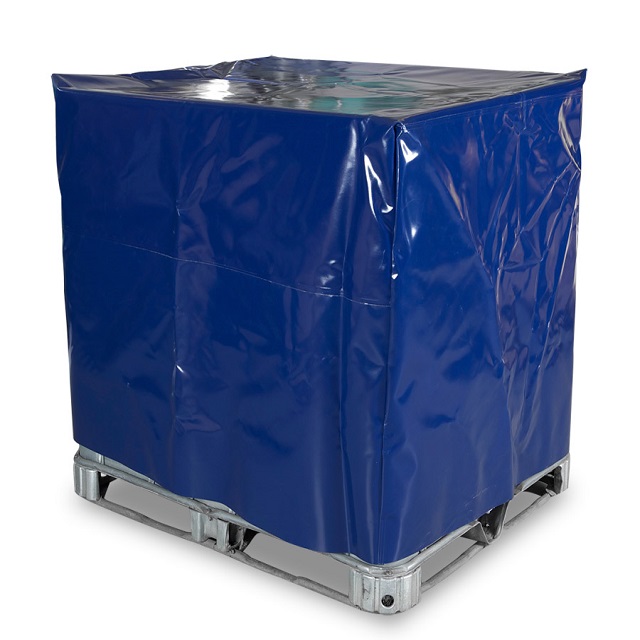
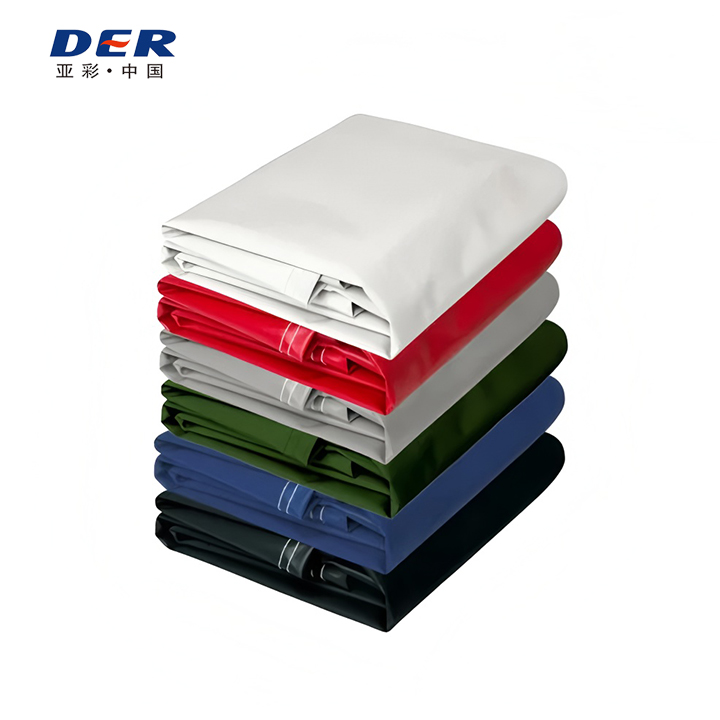
DERFLEX-hosted product images illustrate available cover and material directions. They are not pellet-storage performance evidence.

Build a purchasing specification
Choose construction before comparing price.
The table defines the choices to agree for a custom program. It is not a stock-model data sheet.
Review the material family in PVC coated polyester tarpaulin, and compare the fabrication considerations in waterproof tarp material guidance.
| Item | What to agree with DERFLEX |
|---|---|
| Supply format | Roll material for converters, cut panels, or a fabricated cover. Identify which fabrication and fittings are included in the quotation. |
| Material structure | PVC coated polyester; select the grade against exposure, folding, wear and handling. Record GSM and thickness separately if both are required. |
| Finished dimensions | Loaded L × W × H in mm, or developed panel dimensions in mm; agreed fit allowance, side drop, closure and finished-size tolerance. |
| Seams & openings | Panel layout, compatible welding method and acceptance check. Specify any access split, zipper and rain flap as separate details. |
| Edge reinforcement | Hem, webbing, corner patches and eyelet or strap positions matched to the actual attachment points. |
| Exposure requirements | Climate, sunlight, lowest handling temperature and storage duration. Request grade-specific evidence for any UV, cold-flex or other performance requirement. |
| Identification & packing | Color sample, size label, batch identification, folding method, carton or pallet packing, and private-label requirements. |
Before you order
Measure the loaded stack. Then define the cover.
A pallet footprint does not capture bag overhang, an uneven top or the clearance needed to fit a hood without dragging it over corners.
Use the tarp measurement guide for developed cover paths. For a fitted hood, provide a three-dimensional drawing or annotated photographs.
Measurement brief
- Load envelope
- Maximum loaded length, width and height; bag bulges, top profile and pallet overhang.
- Cover envelope
- Required skirt position, fitting clearance, opening side and attachment locations.
- Units & dimensions
- Use mm or clearly marked inches. State whether each value describes the load or the desired finished cover.
- Changing stock
- Show both full and partly depleted stacks. Agree how excess material is secured as the load becomes smaller.
Inspect before covering
Check for damaged bags, wet packaging and sharp pallet edges. Keep questionable stock separate for assessment by the pellet supplier; covering it does not restore pellet condition.
Keep drainage outside the load
Show where roof runoff, surface water and any water shed by the tarp will go. A raised pallet does not protect against flooding or water reaching the bags from the sides.
Agree a condensation check
Inspect after weather and temperature changes. If moisture appears below an intact cover, assess the stock, packaging and storage environment before assuming the fabric has leaked.
Define contact & system boundaries
This brief concerns an external cover over packaged goods. Direct contact with loose pellets, use as a silo liner, and any food-contact requirement need separate material approval. Silo, building, ventilation and monitoring systems require their own specification.
From sample to repeat order
Make acceptance criteria part of the brief.
Resolve the drawing
Number the panels, openings and attachment points. Record the chosen fabric, finished dimensions and label position so the order is reproducible.
Check the actual workflow
Plan a sample fitting on representative packaged stock. Check removal, corner contact, reclosure and runoff without risking saleable pellets during a water check.
Record what counts as a pass
Agree how dimensions, seams, fittings and appearance will be checked. Where performance matters, specify the test method, conditions and acceptance result before bulk production.
Cover cost depends on developed material area, panel yield, seam length, access details, reinforcement, order quantity and packing. Compare quotations against the same drawing and acceptance criteria.
Start your cover brief
Show us the stock.
Define the protection.
Send a loaded-pallet photograph, a simple sketch and your quantity. DERFLEX can review the material and fabrication scope for your packaged wood pellet storage covers.
Include these details
- Bagged pallets, big bags or another packaging format
- Loaded dimensions, photographs and desired side drop
- Indoor, sheltered or exposed site; climate and storage period
- Access, drainage, attachment points and handling frequency
- Quantity, color, labels, packing and destination
- Required documents, acceptance checks and planned date
Ask the quotation to state the cover supply scope, sample arrangements, MOQ and lead time for the agreed design.
Buyer questions
Wood pellet cover FAQ
Can I store bagged wood pellets outside under a tarp?
Use the pellet supplier’s approved storage conditions. Dry, sheltered storage is the starting point. For a permitted period of outdoor staging, assess packaging integrity, raised support, runoff, restraint and inspection together. A tarp alone cannot establish that the pellets will remain dry.
Should a wood pellet storage cover be breathable?
The answer depends on the moisture-control plan. Solid PVC provides an external rain barrier and is not a breathable membrane. Openings may help air exchange but can also admit damp air and driving rain. Specify the packaging and storage environment before choosing vent or closure details.
Which GSM is best for a pellet pallet cover?
There is no single GSM for every load. Compare the fabric structure, finished cover weight, folding frequency, corner abrasion, seams and attachment design. Ask for a sample of the proposed grade. GSM measures mass per area and does not directly establish thickness or a service-life rating.
Can one cover fit a full pallet and a partly used stack?
Only if the drawing accounts for both shapes. A loose hood can flap, snag or collect water after bags are removed. Provide the expected size range and discuss adjustable restraint, sectional coverage or separate cover sizes.
Can a PVC tarp be used as a loose-pellet silo liner?
That is a separate application. Contact suitability, seams, filling and discharge interfaces, moisture control and the storage system’s operating requirements must be assessed. An outer cover specification does not establish suitability as a silo liner or a complete bulk pellet store.
Does DERFLEX supply roll fabric or finished custom covers?
DERFLEX supports roll-material, cut-panel and custom fabricated-cover discussions. State which format you need and provide dimensions, environment and quantity. The quotation should identify the agreed material, fabrication, fittings, packing and any excluded system components.