


Coal Pile Covers — Mining & Power Plant Stockpile Tarps
DERFLEX supplies custom coal pile covers and heavy-duty stockpile tarps for coal yards, mining sites, power plants, ports and industrial storage areas where rain, windborne dust, abrasion and repeated outdoor exposure must be managed with a project-specific covering system.
Choose PVC coated polyester roll goods, large welded panels or finished covers with reinforced hems, webbing, grommets, D-rings, wear zones, access details and custom fixing layouts. Final material weight and construction should be matched to pile geometry, storage duration, wind exposure, handling method and site safety requirements.
What Is a Coal Pile Cover?
A coal pile cover is a large protective tarp or membrane placed over an outdoor coal stockpile to reduce direct rain exposure, limit wind-driven surface loss and dust migration, and create a more controllable storage surface. For mining and power-plant yards, heavy-duty PVC coated polyester is commonly selected because it is waterproof, weldable and suitable for reinforced large-panel fabrication. The cover must be sized and anchored around the actual pile geometry; seams, drainage, access, wind loading and coal stockpile fire-management procedures are part of the system design.
For a reliable quotation, send pile dimensions or a drawing, storage duration, expected wind exposure, cover objective, preferred material direction, anchoring concept, access points, quantity and destination.
Why Mining Sites and Power Plants Cover Coal Stockpiles
The cover is not selected only to “keep coal dry.” A useful specification starts with the operational problem: precipitation, wind erosion, surface dust, runoff control, stock rotation, access frequency, pile reshaping and the way crews will install and recover the tarp.
Reduce Direct Rain Exposure
A solid waterproof tarp can limit direct precipitation reaching the coal surface. Finished water control still depends on seam integrity, overlaps, slope and drainage around the pile.
Limit Windborne Surface Dust
Covering the exposed pile surface creates a physical barrier against wind acting directly on loose fines. Perimeter gaps, access openings and handling zones should be planned rather than left uncontrolled.
Protect the Stored Material Surface
Rain, sun, repeated wet-dry cycling and wind can change surface conditions. A reusable cover helps operators create a more consistent storage interface for seasonal or temporary stock.
Support Yard Housekeeping
Clearly defined cover edges, runoff direction and access zones can make inspection and material handling more organized in coal yards, ports and mine storage areas.
Adapt to Irregular Stockpiles
Large coal heaps rarely behave like a flat rectangle. Custom panel geometry, modular sections, conveyor cut-outs and reinforced lifting points can simplify field use.
Enable Repeatable Project Supply
For utilities, mining contractors and distributors, approved panel layouts, material references and packing codes make replacement and repeat ordering easier to control.
Which Stockpile Tarp Direction Fits the Coal Yard?
Do not freeze the GSM before defining the installation. Material weight, panel size, wind exposure, pile slope, edge loading and handling frequency work together.
| Use Case | Recommended Direction | Design Focus | Buyer Questions |
|---|---|---|---|
| Temporary coal storage | Project-matched PVC or reinforced PE depending on duration and reuse expectations | Fast installation, manageable panel weight, simple perimeter fixing | How long will the pile remain covered? Is the cover reused? |
| Power plant coal yard | Mid-to-heavy PVC coated polyester with welded seams and reinforced perimeter | Rain exclusion, repeated handling, access openings, labeled panels | Are reclaim points, conveyors or inspection zones inside the cover footprint? |
| Mining stockpile | Heavy-duty PVC coated polyester; 650–900 gsm is a common DERFLEX mining-tarp direction | Abrasion zones, rough ground contact, UV exposure, large panel strength | Will the tarp contact sharp rock, rough coal or equipment? |
| High-wind open yard | Reinforced large-panel system with engineered fixing layout; mesh relief may be considered only where waterproofing is not required | Edge reinforcement, anchor spacing, panel segmentation, wind movement | What are the site wind conditions and approved anchoring method? |
| Port or bulk terminal | Reusable PVC tarp system with cleaning-friendly surface and clear lifting/handling zones | Fast recovery, contamination control, crane/forklift handling interface | How often is the pile opened and re-covered? |
| Special hazard or regulated zone | Project-specific material only after the required test method is defined | Flame-retardant, anti-static or other documentation requirements | Which exact standard and acceptance document does the site require? |
Coal Pile Cover Material and Fabrication Options
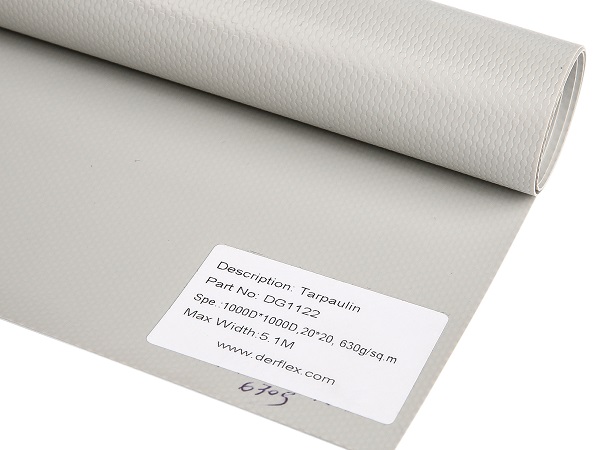
DERFLEX already supplies heavy-duty mining and industrial tarp constructions based on PVC coated polyester. For coal stockpiles, the final specification should be confirmed against pile geometry, wind, installation method, exposure duration and required test documentation.
Protective PVC Surface
Supports waterproofing, cleanability and outdoor weather exposure.
Polyester Reinforcement
Woven scrim provides tensile stability, tear resistance and dimensional control.
Welded Panel System
Large sections can be joined by compatible welding methods to reduce open seams.
Load-Bearing Perimeter
Webbing, hems, corners, grommets, D-rings and wear zones transfer pulling forces away from unsupported fabric edges.
| Specification Item | Typical Direction | Procurement Note |
|---|---|---|
| Primary Material | PVC coated polyester fabric; other project-matched tarp constructions can be discussed | PVC coated polyester is the main heavy-duty direction for reusable waterproof coal covers. |
| Weight | Approx. 650–900 gsm is a common DERFLEX mining tarp range; other weights depend on project requirements | Higher GSM can increase robustness but also increases lifting, folding and panel-handling weight. |
| Surface | Matte, glossy, lacquered or other project-defined finish | Surface affects cleaning, dirt pickup, welding and handling. |
| Performance Direction | Waterproof, UV-resistant, anti-mildew, cold-flexible, abrasion-resistant or project-specific flame-retardant options | Special claims should be tied to the exact material construction and required test method. |
| Finished Size | Large rectangular panels, modular cover sets or drawing-based custom shapes | Do not size from coal tonnage alone; use pile geometry and required edge/anchor margin. |
| Seams | Hot-air welding, high-frequency welding or project-matched fabrication | Fabricators should confirm weld settings and seam design on the approved material. |
| Reinforcement | Webbing hems, rope edges, corner patches, wear strips, lifting points | Reinforce stress concentrations, not only the outer perimeter. |
| Hardware | Grommets, eyelets, D-rings, straps, sleeves and project-specific fixing interfaces | Spacing must match actual panel loads and the approved anchoring system. |
| Supply Format | Roll goods, cut panels, semi-finished sheets, finished stockpile tarps, labeled kits | Select format around local fabrication capability and installation logistics. |
The Fabric Is Only One Part of the Stockpile Cover System
1. Measure the Pile, Not Just the Tonnage
Coal tonnage does not uniquely define cover area. Send top length, footprint width, height, slope, irregular shoulders, equipment obstructions and the required anchor margin. A field survey, dimensioned sketch or 3D measurement is more useful than a tonnage-only request.
2. Plan Runoff Before Panel Layout
Water should shed away from access routes and anchor zones. Avoid geometry that creates low pockets where water can collect. Overlap direction and seam orientation should support the intended drainage path.
3. Reinforce Contact and Pull Zones
Wear often begins at corners, grommets, ridges, sharp transitions and repeated dragging points. Add wear pads, doubled webbing or replaceable lower strips where the installation creates concentrated abrasion.
4. Segment Very Large Covers
One huge sheet may reduce seams but become difficult or unsafe to lift and position. Modular panels can simplify installation, replacement and access if overlaps and joining details are planned correctly.
5. Design Fixing Around Wind
The tarp, edge reinforcement, anchors, ballast and ground interface form one load path. DERFLEX can fabricate attachment details, but wind-load assessment and final anchoring approval should remain with the project engineer or site team.
6. Keep Access Intentional
Conveyor penetrations, inspection points, reclaim areas, temperature-monitoring routes and partial opening zones should be designed into the cover rather than created later by uncontrolled cutting.
Coal stockpile safety note
Coal can self-heat during storage. A tarpaulin is a weather and containment component, not a substitute for the site’s coal stockpile fire-prevention, temperature-monitoring, ventilation, inspection or emergency procedures. Do not install standard PVC tarps against hot coal, open flame, direct sparks or energized equipment. If the project has a flame-retardant, anti-static or other hazard-control requirement, define the exact test method and acceptance criteria before material selection.
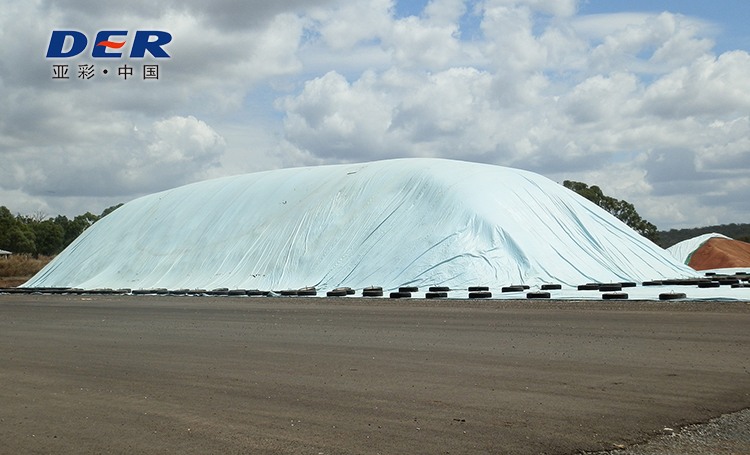
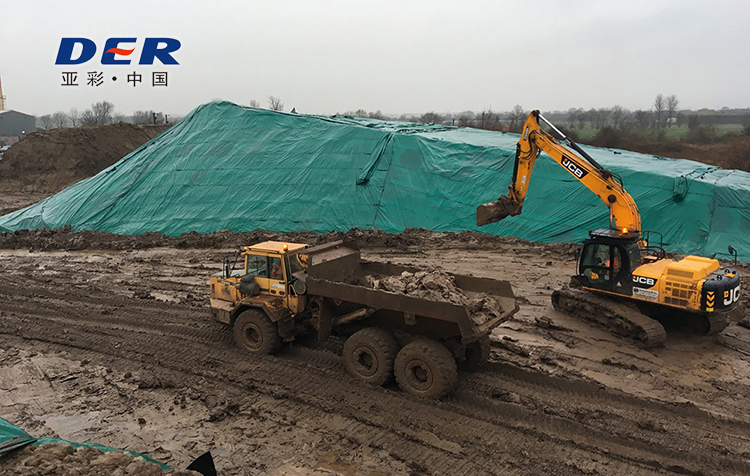
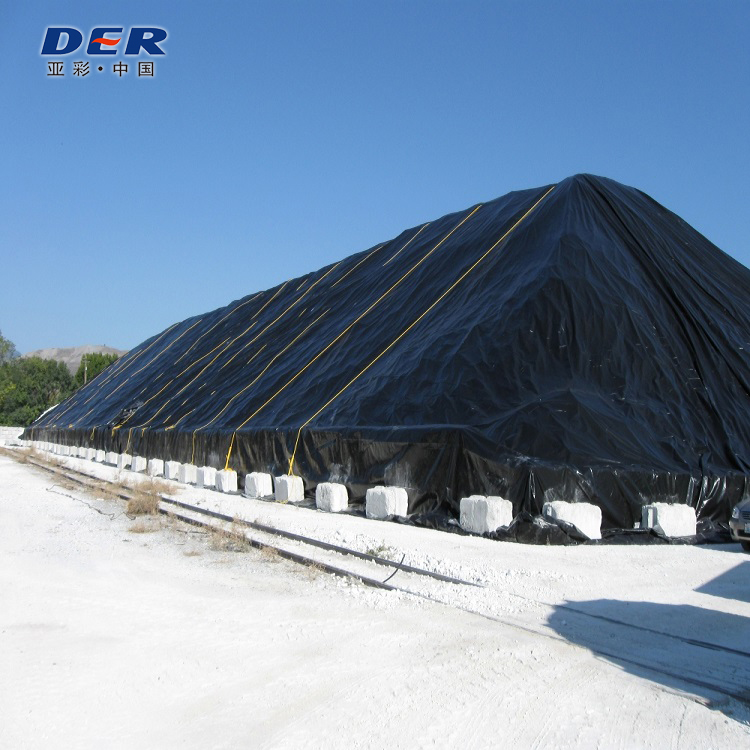
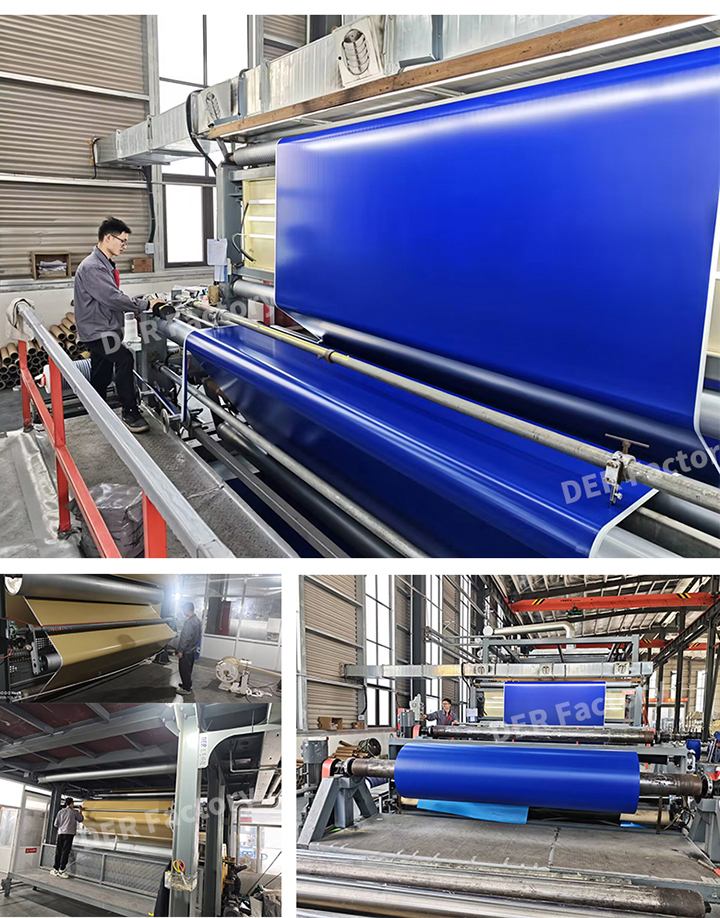
Real Stockpile and Manufacturing Images
The gallery uses existing DERFLEX website images. The hero is loaded immediately; supporting images use lazy loading and descriptive alt text for image-search context.
Information Needed for a Coal Stockpile Cover Quote
Pile Geometry
Length, width, height, slope, shape, photos, survey or drawing.
Storage Conditions
Outdoor duration, UV exposure, temperature, rainfall and wind conditions.
Cover Objective
Rain shielding, dust control, surface protection, seasonal storage or repeat reuse.
Fixing & Access
Ballast or anchors, grommet/D-ring layout, conveyor interfaces and opening zones.
Commercial Details
Quantity, roll or finished tarp format, labels, packaging, required tests and destination.
Common Procurement Mistakes
- Estimating cover size from coal tonnage alone.
- Choosing the heaviest GSM without checking crew handling and panel size.
- Using generic grommet spacing without a wind and anchor concept.
- Ignoring drainage and allowing water to pond on the cover.
- Leaving sharp contact points unprotected.
- Adding uncontrolled field cut-outs after fabrication.
- Assuming a weather cover replaces coal self-heating monitoring or fire-management procedures.
How DERFLEX Can Supply the Project
- PVC coated polyester roll material for local fabrication.
- Large welded panels with reinforced edges.
- Modular cover sets for staged installation and replacement.
- Custom grommets, D-rings, webbing, straps, rope hems and wear zones.
- Drawing-based openings, sleeves and access features.
- Color, printing, labels and export-oriented packing by project.
Continue the Material and Application Review
Heavy-duty PVC tarpaulins for mining operations, ore and mineral stockpiles, equipment and harsh-site protection.
Maintenance, containment, equipment protection and coal/ash bulk-material applications in generating facilities.
Outdoor storage covers for machinery, materials, pallets, stockpiles and industrial inventory.
Broad heavy-duty tarp supply for transport, construction, storage, mining and OEM cover programs.
Robust PVC tarp material directions for repeated handling and demanding outdoor applications.
Core coated textile materials used for waterproof industrial covers, tarps, curtains and fabricated systems.
Coal Pile Cover FAQs
What is the best material for a coal pile cover?
For reusable heavy-duty mining and power-plant stockpile covers, PVC coated polyester is a common direction because it combines waterproofing, tear resistance, weldability and reinforced fabrication. Reinforced PE can be considered for some shorter-term or lower-weight applications. The final choice should match storage duration, wind exposure, handling frequency and required documentation.
What GSM should a coal stockpile tarp use?
There is no single GSM that fits every pile. DERFLEX mining-tarp programs commonly use approximately 650–900 gsm directions, but the correct weight depends on panel size, wind, abrasion, handling, UV exposure, reinforcement and reuse cycle. The heaviest material is not automatically the best option.
Can a coal pile tarp help control dust?
Yes. A solid cover can reduce direct wind contact with the stockpile surface and therefore limit wind-driven movement of loose fines. Good results also depend on perimeter closure, access openings, handling practices and the wider site dust-control plan.
Are coal pile covers waterproof?
PVC coated polyester can provide a waterproof material barrier, especially when panels use compatible welded seams. The completed stockpile system still depends on overlaps, penetrations, drainage slope, seam layout and installation quality.
How do you size a tarp for a coal stockpile?
Measure the actual pile geometry rather than estimating from tonnage alone. Provide footprint length and width, height, side slopes, irregular shoulders, protrusions, access zones and the required anchoring margin. For large piles, a site survey or 3D measurement gives a more reliable panel layout.
How should a large coal stockpile tarp be anchored?
Anchoring should be designed around site wind conditions, cover area, panel geometry, ground conditions and the approved load path. DERFLEX can fabricate reinforced hems, grommets, D-rings, straps, sleeves and wear zones, while the project engineer or site team should approve the final anchor or ballast system.
Can a tarp prevent spontaneous combustion in a coal pile?
A tarp should not be treated as the site’s fire-prevention system. Coal can self-heat during storage, so stockpile monitoring, inspection, temperature control and emergency procedures remain necessary. The cover should be integrated with those procedures and should not block required monitoring or access routes.
Can DERFLEX make custom openings for conveyors and reclaim areas?
Yes. Custom sleeves, cut-outs, flaps, modular panel edges, reinforced access zones and labeled cover sections can be discussed from a drawing or marked-up site photo. These details should be defined before fabrication so field cutting is minimized.
Build the Coal Cover Around the Actual Stockpile
Send DERFLEX the pile geometry, site exposure, cover objective and fixing concept. The team can review a practical PVC tarp direction for material supply, fabricated panels or a repeatable B2B stockpile-cover program.
- Pile dimensions, drawing or survey
- Storage duration and climate exposure
- Preferred GSM / material direction
- Anchor, ballast and access requirements
- Quantity, test requirements and destination