
01
Protective Surface
Matte, glossy, lacquered or embossed PVC surfaces can be selected for cleanability, appearance, handling and outdoor exposure.



Custom waterproof and heavy duty tarp systems for planned outages, scaffold enclosures, temporary work zones, machinery covering and dust-control projects.
DERFLEX supports EPC contractors, plant maintenance teams, industrial fabricators, distributors and project buyers with PVC coated fabric rolls, cut panels and fabricated power plant tarps matched to the installation method and exposure conditions.
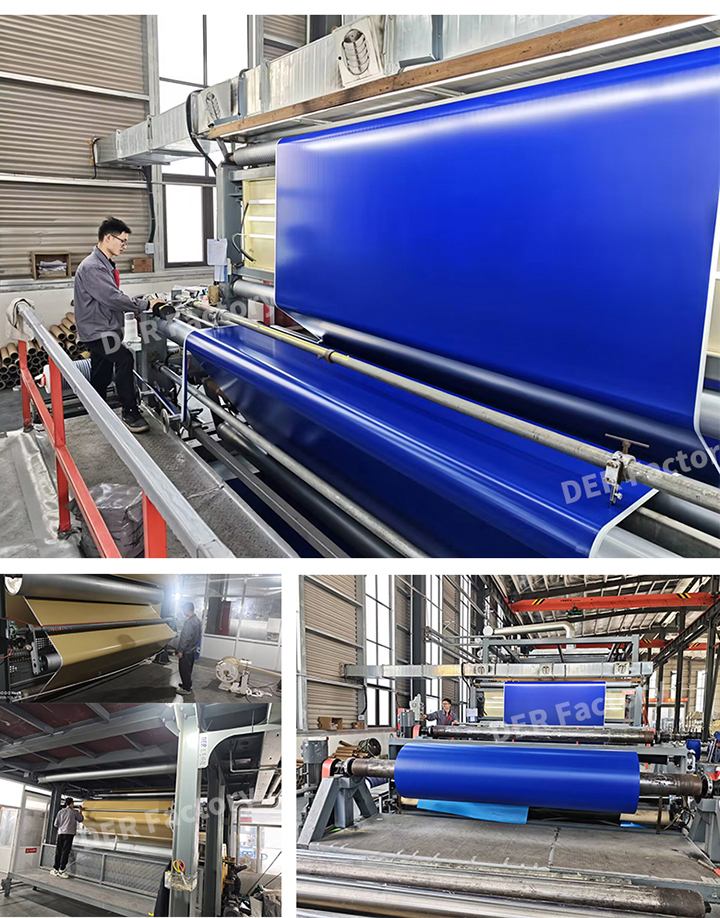
Power plant tarps are flexible protection and containment panels used during construction, inspection, overhaul and scheduled maintenance. Their function may include diverting rain, limiting dust migration, protecting stored components, enclosing scaffold work areas, separating maintenance zones or covering machinery that is temporarily out of service.
The correct design depends on where the tarp will be installed, what it must contain or exclude, how often workers need access and which hazards are present nearby. A boiler-area enclosure, turbine component cover and outdoor material staging tarp may all require different weights, reinforcement patterns and surface treatments.
DERFLEX approaches custom power plant tarps from the end use backward: plant zone, exposure, fastening method, handling frequency, fabrication process, required documentation and expected reuse cycle are clarified before a material direction is proposed.
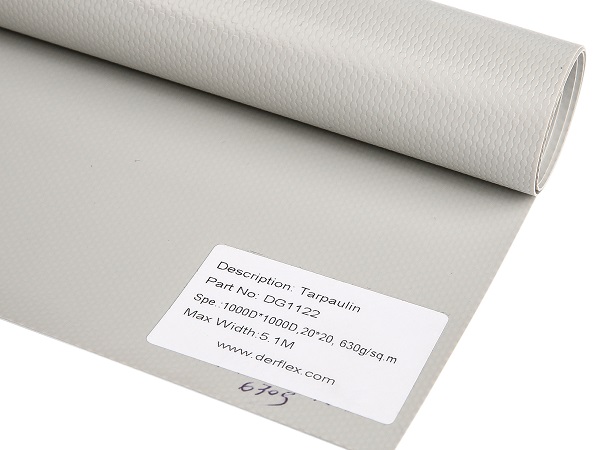
PVC tarpaulin rolls for local fabrication, cut-to-size panels, semi-finished sheets or completed covers with welded seams and reinforced attachment points.
A reliable tarp assembly combines coated textile performance with fabrication details that distribute installation and wind loads.
Matte, glossy, lacquered or embossed PVC surfaces can be selected for cleanability, appearance, handling and outdoor exposure.
Waterproof, UV-resistant, anti-mildew, cold-flexible or project-specific flame-retardant directions are configured according to the confirmed requirement.
Woven polyester supports tensile stability, tear behavior and dimensional control during repeated installation and removal.
Webbing, rope hems, corner patches, grommets, D-rings or sleeves help transfer pull forces away from unsupported tarp edges.
Field failures often begin at corners, grommets, access cut-outs or seams rather than in the center of the fabric. For this reason, finished power plant tarps should be specified as a complete assembly. The fabric weight alone does not determine whether the installation will tolerate wind movement, repeated opening or uneven pulling.
Selected DERFLEX tarp constructions are available in wide roll formats. Reducing the number of seams can simplify large enclosure fabrication, but the final width should be balanced against handling, welding equipment and transport constraints.
White, grey, blue, orange, yellow and custom colors can help distinguish work zones, improve light conditions or support contractor branding. Color and gloss should be approved against a physical sample where appearance consistency is important.
Instead of treating every power plant tarp as the same product, DERFLEX maps material and fabrication decisions to the most likely field stresses.
Dense PVC coating and correctly welded seams support waterproof enclosures and equipment covers. Drainage slope and installation geometry remain part of the finished system design.
High-tenacity scrim, reinforced hems and suitable attachment spacing help manage movement. Wind load calculations and structural anchoring remain the responsibility of the project designer.
Heavier coated structures and reinforced contact points can be considered where the tarp is dragged, folded frequently or placed near steelwork and sharp transitions.
Solid tarps, mesh screens or combined panels can support temporary containment around grinding, cleaning, coating preparation and maintenance activities.
Light-colored surfaces, clear viewing panels, zipper doors, roll-up sections and labeled access points can improve practical use without removing the full enclosure.
Material weight, surface finish and panel size should allow the crew to remove, clean, fold, identify and store the tarps without creating unnecessary handling risk.
The table is an inquiry guide rather than a fixed datasheet. Final values depend on the selected construction, test method, order quantity and plant application.
| Specification Item | Typical Options | Procurement Notes |
|---|---|---|
| Primary Material | PVC coated polyester; selected laminated PVC; mesh or clear PVC used as functional panels | PVC coated polyester is commonly selected for heavy duty waterproof covers and enclosure panels. |
| Weight Range | Approx. 450–1200 gsm; common project directions include 610, 650, 680, 750 and 900 gsm | Higher GSM may improve robustness but also increases lifting and folding weight. |
| Base Scrim | 500D, 840D, 1000D, 1100D, 1300D and project-specific woven polyester structures | Yarn and weave should be chosen with tear behavior, dimensional stability and handling in mind. |
| Roll Width | Standard and wide-width options; selected constructions available up to approximately 5.1 m | Confirm the exact construction and width before layout design because not every grade is available at maximum width. |
| Surface | Matte, glossy, lacquered, embossed, printable, anti-fouling direction | Surface choice affects cleanability, welding, marking, light reflection and appearance. |
| Functional Options | Waterproof, UV-resistant, anti-mildew, cold-flexible, low-wicking, abrasion-resistant, project-specific flame-retardant direction | Performance claims must be tied to the exact approved sample and relevant test report. |
| Fabrication | Hot-air welding, high-frequency welding, sewing with seam treatment or combined processing | Fabricators should test the material on their own equipment before bulk conversion. |
| Attachment & Access | Webbing, rust-resistant grommets, D-rings, straps, rope hems, sleeves, clear windows, zippers, hook-and-loop flaps | Spacing and reinforcement should be based on actual panel size, load direction and access frequency. |
| Supply Format | Roll goods, cut panels, semi-finished sheets, finished tarps, labeled kits | Choose according to whether installation fabrication will be completed locally or at source. |
| Documentation | Product data, batch inspection references and third-party testing discussion by project | Required documents and acceptance criteria should be listed before sample approval. |
All technical ranges are for initial selection. DERFLEX will confirm the commercially available construction and applicable test documents in the quotation process.
Power plant tarps can be configured for thermal, hydroelectric, biomass and other generation facilities, subject to site-specific risk review.
Temporary wall and roof panels around elevated work areas during inspection, cleaning, repair or coating preparation.
Fitted or draped covers for components, tools and work areas that need temporary separation from dust, moisture and maintenance traffic.
Weather covers for spare parts, pipe sections, scaffolding materials, crates and temporary outdoor storage during shutdown projects.
Containment panels for surface preparation, abrasive cleaning, paint work and maintenance areas where migration must be reduced.
Heavy duty covers for temporary stock protection, conveyor maintenance zones and outdoor handling areas exposed to dust and abrasion.
Pre-planned temporary covers for damaged roofing, exposed equipment or short-duration protection while permanent repairs are arranged.
A practical specification balances durability with installation weight. The heaviest material is not automatically the most suitable for every work zone.
Consider lighter coated panels or mesh where handling speed and airflow matter more than long outdoor exposure.
Mid-to-heavy PVC coated polyester with welded seams, UV direction and reinforced attachment details is commonly evaluated.
Focus on abrasion points, cleanable surfaces, foldability, lifting method and identification markings.
Confirm the exact flame-retardant, anti-static, chemical or temperature requirement and the acceptance test before ordering.
DERFLEX can discuss custom power plant tarp fabrication for one-off projects, repeat maintenance kits and wholesale programs. The most useful starting point is a dimensioned drawing or a marked-up photograph showing connection points and access needs.
Send Project DetailsA structured review reduces the risk of quoting a material that is strong on paper but unsuitable for the actual installation.
Confirm plant zone, tarp function, exposure, installation method, reuse cycle and nearby hazards.
Select coated structure, GSM, width, surface and functional options for sampling.
Review seams, edges, attachment spacing, access openings, labels and panel breakdown.
Check color, hand feel, welding, dimensions, reinforcement and documentation before bulk order.
Plan inspection, packing, labels, shipment grouping and repeat-order references.
Power plant projects may involve contractor specifications, site procedures and destination-market requirements. DERFLEX recommends defining the evidence needed at quotation stage.
Weight, thickness direction, color, coating appearance, roll width and surface condition can be included in the inspection plan.
Tensile, tear, adhesion, waterproofing or weld-related checks can be discussed according to the selected fabric and buyer requirement.
Flame-retardant or other special-function requirements must identify the exact test method, material construction and acceptance document.
Panel size, seam allowance, grommet spacing, hardware position and printed identification can be checked against approved drawings.
Kit labels, folded dimensions, roll cores, protective wrapping, carton marks and pallet requirements can be specified for site logistics.
Confirmed samples, project codes and approved specifications help reduce variation when replacement panels or repeat quantities are required.
Different tarp materials solve different problems. A mixed system may use solid PVC panels, mesh ventilation sections and transparent access windows.
Waterproof, weldable and available in multiple weights and functional finishes. Suitable for outdoor enclosures, equipment covers and reusable industrial tarp assemblies.
Lightweight and convenient for short-duration protection. It may be less suitable for repeated handling, fitted fabrication or demanding long-term exposure.
Mesh reduces wind pressure and supports airflow; treated canvas may suit selected breathable applications. Neither should be assumed fully waterproof without the correct construction.
A clear inquiry allows material, fabrication and documentation costs to be evaluated together. For custom power plant tarps, drawings and site photos are more useful than a general request for “heavy duty” material.
Lead time, MOQ and sample route depend on whether the project uses a regular material, custom color, special width, functional test, complex fabrication or grouped kit packing.
These six internal resources connect power plant tarp projects with broader industrial cover, enclosure and functional material options.
Answers for procurement teams, outage contractors, fabricators and distributors preparing a project inquiry.
They are used for temporary scaffold enclosure, equipment covering, work-zone separation, weather protection, dust and debris containment, outdoor material staging and maintenance-outage protection. The material and fabrication should be matched to the exact plant zone and hazard profile.
PVC coated polyester is commonly evaluated because it combines waterproofing, tear resistance, weldability, cleanable surfaces and custom fabrication options. The suitable GSM and scrim depend on panel size, wind exposure, handling frequency and expected reuse.
Yes. DERFLEX can discuss custom panels and fitted covers with reinforced edges, grommets, D-rings, straps, sleeves, zipper doors, clear windows, access ports, printed identification and project-specific packing. A drawing, sample or measured photo is recommended.
Flame-retardant material directions can be discussed. The buyer should provide the exact test method and acceptance requirement. Compliance must be confirmed against the approved material construction and the relevant report; a general “FR” description is not sufficient for a controlled plant application.
Yes. Supply formats can include PVC tarpaulin rolls, wide-width material, cut panels, semi-finished sheets or completed tarp assemblies. Local fabricators should test welding or sewing behavior on their own equipment before mass conversion.
Provide the intended market, target grade, dimensions, color, surface, functional requirements, roll or finished format, quantity, branding, label and packing needs. For repeat programs, include acceptance standards and batch consistency expectations.
Send the plant zone, application, dimensions, material target, attachment layout, functional requirements, quantity and delivery destination. DERFLEX will review a practical route for samples, pricing and production planning.