01 · SALT
Salt Spray & Residue
Sea aerosol and splash leave chloride-rich deposits after water evaporates. Deposits can retain moisture, soil surfaces and accelerate corrosion of unsuitable metal fittings.



Coastal tarps fail for different reasons than ordinary outdoor covers. Salt residue attacks exposed hardware, UV ages polymer surfaces, humid air encourages condensation, and wind-driven movement concentrates load at seams, hems and tie-down points. This guide shows B2B buyers how to specify the complete tarp system—not just a heavier sheet.
For long-term waterproof coastal protection, a UV-stabilized PVC coated polyester tarp is often a practical starting point because it can combine a continuous waterproof surface, strong polyester reinforcement, heat-weldable seams, abrasion resistance and custom edge reinforcement.
The fabric alone does not make a cover “marine-ready.” The finished system should also use corrosion-conscious hardware, reinforced fixing zones, drainage slope, ventilation where condensation matters, chafe protection and a maintenance plan for removing salt deposits.
A marina, port, island project or waterfront yard can combine multiple aging mechanisms at the same time. The correct specification should separate those mechanisms so each can be addressed deliberately.
Sea aerosol and splash leave chloride-rich deposits after water evaporates. Deposits can retain moisture, soil surfaces and accelerate corrosion of unsuitable metal fittings.
UV exposure can contribute to fading, chalking, loss of flexibility and cracking in polymer surfaces. Outdoor formulation and color system matter separately from thickness.
A waterproof cover can trap moisture underneath. Ventilation, drainage and cleaning matter because mildew can grow on dirt and organic residue even when the base textile is synthetic.
Wind-driven movement repeatedly loads seams, hems, eyelets and straps. A loose cover can fatigue or abrade even when the center fabric is strong.
Rails, frames, cleats, machinery corners and grit can wear through coatings at local contact points. Wear pads and geometry often add more value than extra weight everywhere.
Coastal durability is created by the relationship between the coated textile and every component that transfers load or blocks water. PVC coating provides the weather barrier; polyester scrim carries tensile load; seams connect panels; hems spread edge forces; hardware converts membrane tension into local point loads; and the support geometry controls pooling, flutter and ventilation.
DERFLEX already publishes dedicated boating tarp and marine cover solutions. This page is intentionally different: it focuses on failure prevention under combined salt, UV and corrosion exposure so procurement teams can write a more complete coastal specification.
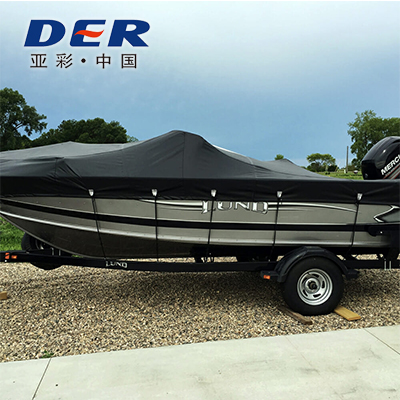
Coastal failure usually starts where chemistry, movement and concentrated stress meet.
For wind-exposed installations, see the DERFLEX Tarpaulin Wind Load Guide for pressure, load-path and anchoring considerations.
Use the duty profile below as an RFQ starting point. Final GSM, base fabric, coating, hardware and fabrication should be confirmed against the actual application and approved sample.
| Coastal Duty | Typical Environment | Material Direction | Fabrication Priorities | Corrosion / Moisture Controls | What Buyer Should Confirm |
|---|---|---|---|---|---|
| Seasonal / Sheltered | Covered marina, short seasonal storage, indirect salt air | UV-treated PE or lighter PVC direction depending reuse target | Reinforced perimeter, practical tie-downs, drainage slope | Rust-resistant hardware direction; dry storage | Weeks or months installed? Direct rain? Handling frequency? |
| Year-Round Marina | Continuous sun, salt-laden air, humidity and wind | UV-stabilized PVC coated polyester | Welded seams, webbing / rope hems, chafe pads, distributed fixing | Project-specified hardware alloy / coating; ventilation plan | Sun hours, wind exposure, salt cleaning routine, condensation sensitivity |
| Direct Salt Spray | Waterfront machinery, exposed dock, fishing fleet, frequent spray | Heavy-duty coated polyester with easy-clean surface direction | Localized abrasion layers, sealed panel joins, replaceable wear zones | Corrosion-resistant metal selection plus isolation from dissimilar metals where needed | Direct splash frequency, cleaning chemistry, hardware test requirement |
| Industrial Waterfront | Ports, shipyards, cargo, equipment and abrasive work zones | Project-defined heavy-duty PVC structure | High-stress seam layout, reinforced lifting / fastening zones, repair strategy | Document hardware spec; inspect interfaces and fastener coatings | Drawings, abrasion map, handling equipment, safety or test standards |
| Trailerable / Dynamic | Road transport near coast or marine logistics | High-strength coated polyester matched to aerodynamic cover design | Close fit, strong leading edge, protected corners, controlled straps | Corrosion-conscious buckles / rings plus frequent inspection | Vehicle speed, cover pattern, anchor map, road movement and test basis |
DERFLEX's published heavy-duty PVC tarp range includes 450–900 gsm structures with custom options. Final coastal grade should be chosen by exposure and construction—not GSM alone.
“Marine grade” is not one universal material. The best direction depends on whether the project prioritizes waterproofing, handling weight, breathability, fitted appearance, repeated conversion or long outdoor exposure.
| Material Family | Best Coastal Use | Main Strength | Watch Point | Fabrication Direction |
|---|---|---|---|---|
| PVC Coated Polyester | Long-term waterproof covers, dockside machinery, shipyards, OEM marine cover programs | Waterproof surface, weldability, tear strength, abrasion resistance, cleanability | Heavier than light PE; moisture management still required under enclosed covers | Hot-air / hot-wedge / RF welding where compatible, reinforced hems, webbing, patches, hardware |
| Woven PE Tarp | Temporary covers, emergency protection, seasonal or price-sensitive programs | Lightweight, economical, easy to deploy | Grades vary widely; lower-duty constructions can age faster under UV, wind and folding | Heat-sealed / sewn edges depending construction, reinforced corners and eyelets |
| Treated Canvas | Breathable storage where condensation control is important | Airflow and softer textile handling | Water resistance depends on treatment; can hold dirt and moisture if stored wet | Sewn seams, hems and textile reinforcements |
| Marine Acrylic / Specialty Woven | Fitted boat covers, biminis and appearance-focused systems | Selected marine grades can offer strong color / UV performance and easier handling | Performance is fabric-family specific; seam sealing, fit and abrasion zones remain critical | Patterned sewing, straps, vents, reinforcement and model-specific fit |
| PVC / Polyester Mesh | Shade, airflow, debris control or wind reduction where rain blocking is not required | Ventilation and lower pressure than a solid sheet in suitable designs | Not a waterproof cover | Reinforced perimeter and attachment points matched to mesh openness |
Salt does not need to penetrate the tarp to cause trouble. Grommets, D-rings, buckles, hooks, cable ends and fasteners can corrode independently. The hardware specification should therefore be written as clearly as the fabric specification.
Do not accept “marine grade hardware” as the only description. Ask for the alloy or coating system. Where stainless is required, 316-series stainless is commonly chosen for better chloride resistance than 304, but the correct grade still depends on exposure, fabrication and budget.
Two different metals in a wet, conductive salt environment can create galvanic-corrosion risk. Review grommet, D-ring, frame and fastener combinations, and consider isolation materials or compatible hardware where the design requires them.
Corrosion resistance does not solve pull-out. A grommet needs enough reinforced fabric around it to distribute load. Webbing, double layers, rope hems or patches can reduce local stress depending on the cover design.
There is no universal “marine grommet spacing.” Spacing should reflect wind, cover size, support geometry, edge direction, strap elasticity and the expected load at each fixing point.
Plated or coated fittings can lose protection if edges are damaged during punching, bending or installation. Inspection should include coating continuity, sharp burrs and wear from moving straps.
For industrial waterfront covers, consider replaceable straps, bolt-on fittings or sacrificial wear components. Maintenance-friendly hardware can reduce the cost of repairing an otherwise serviceable cover.
DERFLEX can supply custom finished PVC vinyl tarps with project-defined hems, webbing, grommets, D-rings, welding and OEM packaging.
Accelerated tests can help compare materials or hardware, but they do not automatically convert into “years outdoors.” Procurement documents should state the test method, specimen, exposure conditions and acceptance criteria.
ASTM B117 provides a controlled corrosive salt-fog environment for comparing metals and coated metals. ASTM itself cautions that stand-alone salt-spray results do not reliably predict performance in natural environments.
ASTM G154 provides operating procedures for fluorescent UV and moisture exposure of nonmetallic materials. It supports comparative weathering work, but the test conditions and evaluation method must be reported.
| Observed Problem | Likely Contributors | Specification / Maintenance Response |
|---|---|---|
| White salt crystals and stiff surface deposits | Repeated sea aerosol or splash drying on the surface | Fresh-water rinse according to approved cleaning method; consider easy-clean finish; improve maintenance frequency. |
| Rust or pitting around grommets / rings | Unsuitable alloy, damaged plating, trapped salt, dissimilar-metal contact | Document hardware material; review isolation and coating; rinse and inspect; replace corroded fittings before fabric tears. |
| Surface fading, chalking or cracking | UV exposure, heat, formulation mismatch, chemical cleaning | Increase UV-weathering requirement; verify cleaning compatibility; review color and surface formulation. |
| Grommet pull-out with intact center fabric | Point-load concentration, wide spacing, weak hem, poor tie-down angle | Add webbing / patches / rope edge; redistribute anchors; review wind load and strap system. |
| Seam peel or leakage | Insufficient weld overlap, poor process control, high local tension, incompatible seam method | Validate welding process and seam width; move seams away from peak load zones where possible. |
| Wet underside or mold odor | Condensation, poor ventilation, trapped contaminants, storage while wet | Add slope / vents / spacers; clean and dry cover before storage; do not confuse waterproofing with condensation control. |
| Holes at rails, corners or machinery edges | Chafe, vibration, grit and wind movement | Add wear pads / sacrificial patches / padding; improve fit and tension; remove sharp contact points. |
Real product and application images help buyers evaluate fit, cover geometry and material options more effectively than generic stock imagery.
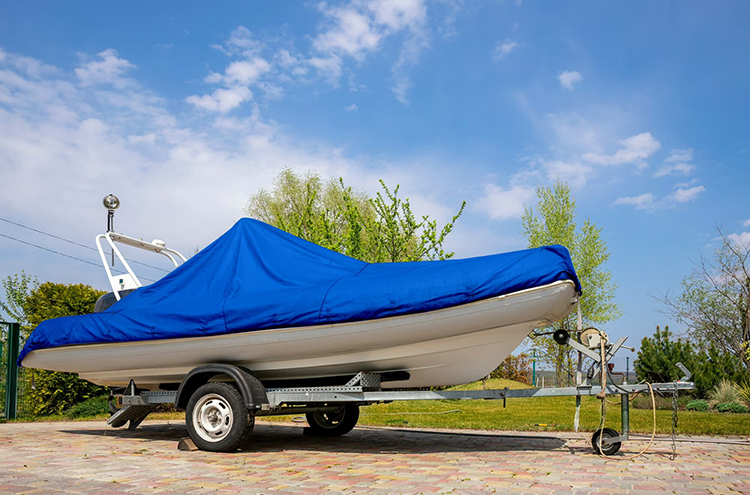
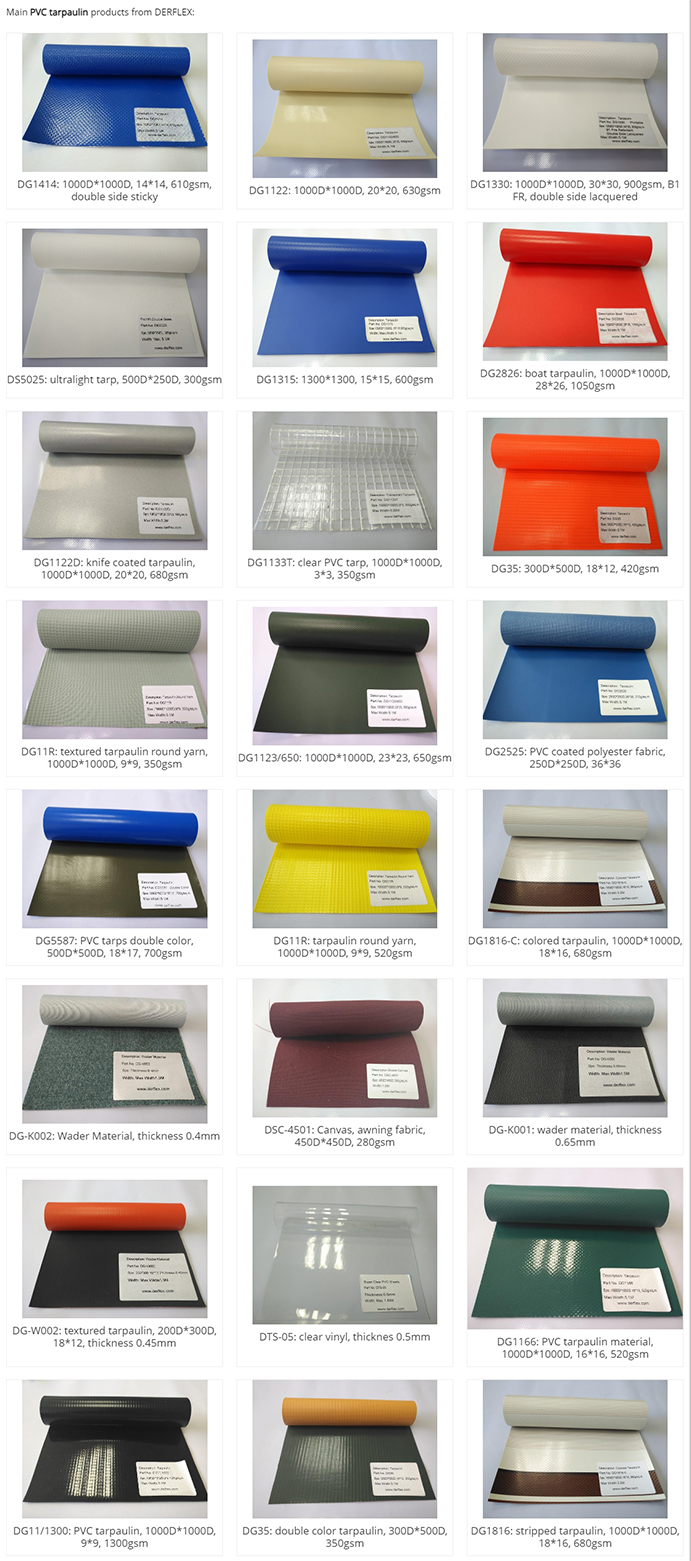
For compatible PVC systems, heat-welded seams can support waterproof construction. Place panel joins so the seam is not unnecessarily exposed to maximum peel or chafe stress.
Webbing, rope hems, double layers and local patches spread edge load and reduce the chance that a strong center panel fails around one small fitting.
Mark every rail, sharp corner, windshield edge, motor, cable, frame and machinery contact point before pattern approval. Add abrasion protection where motion is expected.
Even a fully waterproof tarp needs slope. Ponding adds weight and concentrates stress at seams, supports and tie-down points.
Where condensation can damage the covered asset, use vents, stand-offs or breathable zones. A sealed waterproof envelope can still become wet on the inside.
Too much slack creates flutter; too much point tension can tear fixing zones. Match strap elasticity and anchor positions to the cover geometry.
Coastal covers benefit from a design that can be rinsed, inspected and repaired. Consider removable straps, accessible fastening points, repairable welded patches and visible wear zones. If the project is specifically a fitted boat or yacht program, review DERFLEX boat-cover and marine-storage tarp selection guidance alongside this corrosion-focused guide.
Maintenance should respond to actual contamination and exposure. Coastal projects with direct spray may need more frequent rinsing than sheltered sites several kilometers inland.
Use fresh water and an approved mild cleaning method after heavy salt exposure or when deposits become visible. Avoid harsh chemicals unless coating compatibility is confirmed.
Store the tarp clean and dry. Repeated tight folds at the same line can become fatigue points, especially when cold or contaminated.
Look for pitting, coating damage, burrs, elongating holes, loose rings, strap wear and staining around metal fittings before the center sheet shows obvious damage.
After strong wind or heavy rain, correct loose sections, restore drainage slope and check local anchors. Flutter and pooling can create damage quickly.
Sand and grit trapped between the cover and a hard edge can act like an abrasive. Clean contact points and renew sacrificial protection before the coating wears through.
A small cut or loose fitting can concentrate more load into the surrounding area. Use a repair method compatible with the original material and fabrication process.
A precise inquiry lets the material, fabrication and hardware be evaluated together before sampling.
DERFLEX supports coated tarpaulin materials and custom finished covers for international B2B buyers. Published company information lists an integrated 60,000㎡ production area, 450+ employees, 25+ senior engineers and customers across 120+ countries and regions.
Discuss base fabric, coating weight, UV direction, surface finish, color, cold flexibility and the target marine duty profile.
Plan panel welding, reinforced hems, corner patches, grommets, D-rings, webbing, straps, wear pads, openings and finished dimensions.
Define sample approval, workmanship points, packing and repeat-order specification so the same coastal cover program can be reordered consistently.
These verified DERFLEX pages support adjacent buyer decisions without replacing this page's salt-spray / UV / corrosion focus.
For long-term waterproof protection, UV-stabilized PVC coated polyester is often a practical starting point because it combines a waterproof coating, reinforced polyester base fabric, weldability, abrasion resistance and custom edge reinforcement. The final specification should still address hardware corrosion, wind, chafe, drainage and condensation.
A correctly specified PVC coated tarp can be suitable for salt-air and salt-spray environments, but salt residue should still be removed as part of maintenance. Salt may be more damaging to exposed hardware, seams, contaminants and contact interfaces than to the coated sheet itself. Final durability depends on the complete cover system.
No. Waterproofing only describes water exclusion. A marina tarp may also need stronger UV stabilization, corrosion-resistant hardware, wind-ready reinforcement, mildew / condensation management, chafe protection and an easy-clean surface.
Specify the actual alloy or coating rather than relying only on a “marine grade” label. Stainless and brass systems are common directions, but the correct choice depends on chloride exposure, load, dissimilar-metal contact, cost and the supporting reinforcement. Where stainless is required, 316-series stainless is commonly preferred over 304 for stronger chloride-corrosion resistance.
No. ASTM B117 is useful for comparative corrosion information on metals and coated metals, but ASTM cautions that stand-alone salt-spray results do not directly predict natural-environment performance. Use the test as one evidence point with defined specimen and acceptance criteria, not as a direct years-of-life conversion.
No. Higher weight can support a more substantial construction, but coastal life also depends on base fabric, coating formulation, UV stability, seam design, edge reinforcement, hardware, fit, abrasion protection and maintenance. Local reinforcement can sometimes solve a failure risk more efficiently than adding weight to the entire tarp.
There is no universal calendar interval. Rinse after heavy direct salt spray or when deposits accumulate, and adjust the routine to exposure intensity. A sheltered coastal site can need less frequent cleaning than a fishing boat, dock edge or exposed waterfront machine.
DERFLEX can discuss project-defined material weight, color, surface finish, UV / mildew direction, welded or sewn construction, reinforced hems, grommet spacing, webbing, D-rings, straps, rope edges, logo printing, labels and private-label packaging. Final specifications should be confirmed during quotation and sample approval.
Send DERFLEX the application, dimensions, salt exposure level, UV environment, material direction, reinforcement map, hardware requirement, quantity, destination and any test or documentation requirement. The team can review a practical material and fabrication direction for sampling and quotation.