


Collapsible Water Storage Tanks for Portable Water Supply
DERFLEX supplies foldable PVC and project-matched coated-fabric tanks for temporary water storage where empty-pack volume, transport weight, deployment speed, ground protection, fittings and repeated handling matter as much as the filled capacity.
Specify the tank by the real field workflow: capacity, packed dimensions, empty weight, available footprint, fill and drain connections, deployment cycle, storage procedure, groundsheet, repair kit and destination requirements.
What Is a Collapsible Water Storage Tank?
A collapsible water storage tank is a flexible, reinforced liquid-containment system that can be folded into a compact package when empty and deployed near the point of use. The tank expands as it fills, so buyers can move storage capacity without transporting a rigid container of the same installed volume.
The useful procurement difference is not simply “flexible versus rigid.” A well-specified collapsible tank has a defined packed size, empty weight, handling method, ground protection plan, valve set, deployment sequence and return-to-storage procedure. Those details determine freight efficiency and field practicality.
Terminology note: in project specifications, this closed flexible format may also be described as a collapsible tarpaulin tank, foldable tarpaulin tank, portable tarpaulin tank, portable water storage tank or foldable water storage tank. DERFLEX supports buyers looking for a collapsible water tank manufacturer or collapsible tank supplier that can discuss the packing and field-use details behind the product name.
Buy the Tank by Its Empty-State Logistics, Not Only Its Liter Capacity
Many water-tank pages stop at capacity and material. For portable projects, the empty-state data can be just as important. Ask for a model-specific packing sheet before approving a bulk order.
| Data to Request | Why It Matters | DERFLEX Quotation Direction |
|---|---|---|
| Nominal capacity | Sets the starting volume target but does not define the actual field footprint. | Existing DERFLEX flexible-tank references span approximately 500–500,000 L; final size is reviewed by project. |
| Deployed / filled footprint | Confirms whether the tank fits the usable level area and required safety clearance. | Provide the maximum available length × width and site constraints. |
| Folded pack dimensions | Used for warehouse slotting, truck loading, air/sea freight CBM and emergency cache planning. | Confirm after tank geometry, fabric construction, fittings and accessory set are fixed. |
| Net empty weight | Determines manual handling, team size and whether lifting equipment is needed. | Model-specific; do not estimate from capacity alone. |
| Gross packed weight | Includes protective packing, valves, groundsheet and repair items. | Confirm final accessory package and export packing before freight booking. |
| Deployment procedure | Clarifies ground preparation, unfolding, fitting connection and filling sequence. | Match procedure to tank style, crew and field connections. |
| Storage procedure | Repeated folds, trapped moisture and fitting pressure can shorten service life. | Specify clean/dry storage and protected fitting zones for repeat-use programs. |
How Folded Packing Can Reduce Logistics Burden
A rigid tank moves its full external volume even when empty. A foldable tarpaulin tank moves mainly the coated-fabric body, fittings and protective accessories. That can make collapsible storage attractive for remote sites, emergency stock, seasonal agriculture and projects where empty tanks move frequently.
Transport cost should be calculated from the actual shipment, not from an unsupported percentage claim. Use packed CBM, gross weight, number of units, palletization and destination to compare alternatives.
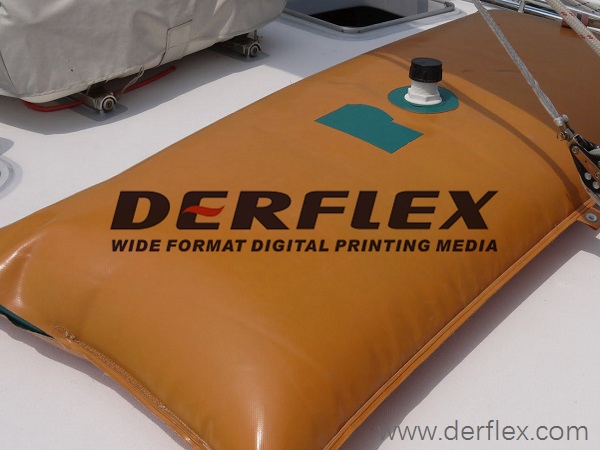
Deployment Time Depends on the Whole Field Setup
A collapsible tank can be fast to deploy, but the realistic time is affected by tank size, crew size, ground cleaning, groundsheet placement, hose routing, valve connection, pump location and the inspection required before filling.
Before Unfolding
Confirm a level area, remove puncture hazards, plan hose direction and verify that the fully filled footprint will remain clear.
Connection Stage
Identify inlet, outlet and vent positions before filling. Support hoses so their mass does not continuously load the fitting.
Controlled Filling
Monitor the tank as it takes shape. Stop if folds, fittings, ground contact or footprint differ from the approved setup.
Design the Valve Set Around the Pump, Hose and Field Workflow
The phrase “quick-connect valve” should be translated into a complete connection specification. The valve body, flange reinforcement, hose interface, thread or coupling standard, gasket material, flow requirement and location on the tank should be agreed before fabrication.
| Connection Requirement | What the Buyer Should Specify | Design Note |
|---|---|---|
| Fast fill from tanker / pump | Hose ID, coupling type, pump flow direction, required valve size and local connection standard. | Large flow may justify a larger inlet, but the fitting zone must be reinforced for the load. |
| Controlled discharge | Outlet size, downstream hose, gravity vs pumped discharge, valve access and shutoff method. | Outlet position affects usable drainage and how much residual water remains. |
| Emergency / firefighting interface | Exact coupling standard used by the local pump or service system. | Camlock, threaded, Storz-type or other project interfaces may be discussed; confirm availability and compatibility before order. |
| Air management | Whether a separate vent is required and where it should be positioned. | Filling and emptying behavior changes when the tank cannot vent correctly. |
| Repeated connection cycles | Expected number of connect/disconnect events and handling method. | Frequent field handling puts more mechanical demand on fitting reinforcement and seals. |
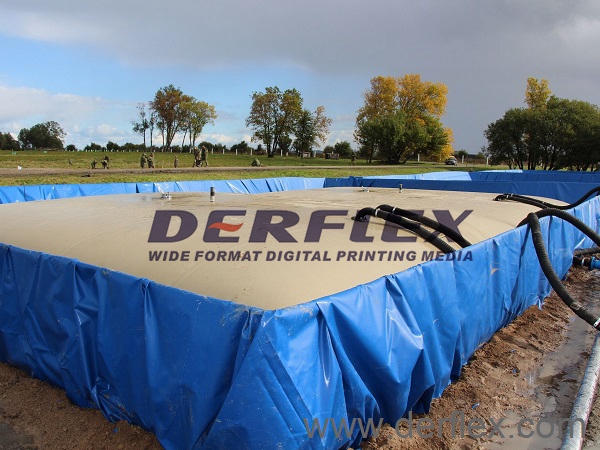
The Groundsheet Is Part of the Portable Tank System
A foldable water tank may travel easily, but the filled tank can place substantial continuous load against the ground. Stones, metal fragments, rough concrete, roots and construction debris can damage even a heavy coated textile if they remain under the tank.
- Use a level, stable deployment area sized for the full footprint.
- Remove sharp debris before laying out the tank.
- Use a compatible groundsheet or protective mat where abrasion or puncture risk exists.
- Do not drag a filled or partially filled bladder across the ground.
- Keep hoses supported so fittings are not pulled sideways.
For bulk projects, include the groundsheet in the quotation so it arrives as part of one deployment kit instead of becoming a field improvisation.
Repeated Folding Is a Material-and-Procedure Question
Collapsible tanks are selected because they can be packed, moved and redeployed. Repeated folding, however, concentrates flexing along creases and near fittings. The coating chemistry, fabric construction, ambient temperature, fold radius, cleanliness and storage method all influence durability.
Material Flexibility
PVC coated polyester is a practical direction for many utility-water applications. TPU coated fabric can be evaluated when a project needs a different flexibility profile, repeated folding behavior or specified water-contact performance.
Fitting Protection
Do not create a tight fold directly across a rigid flange, valve body or coupling. Protect and position fittings before packing.
Cold-Condition Folding
Flexible coatings can become less compliant at low temperature. Confirm the intended folding and storage temperature range for the selected material.
A Practical Drain–Dry–Inspect–Fold–Store Sequence
For Remote Use, Order the Repair Kit with the Tank
A repair kit is most useful when it is matched to the actual coated fabric and fitting system. Generic tape or adhesive should not be assumed suitable for every PVC or TPU construction.
A project repair kit can be discussed with matching patch material, cleaning items, compatible field-repair consumables where appropriate, spare seals/gaskets for specified fittings, valve accessories and written repair instructions.
Include in the RFQ
- How far the tank will operate from maintenance support
- Expected deployment cycle
- Whether field patching is required
- Required spare valves, caps or gaskets
- Individual kit packing vs shared project kit
- Labeling or private-label requirements
Collapsible Water Tank Procurement Specification
The values below are a sourcing framework. Where DERFLEX has not published a model-specific value, the page deliberately asks the buyer to confirm it at quotation stage instead of inventing a number.
| Item | Project Direction | Buyer Decision |
|---|---|---|
| Tank format | Closed pillow / bladder, rectangular flexible tank, custom collapsible geometry; other structures by project. | Choose by access, footprint, contamination control and deployment workflow. |
| Material | Reinforced PVC coated polyester; TPU coated fabric direction available for selected projects. | Confirm water contact, folding cycle, climate, cleaning and compliance needs. |
| Capacity | Custom capacity; existing DERFLEX flexible bladder family references approximately 500–500,000 L. | State required usable volume and maximum available footprint. |
| Thickness | Existing DERFLEX flexible-tank references include approximately 0.75–1.20 mm for selected structures. | Do not select by thickness alone; review tensile, tear, weldability and service conditions. |
| Seams | HF/RF or hot-air welded routes where appropriate for the coated fabric and construction. | Confirm weld method, seam layout and reinforcement around fittings. |
| Inlet / outlet | Valve, flange, threaded or quick-connect configuration by project. | Send exact hose/pump connection standard and target flow direction. |
| Groundsheet | Optional project accessory; recommended where abrasion or puncture risk exists. | Specify ground type and whether the tank will be repeatedly relocated. |
| Repair kit | Can be discussed with tank and fitting set. | State field-repair expectations and spare-part needs. |
| Folded dimensions | Model-specific; confirm on final packing sheet. | Required for freight CBM and storage planning. |
| Empty / gross weight | Model-specific; confirm after material, fittings and accessories are fixed. | Required for manual-handling and transport planning. |
| OEM | Color, marking, logo, labels and export packing can be discussed. | Provide artwork, label language, packing format and repeat-order requirements. |
Where Collapsible Water Tanks Create the Most Practical Value
Emergency Response
Portable storage can be cached compactly, transported to a disrupted area and deployed close to demand. Procurement should prioritize packed size, handler count, connection simplicity, groundsheet and repair support.
Firefighting Water Reserve
Temporary reserve tanks can support staging in remote areas. Specify coupling standard, discharge rate, pump interface, ground condition and local operational requirements.
Construction Sites
Useful where water demand changes as the project moves. Rough ground and vehicle traffic make protective placement and fitting support important.
Agriculture & Irrigation
Seasonal or mobile water storage can reduce the need to keep a rigid tank at every field location. Confirm UV exposure, relocation cycle and discharge connection.
Remote Projects & Camps
Compact transport and on-site deployment are valuable where access is restricted. Include spares and repair items when maintenance support is distant.
Temporary Utility Water
Industrial or civil projects can use flexible containment for selected water streams. Exact liquid compatibility must be confirmed before approval.
Match the Tank to How Often It Will Move
| Operating Pattern | Priority Specification | Why |
|---|---|---|
| Emergency cache / standby | Compact pack, clear labels, protected fittings, complete accessory kit. | The tank may spend more time stored than deployed, so readiness and packaging matter. |
| Seasonal agriculture | UV exposure, groundsheet, drainage, clean/dry storage procedure. | Seasonal handling creates repeated storage cycles and outdoor exposure. |
| Repeated relocation | Flexible material direction, protected valve zones, fold procedure, repair kit. | More moves mean more handling, folding and connection cycles. |
| Remote construction | Rough-ground protection, robust fitting layout, transport weight, spare components. | Access and maintenance constraints increase the cost of field damage. |
| Potable-water project | Specified water-contact compliance, sanitation procedure, closed containment. | Material name alone does not establish drinking-water compliance. |
Collapsible Bladder vs Rigid Tank vs Open Field Tank
Closed Collapsible Bladder
- Compact empty-state packing
- Closed liquid containment
- Good for mobile and temporary projects
- Requires careful ground preparation
- Fittings and fold procedure matter
Rigid Tank
- Predictable fixed geometry
- Easy to understand visually
- Occupies full transport/storage volume when empty
- Can suit permanent or semi-permanent installations
- Often requires more space and handling equipment
Open / Frame-Supported Tank
- Fast access and visual inspection
- Useful for working water or aquaculture
- Frame adds setup components
- Open access may need contamination control
- Different packing profile from a closed bladder
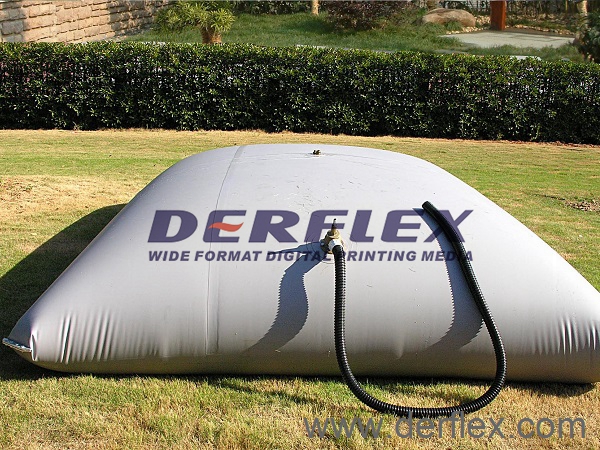
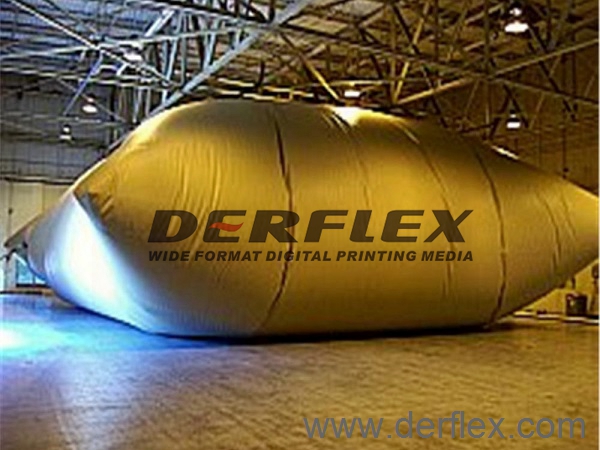
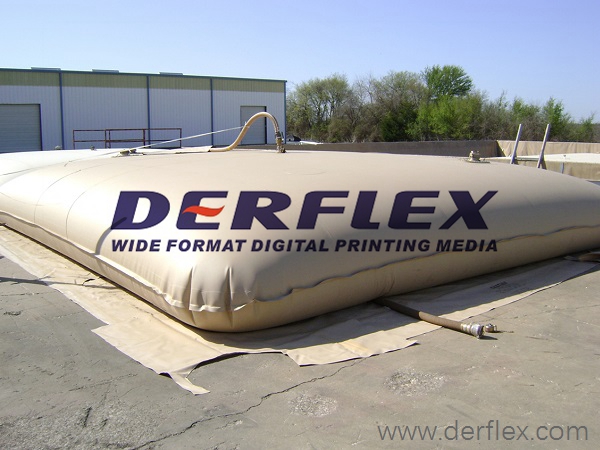
Flexible Water Storage in Different Field Configurations
Five Mistakes That Make a “Portable Tank” Harder to Use
1. Buying by Capacity Alone
A 20,000 L tank that does not fit the available footprint is not useful. Send the maximum field dimensions with the RFQ.
2. Ignoring Pack Size
For emergency caches and export shipments, folded dimensions and gross packed weight should be part of model approval.
3. Treating All Valves as Equivalent
A valve may fit the tank but not the buyer’s pump, hose or local coupling standard. Specify the whole connection chain.
4. No Ground Protection Plan
Heavy material does not eliminate puncture and abrasion risk. Ground preparation and protective layers matter.
5. Folding It Wet and Dirty
Drain, clean where required, dry and inspect before long-term storage to protect the coating, seams and hygiene condition.
6. Calling Every Tank “Potable”
Drinking-water use requires the material and finished system to meet the project’s actual water-contact standard.
Why Coated-Fabric Knowledge Matters in a Collapsible Tank
The tank body, welded seams and fittings work as one flexible structure. DERFLEX’s existing water-tank product lines combine coated-fabric supply with finished flexible tank fabrication, so project discussion can begin with the material system rather than treating the tank as a generic bag.
For a repeated-use project, ask how base-fabric strength, coating thickness, coating flexibility, weld process, fitting reinforcement and fold layout relate to the expected deployment cycle.
For the broader tank family, review the China flexible water tank manufacturer page. For higher-load or wider industrial containment, compare the heavy duty tarpaulin tank specification framework.
Continue the Water-Containment Topic Cluster
What to Send for a Collapsible Water Tank Quote
Tank & Site Data
- Required usable capacity
- Stored water type / exact liquid
- Indoor or outdoor use
- Maximum available footprint
- Ground type and puncture / abrasion risk
- Minimum and maximum service temperature
Logistics & Connection Data
- Deployment frequency / relocation cycle
- Required inlet, outlet and vent sizes
- Hose, pump and coupling standard
- Target folded-pack and handling limits, if any
- Groundsheet / repair kit / spare fitting requirement
- Quantity, destination, logo and packing requirement
Collapsible Water Storage Tank FAQ
How small does a collapsible water tank pack when empty?
The packed size depends on capacity, tank geometry, fabric thickness, valve layout, groundsheet and packing method. For freight or emergency-cache planning, request the exact folded length × width × height and gross packed weight for, the selected model rather than using a generic percentage.
How much does an empty collapsible water tank weigh?
Empty weight changes with capacity, coated-fabric construction, thickness, fittings and accessories. DERFLEX should confirm net tank weight and gross packed weight on the quotation or packing data sheet after the project specification is fixed.
How quickly can a foldable water storage tank be deployed?
Deployment time depends on model size, crew size, ground preparation, groundsheet placement, hose routing and quick-connect fittings. A useful comparison states the tank model, number of handlers and setup assumptions together with the time.
Can a collapsible water tank be folded repeatedly?
Yes, flexible coated-fabric tanks are intended to be collapsible, but repeated-use durability depends on material flexibility, temperature, fold radius, cleanliness, weld quality and how rigid fittings are protected. State the expected deployment cycle when requesting a quotation.
Do I need a groundsheet under a portable water tank?
A protective groundsheet is recommended wherever the site may contain stones, sharp debris, rough concrete or abrasive surfaces. The ground should also be level, stable and large enough for the fully filled footprint.
Can quick-connect valves be customized?
Valve and fitting configurations can be discussed by project. Send the exact hose, pump, thread or coupling interface, target size and use direction. Common industrial interfaces should be confirmed for availability and compatibility before production.
What should be included in a repair kit?
A repair kit should match the tank material and fitting system. Depending on the project, it can include compatible patch material, field-repair consumables, spare seals or gaskets, caps or valve accessories and written instructions. Do not assume a generic adhesive is suitable for every PVC or TPU construction.
Can a PVC collapsible tank store drinking water?
Only when the selected material and finished tank meet the required potable-water or food-contact standard for the destination market and project. A standard industrial PVC tank should not automatically be described as potable-water approved.
Request a Collapsible Tank Specification & Packing Quote
Send DERFLEX your capacity, available footprint, water type, deployment cycle, hose/valve interface, ground condition, quantity and destination. Ask for the folded packing dimensions, net empty weight, gross packed weight, deployment assumptions, groundsheet and repair-kit options together with the tank quotation.