



Commercial Seating PU Leather
PU synthetic leather for contract chair manufacturers, upholstery converters and sourcing teams. Build a seating material specification around repeated contact, surface wear, upholstery fit, cleaning chemistry and reproducible roll supply. DERFLEX can discuss grain, color, backing, hand feel and project-specific testing; the final grade is approved against the actual chair and purchase brief.
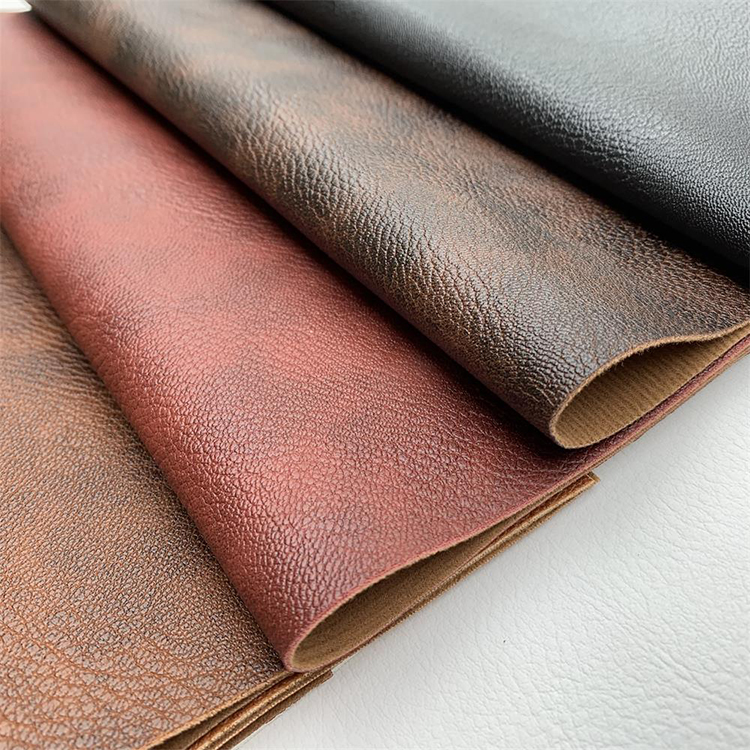
What commercial seating PU leather actually means
A layered upholstery material whose finish and backing must survive the seat design and maintenance routine.
Commercial seating PU leather is a polyurethane-surfaced upholstery material selected for furniture exposed to repeated use: workplace chairs, reception seating, café chairs, education seating and public-facing lounge furniture. It is normally purchased as roll stock for upholstery conversion, rather than as a finished seat or fitted cover. The specification must reflect the upholstered assembly, not only the surface appearance.
A seat cushion bends and stretches over foam; an outer armrest receives localized friction; a dining chair is cleaned more frequently than a private office chair. Those stresses call for different surface, backing and finish decisions. DERFLEX supports discussion around color, grain, hand feel, backing construction, thickness direction and project test requirements, with final suitability set by an approved sample.
Approve the material on the intended seat form, with the actual foam profile, stitch design, tension and cleaner. A flat swatch can pass a visual review yet fail after upholstery because the surface creases, seam holes distort or the grain changes under stretch.
Finish that faces contact
PU coating, embossing, sheen and top treatment shape touch, transfer and wipe-clean response.
Backing that carries the load
Woven, knit, nonwoven or microfiber directions influence sewing, stretch and recovery.
Foam, seam and edge geometry
The finished chair design influences flex, abrasion concentration and long-term appearance.
Choose by the chair, not the color
Start with the real wear location, cleaning interval and converting method for each furniture category.
| Seating environment | Where the stress occurs | Material conversation | Verify before approval |
|---|---|---|---|
| Office and task chairs | Front edge, arms, moving backrest | Grain retention, flexibility, controlled stretch, surface friction | Abrasion method, flex trial, cleaning agents and seam stability |
| Reception and waiting areas | Multiple users, bags, repeated sitting | Consistent appearance, stain response, repeatable shades | Rub/color transfer, edge wear and replacement batch matching |
| Café and dining chairs | Food spills, rapid cleaning, seat edges | Cleanable finish, practical texture, lower-soil colors | Actual cleaning chemistry, wipe cycles and splash exposure |
| Education and shared-use rooms | Heavy contact, abrasive clothing, chair stacking | Topcoat wear, puncture/tear and abrasion direction | Representative rubbing, seam and handling trials |
| Contract lounges and booths | Long seams, curved profiles, grouped units | Softness, color-lot control, upholstery yield | Corner wrapping, stitch response and long-run cutting plan |
Use this as a brief-building matrix, not a statement that one unspecified DERFLEX grade passes every seating application.
For task seating where adjustments and flexing drive material choice, review the dedicated office-chair PU leather program. For upholstery grades that span several furniture categories, see the broader upholstery PU leather guide.
Three failure modes to screen early
Commercial use can expose weaknesses in the topcoat, PU chemistry, backing and sewn construction.
Polished front edges
Friction can change sheen before the underlying fabric tears. Compare the approved finish after a relevant wear test, including appearance changes, not only survival cycles.
Surface peeling or tackiness
PU systems vary in hydrolysis behavior. Ask for the chosen hydrolysis method and evaluate heat/humidity exposure when the climate or storage route warrants it.
Perforation and seam opening
A narrow seam allowance, dense needle pattern, brittle backing or excessive tension can damage the cover at stress zones. Sew a production-like trial.
Specify whether the concern is color transfer, topcoat wear, hydrolysis, cracking, seam strength, stretch recovery or cleaner compatibility. Different mechanisms require different acceptance tests and material decisions.
What evidence belongs on an upholstery specification
A method-backed acceptance plan allows procurement to compare suppliers fairly and avoid unsupported claims.
For commercial upholstery, one quoted number is rarely enough. Ask the supplier to state the test method, conditioning, loading or media, units, endpoint and full material reference on the report. Where a project specifies a standard, use the named edition and verify which assembly is tested.
| Review area | What to request | Why it matters |
|---|---|---|
| Abrasion | Martindale (ISO 12947 series) or Wyzenbeek (ASTM D4157) procedure, conditions, cycles and failure definition | Different methods and endpoints are not interchangeable; visible wear also matters |
| Hydrolysis / ageing | Ageing method, temperature, humidity, duration and post-ageing evaluation | Relevant to humid rooms, storage and repeated exposure |
| Seam and backing | Representative stitch trial, tear/strength method and upholstery tension | Reveals problems that a flat-surface rub test may miss |
| Color and crocking | Dry and wet rub protocols, contact materials, pass criteria | Helps evaluate potential color transfer to clothing |
| Cleaner resistance | Actual product name, concentration, frequency, dwell time and rinse procedure | Prevents assuming a general “easy clean” claim covers your chemical routine |
| Fire performance | Applicable market standard and required tested composite or assembly | A raw sample result may not demonstrate compliance of the final chair |
Test references are procurement examples, not DERFLEX product certificates. Request the test report for the exact nominated construction.
Where fire performance governs the tender, start with the dedicated guidance on fire-retardant synthetic leather and confirm the jurisdiction, substrate and sample configuration.
From approved swatch to cut-and-sew chair cover
Work with the furniture manufacturer to translate the material into repeatable production yield and appearance.
Design for actual cutting yield
Price per linear meter only becomes meaningful after usable width, grain direction, nesting limits and expected reject allowance are agreed. An embossed material with a directional grain may consume more roll length than the same nominal width in a nondirectional plain finish.
Ask for face/back identification, roll length tolerance, edge margins, splice rules and labeling. Document the approved shade under consistent lighting so replacement panels do not stand apart.
Trial the upholstery process
Check bend radius on tight upholstery corners, adhesive or foam interaction, sewing foot marks, needle size suitability, stitch tension and edge finish. Agree whether the seat cover will be cut, sewn, stretched, wrapped or heat formed before selecting a backing.
For purchasing as raw roll material, the PU leather fabric supplier guide helps define usable width, labeling and repeat supply.
Freeze color and grain
Use a physical approved reference and agree the tolerance-review process.
Prove manufacturability
Test stitching and wrapping on an actual chair or representative section.
Control repeat orders
Record reference, lot/roll identity, packaging and acceptance criteria.
Prepare a purchasing brief DERFLEX can evaluate
Supply is focused on synthetic-leather roll stock; material and commercial details are finalized per project.
What DERFLEX supplies
The procurement starting point is polyurethane synthetic leather material rolls with potential project-specific directions for color, grain, backing, finish and packaging. Final construction and available options must be agreed in the quotation and approved sample. Finished chairs, upholstery installation and regulatory certification of your furniture assembly are not automatically included.
Use the PU leather material overview for construction choices, or compare the broader synthetic leather upholstery material families when PU is not the only viable chemistry.
- Seat type, user traffic and destination market
- Photograph, drawing or existing cover swatch
- Surface color, grain, touch and thickness direction
- Backing / cut-and-sew or wrapped-cover process
- Tests, cleaners and fire requirements by exact name
- Target roll width, quantity and repeat-order plan
- Packaging, delivery destination and project schedule
Define the seat
Share contact zones, photographs, intended cleaners and the furniture maker’s converting process.
Review candidate constructions
Compare the material layer system, hand feel, color standards and required test route.
Approve a trial cover
Test fit, seams, abrasion appearance and cleaning on representative production pieces.
Release a traceable order
Freeze accepted sample, roll definition, documented criteria, packing and delivery terms.
See the real material before you specify it
These are DERFLEX product-material photographs, not a guarantee of a stocked grade or proof of a finished seating installation.
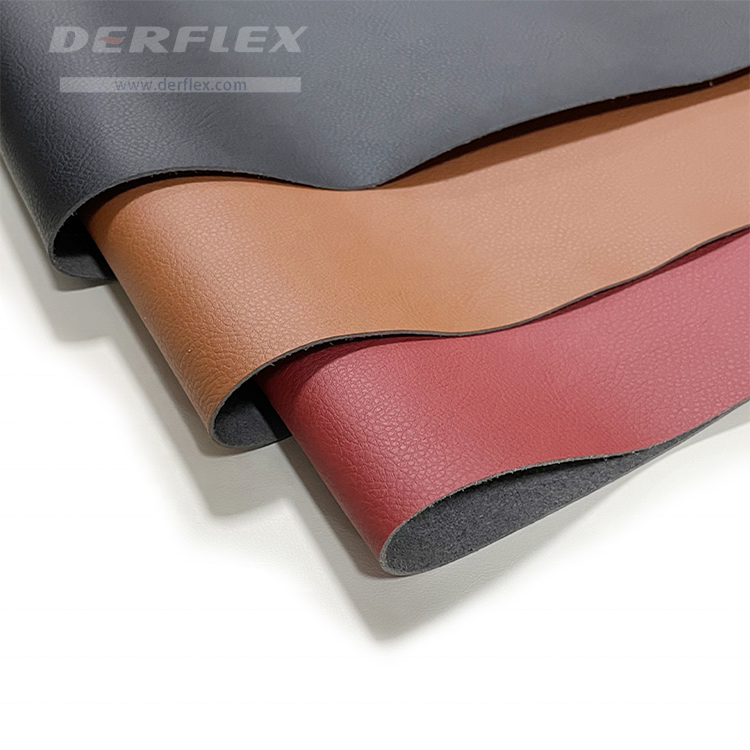
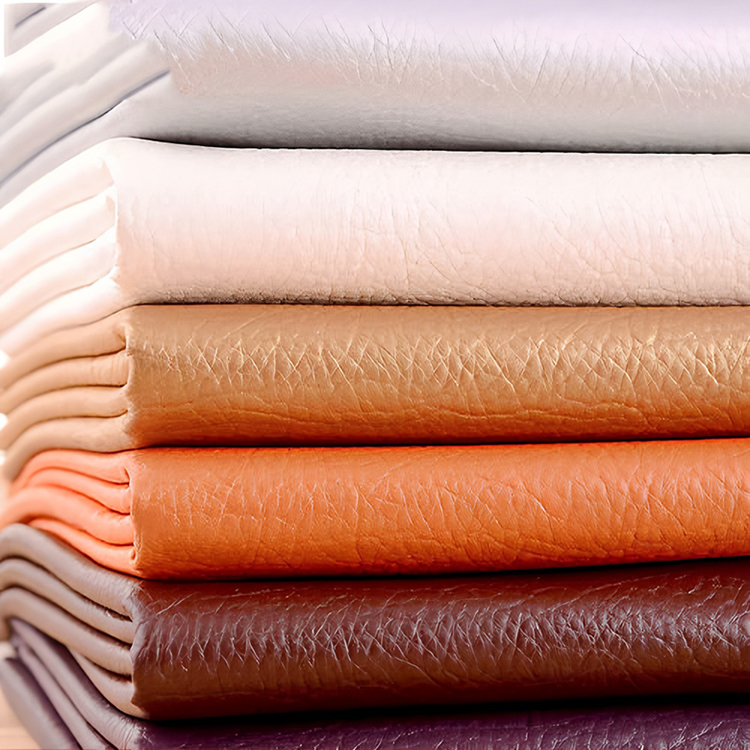
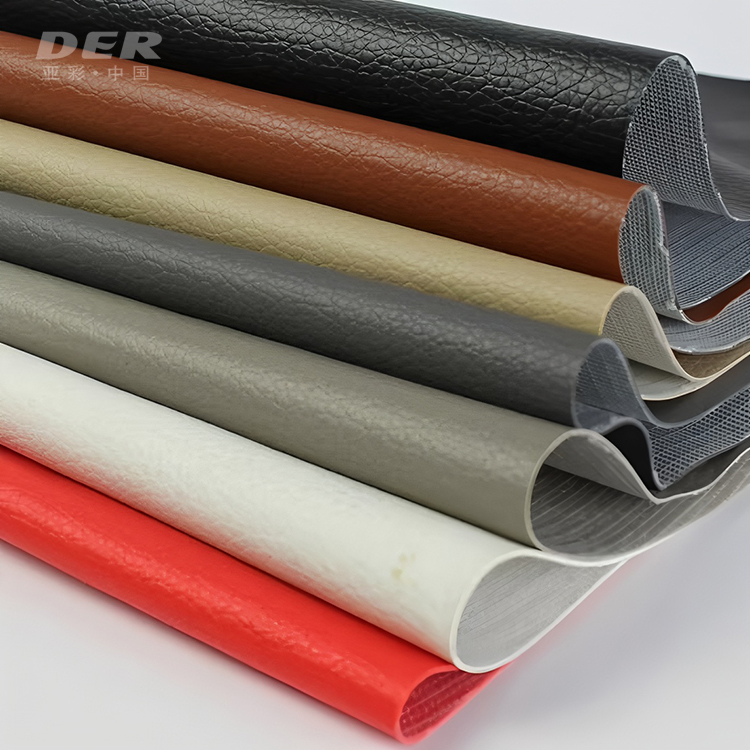
Specify the seat. Then specify the leather.
Send DERFLEX your chair application, sample or drawing, desired finish, backing, quantity and test requirements. Request a coordinated roll-material review and quotation.
No published price, universal MOQ, certification or lead time is implied by this page.Frequently Asked Questions
Clear answers for manufacturers, upholstery buyers, interior specifiers and bulk sourcing teams.
Is PU leather suitable for commercial seating?
It can be suitable when the surface finish, backing, seam behavior, cleaning route and ageing requirements match the actual chair and use environment. The material name alone does not establish a contract-grade result.
Which abrasion number should I request for commercial PU upholstery?
Ask first which test method the project requires. Martindale and Wyzenbeek report different procedures, and a cycle figure without an endpoint, load, abrasion medium and visible-wear assessment is not comparable across suppliers.
How can a furniture maker reduce peeling and cracking risk?
Discuss the specified PU chemistry, coating adhesion, heat and humidity exposure, bend radius and cleaning products. Test the actual construction after ageing and on a representative sewn or wrapped cover.
Can DERFLEX match a color, grain or backing for an OEM chair?
DERFLEX can discuss custom color, embossing, hand-feel and backing directions. Feasibility, minimum quantity, acceptance criteria and final supply details depend on the chosen material and project review.
Is the supplied product a finished seat cover or upholstery roll?
This page concerns PU synthetic leather roll stock for furniture manufacturing and converting. Finished covers, chair assemblies and installation are outside the default material offer unless separately confirmed.
What should I send to request a commercial seating quotation?
Provide the seat type, drawings or photos, annual or project quantity, visual reference, usable width, upholstery process, target performance tests, cleaners, destination and delivery schedule. A swatch or existing cover improves the discussion.