Protective Top Finish
Influences gloss, touch, stain-release direction, scuff visibility and compatibility with the intended maintenance routine.



 Chair Upholstery Material Program
 DERFLEX supplies custom PU leather for chairs used in dining seating, office furniture, lounge chairs, hospitality projects, reception seating and OEM chair collections.
The right chair upholstery material is not selected by color alone. It should fit the seat geometry, seam route, backing stretch, edge tension, cleaning routine, traffic level and future reorder plan. DERFLEX helps buyers turn those variables into a workable roll-material specification for sampling and bulk supply.
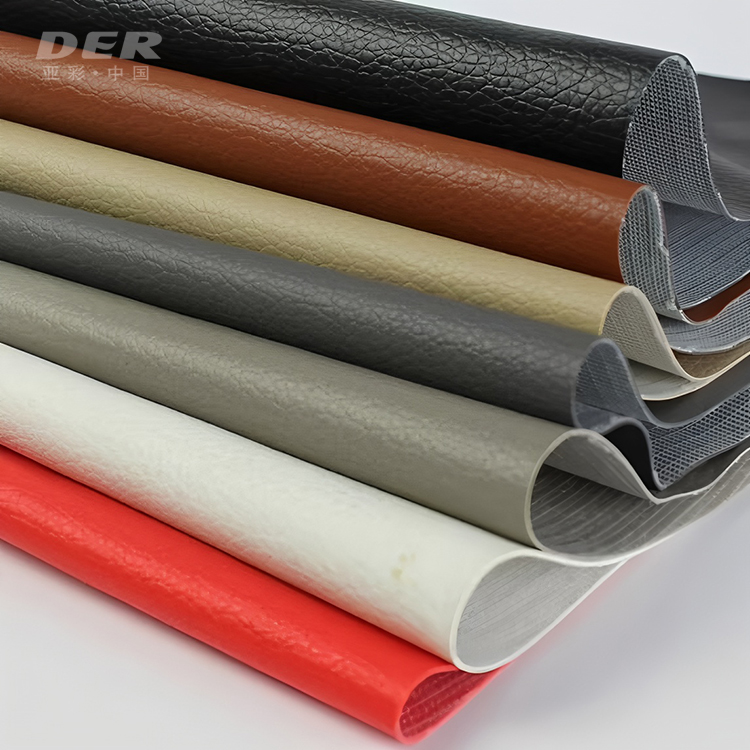
Compared with large flat panels, chairs concentrate friction, body heat, seam tension and cleaning in compact areas. A seat front edge may wear differently from a backrest; an arm pad may see more cleaner and hand oil than the side panel. Treating every zone as the same material problem can lead to unnecessary cost—or to weak performance in the places that matter most.
Professional chair manufacturers usually get a more useful material recommendation when the inquiry includes the finished chair, not just a color swatch.
PU leather for chair upholstery is a layered material. Surface appearance attracts attention, but the layer balance underneath determines how the roll stretches, sews, wraps, flexes and ages in the finished chair.
Influences gloss, touch, stain-release direction, scuff visibility and compatibility with the intended maintenance routine.
Creates the leather-like face and contributes to flexibility, grain definition, color depth and repeated-contact behavior.
Helps keep the surface system attached during bending, upholstery tension, sewing and repeated flexing around chair contours.
Knitted, woven, nonwoven and microfiber backings can produce different balances of stretch, body, tear behavior and stitch response.
“PU leather for chairs” covers multiple end uses. The correct material direction changes with traffic, upholstery geometry, visual positioning and cleaning exposure.
Dining seats need clean wrapping, attractive grain and practical maintenance for spills and repeated entry/exit.
Daily body contact makes abrasion, flex, hydrolysis direction and cleaner compatibility more important than a showroom-only surface.
Public seating often combines appearance, higher use frequency, cleaning routines and project-specific documentation requirements.
Large visible upholstery areas benefit from controlled matte level, refined grain, soft hand feel and stable drape.
High turnover can place more emphasis on easy maintenance, visible scuffing and consistent replacement material.
Specialty seating may add repeated flexing, body oils, cleaning chemistry or project-specific test requirements.
Use this table to prepare a practical inquiry. Final construction, tolerances and test values should be confirmed through approved samples and written order specifications.
| Specification Item | Available Direction | What the Chair Buyer Should Confirm |
|---|---|---|
| Material Structure | PU surface over knitted, woven, nonwoven or microfiber backing; project-specific constructions can be discussed. | Chair type, upholstery method, stretch direction, body, softness and expected contact level. |
| Thickness | Approx. 0.6–2.0 mm as a broad sourcing window, or project-specific according to structure and chair geometry. | Do not choose thickness alone; review seam bulk, drape, wrapping radius and backing together. |
| Surface & Grain | Fine grain, pebbled, napa-style, smooth, matte, semi-matte, low-gloss, embossed or custom visual direction. | Reference swatch, desired gloss, grain depth, scuff visibility and finished-chair design language. |
| Color Program | Standard shades, buyer-sample matching, collection colors and project-oriented color development. | Master color reference, tolerance route, light source used for approval and replenishment requirements. |
| Backing | Knitted, woven, nonwoven, polyester base, microfiber or another application-oriented substrate. | Stretch, dimensional stability, sewing response, tear behavior and compatibility with the chair-cover process. |
| Abrasion Direction | Test pathway can be discussed according to expected traffic and buyer/customer protocol. | Test method, abrasive medium, load, endpoint and acceptance criteria—not only a cycle number. |
| Hydrolysis / Ageing | Humidity- and heat-ageing direction can be built into selected PU constructions when required. | Climate, storage, cleaning frequency, ageing condition, test duration and post-ageing acceptance rule. |
| Easy-Clean Direction | Surface finish can be reviewed around common upholstery cleaning routines and project-specific cleaner exposure. | Cleaner family, concentration, dwell time, wipe frequency and visible acceptance after repeated cycles. |
| Flame Test Route | Project-specific development can be discussed when chair or contract furniture requirements call for a named standard. | Exact standard, ignition source, sample construction and whether the cover alone or complete upholstery composite is tested. |
| Roll & Packing | Width, usable width, roll length, protective packing, labels, carton marks and OEM pack-out can be discussed. | Cutting yield, warehouse handling, container loading, label format and repeat-order identification. |
Technical note: ranges and performance directions above are purchasing references, not automatic guarantees for every construction. Final specifications depend on the approved material, test method, order quantity, production feasibility and destination-market requirements.
A material can look convincing on a small swatch and still create problems after sewing, stretching, repeated sitting or cleaning. Validate the failure modes that are relevant to the chair.
Map seat edges, front corners, arms and other high-friction zones. Compare materials only under equivalent test conditions.
Repeated bending around padded curves can reveal cracking, finish weakness or coating/bonding issues not visible on a flat sample.
Check whether the surface-to-backing system remains stable through upholstery tension, repeated flexing and relevant ageing conditions.
Use the intended cleaner family in the evaluation instead of assuming all “easy-clean” surfaces tolerate the same chemistry.
High-contact seating can expose polishing, transfer or shade differences. Lock a controlled color and surface reference before production.
For humid markets or longer programs, evaluate heat/humidity exposure and define what surface and adhesion condition must remain acceptable.
These DERFLEX website images show actual synthetic leather material directions. Final chair-grade construction, grain, color, backing and performance package are confirmed through project sampling.
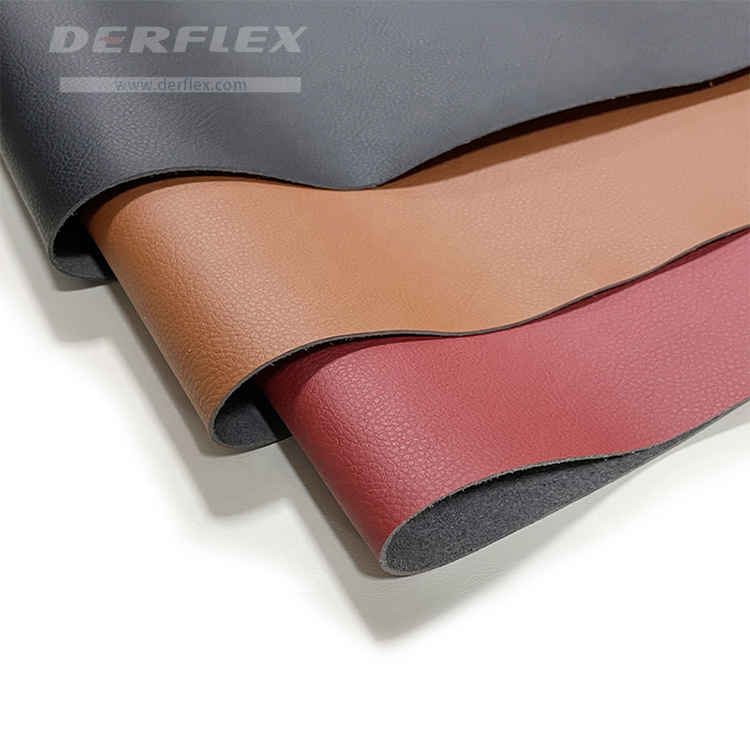
Useful for evaluating how body, stretch, grain and coating support interact around curved upholstery zones.
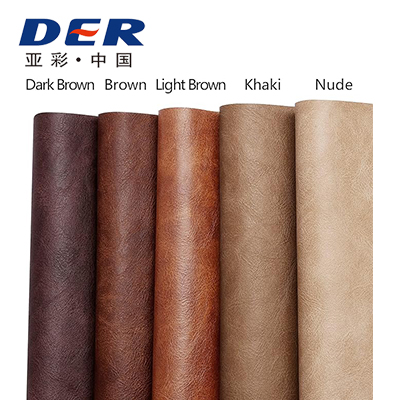
Neutral and custom color directions can be coordinated for chair families, private-label furniture ranges and repeat purchasing.
For OEM furniture factories, distributors and chair brands, the fastest path is to convert the finished-product brief into a controlled material sample before discussing volume production.
Share chair type, drawings or photos, upholstery zones, foam geometry and the highest-contact areas.
Set color, grain, gloss, hand feel, texture depth and visual positioning for the collection.
Review backing, thickness, stretch, body and conversion method against sewing and upholstery requirements.
Agree abrasion, flex, hydrolysis, cleaning, rub fastness or flame route only where relevant to the project.
Retain approved references and define roll packing, labels, visual acceptance and reorder identification.
No material family is universally superior. The useful choice depends on touch, cleaning, traffic, price structure, chair geometry and the expected product life cycle.
Often chosen for a softer leather-like touch, broad color/grain development and flexible chair upholstery handling.
Can suit projects that emphasize wipeability, water-resistance direction, commercial durability and cost control.
Can be considered when buyers want an upgraded backing structure, refined hand feel and higher material positioning.
Offers a woven aesthetic and different comfort profile, but stain, cleaning and edge-wear behavior follow a different material logic.
DERFLEX approaches chair upholstery as a material-development and repeat-supply problem. The objective is to make the specification clearer before bulk production—surface, backing, processing fit, test route, roll format and approval references—rather than relying on broad phrases such as “high quality” or “heavy duty.”
These six related pages support the next step in PU leather selection, performance definition and chair-program sourcing.
Concise answers for furniture manufacturers, chair brands, upholstery converters, importers, distributors and project buyers.
PU leather can be suitable for dining chairs, office seating, lounge chairs, hospitality furniture and other upholstered chairs when the backing, surface, thickness, flex, wear and cleaning requirements are matched to the actual chair design and use environment.
A broad commercial discussion may start around approximately 0.6–2.0 mm, but thickness should never be selected in isolation. Tight curves may need different drape and backing behavior than padded executive seating. Final thickness should be approved on the finished or prototype chair.
Dining chairs may put more emphasis on stain management, seat-edge appearance and coordinated sets. Office chairs usually add repeated daily friction, flexing, arm-pad cleaning, humidity exposure and longer repeat-order programs. The material route should reflect those differences.
DERFLEX can discuss custom color matching, embossed grain, gloss or matte level, hand feel, backing, thickness, width, roll format and selected performance directions. Feasibility depends on the approved construction, quantity and production requirements.
Compare the complete test condition rather than only a cycle number. Ask for the test method, abrasive medium, load or pressure, endpoint, wet/dry condition and pass/fail rule so that two samples are being evaluated on a comparable basis.
Send the chair type, photos or drawings, target upholstery zones, current or target thickness/backing, color and grain reference, processing method, test requirements, quantity, destination and expected reorder plan. A physical swatch or current chair sample can also make matching faster.
Share your chair type, upholstery zone, color/grain reference, backing or thickness direction, cleaning route, required tests, estimated quantity and destination. DERFLEX can review a practical PU leather direction for sampling and quotation.