


 Technical materials / buying guides
Tent Fabric Cleaning, Repair & Storage Guide
Commercial PVC tent fabric can often stay serviceable longer when operators use a material-specific cleaning routine, inspect seams and stressed edges, and store covers completely dry. This guide is written for tent rental fleets, venue technicians and resort teams managing PVC-coated marquee roofs, glamping covers and dome skins. It explains which defects merit a controlled patch assessment and which call for a replacement panel or full skin. Cleaning chemistry, welding settings and any fire-performance claims must be checked against the exact fabric grade and its documentation before work begins.
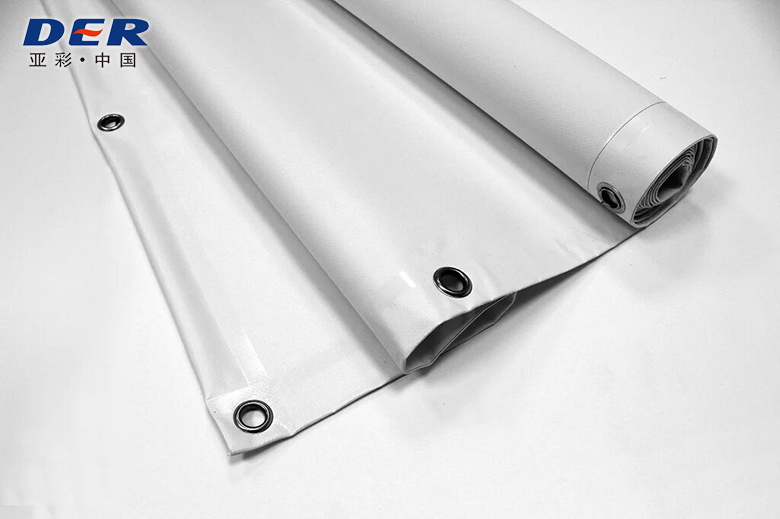
Clean first. Dry completely. Then decide.
A repeatable cleaning log helps rental fleets and resort maintenance teams distinguish ordinary surface soiling from early material failure.
01 · Identify the surface
Record the tent cover grade, coating and lacquer, printing or clear-window sections. Do not transfer a cleaning recipe between PVC, acrylic, canvas or TPU.
02 · Protect the cover
If the cover is removed, use a smooth and clean work surface. Keep grit, footwear, metal fittings and sharp folding tools off the coated face.
03 · Remove loose contamination
Lift debris and rinse dust before wiping. Avoid grinding abrasive particles into clear or glossy surfaces.
04 · Use a compatible cleaner
Only use a cleaning product and dilution suitable for the exact finish. Begin with soft non-scratching tools and a controlled spot test.
05 · Rinse and inspect
Remove residues, including along seams, hem pockets, windows and eyelets. Document stubborn staining separately from coating damage.
06 · Air-dry thoroughly
Dry both sides and attached ropes or fittings. Never package a cover while moisture remains in folds or reinforcements.
For a broader maintenance approach to coated textile rolls and fabricated shelter panels, compare the tent fabricator material and handling guide.
Look where damage starts, not only where it shows.
A tent may look intact at a distance yet need attention at concentrated loads, openings and folded interfaces.
| Inspection zone | Evidence to photograph | Technical decision |
|---|---|---|
| Welded or stitched seams | Peeling, open stitch holes, localized delamination, water tracks | Check seam design and qualified repair process before use |
| Keder or edge beads | Abrasion, pulled edges, rail mismatch, distorted bead sleeve | Measure the rail-to-bead assembly and panel pattern |
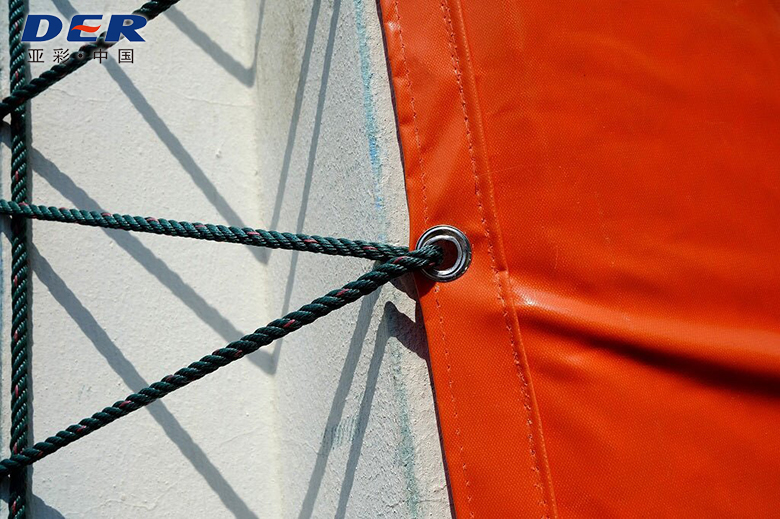
| Grommets and webbing | Elongated holes, torn reinforcement, hardware corrosion | Review load path and compatible reinforcement |
| Clear windows and doors | Clouding, scratches, zipper stress and leakage | Assess separate film/panel replacement |
| Main field of membrane | Cracking, exposed scrim, powdering, widespread coating loss | Assess remaining base fabric and replacement scope |
Replacement edge geometry is covered in the Keder panel measurement guide; frame-specific dome skins are discussed in the dome replacement cover guide.
A decision rule for operations teams.
Choose a route by defect location, fabric condition and the consequences of failure—not simply the visible hole diameter.
| Condition | Likely first action | Why |
|---|---|---|
| Small isolated puncture, sound surrounding membrane | Request a material-matched repair assessment | Patch geometry, adhesion, surface lacquer and cure/weld settings must be verified |
| Repeated seam opening or damage near tension point | Stop use and involve qualified fabricator / engineer | An applied patch may not restore the design load path |
| Large brittle, chalked or delaminating area | Evaluate partial or full cover replacement | Local repair does not renew degraded substrate or coating |
| Clear window failure with stable opaque shell | Review separate window or panel replacement | Different films, weldability and optical finishes need specific checks |
| Uncertain fire documentation after alteration | Hold classification claim pending review | Added layers or treatment can change the tested construction |
This matrix is an inspection triage tool, not approval to perform a structural repair. Follow the responsible manufacturer and qualified professional for loaded covers.
For the documentation question, use the tent textile fire-test report guide before ordering a modified cover.
Protect the next deployment during pack-down.
A clean dry cover can still be damaged by an unsuitable storage environment or aggressive folding.
Prepare the fold
Remove standing moisture, grit and disconnected hardware. Record and isolate wet items until fully dry.
Keep the load distributed
Use the original packing plan where available. Avoid sharp folds, over-tight straps and heavy objects compressing vulnerable edges.
Choose the environment
Use a clean, dry, sheltered space away from UV exposure, heaters, solvents, standing water and sharp equipment.
Store for traceability
Label model, fabric grade, bay location, inspection date, damage photos and repair status to support repeat panel orders.
For rental fleets, photograph every panel before folding and maintain one condition record per bay. Resort operators should link the cover ID to a guest-unit maintenance record so that replacement materials match the installed model.
Send the evidence that makes a quote useful.
A strong maintenance enquiry gives DERFLEX enough facts to discuss matched coated-fabric materials, finished panel scope or a replacement skin.
- Fabric identity, available TDS and any fire-report reference
- Clear close-up photographs of defects, seams, edges and windows
- Cover or panel dimensions, original drawings, Keder bead/rail reference
- Cleaning agents and repair history, installation age and climate exposure
- Whether the request is a patch material, cut panel, fabricated replacement or full cover
- Quantity, destination, required samples and planned shutdown date
For a first-time fabric specification, consult PVC tent fabric options and commercial tent quotation variables.
Material and application references
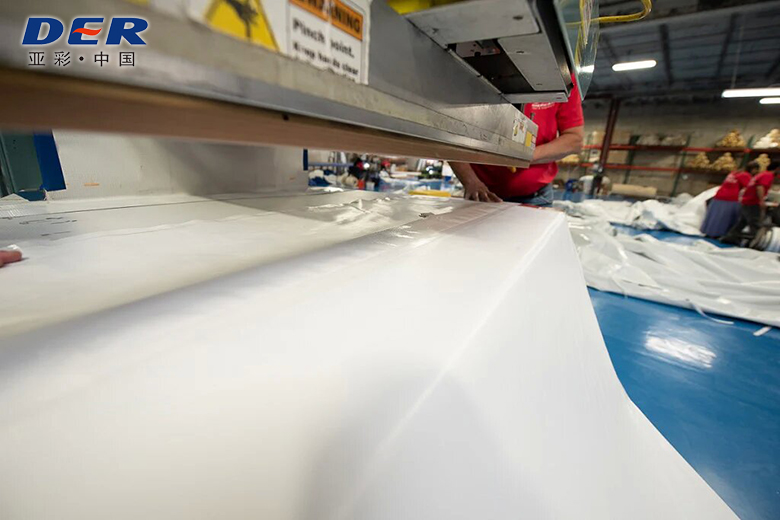
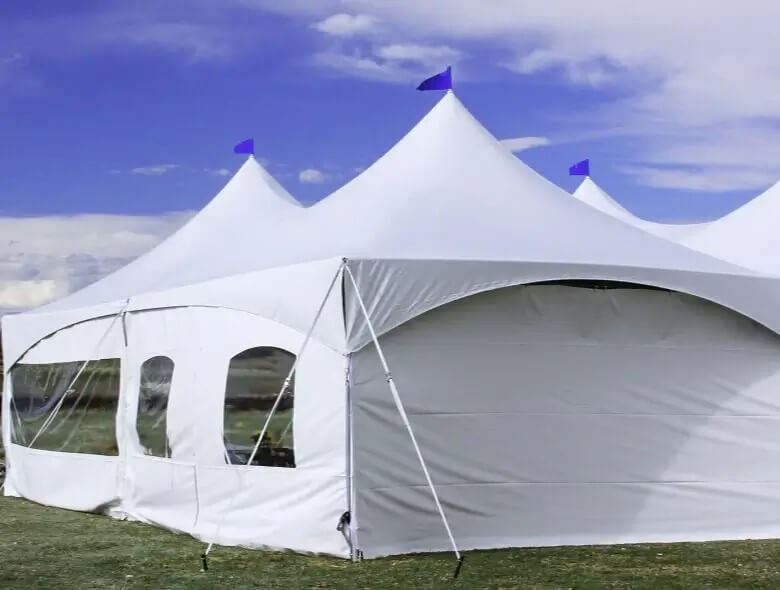
These images are real assets currently used on DERFLEX pages. Concept imagery is explicitly identified; imagery cannot prove model availability, engineering performance or an approved project.
Frequently asked questions
Practical answers to the questions that often hold up a purchase or maintenance decision.
What is the safest starting method for cleaning PVC tent fabric?
Identify the exact PVC-coated fabric and finish first. Remove loose dirt, rinse with clean water, use only a supplier-approved diluted non-abrasive cleaner and soft cloth or brush, rinse thoroughly and dry the membrane before packing.
Can a PVC marquee roof be cleaned with a pressure washer or bleach?
Do not assume either is compatible. High-pressure jets can damage coatings and seams; oxidizing cleaners can attack some finishes and fittings. Follow the written care instructions for the material and test any approved method on an inconspicuous area.
When can a dome tent cover be patched rather than replaced?
Local non-structural damage may be repairable when the parent fabric remains sound and an approved patch and weld process can be qualified. Spreading tears, coating failure, seam separation at loaded areas or unknown fire-performance implications call for specialist review and may require replacement.
How do I prevent mildew during tent fabric storage?
Clean and fully dry the textile, seams, edge ropes and attached accessories. Store off the floor in a clean, ventilated, dry location protected from heat, sunlight, chemicals and sharp items; inspect again after any damp transit.
Will a repair retain the original flame-retardant classification?
Not automatically. An added patch, adhesive, seam tape, ink or finish may change the specimen configuration. Match the exact material and repair method with the applicable test report and approval authority before relying on a fire-performance claim.
What photographs and records should I send for a replacement cover quote?
Send the fabric code or available TDS, overall cover dimensions, photos of defects and seams, any previous cleaning or repairs, installation age and exposure, frame or Keder details, quantities and destination.