


Composite Fabric Manufacturer for OEM, Industrial Protection, Architecture, and Technical Textile Applications
DERFLEX is a composite fabric manufacturer serving buyers who need more than a basic coated roll. We support distributors, converters, fabricators, OEM brands, project contractors, and technical textile buyers looking for reliable coated and laminated composite fabrics built for real commercial use.
Whether you are sourcing a waterproof composite fabric manufacturer for outdoor covers, a custom composite fabric supplier for transport systems, a laminated composite fabric manufacturer for inflatable products, or a technical composite fabric manufacturer for demanding industrial applications, the goal is usually the same: stable structure, dependable performance, practical lead time, and a factory that understands how material decisions affect your downstream product.
- OEM & Custom: Tailored weights, widths, colors, surfaces, and performance targets.
- Multi-Material Capability: PVC, TPO, TPU, and coated or laminated technical textile systems.
- Quality-Focused Production: Built for repeatability, not just one-off quotation.
- Export-Oriented Support: Suitable for distributors, brands, converters, and project buyers.
Application-Based Matching
We help buyers choose the right composite textile structure based on end use, not only by price or appearance.
Commercially Practical Development
Suitable for buyers balancing performance, cost control, sell-through logic, and long-term product line planning.
Performance Options
Waterproofing, tear strength, UV resistance, flame retardant, anti-mildew, anti-static, and surface finish pathways.
Factory-Direct Communication
Better control over customization, technical alignment, sampling, bulk production, and repeat order consistency.
What Is Composite Fabric?
Composite fabric is a technical material made by combining a base textile with one or more functional layers to improve performance. In practical sourcing terms, the base layer may provide structural strength, while the outer coating, lamination, or film layer delivers waterproofing, airtightness, weather resistance, flexibility, abrasion resistance, chemical resistance, or easier cleaning. 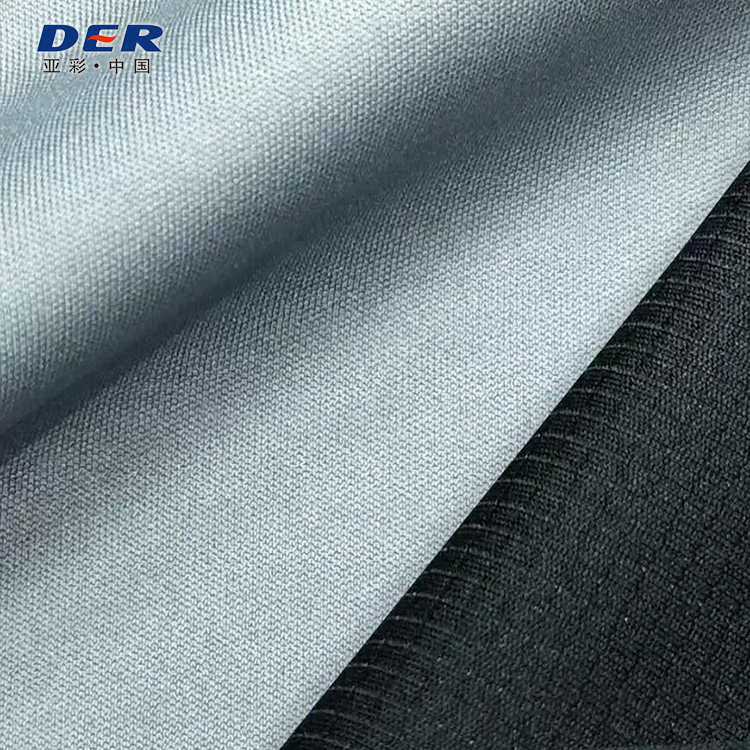
That is why buyers looking for an industrial composite fabric manufacturer are usually not searching for a generic roll fabric. They are looking for a material system. The right structure depends on where the material will be used, how it will be finished, what environment it will face, and what the final product must achieve after conversion or fabrication.
A serious coated composite fabric manufacturer or reinforced composite fabric supplier should be able to discuss application logic clearly: Will the fabric be welded, sewn, heat sealed, or high-frequency processed? Will it be used for tents, inflatable products, truck systems, architectural membranes, industrial partitions, agricultural covers, or branded OEM equipment? Does the buyer need more flexibility, more tear resistance, more weather life, or a more premium surface? Those decisions shape the fabric structure from the beginning.
Common composite fabric families include PVC coated polyester fabrics, TPO composite fabrics, TPU composite fabrics, laminated technical textiles, and application-specific industrial composite fabric systems developed for transport, construction, agriculture, architecture, inflatables, and protective covers.
Need a Custom Composite Fabric for Your Product Line or Project?
Send your target application, width, GSM or thickness preference, quantity, and performance requirements. DERFLEX can recommend a suitable composite fabric structure for OEM programs, industrial supply, and project-based sourcing.
Key Features Buyers Expect from a Professional Composite Fabric Manufacturer
1. Engineered Material Structure
The best composite textile manufacturer does not push one formula for everything. The structure should reflect the real use case, whether the priority is waterproofing, rigidity, weldability, low-temperature flexibility, or mechanical durability.
2. Strong Tensile and Tear Performance
For covers, membrane systems, tents, transport equipment, and industrial protection, stable strength is critical. Reinforced composite fabrics should support demanding commercial use rather than only light temporary coverage.
3. Weather Resistance
Outdoor buyers need UV resistance, moisture resistance, surface stability, and practical service life. A waterproof composite fabric manufacturer should understand how environment changes material choice.
4. Custom Coating or Lamination Options
Many OEM buyers require different polymer systems, top-surface finishes, embossing, gloss or matte effect, and application-oriented treatment rather than a standard off-the-shelf roll.
5. Conversion Compatibility
The material must work with the buyer’s downstream production method, including sewing, RF welding, hot air welding, cutting, printing, bonding, or heat sealing.
6. Quality Consistency Across Orders
Repeatability matters. For a custom composite fabric supplier, stable batch performance is often more important than an attractive sample that cannot be reproduced on scale.
7. Certification and Compliance Pathways
Depending on the market and end use, buyers may need flame retardant, environmental, or project-oriented test support. Early alignment reduces later risk.
8. OEM and Commercial Support
A reliable OEM composite fabric manufacturer should help with sampling, packaging adaptation, market positioning, and product differentiation, not only roll production.
Technical Specifications
Composite fabric specifications vary according to end use, base textile, coating or lamination method, and performance target. The table below reflects the typical parameters buyers discuss when sourcing from a custom composite fabric manufacturer.
| Item | Typical Range / Option | Buyer Consideration |
|---|---|---|
| Base Fabric | Polyester, nylon, reinforced woven textile, technical substrate | Strength, flexibility, dimensional stability, final application |
| Coating / Lamination | PVC, TPO, TPU, composite film, multilayer construction | Weather resistance, cost level, processability, performance pathway |
| Weight | Customizable by application | Balance between durability, handling, and target price |
| Thickness | Application-oriented structure selection | Puncture resistance, stiffness, flexibility, sealing behavior |
| Width | Custom roll width according to production plan | Waste reduction, cutting efficiency, finished product design |
| Surface Finish | Glossy, matte, embossed, easy-clean, printable | Appearance, handling, end market positioning |
| Functional Options | UV-resistant, flame retardant, anti-mildew, anti-static, cold-resistant | Regional requirements and end-use environment |
| Color | Standard or custom colors | Branding, project matching, market preference |
| Processing Compatibility | Sewing, welding, heat sealing, printing, converting | Production efficiency and finished product reliability |
How Buyers Usually Review Specifications
Serious buyers do not choose a composite material by one number alone. A waterproof composite fabric supplier may offer a higher weight roll, but that does not automatically make it better for your product. The better question is whether the structure fits your real use condition, fabrication method, market level, and downstream performance goal.
Want a Recommendation Instead of Comparing Specs Blindly?
Tell us the end use, climate condition, production method, target price level, and order volume. We can help match a more suitable laminated or coated composite fabric structure.
Applications of Composite Fabrics
One reason buyers search for a composite fabric manufacturer instead of a generic textile seller is application diversity. Composite materials can be developed for many commercial and industrial uses, but the structure needs to match the job.
Transportation & Logistics
Truck covers, trailer systems, side curtains, cargo protection, container covers, and transport shielding materials.
Tents & Outdoor Structures
Commercial tents, event shelters, awnings, camp equipment, semi-permanent enclosures, and weather-exposed cover systems.
Architecture & Membrane Systems
Canopies, tensile membranes, walkway covers, façades, air-supported structures, and large-span architectural applications.
Inflatables & Airtight Products
Inflatable boats, inflatable domes, advertising inflatables, air barriers, rescue products, and technical airtight fabric systems.
Industrial Protection
Machine covers, partitions, warehouse protection, dust control, waterproof barriers, and heavy-duty industrial shielding.
Agriculture & Outdoor Utility
Protective covers, shelter systems, equipment coverage, lining materials, and weather-resistant agricultural applications.
Why Application Context Matters
A technical composite fabric supplier should not treat all applications as interchangeable. A fabric for an architectural membrane program is not selected the same way as a fabric for a tarp line, and a material for inflatable sealing is different from a material designed mainly for printed or sewn use. That is why application-first communication usually leads to better quotation accuracy and better long-term product performance.
Why Choose DERFLEX as Your Composite Fabric Supplier
Broad Composite Material Coverage
DERFLEX supports coated and laminated technical fabric programs across multiple categories, helping buyers source more than a single isolated material.
OEM and Custom Development Support
From width and color to surface finish and performance targeting, custom work is structured for real commercial production rather than only sample-stage discussion.
Quality-Oriented Manufacturing Logic
Reliable composite fabric supply depends on material selection, process control, consistency, and communication discipline throughout development and bulk production.
Export-Focused Coordination
For international buyers, smooth communication, practical documentation support, and stable order follow-through are part of the value, not an extra.
Application-Matched Recommendation
We focus on helping buyers select a more suitable structure for their use case instead of offering one material for every category.
Commercial Repeatability
The goal is to support repeat orders, catalog expansion, and more dependable supply relationships for buyers building long-term product programs.
Comparison: Composite Fabric vs. Conventional Material Choices
Buyers comparing materials often need to decide between a reinforced composite fabric, a standard woven textile, an entry-level laminated sheet, or a simpler coated material. The right answer depends on the performance goal, processing method, and budget structure.
| Material Type | Main Strength | Potential Limitation | Best Fit |
|---|---|---|---|
| Composite Fabric | Balanced structural strength plus functional surface performance | Needs correct structure selection for each application | Industrial, architectural, inflatable, transport, OEM products |
| Standard Woven Fabric | Lightweight and simple | Usually lacks the barrier and durability performance needed for tougher use | Basic textile use with limited exposure requirements |
| Entry-Level Laminated Sheet | Lower initial cost | May offer weaker long-term performance in demanding outdoor conditions | Shorter-term or lighter-duty coverage |
| Single-Use Basic Coated Material | Can work well for a narrow purpose | Less flexible when buyers need multi-performance balance | Simple, application-specific supply programs |
How Buyers Make Better Material Decisions
The best sourcing decision is rarely “which material sounds strongest.” It is usually “which structure performs well enough, processes efficiently, fits my market, and supports margin and repeatability.” That is where an experienced industrial composite fabric manufacturer adds real value.
Looking for OEM Composite Fabric with Stable Lead Time and Better Quality Control?
DERFLEX can support custom development for coated and laminated composite fabrics used in covers, architecture, inflatables, transport systems, and technical textile applications.
Case Study Scenario
Representative OEM Sourcing Program for Multi-Use Composite Fabric
A buyer building a product range for transport covers and outdoor industrial protection needed a more dependable composite fabric supplier. The problem was not only price. The buyer needed a structure that could support repeated production, more stable processing in fabrication, and better consistency across orders.
Instead of quoting a single generic roll, the material discussion focused on application segmentation. One structure was matched for heavier outdoor protection use, another for better handling and fabrication efficiency, and a third option was reserved for customers who needed a more premium or specialized performance path. This approach helped the buyer organize their product line more clearly and reduce sourcing confusion.
The key lesson is simple: a custom composite fabric manufacturer should help buyers build a better material logic, not only send a price sheet. The right structure improves downstream efficiency, makes product positioning easier, and reduces the risk of material mismatch after launch.
Related Materials & Internal Links
Below are six related internal pages that can support this composite fabric manufacturer page and help strengthen topical relevance across coated and laminated technical textile categories.
Frequently Asked Questions
1. What is composite fabric?
Composite fabric is a technical textile made by combining a base fabric with one or more functional layers such as PVC, TPO, TPU, or other coating and lamination systems to improve waterproofing, strength, durability, flexibility, or special performance.
2. Can DERFLEX provide OEM and custom composite fabric development?
Yes. DERFLEX supports OEM and custom development for composite fabrics, including weight, thickness, width, color, surface finish, reinforcement, coating formula, printing compatibility, packaging, and application-oriented structure selection.
3. Which industries use composite fabrics?
Composite fabrics are widely used in transportation, industrial protection, architecture, tents, inflatables, agriculture, logistics, waterproof covers, partitions, and technical textile manufacturing.
4. How do I choose between PVC, TPO, and TPU composite fabrics?
PVC is often chosen for broad industrial use and cost-performance balance, TPO is attractive for certain weather-resistant and lighter-weight programs, and TPU is preferred when flexibility, abrasion resistance, low-temperature performance, or premium waterproof performance is a priority.
5. Can composite fabrics be supplied with flame retardant or special surface treatments?
Yes. Depending on the project, composite fabrics can be developed with flame retardant, UV resistant, anti-mildew, anti-static, easy-clean, or custom top-surface treatments.
6. What information should buyers send for quotation?
For faster quotation, buyers should send target application, base fabric type, desired coating or lamination system, GSM or thickness target, width, color, roll length, quantity, performance requirements, and destination market.
Ready to Source from a Composite Fabric Manufacturer That Supports OEM and Custom Development?
If you are building a product line, quoting a project, replacing an unstable supplier, or expanding into coated and laminated technical textiles, DERFLEX can help you evaluate a more suitable composite fabric solution.